The Universe should not exist. At least, not according to simple physics. After the Big Bang, equal parts matter and antimatter should have formed, then wiped each other out in flashes of energy. Instead, matter won. Stars, galaxies and people are here. One of the strongest suspects behind that cosmic imbalance is a near-invisible particle called the neutrino.
A new international study brings scientists closer to understanding whether neutrinos tipped the scales. The work, published in Nature, combines results from two massive experiments in Japan and the United States that chase these particles through hundreds of miles of rock. You now have your clearest picture yet of whether neutrinos behave differently from their mirror twins made of antimatter.
The breakthrough came from a rare joint effort between the world’s two leading neutrino projects: T2K in Japan and NOvA in the United States. Instead of working alone, the teams merged years of data into one unified analysis to answer a question that cuts to the heart of existence.
Neutrinos are among the strangest things in nature. Trillions pass through your body every second without leaving a mark. They barely interact with anything, yet they may hold the key to why the Universe did not vanish at birth.
There are three kinds of neutrinos, and they morph from one type into another as they travel. This shape-shifting, known as oscillation, depends on tiny differences in their mass and how they mix. If neutrinos and antineutrinos change in different ways, it would signal a deep break in nature’s rules known as CP violation. That break could explain why matter survived when antimatter did not.
Physicists have chased this signal for decades. Now, by combining two powerful experiments, they have spotted one of the clearest hints yet that neutrinos might indeed break this symmetry.
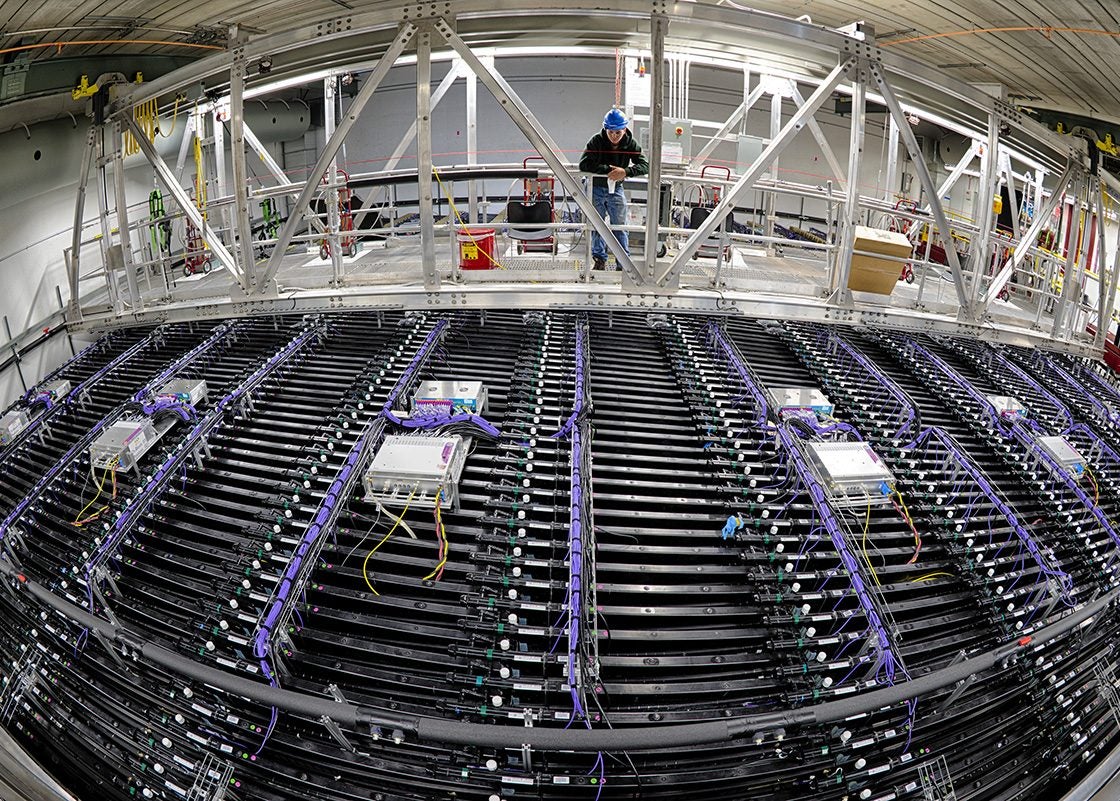
In Japan, T2K shoots a beam of neutrinos from the J-PARC lab in Tokai to the Super-Kamiokande detector, buried deep in a mountain 183 miles away. In the United States, NOvA sends neutrinos from Fermilab near Chicago to a detector in northern Minnesota, about 500 miles off.
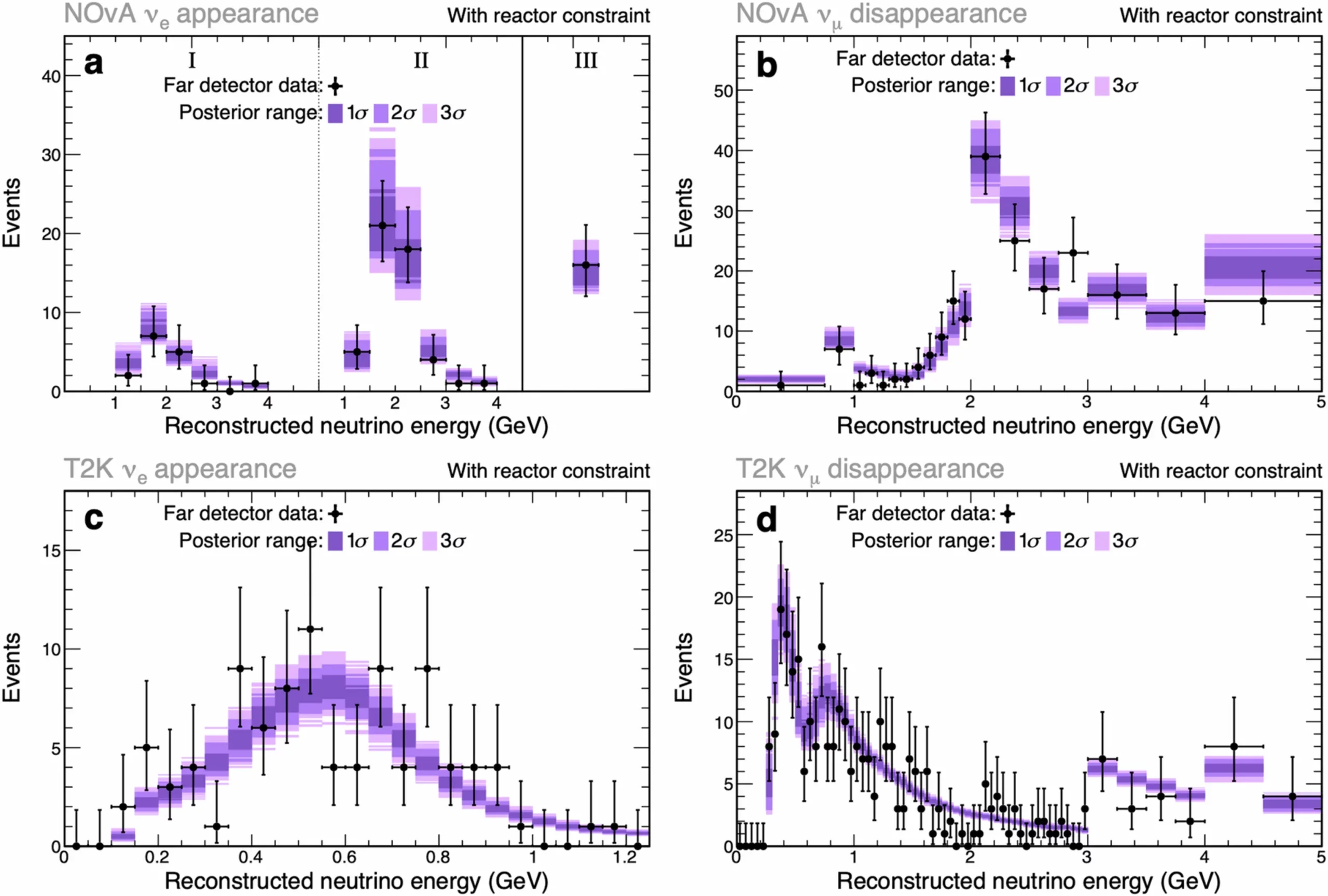
Each experiment uses a near detector to record what the beam looks like at the start. A far detector then counts how many neutrinos arrive and what type they are after their long trip. The differences tell scientists how the particles changed along the way.
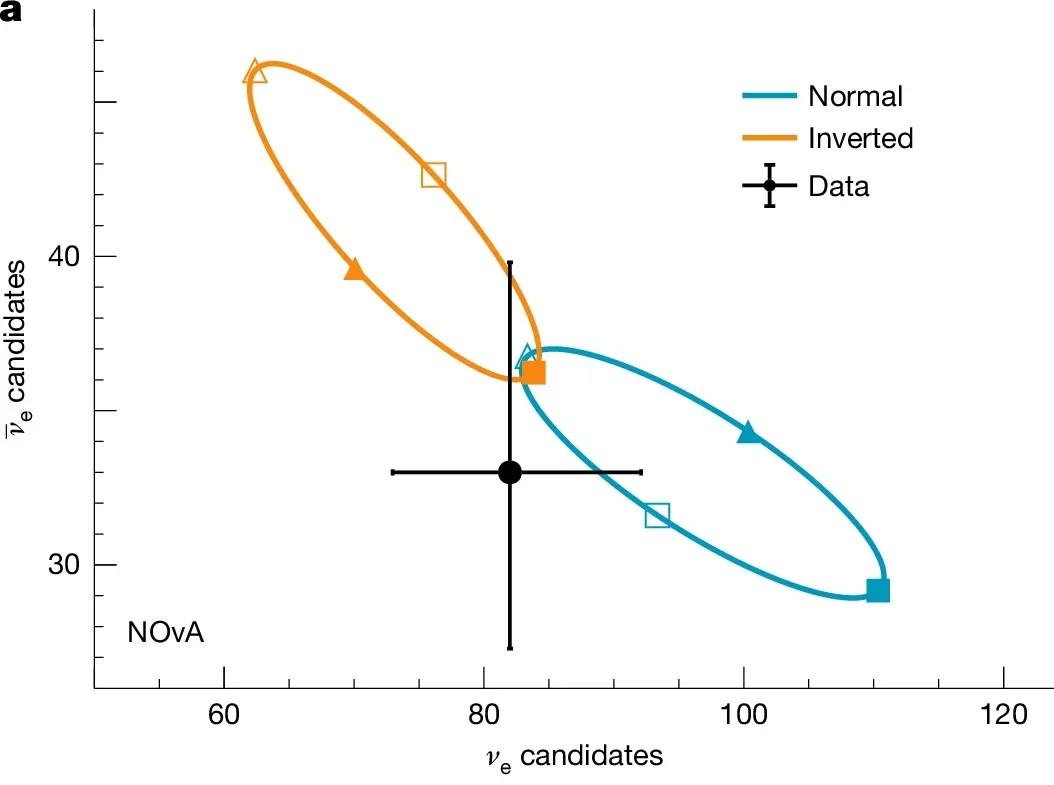
T2K is especially good at spotting signs of CP violation. NOvA excels at revealing which neutrino is heaviest, a mystery called mass ordering. Alone, each group faced blind spots. Together, their strengths meshed.
For the first time, the collaborations blended their full datasets into a single model. Rather than compare final numbers, the teams shared raw statistical tools and ran one combined analysis. This demanded care. The experiments use different beams, detectors and energy ranges. Some errors might overlap. Others definitely do not.
To be safe, scientists ran countless trials with fake data, shifting uncertainties in every extreme way they could imagine. They even created “nightmare” scenarios with exaggerated errors to stress-test the results. In every realistic case, the core conclusions held steady.
Then came the ultimate test. If their model were wrong, it would fail to match real data. Instead, it fit beautifully. The combined result passed strict quality checks for every dataset. T2K and NOvA together told one consistent story.
The joint study sharpens several key measurements. It pins down one neutrino mass difference better than any experiment before. It also suggests that one mixing angle likely sits just above a perfect balance point, hinting at a subtle asymmetry.
The biggest question, mass ordering, remains open. Scientists still cannot say for sure which neutrino is the heaviest. Some analyses lean one way, others the opposite. For now, the scales are not settled.
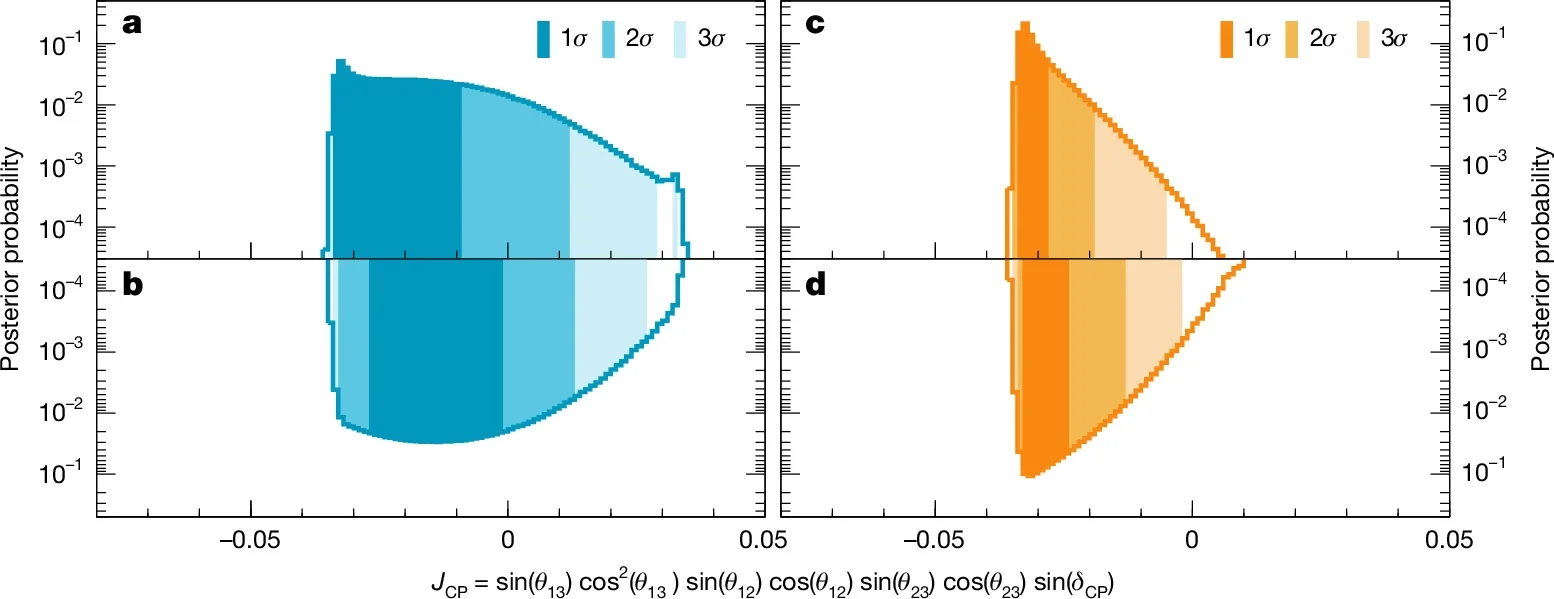
The most exciting result centers on CP violation. When both experiments are combined, a wide range of values that would cancel differences between matter and antimatter are pushed aside. If the mass ordering turns out to be one specific way, the data would point strongly to neutrinos breaking nature’s symmetry. In that case, CP violation would no longer be a rumbling possibility but a measured feature of reality.
The Experimental Neutrino Physics Group at Syracuse University played a major role. Associate Professor of Physics Denver Whittington helped guide the NOvA effort for more than ten years.
“I think this study was particularly valuable in that it identified and tackled a number of different challenges associated with comparing and combining measurements made from two very different neutrino experiments with different neutrino beams both looking to measure the same physics,” Whittington said.
Graduate student Aklima Lima focused on data quality and event selection, making sure each signal met tough standards. Whittington also leads a team that hunts for exotic particles like dark matter and magnetic monopoles using the same detectors.
Bigger experiments are coming. Japan is building Hyper-Kamiokande. The United States is breaking ground on the Deep Underground Neutrino Experiment in South Dakota. Both will use the methods forged by this collaboration.
The next years may finally reveal whether neutrinos saved the Universe from destruction. And if they did, you will know that the faintest particles shaped the grandest outcome.
Understanding neutrinos reshapes how scientists view the birth and fate of the Universe. If CP violation in neutrinos is confirmed, it could explain why matter survived the Big Bang.
The techniques also improve how large physics projects combine data worldwide, influencing fields from astronomy to climate modeling.
Advances in detector technology developed here often find new uses in medicine, security and computing.
Research findings are available online in the journal Nature.
Like these kind of feel good stories? Get The Brighter Side of News’ newsletter.
The post Neutrinos may explain why anything exists at all, study finds appeared first on The Brighter Side of News.

