In a small lab at Penn State University, lightning may be happening on a scale smaller than a deck of cards. Victor Pasko, a professor of electrical engineering, and his team have shown that under certain conditions, everyday solid materials like acrylic, quartz, and bismuth germanate can host lightning-like electrical discharges.
The discovery challenges long-standing ideas that lightning only forms in massive storm clouds and opens the door to studying extreme electrical phenomena in a tabletop setting.
“Using a high-powered electron source, lightning can be triggered in everyday insulating materials,” Pasko explained. The study applies models traditionally used to study thunderstorms to much denser, compact materials. The result is what the researchers describe as “mini-lightning,” a rapid, intense electrical discharge inside solids.
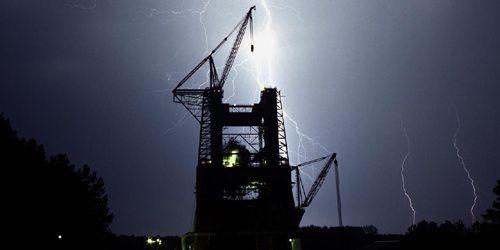
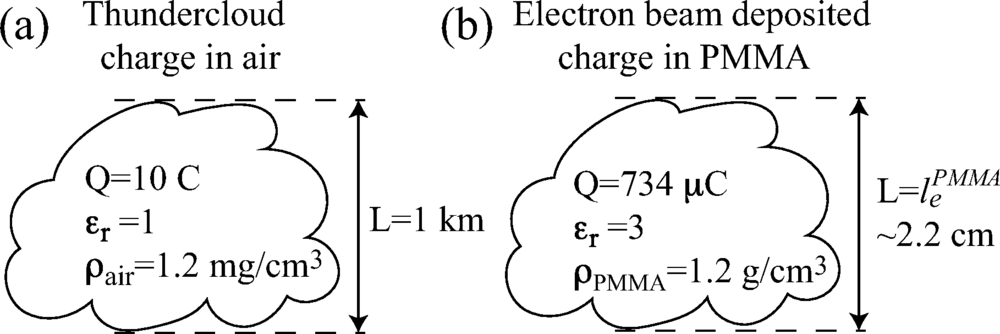
Thunderstorms produce electric potentials of about 100 million volts across kilometers of cloud. In contrast, the Penn State team found that blocks of acrylic, quartz, and bismuth germanate, roughly a thousand times denser than air, can replicate those conditions over a few centimeters. Using detailed simulations, they calculated that electrons in these solids could accelerate, collide, and create bursts of radiation in less than a billionth of a second.
“We were amazed because we were able to model the same phenomena in a material one thousand times denser than air, and strike a thousand times faster than in thunder clouds,” Pasko said. These simulations suggest that solid materials can reach lightning-like electric potentials in a fraction of the space required in the atmosphere.
This process, known as a photoelectric feedback discharge, allows electrons to create new energetic particles and radiation as they move through the material. The chain reaction mirrors what happens during natural lightning, where electrons collide with air molecules to produce bursts of X-rays and gamma rays known as terrestrial gamma-ray flashes.
The phenomenon hinges on what physicists call a relativistic runaway electron avalanche. Under strong electric fields, electrons accelerate to high energies, colliding with surrounding atoms and producing more energetic electrons and high-energy photons. In thunderstorms, this chain reaction helps trigger lightning.
In the lab models, the same feedback loop appeared in solid materials. The researchers applied electric fields to small insulating blocks, and their simulations indicated that runaway electrons could produce compact, intense discharges inside the materials. While the discharges are tiny compared with a thunderstorm bolt, the underlying physics is comparable.
“If you’re able to experiment with lightning-like conditions on a desktop, it would be wonderful,” Pasko said. “Much more cost-effective and could answer so many questions.”
Studying lightning in clouds is expensive and logistically complex. Researchers often rely on hundreds-of-kilometer-scale experiments, using balloons, aircraft, or rockets to gather data. Mini-lightning could change that. Controlled experiments in small, dense solids could allow scientists to probe high-energy phenomena without leaving the lab.
Beyond scientific curiosity, there are potential engineering benefits. Many devices, from power grids to satellites, rely on insulating materials to remain stable under high voltages. Understanding how electrical breakdowns can form in solids could lead to safer designs and prevent unexpected failures. It also provides a new way to study gamma-ray and X-ray emissions, which are difficult to observe directly during storms.
The team’s simulations revealed several key points:
These results indicate that the physics of lightning is broader than previously thought, not confined to vast, low-density atmospheric environments.
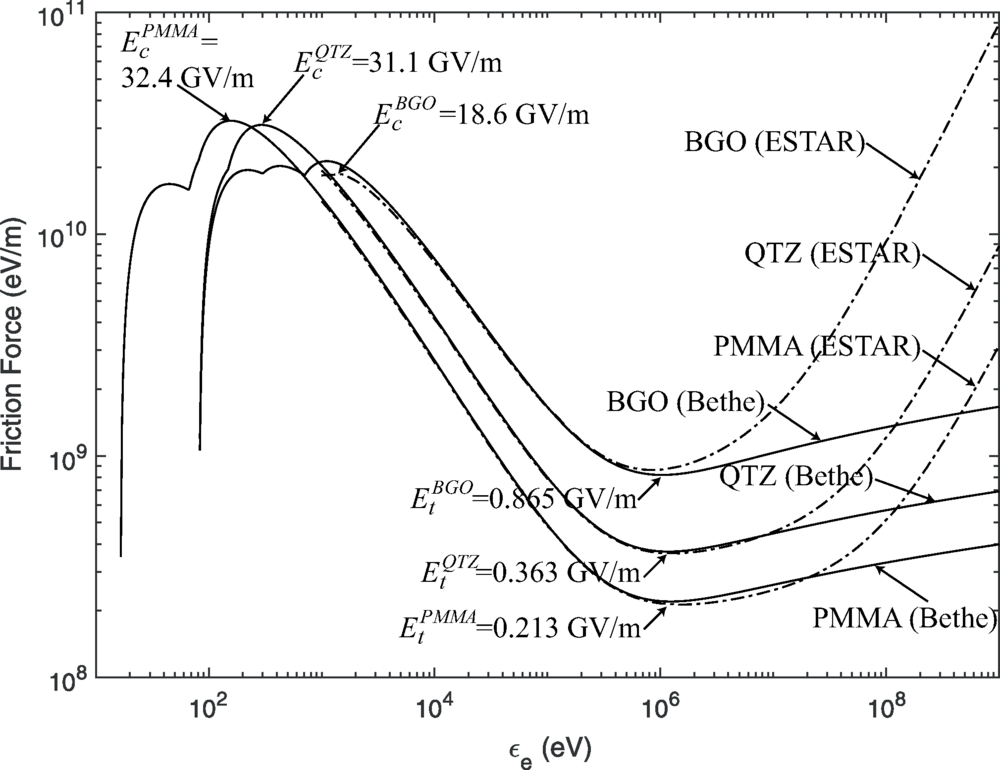
The study also has implications for high-energy physics and materials science. By creating mini-lightning in a lab, researchers can better observe the acceleration of electrons and the production of energetic particles. This controlled environment may help refine models of atmospheric electricity and guide future research in energy, safety, and electronics.
Other authors on the paper include Sebastien Celestin, professor of physics at the University of Orléans, France, and Anne Bourdon, director of research at École Polytechnique, France, and the French National Center for Scientific Research. U.S. funding was provided by the National Science Foundation.
This research reframes our understanding of lightning. No longer is it solely an atmospheric spectacle; it can occur in ordinary materials under the right conditions. The discovery shows that physical laws governing electrical breakdowns are not confined to clouds, but can be tested, observed, and potentially harnessed in the lab.
“It just needs to be a kind of insulating material — theoretically you can reproduce this large-scale phenomenon in a very small volume,” Pasko said. “For us to realize that these voltages and electric fields, generated inside these materials, are theoretically the same as in thunder clouds, was a real breakthrough.”
Practical applications may be wide-ranging. Miniature lightning experiments could lead to safer insulating materials, improved electronic devices, and new X-ray sources for medicine and security. Moreover, the approach provides a tangible bridge between high-energy atmospheric phenomena and accessible laboratory physics, offering educators and students a striking demonstration of natural forces in action.
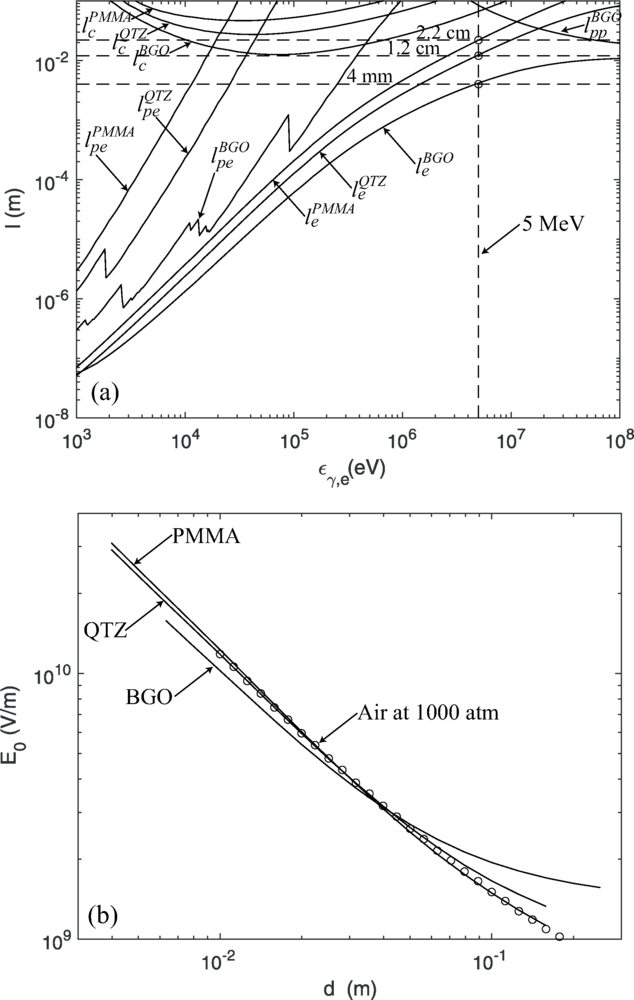
The discovery of lightning in solid materials represents both a scientific milestone and a tool for practical investigation. It allows physicists to study extreme electron dynamics in environments where parameters can be tightly controlled. Understanding these processes could inspire new safety standards, better electronics design, and novel ways to generate high-energy particles on demand.
By revealing that lightning can occur outside the sky, Penn State’s work illuminates unexpected opportunities for science and technology.
Even everyday materials hold secrets waiting to be explored, demonstrating that natural phenomena are not just distant spectacles but sometimes small, measurable events hiding in plain sight.
Research findings are available online in the journal APS.
The original story “New discovery reinvents how lightning is formed” is published in The Brighter Side of News.
Like these kind of feel good stories? Get The Brighter Side of News’ newsletter.
The post New discovery reinvents how lightning is formed appeared first on The Brighter Side of News.


Leave a comment
You must be logged in to post a comment.