In a secluded corner of the Lynx constellation, just 18 light-years from our planet, astronomers have found a stunning jewel—a planet around a tiny red dwarf star that may have the right conditions to harbor life.
The discovery is centered on GJ 251, a faint, cool M-dwarf star once thought to be unremarkable. But careful examination revealed something even more intriguing: a second planet, called GJ 251 c, that orbits within the habitable zone of the star, where temperatures might allow liquid water.
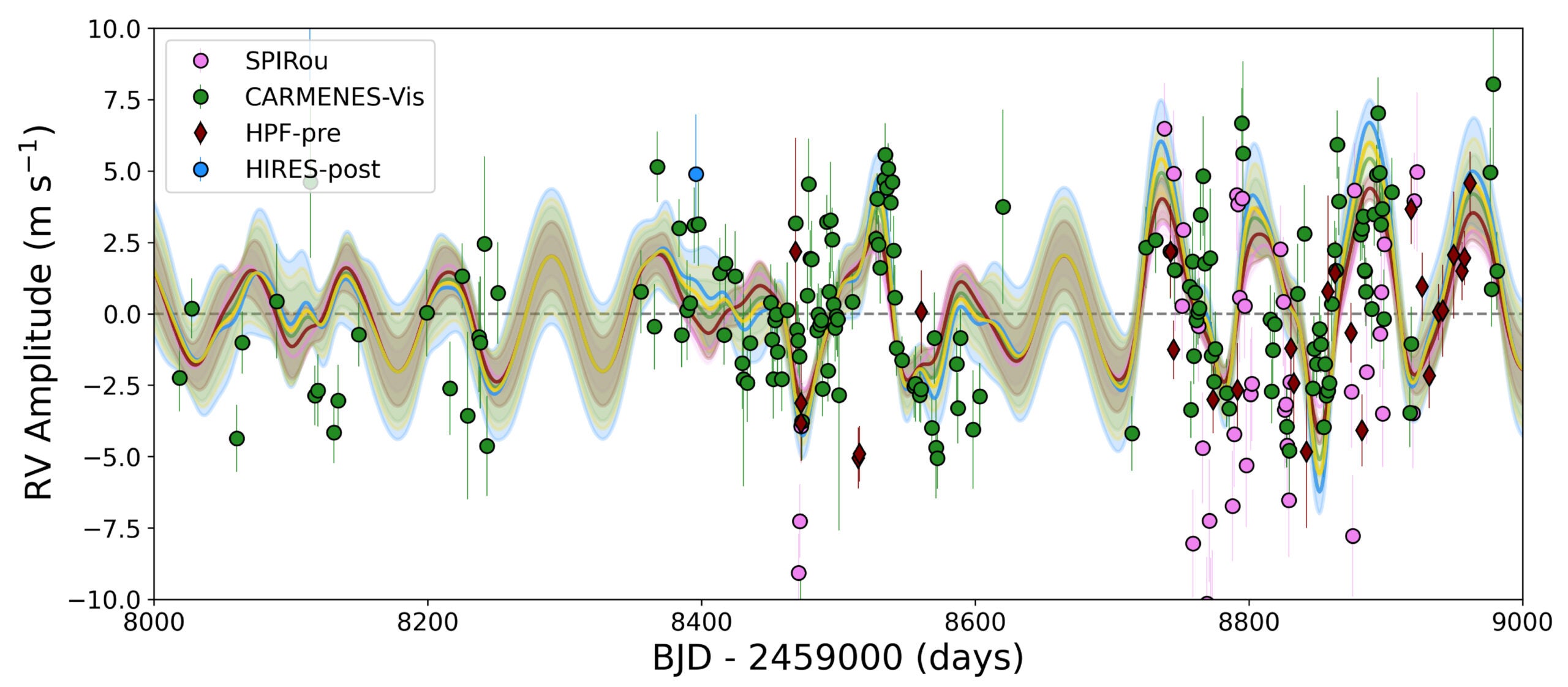
The discovery was enabled by one of astronomy’s most precise methods—observes the faint “wobbles” of a star as unseen planets tug on it with their gravity. Scientists combined data from some of the world’s most sensitive instruments, such as CARMENES, HARPS-N, MAROON-X, and Penn State’s Habitable Zone Planet Finder (HPF). Each of the spectrographs measured tiny Doppler shifts in starlight that betrayed two distinct signals.

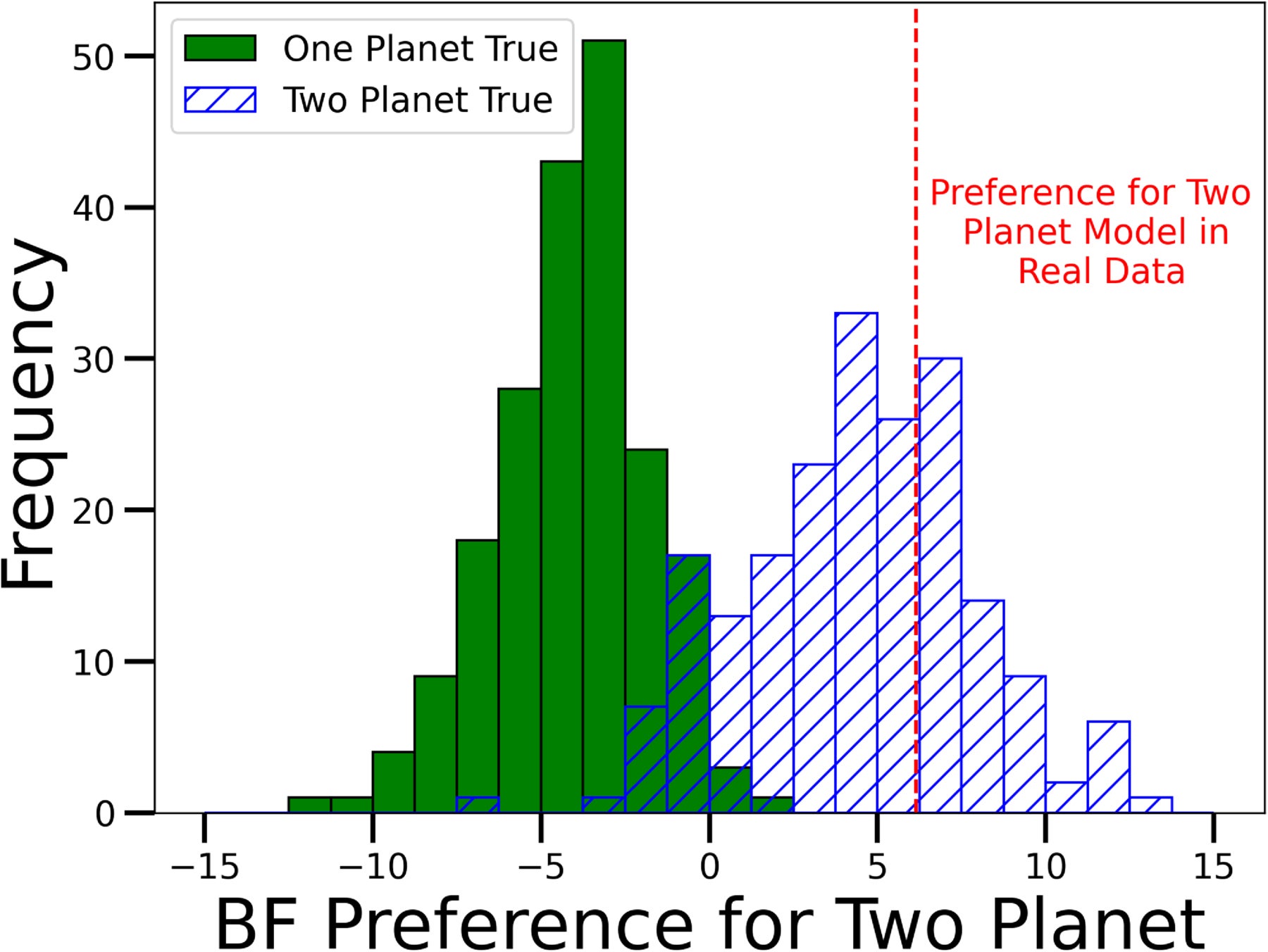
The first was confirmed with a familiar inner world, GJ 251 b, orbiting every 14 days. The second, with a 54-day repeat, hinted at a world farther out. Extensive testing ruled out any chance that the signal could be caused by stellar activity or equipment malfunction.
As Penn State astronomer Suvrath Mahadevan put it, “We hunt for these types of planets because they are our best bet for hunting for life elsewhere.”
Observations suggest GJ 251 c is roughly three times the mass of Earth, qualifying it as a “super-Earth.” The planet is roughly 0.22 astronomical units from its star—sufficiently far from the star to receive similar star power that Earth gets from the Sun. With an estimated surface temperature of around –13°C (260 Kelvin), the planet can potentially support liquid water, should it be furnished with an atmosphere.
While scientists cannot comment yet on whether GJ 251 c is rocky or cloud-covered, models suggest a diameter of about 1.6 times Earth’s diameter. Because the planet does not transit in front of its star, it is hard to measure directly, but its steady gravitational pull leaves little doubt that it exists.
To the research team, this world contributes to a brief but growing list of temperate worlds in and around our solar system that can be studied in depth. “This discovery is one of the best candidates for the search for atmospheric signs of life elsewhere over the next five to ten years,” Mahadevan said.
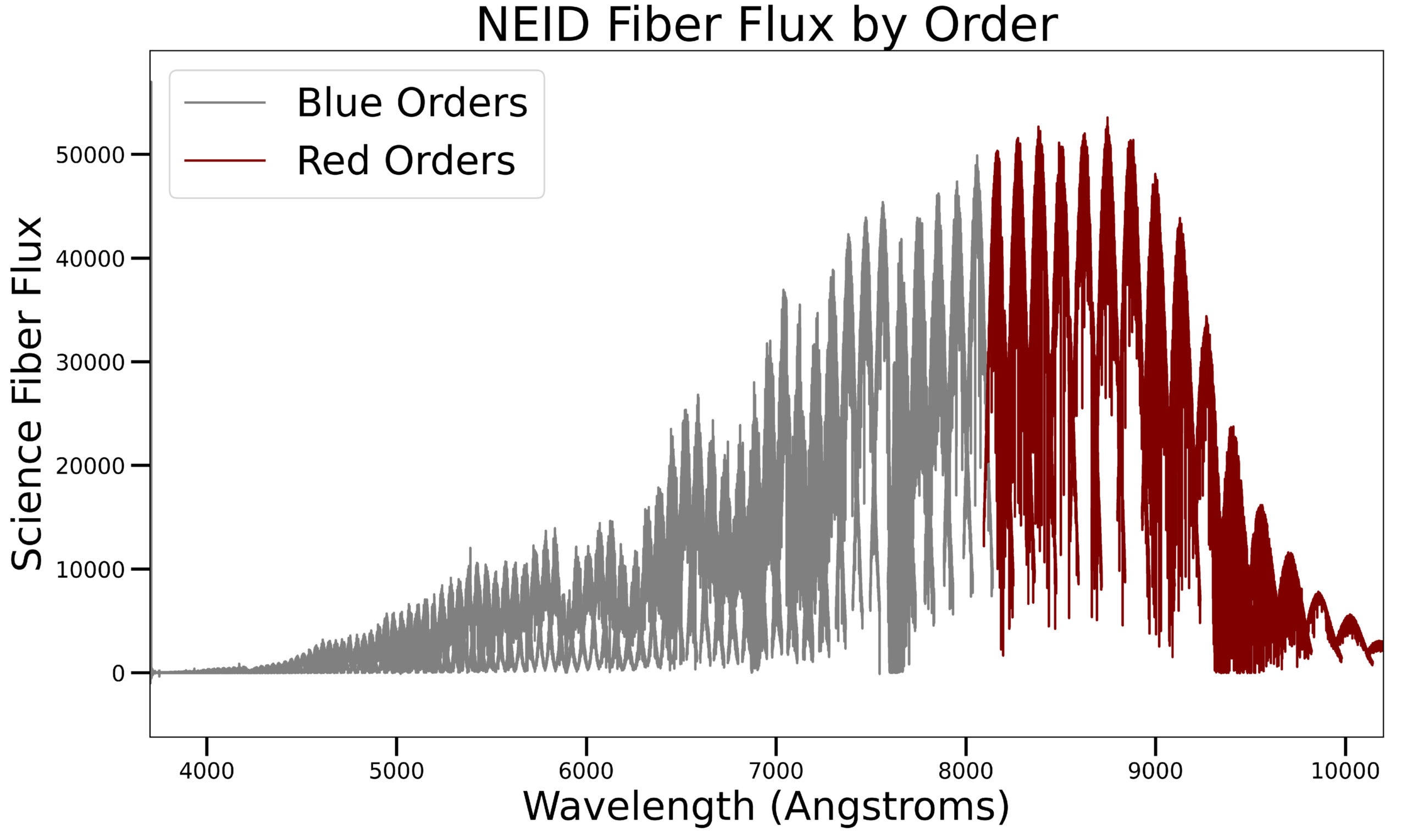
The discovery wraps up two decades of patient monitoring. By combining radial-velocity observations from ancient times with HPF measurements, astronomers refined the inner world’s orbit and revealed the outer companion’s faint 54-day signal. They confirmed the result using the NEID spectrometer, which was constructed by Penn State and installed at the Kitt Peak National Observatory in Arizona.
Lead author Corey Beard, who conducted the work as a doctoral student at the University of California, Irvine, said, “We are at the cutting edge of technology and analysis method with this system. We need the next generation of telescopes to directly image this candidate, but what we also need is community investment.”
Finding planets around red dwarfs isn’t easy. These small stars often flicker with magnetic storms that can mimic planetary signals. To separate genuine planets from stellar “noise,” researchers used advanced computational modeling to track how light shifted across different wavelengths. “This is a hard game,” Mahadevan explained. “We’re teasing out slight signals from what is essentially a frothing, magnetospheric cauldron of a star surface.”
Fortunately, GJ 251 is abnormally quiet for a red dwarf star. It rotates slowly—about once in 122 days—and has little magnetic activity, a hopeful omen for planet habitability. Without extreme flares or radiation upsurges, any atmosphere on GJ 251 c would stand a better chance of survival.
The two planets already known in the system follow stable, nearly circular paths. Simulations show that they’ve likely been in sync for billions of years. Their ratio of orbital periods of about 3.77 to 1 positions them just beyond a gravitational resonance, preventing them from serious disruption.
Scientists think both planets could be tidally locked, with one side always facing the star. Yet if GJ 251 c possesses even a tenuous atmosphere, it can transfer heat uniformly sufficiently to keep the extreme temperature differences between its day and night sides at bay.
GJ 251’s proximity means it’s a top candidate for the next generation of giant telescopes like the Thirty Meter Telescope and the Giant Magellan Telescope.
Although GJ 251 c is not transiting its star, researchers may ultimately spot its faint reflected light with the aid of adaptive optics. Taking measurements of the light may reveal whether it has an atmosphere, what gases it consists of, and even if there is life involved.
Few discovered planets tip the scale of brightness, proximity, and temperate conditions as well as this one does. “While we cannot yet determine the presence of an atmosphere or life on GJ 251 c, the planet is a good target for further investigation,” said Mahadevan.
Discoveries like GJ 251 c offer more than scientific curiosity—they guide the quest for life beyond Earth. The techniques used here refine how astronomers distinguish real planetary signals from star noise, raising the confidence in future detections.
As larger and larger telescopes loom on the horizon, the groundwork laid by this study will inform searches to directly analyze exoplanet atmospheres.
In addition to opening our galactic backyard, this research shows that collective effort between universities and nations can result in revolutionary discoveries. It also ensures that future generations of astronomers will not only possess the technology but also the objectives for searching for habitable worlds.
Research findings are available online in The Astronomical Journal.
Like these kind of feel good stories? Get The Brighter Side of News’ newsletter.
The post Newly discovered ‘super-Earth’ offers prime target in search for alien life appeared first on The Brighter Side of News.

