The idea of warp drive—the ability to travel faster than the speed of light—has fascinated humanity for decades. It began as a fictional concept in Star Trek and Star Wars, fueling imaginations and sparking real-world scientific curiosity.
Now, scientists are seriously investigating whether bending spacetime could allow us to reach distant stars quickly, turning science fiction into fact.
Warp drive doesn’t involve rockets burning fuel. Instead, it bends spacetime itself. Physicist Miguel Alcubierre first described this concept in 1994. He proposed creating a bubble around a spacecraft that compresses space in front and expands space behind. Inside the bubble, your ship doesn’t actually move faster than light—it stays still while spacetime shifts around it. This clever loophole avoids breaking Einstein’s universal speed limit.
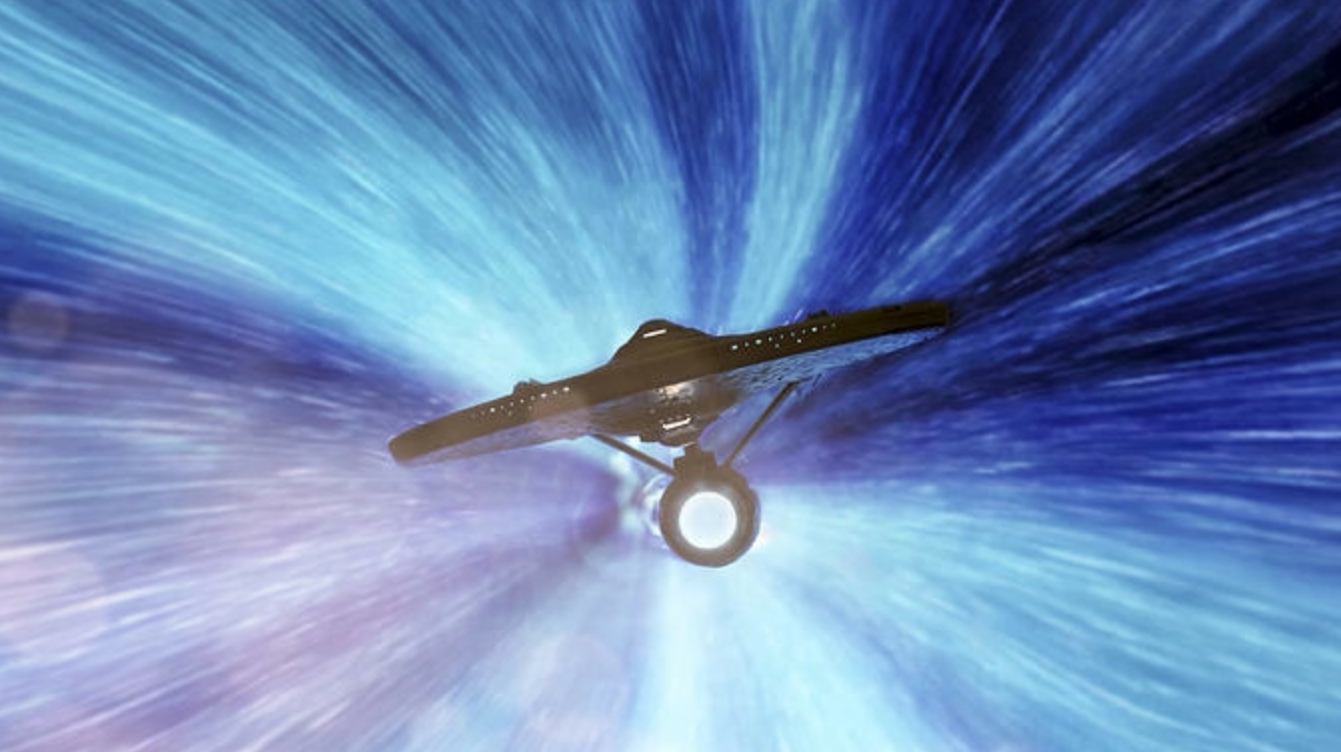
Joseph Agnew, an undergraduate at the University of Alabama, simplified this theory: “Suppose you have a craft that’s in the bubble. You’d compress spacetime ahead of the craft and expand spacetime behind it.” Amazingly, you wouldn’t feel motion inside; your destination would simply get closer.
Einstein’s Theory of Relativity states nothing with mass can travel at or faster than the speed of light, as it would require infinite energy. Yet photons, light’s particles, move at this speed because they have no mass. But Alcubierre’s warp bubble cleverly sidesteps this rule, allowing the bubble itself—rather than the spacecraft—to exceed light speed.
However, there’s a big catch: creating this bubble requires “negative energy” or “negative mass,” strange materials that push space outward rather than pulling it in. Alcubierre’s original theory suggested you’d need negative energy equivalent to Jupiter’s mass—far beyond current human capabilities. NASA physicist Dr. Harold “Sonny” White believes tweaking the bubble’s shape could reduce this mass to about 700 kilograms, making the idea slightly more feasible.
White leads a NASA team developing the White-Juday Warp Field Interferometer, a device intended to detect tiny warp bubbles. Although far from enabling actual space travel, this project could provide crucial steps toward real warp drives.
Scientists still debate whether warp drives can ever be practically achieved. Negative energy, though predicted by quantum physics, remains elusive in meaningful amounts. Small amounts have appeared in experiments like the Casimir effect—where two metal plates placed close together create negative energy. But these tiny quantities fall short of powering warp drives.
Further research revealed alarming issues. For instance, calculations indicate quantum fields at the warp bubble’s edges might become infinitely large and unstable when activated. Other simulations suggest that the exotic matter might escape the bubble at speeds faster than light, quickly destroying it.
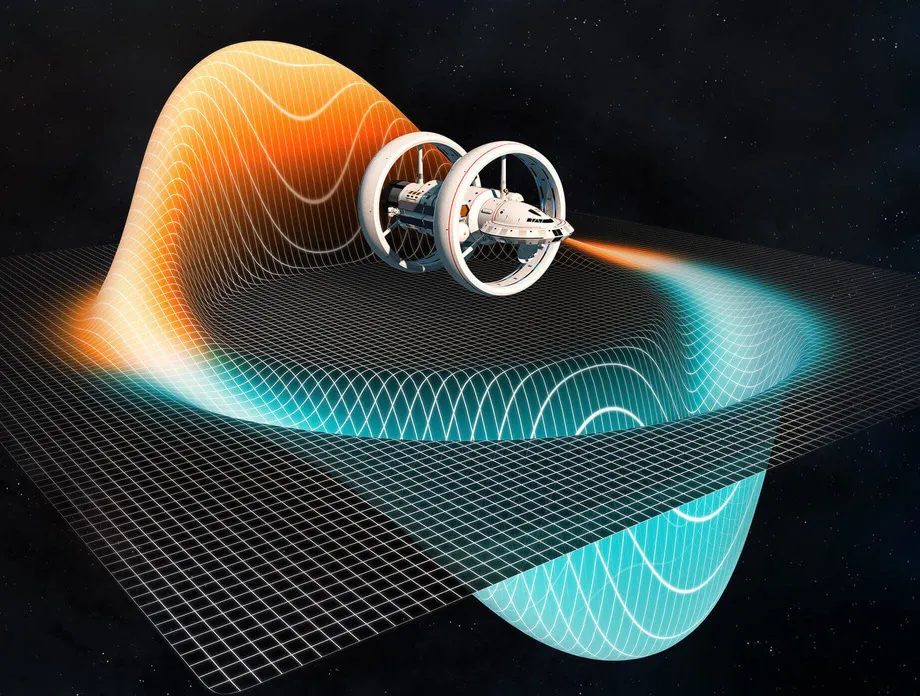
Even the smallest viable warp bubble, roughly 30 feet wide, would demand negative energy surpassing all positive energy in our universe. Yet some scientists argue reshaping the bubble could drastically reduce energy requirements. Still, these modifications only lower it to roughly the energy of a star—better, but still immense.
Professor Tim Dietrich from Potsdam University highlighted another serious issue: causality paradoxes. “Using a warp drive might cause paradoxes once it crosses light speed,” he explained. Essentially, faster-than-light travel could potentially disrupt our understanding of cause and effect.
Despite these significant hurdles, scientists haven’t dismissed warp drives entirely. Professor Geraint Lewis of the University of Sydney thinks we might discover exotic matter within the next century. “We have hints these materials exist in the universe,” Lewis said. “But whether we can build a warp drive, we still don’t know.”
Lewis added optimistically, “Einstein’s theory is a hundred years old, but we’ve only scratched the surface. In the next 100 or 1,000 years, hyper-fast travel might become achievable.”

NASA’s Dr. White supports the idea that initial journeys could combine warp drives with traditional propulsion. Ships could leave Earth with standard rockets, engage warp drives once safely away, and deactivate them close to their destination. A trip to Alpha Centauri could then take months instead of centuries.
Interestingly, even if humans can’t build warp drives yet, detecting aliens using this technology might be possible. Dr. Katy Clough, a cosmologist at Queen Mary University of London, suggests that collapsing warp bubbles would emit detectable gravitational waves. If these exist, Earth-based detectors could potentially spot them.
Dietrich and Clough studied scenarios where the exotic matter’s containment field collapses. “The bubble becomes unstable, collapses, and creates ripples propagating outward,” Dietrich said. Detecting these gravitational waves would mean confirming someone else has already mastered warp travel.
Clough humorously added, “If anyone has a spare billion pounds for a high-frequency gravitational wave detector, please let us know!”
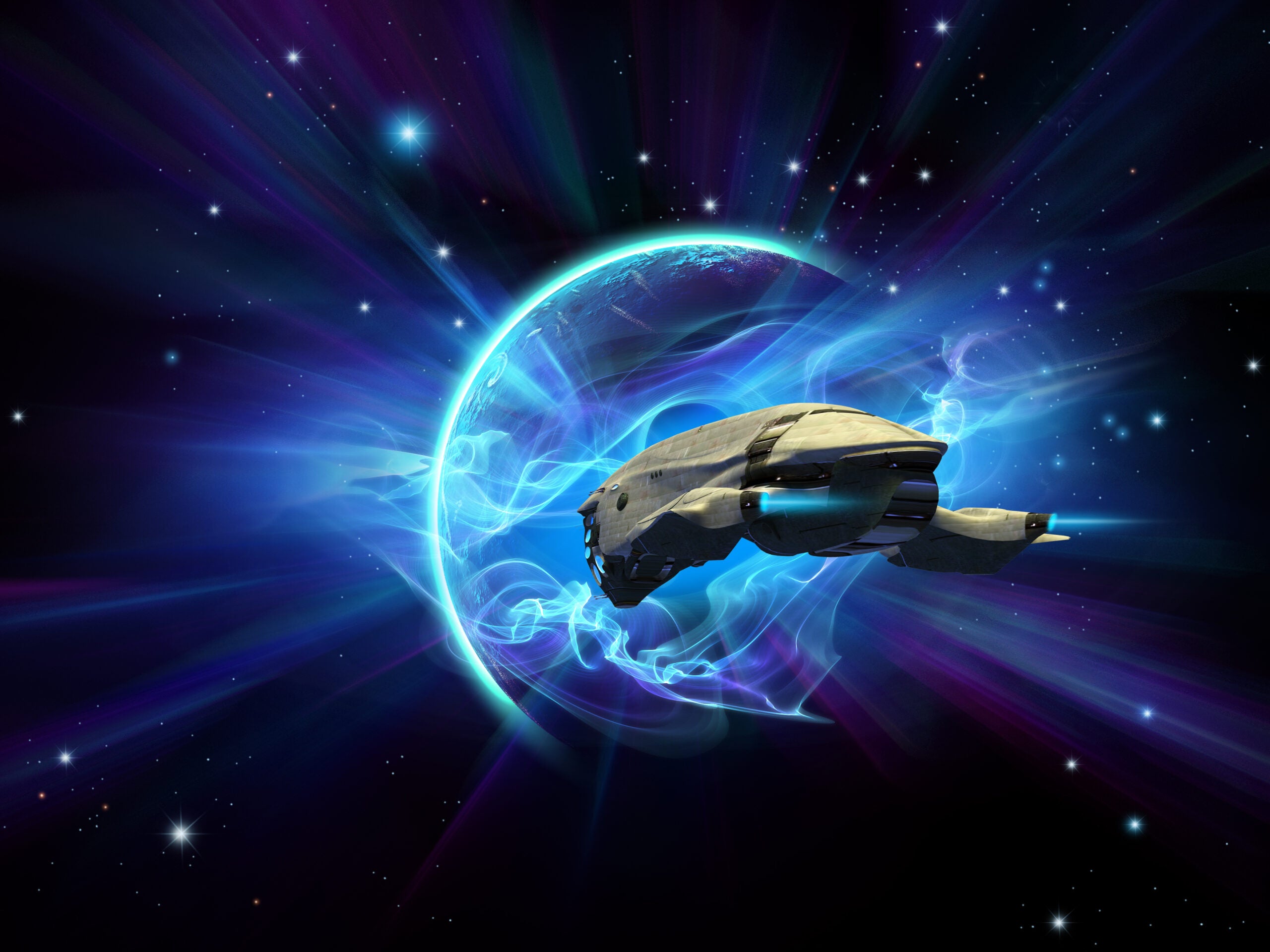
Movies like Star Wars depict warp drives as dazzling bursts of streaking stars. But real warp travel would likely look different. According to Dr. Clough, looking forward would show objects shifted toward blue, while backward views would turn red—effects of warped light wavelengths. Shapes would appear distorted, similar to viewing through curved glass.
Interestingly, research by physics students at the University of Leicester suggests passengers wouldn’t see stars streaking past. Instead, they’d witness a glowing disc due to cosmic background radiation shifting into visible light.
Dr. Clough praised Star Trek Beyond for accurately depicting warp visuals: “The ‘bullet shot’ was loosely based on how light curves around a warp bubble.”

Warp drive remains speculative and distant, yet history teaches us not to dismiss such concepts lightly. Today’s technology—touchscreens, voice assistants, 3D printing—began as improbable ideas from fiction.
Star Trek famously predicted warp travel by 2063. While ambitious, scientists agree breakthroughs might bring us closer faster than we imagine. Continued exploration in physics, quantum mechanics, and engineering could one day make warp drives reality.
Whether humanity ever travels at warp speed remains uncertain. Yet the pursuit itself enriches our understanding of the universe, pushing scientific boundaries. Perhaps someday, space journeys lasting mere moments instead of lifetimes might transition from science fiction into our everyday reality.
Aside from Joseph Agnew’s Alcubierre model theory, here are some other warp drive theories and concepts currently being explored:

Each of these theories faces significant obstacles due to the requirement for exotic matter, negative energy, or extremely advanced technologies that we do not yet possess. However, advances in quantum field theory, energy manipulation, and fundamental physics could potentially make warp drive—or something like it—more feasible in the far future.
Note: Materials provided above by The Brighter Side of News. Content may be edited for style and length.
Like these kind of feel good stories? Get The Brighter Side of News’ newsletter.
The post Real warp drives could exist in the next 100 years, researchers say appeared first on The Brighter Side of News.

