For centuries, people have wondered what separates being awake from being asleep, dreaming, or unconscious. Scientists have searched for clues throughout the brain, hoping to identify the signals that help create conscious experience. Now, researchers at Ludwig Maximilian University of Munich have uncovered a previously unknown brain rhythm that may offer an important piece of the puzzle.
The discovery centers on the thalamus, a small structure buried deep within the brain. Often described as a relay hub, the thalamus helps route information between different brain regions. It also plays a critical role in attention, awareness, and perception. While scientists have long suspected that it helps regulate consciousness, direct evidence has been difficult to obtain.
In a new study, researchers identified a distinctive pattern of activity in the human thalamus that appears only during wakefulness and rapid eye movement, or REM, sleep. The signal disappears completely during non-REM sleep, a state associated with reduced awareness and little conscious experience.
The findings suggest that this newly discovered rhythm could serve as a measurable biological marker of conscious brain states and may eventually help improve treatments for neurological disorders.
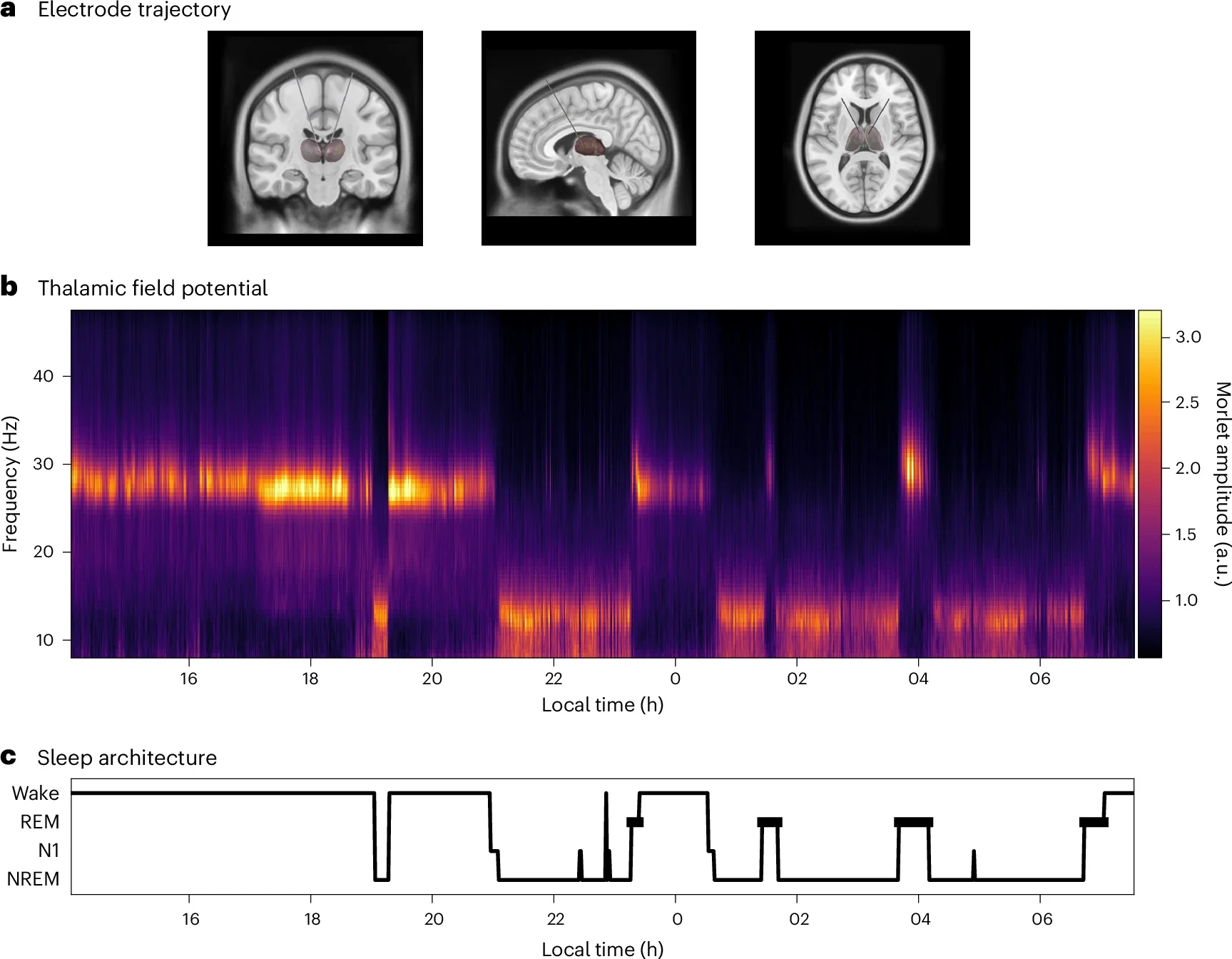
Studying deep brain structures in humans presents a major challenge. Common tools such as electroencephalography, or EEG, primarily capture activity from the brain’s surface. Signals originating deep inside the brain are much harder to detect.
The research team gained a rare opportunity through patients undergoing deep brain stimulation therapy for epilepsy. As part of their treatment, electrodes were implanted into the thalamus to help reduce seizures. These implanted devices allowed scientists to record neural activity directly from the structure itself.
The study involved 17 adults with epilepsy. Researchers continuously monitored electrical activity from both sides of the thalamus, often for more than 40 hours at a time. They combined these recordings with scalp EEG measurements, sleep-stage analysis, eye movement monitoring, and, in some cases, pupil measurements.
Because the team could observe brain activity across wakefulness, REM sleep, and non-REM sleep, they were able to compare how the thalamus behaved during different states of consciousness.
The researchers initially expected to see well-known sleep rhythms. During non-REM sleep, they observed classic sleep spindles, oscillations between 11 and 17 Hertz that have been studied for decades.
But a different pattern emerged at higher frequencies.
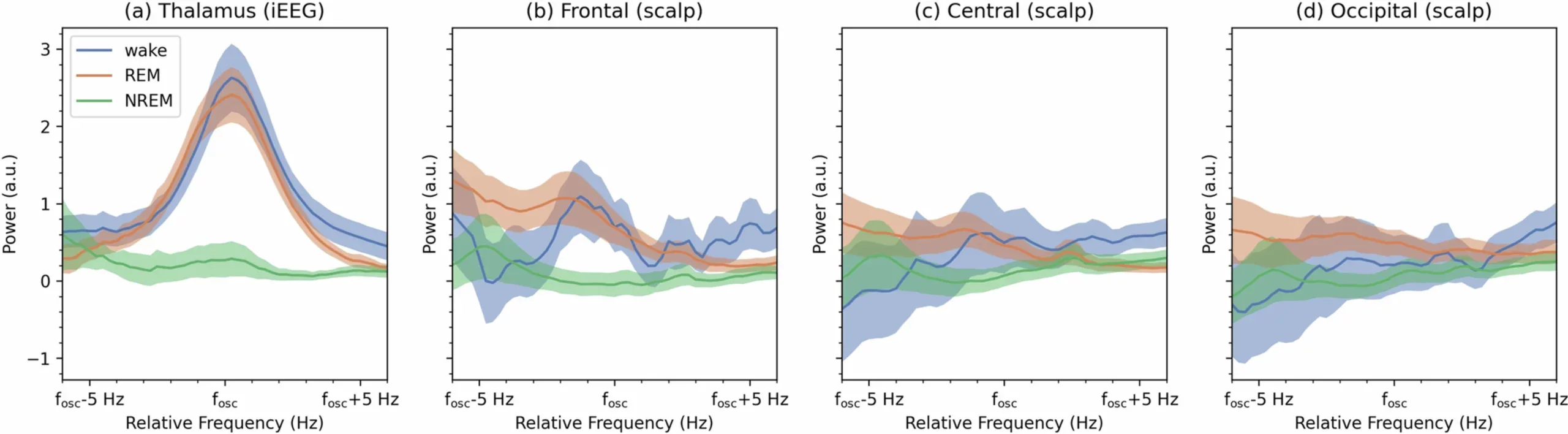
The team identified a previously unknown oscillation between 19 and 45 Hertz. In many recordings, the signal peaked around 28 Hertz. Unlike sleep spindles, this rhythm appeared only when participants were awake or experiencing REM sleep.
It was completely absent during non-REM sleep.
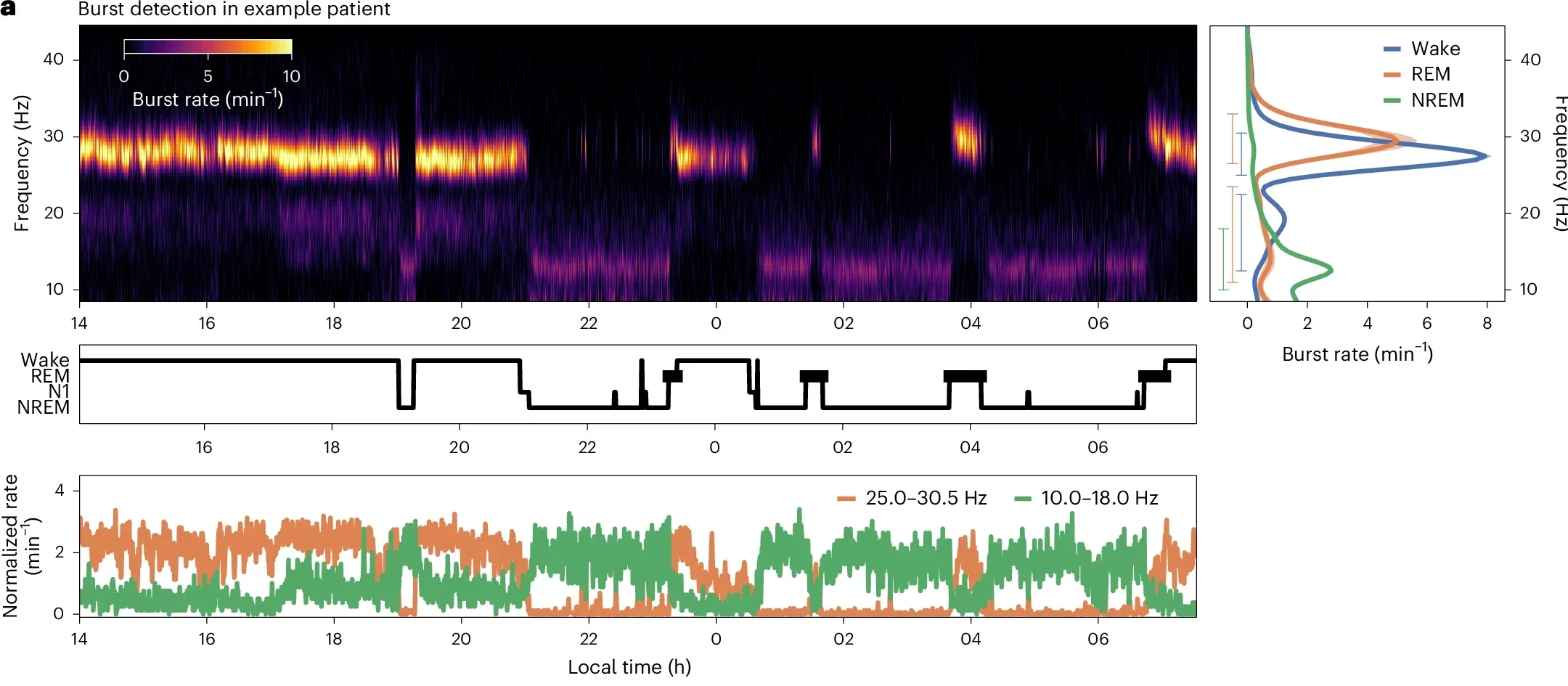
The pattern proved remarkably consistent. Fourteen of the 17 participants displayed the rhythm in at least one thalamic recording site. Across all measurements, the probability of detecting the oscillation was substantially higher during wakefulness and REM sleep than during non-REM sleep.
Statistical analyses confirmed that the difference was highly significant.
To ensure they had found a true rhythm rather than random fluctuations, the researchers examined the power spectra of the recordings. The analysis revealed a clear and repeatable peak during wakefulness and REM sleep. No comparable peak appeared during non-REM sleep.
These findings suggest the oscillation represents a distinct neural signature associated with conscious states.
REM sleep is often called the dreaming stage of sleep because it is associated with vivid and emotionally rich dreams. During this phase, the eyes move rapidly beneath closed eyelids.
Scientists divide REM sleep into two forms. Phasic REM contains bursts of rapid eye movements, while tonic REM contains few or none.
The researchers wondered whether the newly discovered rhythm might be linked to these eye movements.
Their analysis revealed a striking relationship.
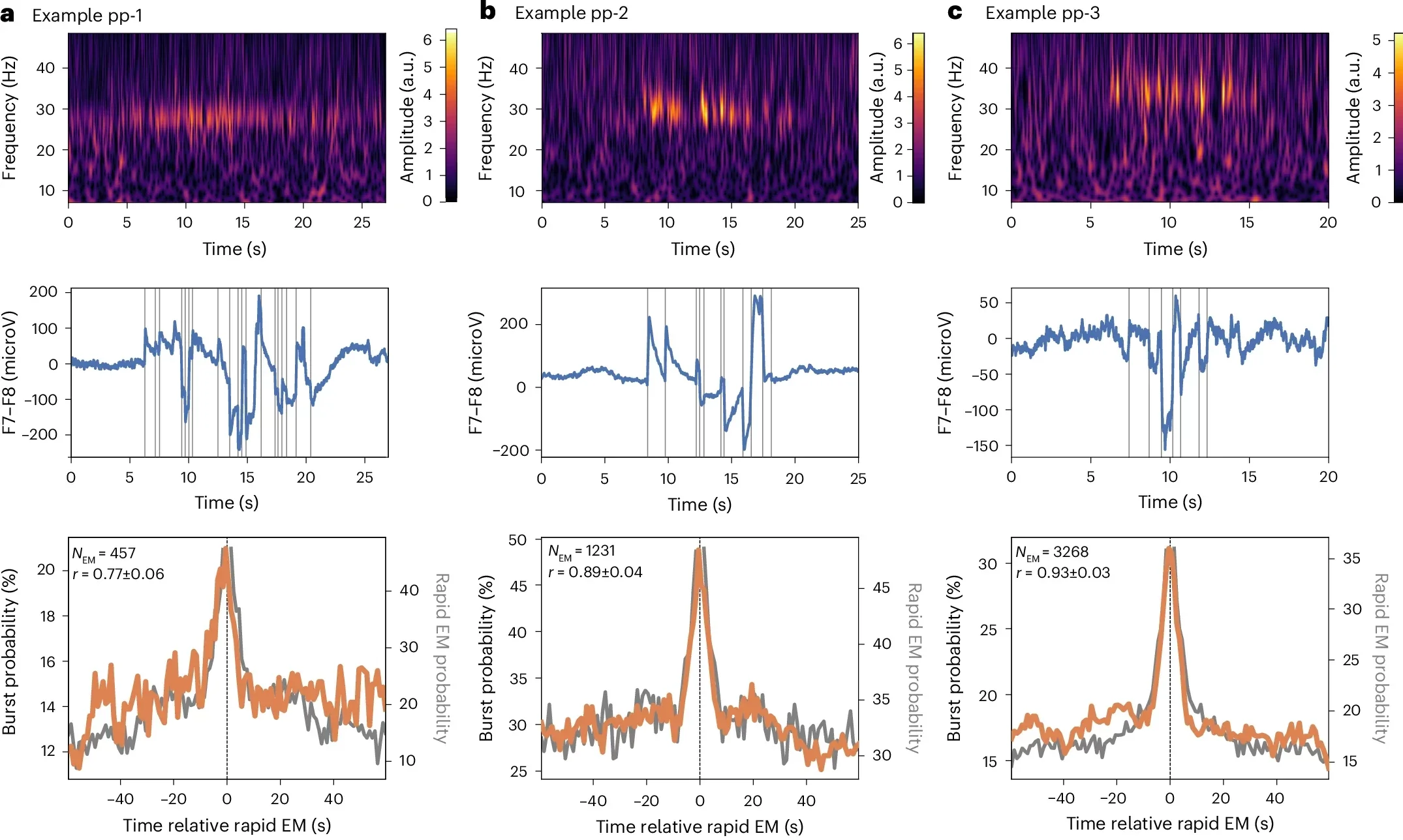
In roughly 92% of the detected oscillatory bands, bursts of thalamic activity closely aligned with rapid eye movements. Across participants, the correlation between eye movement probability and thalamic burst probability reached an average value of 0.94.
When researchers compared REM subtypes, they found significantly higher burst rates during phasic REM than during tonic REM.
This suggests the rhythm does more than distinguish sleep from wakefulness. It also reflects subtle changes within REM sleep itself.
The finding is especially intriguing because phasic REM is often associated with the most vivid dream experiences. The similarity between wakefulness and phasic REM may hint at shared features of conscious processing.
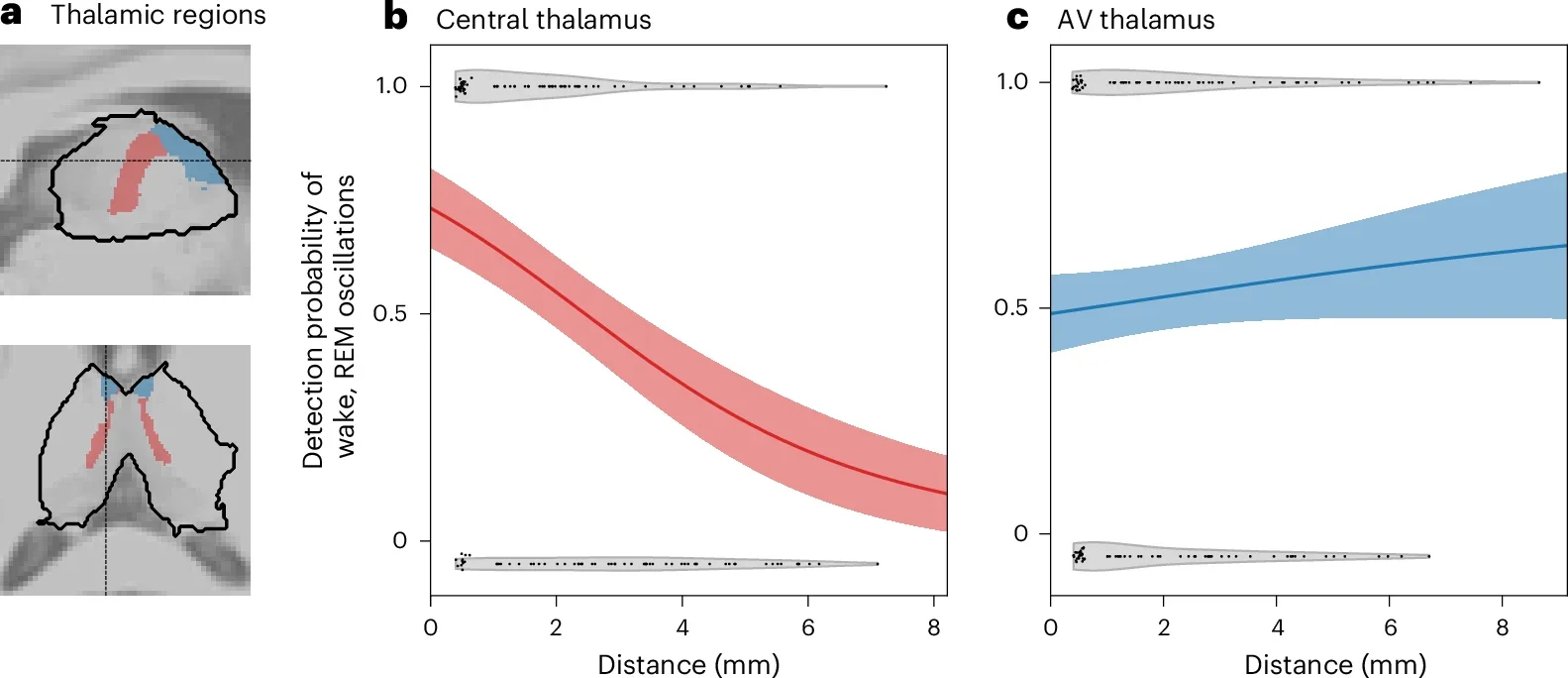
The thalamus contains multiple specialized regions. To pinpoint the source of the oscillation, the researchers analyzed where the signal appeared most often.
Their results pointed toward the central thalamus, an area already known to play a role in arousal and awareness.
The closer an electrode was to the central thalamus, the more likely researchers were to detect the oscillation. By contrast, proximity to another nearby region, the anteroventral nucleus, showed no meaningful relationship.
The pattern strengthened the idea that the central thalamus serves as a key regulator of conscious states.
“Our results show that the central thalamus plays an important role in regulating brain states. In the context of existing research, our results show that this small deep-lying brain structure could actively influence our states of consciousness,” explained Dr. Aditya Chowdhury, lead author of the study.
Consciousness does not arise from a single brain region. Instead, it depends on communication between many areas.
To explore this, the team measured connectivity between the thalamus and the cerebral cortex.
They found significantly stronger synchronization between deep thalamic signals and cortical activity during wakefulness and REM sleep. This increased connectivity disappeared during non-REM sleep.
The result suggests that the newly discovered oscillation may help coordinate communication across widespread brain networks.
Even though the rhythm was difficult to detect directly from scalp recordings, its influence appeared to extend throughout the brain.
The study also explored whether the rhythm tracked changes in arousal during wakefulness.
For two participants, researchers collected pupil diameter measurements. Larger pupils generally indicate higher levels of alertness.
The team found significant correlations between pupil size and thalamic burst activity. As pupil diameter increased, burst rates increased as well.
This observation suggests that the signal may reflect not only broad states such as sleep and wakefulness, but also moment-to-moment variations in alertness.
Professor Tobias Staudigl believes the discovery could have major implications.
“These characteristic rhythm patterns can be reliably attributed to specific states and thus have the potential to serve as a measurable biological signature of states of consciousness,” he said.
The discovery carries important clinical implications.
The central thalamus has long been a target for treatments aimed at restoring consciousness in patients with severe brain injuries. Deep brain stimulation has shown some success in improving arousal, but results have varied.
Researchers now wonder whether effective stimulation may work best when it mimics the brain’s natural rhythms.
If doctors can better understand this newly identified oscillation, they may be able to design more precise therapies for patients with disorders of consciousness and other neurological conditions.
The work has already attracted significant support. Staudigl recently received funding from the European Research Council to further investigate the clinical potential of the discovery.
This study provides one of the clearest examples yet of a specific brain rhythm linked to conscious states. By identifying an oscillation that appears during wakefulness and REM sleep but disappears during non-REM sleep, researchers have uncovered a potential biological marker for awareness.
In the future, this signal could help clinicians assess patients who are unable to communicate due to brain injuries or neurological disorders. Doctors may eventually use such biomarkers to determine whether a patient retains some level of consciousness or to monitor recovery more accurately.
The findings may also improve deep brain stimulation therapies. If scientists learn how to recreate or strengthen these natural thalamic rhythms, they could develop more effective treatments for disorders involving consciousness, attention, or arousal.
Beyond medicine, the discovery deepens our understanding of one of science’s greatest mysteries: how conscious experience emerges from brain activity. It offers researchers a new window into the neural mechanisms that separate waking awareness, dreaming, and unconsciousness.
Research findings are available online in the journal Nature Human Behaviour.
The original story “Researchers may have discovered the key to understanding human consciousness” is published in The Brighter Side of News.
Like these kind of feel good stories? Get The Brighter Side of News’ newsletter.
The post Researchers may have discovered the key to understanding human consciousness appeared first on The Brighter Side of News.

