A pot of gray, lifeless regolith does not look like the start of dinner. Yet in a new experiment, researchers managed to grow chickpeas to the point of seed production in a material designed to mimic lunar soil, a result that hints at how future moon crews might raise some of their own food.
The work, led by researchers from The University of Texas at Austin and Texas A&M University, tested whether chickpeas could survive in simulated lunar regolith mixed with vermicompost, a nutrient-rich material produced by red wiggler earthworms. The team also added arbuscular mycorrhizal fungi, which form symbiotic relationships with plant roots and can help plants handle stress.
The result was a first for this crop in this kind of growing medium. Chickpeas grown in mixtures containing as much as 75 percent simulated lunar regolith produced harvestable seeds. Plants grown in pure regolith did not make it that far, though the fungi helped them live about two weeks longer than untreated plants.
Lunar regolith, often called moon dirt, is not soil in the way farmers use the word. It has no organic matter, no living microbiome and poor structure for holding water and air. It also contains minerals plants need, including phosphorus, potassium, calcium, magnesium and iron, but many of those nutrients are locked up in forms plants cannot easily use.
Some of the same material can also create problems. The researchers noted that metals such as iron, aluminum, zinc and copper can become toxic to plants over time. Nitrogen, another key nutrient, is scarce.
That left the team with a practical question: could they begin turning regolith into something more like a working plant substrate?
“The research is about understanding the viability of growing crops on the moon,” said Sara Santos, principal investigator of the project and a distinguished postdoctoral fellow at the University of Texas Institute for Geophysics at the Jackson School of Geosciences. “How do we transform this regolith into soil? What kinds of natural mechanisms can cause this conversion?”
To test that, the researchers used a lunar regolith simulant from Exolith Labs. They mixed it with vermicompost in different proportions, then planted chickpeas either with or without fungal inoculation.
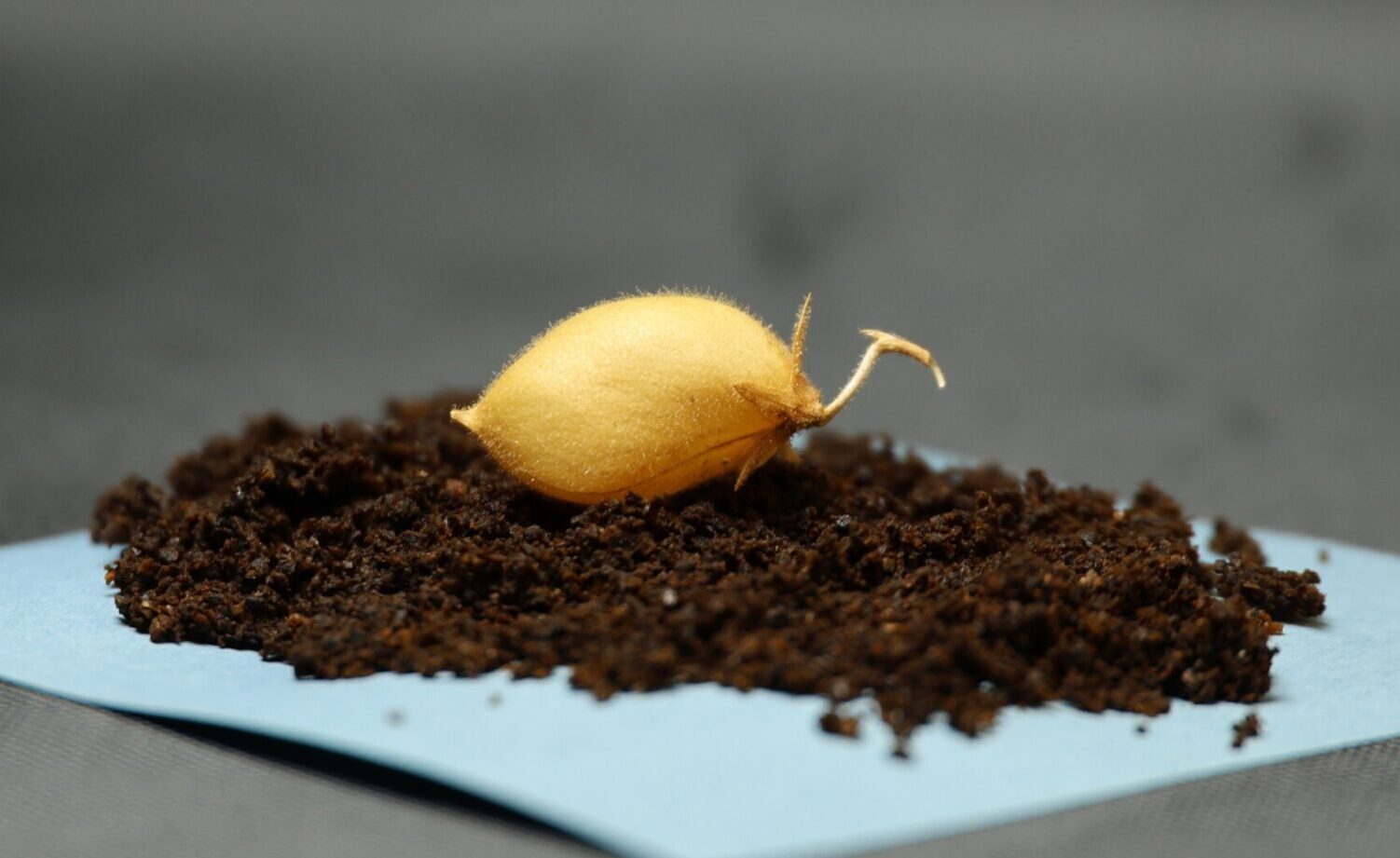
Chickpeas were not chosen at random. The legume is rich in protein, carbohydrates, iron, phosphorus, calcium and vitamin B, according to the paper, and it does not require large amounts of water or nitrogen. It can also host the fungi used in the experiment.
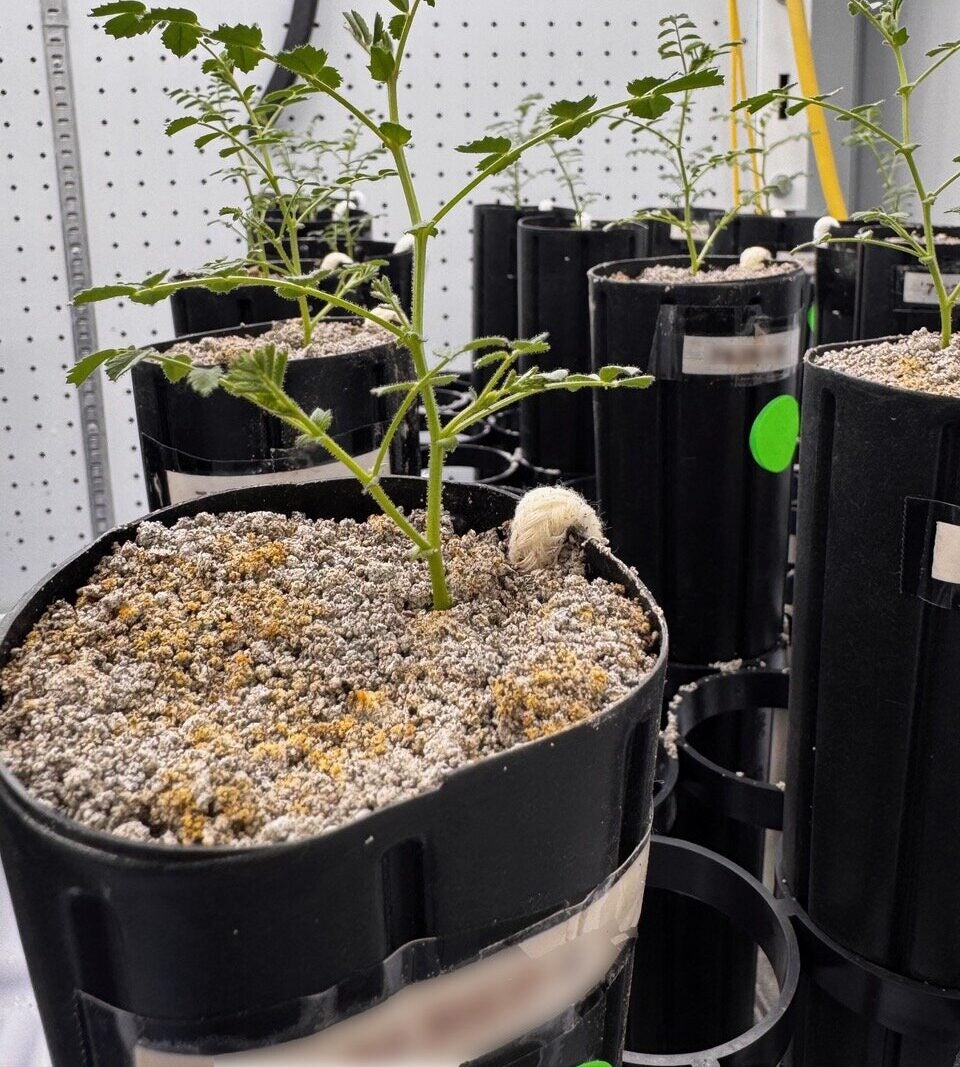
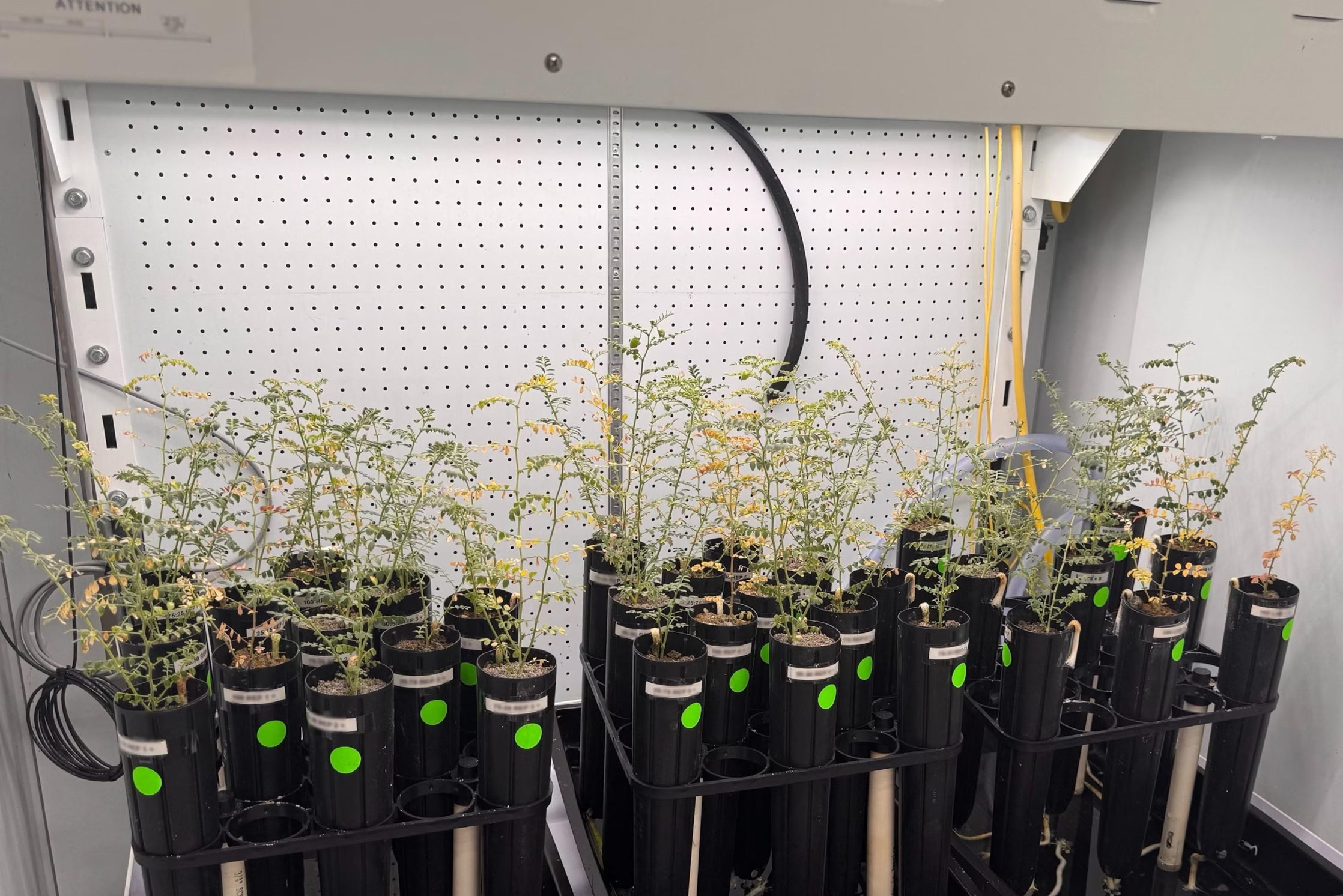
That fungal partner mattered. Early on, seeds germinated well across all treatments, even in 100 percent simulated regolith. But as the plants grew, trouble emerged. Between days 28 and 56, plants in higher-regolith mixes showed stunted growth, yellowing leaves, reduced branching and smaller leaf area.
By day 56, inoculated plants looked healthier than untreated ones, especially in the most extreme condition. In pure regolith, all plants died before the experiment ended, but those treated with fungi senesced later. Untreated plants began dying back around day 61, while treated plants held on until day 75.
Only the fungus-treated plants in the 25 percent, 50 percent and 75 percent regolith mixtures produced flowers and seeds. They matured more slowly than plants in the control potting mix, reaching full maturity in about 120 days instead of 100.
The harvests were smaller as the amount of simulated regolith rose. But there was one encouraging detail: when seeds did form, their weight was mostly comparable to seeds grown in the control mix.
Jessica Atkin, first author of the paper and a doctoral candidate in the Department of Soil and Crop Sciences at Texas A&M University, said that was only part of the picture.
“We want to understand their feasibility as a food source,” Atkin said. “How healthy are they? Do they have the nutrients astronauts need? If they aren’t safe to eat, how many generations until they are?”
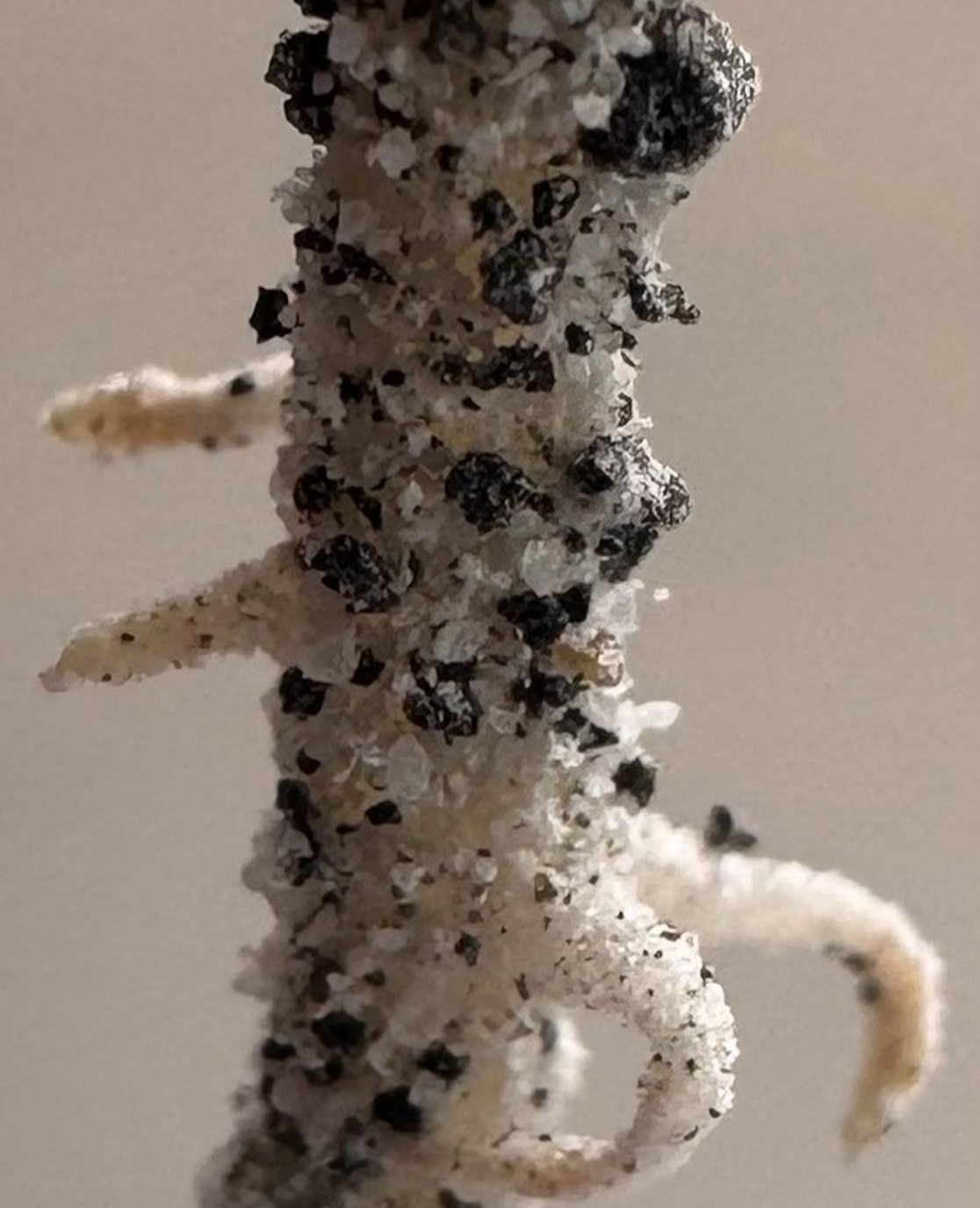
The fungi did more than help the plants survive. The team found that the organisms successfully colonized all inoculated treatments, including 100 percent simulated regolith. They also improved aggregate stability, a measure tied to soil structure. That matters because one of lunar regolith’s biggest weaknesses is its poor physical makeup, which limits water movement, nutrient mobility and stability around roots.
Vermicompost also changed the chemistry of the growth medium. Pure simulated regolith started out strongly alkaline, with a pH of 9.9. Mixed treatments fell into a slightly acidic range closer to what many plants prefer. After harvest, those values shifted, but fungus-inoculated mixtures stayed within a narrower band.
Even so, the study leaves major questions unanswered. The researchers have not yet determined whether the harvested chickpeas are safe to eat, how much metal ended up in the seeds, or whether the crop fully meets astronauts’ nutritional needs. All plants in regolith mixtures showed stress, including stunting and chlorophyll deficiency. The experiment also used simulated lunar material, not actual moon regolith, and was carried out under Earth conditions.
The researchers say future work should examine metal content, microbial communities and whether repeated generations of planting could further improve the substrate.
The study suggests that future lunar agriculture may depend less on planting directly in raw moon dirt and more on gradually conditioning it with biology.
By combining regolith with recycled organic waste and helpful fungi, astronauts might someday produce part of their food supply on the moon while also recycling mission waste into a growing medium.
For now, the result is best seen as an early proof of concept, not a ready-made lunar farm.
Research findings are available online in the journal Scientific Reports.
The original story “Researchers successfully grow chickpeas in ‘moon dirt’” is published in The Brighter Side of News.
Like these kind of feel good stories? Get The Brighter Side of News’ newsletter.
The post Researchers successfully grow chickpeas in ‘moon dirt’ appeared first on The Brighter Side of News.

