Grip strength is something people rarely think about until they experience a decline in it. For older adults, loss of grip strength often signifies the beginning of an overall physical decline that is associated with increased risk of falling, loss of independence, and a condition called sarcopenia, which is the loss of muscle mass and strength that occurs with aging. For many years, scientists have explored multiple ways to slow down the process of declining muscle strength.
Now, researchers have published a study indicating that the intestinal microbiome may play a role in greater muscle strength.
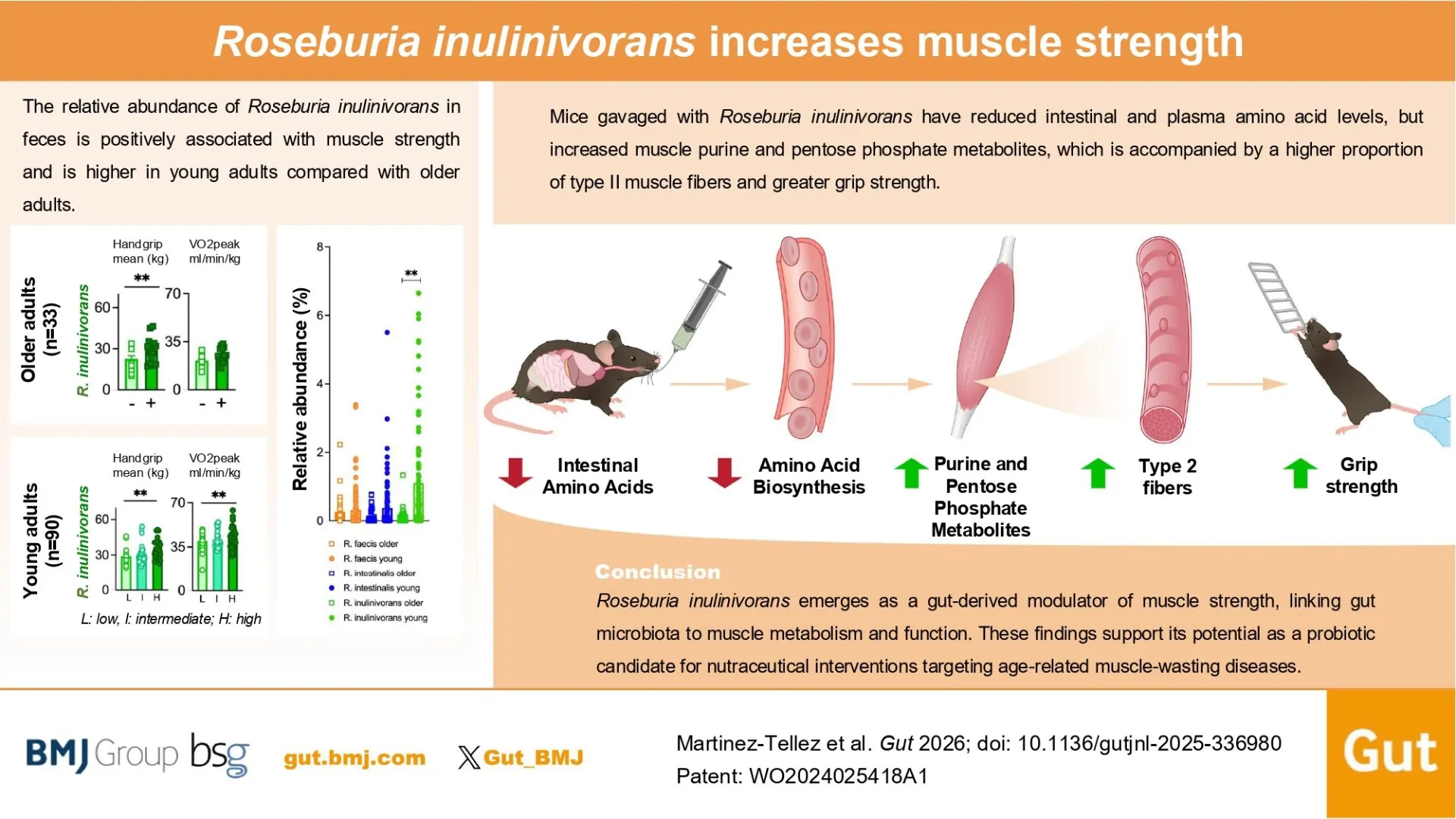
Researchers at the University of Almería, the University of Granada, and the Leiden University Medical Centre in the Netherlands have found that a species of intestinal bacteria known as Roseburia inulinivorans is associated with increased muscle strength in young adults and older adults. It appears that, compared to younger adults, the population of this bacterium in older adults is lower. Research using experimental models in mice suggests that it directly increases grip strength and changes the physical structure of muscle cells.
The information from the study was published in the journal Gut and adds a new species to the list of potential gut microbiome contributors to muscle strength. The findings support the concept of the gut–muscle axis, where gut bacteria communicate with skeletal muscle and affect the way muscles function and deteriorate.

The research team evaluated stool specimens collected from 90 healthy young adults aged 18–25 years and 33 older adults aged 65 years or older. Each participant performed a series of physical fitness tests to measure grip strength, leg press strength, bench press strength, and maximum oxygen consumption, which is a measure of cardiorespiratory fitness.
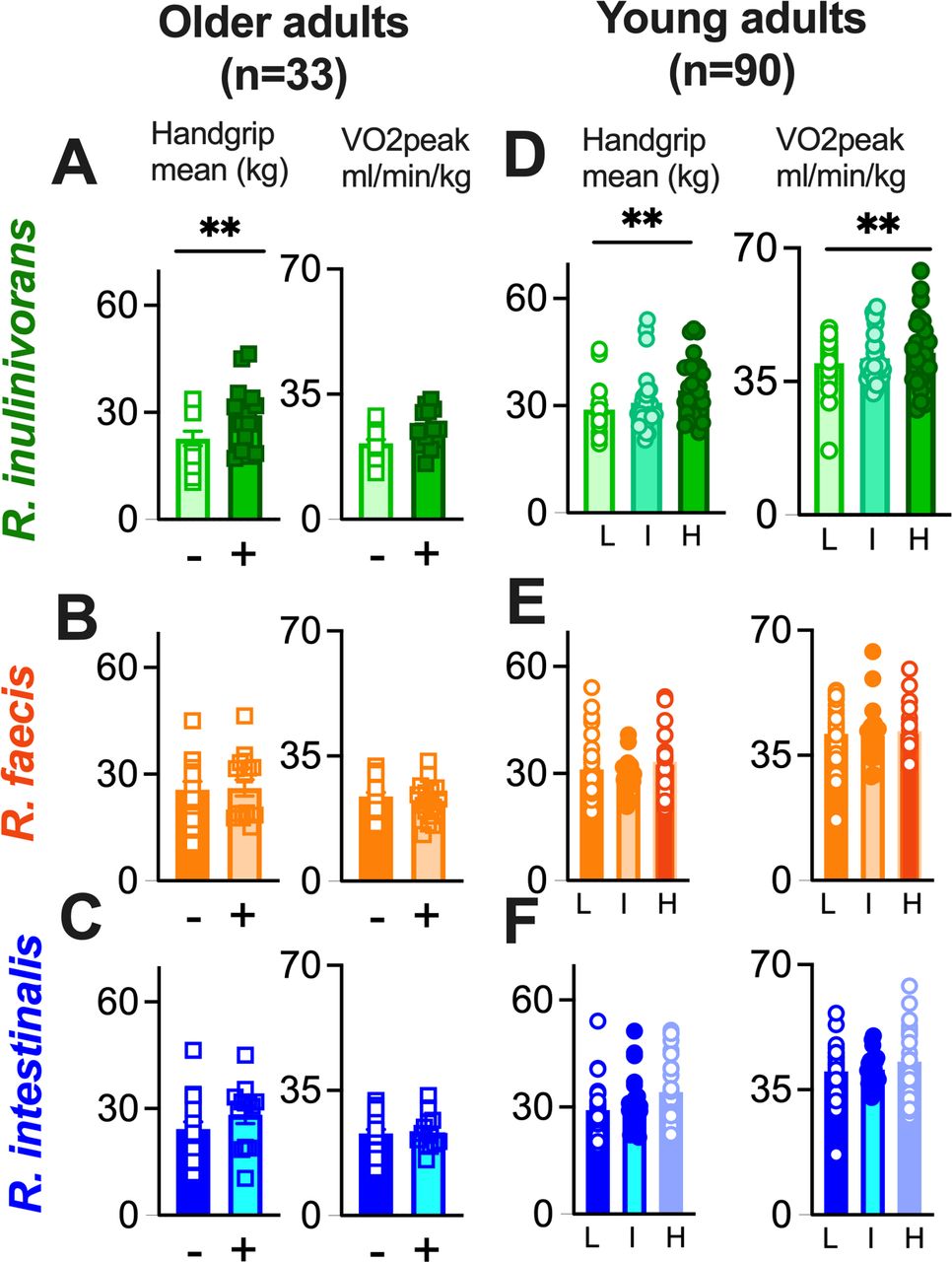
In addition to that, the researchers identified that the genus Roseburia was a prominent bacterium present in both groups. Not all species within a specific taxonomic grouping exhibit identical behaviors. While some species such as Roseburia faecis or Roseburia hominis did not demonstrate any noteworthy connections with the metrics examined, other species such as Roseburia intestinalis correlated positively, to varying degrees, with leg and upper body strength within younger subjects.
The species Roseburia inulinivorans consistently correlated positively with muscle strength among all participants, particularly among those who demonstrated the highest levels of strength within the study sample. Among older adults who were positive for this bacterium, they demonstrated approximately 29 percent greater hand grip strength than those who were negative. Among younger adults, there was a relationship between increased quantities of this bacterium and the ability to display both greater grip strength and increased cardiorespiratory fitness levels.
“When considered collectively, these data provide robust support for a gut-to-muscle axis, whereby this particular bacterium positively influences muscle metabolism and muscle strength,” said Jonatan Ruiz, professor in the Department of Physical Education and Sport at the University of Granada.
The observed relationship between gut bacteria and muscle strength in humans suggests that the gut microbiota may play an important role in regulating muscle function and development. However, the existence of this relationship can only be fully established through experimental methods. The authors of the study therefore designed and carried out a controlled experiment to test the hypothesis that Roseburia species are a causal factor contributing to increased muscle strength.
The experiment utilized an experimental group of 32 male mice. The mice were treated with antibiotics to eliminate their indigenous gut bacteria. They then received weekly doses of selected Roseburia species for eight weeks, while control mice received weekly doses of sterile saline.
Only R. inulinivorans produced statistically significant increases in grip strength in the treated mice when compared to the control mice. The improvement appeared after four weeks and again after eight weeks of administration. Overall, the treatment yielded a 30 percent increase in grip strength.
Despite being closely phylogenetically related, the other Roseburia species tested did not have any effect on muscle strength in the treated mice. Furthermore, the influence of R. inulinivorans on muscle strength was accompanied by changes in the structure of muscle tissue. The mice receiving R. inulinivorans produced larger muscle fibers in the soleus muscle of the calves and showed a higher concentration of fast-twitch type II fibers, which are associated with strength and power output. The control animals and those receiving other bacterial strains did not show this pattern.
None of the Roseburia species colonized the intestines of the mice for any length of time. Additionally, the human strain of bacteria failed to colonize the mouse gut for a significant duration under the experimental conditions.
This finding is important for interpreting the results. The muscle effect appears to relate more to transient microbial signaling or microbial metabolites than to stable colonization of the gut by Roseburia species.
In support of these findings, researchers found that R. inulinivorans treatment led to increased activity in the purine and pentose phosphate pathways. These metabolic pathways are essential for energy production, repairing cells, and synthesizing nucleotides.
Similarly, young adults who possessed higher concentrations of R. inulinivorans in their gut microbiomes exhibited similar pathway patterns. Borja Martínez Téllez, from the University of Almería, suggested that this could indicate the potential of the studied bacterium as a probiotic to help maintain muscle strength during the aging process.
The data obtained from the study also indicated an age-related decrease in R. inulinivorans. Within the study’s cohorts, the bacterium was significantly lower in older adults aged 65 or older than in younger adults aged 18–25.
However, another independent analysis of publicly available gut microbiome data from more than 3,500 individuals produced a more nuanced result. The analysis found that the relative abundance of R. inulinivorans was slightly greater in younger adults than in older adults, but the difference did not achieve statistical significance in the broader meta-analysis.
The relationship between the abundance of R. inulinivorans and the incidence of sarcopenia was also highlighted in the analysis. Sarcopenia, the loss of muscle mass and strength, typically progresses rapidly after the age of 60.
It remains unclear whether the decrease in R. inulinivorans contributes to muscle loss or simply reflects broader changes in gut bacterial ecology with advancing age. To clarify the relationship between the gut and muscle, longitudinal studies monitoring individuals over time will be required.
Researchers have also found that in people with sarcopenia, levels of R. inulinivorans are significantly decreased. Reduced levels of the bacterium have also been observed in diseases associated with muscle wasting, such as cachexia in cancer patients.

The gut–microbiome–muscle axis is likely not a one-way pathway. A study cited by the researchers showed that over a six-week study period, strength training increased the abundance of Roseburia by an average of two percent.
The strength training intervention was conducted in sedentary young adults. Even though the overall microbiome composition did not significantly change, Roseburia levels still increased significantly.
If exercise can increase the levels of beneficial bacteria associated with muscle strength, and if these bacteria also help maintain muscle function, the connection appears to form a feedback loop rather than a one-way pathway.
The researchers caution against drawing overly broad conclusions at this stage. Many variables influence how exercise affects the gut microbiome, including changes in temperature, blood flow patterns, and a wide range of metabolic signals. Demonstrating that muscle-derived signals directly influence gut bacteria will require more targeted research.
One of the immediate applications being discussed for this research is probiotic supplementation. If future studies establish that a specific bacterial strain benefits muscle strength in humans, such supplements could represent a new strategy to help prevent or mitigate age-related muscle loss.
This approach may be particularly useful for individuals who cannot perform intensive exercise or who do not consume sufficient dietary protein. Microbiome-based interventions could potentially support muscle maintenance in these populations.
For individuals already suffering from muscle-wasting conditions or sarcopenia, microbiome-based interventions could be used alongside existing treatments. The identification of the mechanisms through which R. inulinivorans operates, including its influence on amino acid metabolism and muscle-related pathways, provides a framework for further research.
The next step for the research team is to conduct human intervention trials. These trials will determine whether the strength benefits observed in mice translate to humans. They will also help establish how much R. inulinivorans is required to produce similar effects and how long supplementation must continue to achieve measurable results.
Research findings are available online in the journal Gut.
The original story “Scientists discover a gut bacteria linked to greater muscle strength in humans” is published in The Brighter Side of News.
Like these kind of feel good stories? Get The Brighter Side of News’ newsletter.
The post Scientists discover a gut bacteria linked to greater muscle strength in humans appeared first on The Brighter Side of News.


Leave a comment
You must be logged in to post a comment.