A simple roll of adhesive tape may seem far removed from advanced technology. Yet researchers at Penn State have uncovered something remarkable hidden in this everyday material. Ordinary pressure-sensitive tape can store memories of past events, retrieve them later and even perform a basic form of mechanical information processing.
The discovery offers a new glimpse into how materials can “remember” physical experiences. It also hints at future devices that could process information without electricity.
“Many materials or systems have a property called return-point memory that allows them to remember a sequence of events,” said Nathan Keim, associate professor of physics at Penn State and leader of the research team. “A common example is a combination lock that must remember the sequence of turns of the dial in order to open.”
Unlike traditional memory systems, however, the tape stores information using only one-directional motion. That unusual behavior surprised the scientists and opened a new area of research into how materials store physical histories.
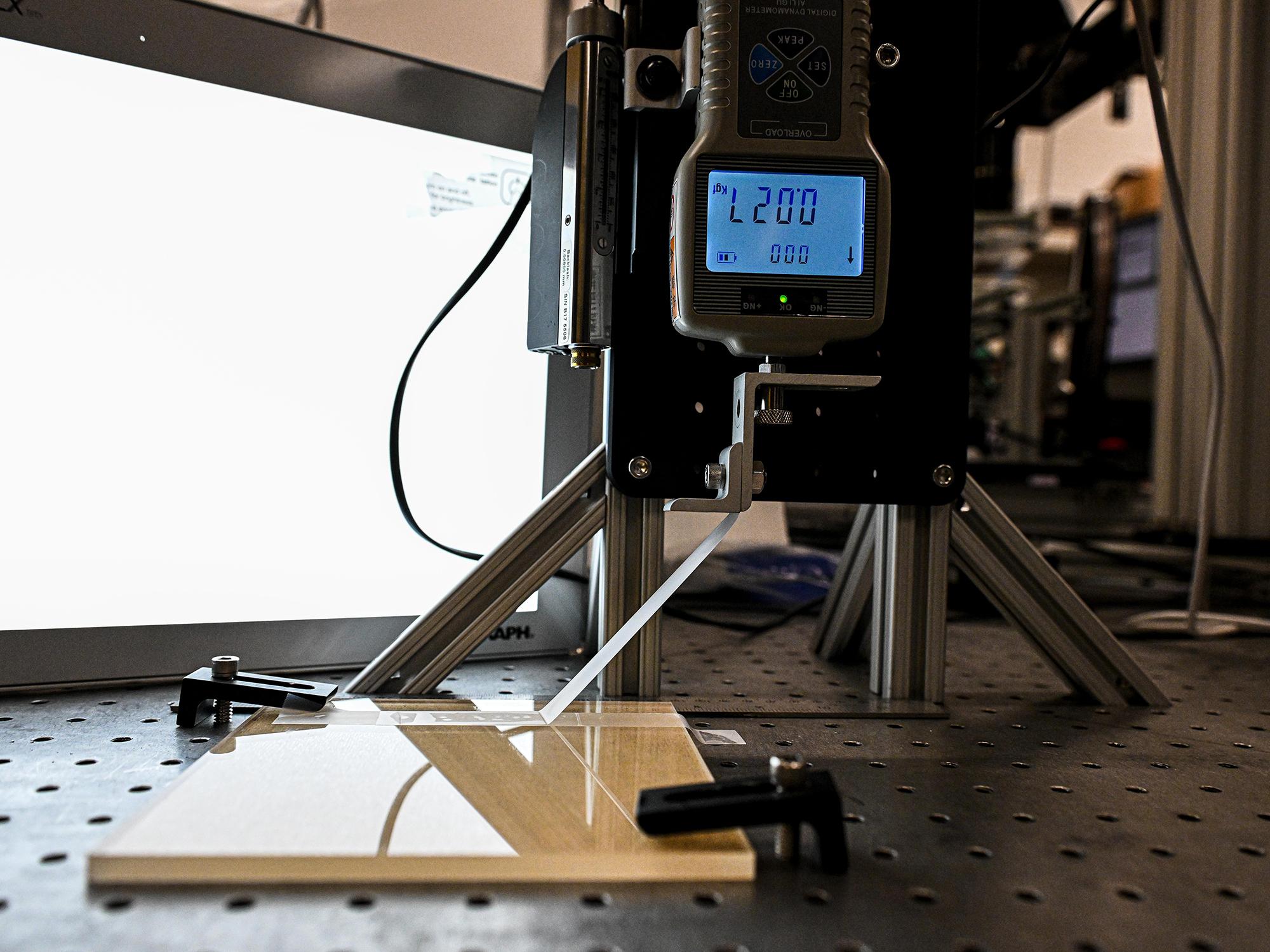
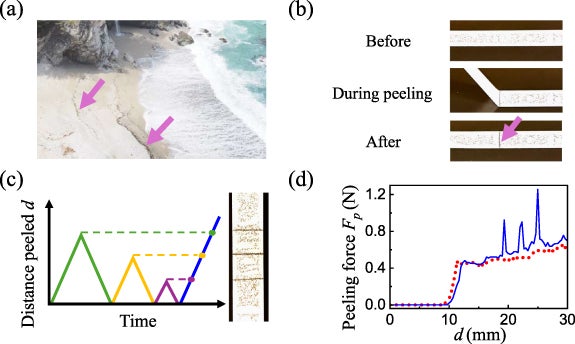
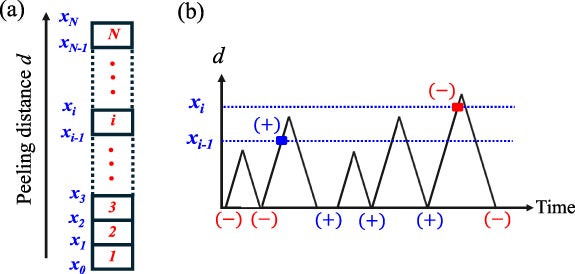
The memory process begins with a simple action. Researchers gently pressed tape onto a surface and peeled it back partway before laying it down again. At the point where the peeling stopped, the tape formed a narrow line of stronger adhesion.
That line became a memory.
The scientists repeated the process several times, each time peeling a shorter distance. Every stopping point left behind another hidden line. These lines stored a sequence of past events inside the tape itself.
To retrieve the memories, researchers peeled the tape again while measuring the force required. As the peeling front crossed each stored line, the force suddenly spiked. Each spike revealed the location of a previous stopping point.
“Ordinary tape is pressure sensitive,” said Sebanti Chattopadhyay, postdoctoral scholar in physics and first author of the study. “The harder you press it down, the more firmly it adheres to a surface.”
The team built a special automated device to carry out the experiments. The machine peeled the tape to exact distances and measured force changes with precision. Without the stored memories, peeling force changed smoothly. With memories present, the force spikes clearly marked earlier events.
The effect comes from the unusual physics at the peeling front. When tape peels upward, tension pulls one way while adhesion pulls another. These competing forces create a twisting effect that presses part of the tape harder against the surface.
That pressure strengthens adhesion in a narrow strip. The stronger bond remains even after the tape is laid back down.
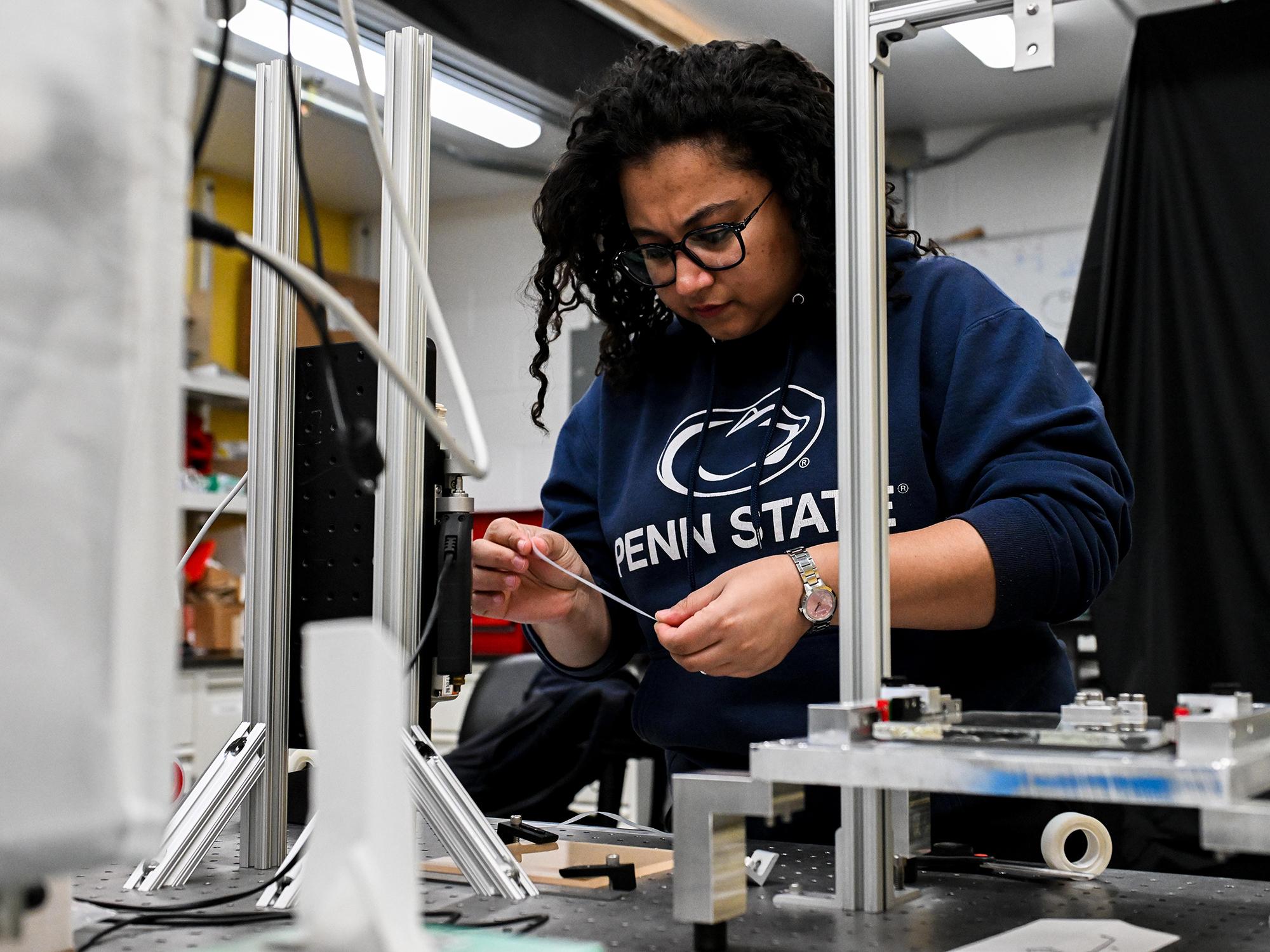
“When we peel and hold the tape before laying it back down, the line of adhesion becomes stronger, allowing us to control the strength of the memories,” Chattopadhyay said.
The researchers discovered they could tune memory strength by changing how long the tape stayed under stress. A longer pause created stronger memories that required more force to erase later.
Some memories even survived multiple readout cycles. Others disappeared immediately after peeling past them.
This ability to strengthen, weaken or erase memories makes the system unusually flexible compared with many other physical memory systems.
The order of stored memories turned out to matter greatly.
If researchers stored memories in decreasing order of peeling distance, the tape preserved them successfully. But storing a larger peeling distance after a smaller one erased earlier memories.
The scientists compared this behavior to strandlines left behind on beaches by retreating waves. Each line marks where water once stopped before reversing direction.
The tape behaves similarly. Every peeling stop leaves behind a physical marker of a past turning point.
But unlike a beach, the tape also follows strict memory rules. A later event can overwrite an earlier one depending on the sequence.
“We were interested if there was a system that could demonstrate this ability to remember a series of events without alternating the input,” Keim said. “With a combination lock, if after the first turn, you return to zero and turn clockwise again, the memory will be lost.”
The tape solved that problem in a surprising way. It allowed several memories to coexist under one-directional motion.
One of the study’s most intriguing findings involved mechanical computation.
The last memory written into the tape always becomes the first one encountered during peeling. That means the tape naturally compares the newest event with the previous one.
“This fact allows a simple type of mechanical computation,” Keim said. “It’s similar to a test used for working memory in neuroscience, called a one-back comparison.”
In neuroscience, a one-back task asks a person to compare each new stimulus with the one that came immediately before it. The tape system performs a similar operation physically.
If the newest peeling distance exceeds the previous one, the tape produces a force spike. If it does not, the force changes smoothly.
In effect, the tape makes a simple decision based on stored information.
The researchers say this does not mean adhesive tape will replace computers. Still, the experiments show that ordinary materials can perform surprisingly sophisticated tasks.
Scientists have long studied return-point memory in magnets, shape-memory alloys and other systems. Those systems usually require back-and-forth motion to store information.
The tape works differently because peeling only moves in one direction. Researchers describe this as “rectified driving.”
Despite that limitation, the tape still stores multiple nested memories. It can also erase and rewrite them quickly.
The team proposed a simple explanation using “bits” along the tape’s length. Each small section can switch between weak and strong adhesion states depending on peeling distance. Together, these sections create a larger memory system.
The longer the tape, the more information it can potentially store.
Researchers also found that different surfaces changed memory behavior. On smooth acrylic surfaces, memories became stronger and lasted longer than on standard tape backing.
Different tape types also behaved differently. Some lost memories quickly, while others retained them across several cycles.
The researchers believe their work could eventually inspire new forms of mechanical devices that process information without electronics.
“There has long been an interest in developing devices that don’t need electricity and don’t have the same vulnerabilities as electronic computers,” Keim said.
Mechanical systems may prove useful in harsh environments where electronics fail, such as extreme temperatures or strong radiation.
The team emphasized that adhesive tape itself will probably not become a computing platform. Instead, the study helps scientists understand the deeper physics behind how materials store histories and process information.
“As this understanding grows, we may find ways to use it that we can’t yet imagine,” Keim said.
The work also opens new questions. Scientists still want to understand how overlapping memory lines interact and why some memories persist longer than others.
For now, one thing is clear. Even an ordinary roll of tape can quietly hold a record of where it has been.
This discovery could help scientists design new mechanical memory systems that work without electricity. Such systems may operate in environments where electronic devices struggle, including extreme heat, radiation or remote locations.
The research also deepens scientific understanding of how materials store physical histories. That knowledge could influence future work in engineering, robotics and smart materials. Researchers may eventually create surfaces or structures that record stress, damage or repeated motion automatically.
The findings could also inspire safer infrastructure materials. Bridges, aircraft components or industrial systems might someday use built-in mechanical memories to track wear over time.
Most importantly, the study reminds researchers that complex behavior can emerge from simple materials. By studying ordinary objects closely, scientists may uncover new physical principles that shape future technologies.
Research findings are available online in the New Journal of Physics.
The original story “Scientists discover ordinary tape can store physical memories” is published in The Brighter Side of News.
Like these kind of feel good stories? Get The Brighter Side of News’ newsletter.
The post Scientists discover ordinary tape can store physical memories appeared first on The Brighter Side of News.

