In the arid deserts of Ethiopia, a geological marvel has been quietly unfolding since 2005—a 35-mile-long fissure known as the East African Rift.
Far from being a mere curiosity, this rift holds the potential to drastically alter the geography of our planet, the socio-economic landscape of Africa, and even political boundaries. Remarkably, it could one day lead to the formation of Earth’s sixth ocean.
At the heart of this phenomenon are tectonic plates—massive sections of the Earth’s crust that move atop the semi-fluid mantle beneath. These plates have shaped the planet’s surface over millions of years, driving the formation and breakup of continents.
What makes the East African Rift particularly significant is its scale and implications. The Somalian tectonic plate is gradually pulling away from the Nubian tectonic plate, echoing the dramatic separation of South America and Africa that began hundreds of millions of years ago.
This gradual shift is well-documented. A study published in Earth and Planetary Science Letters delves into the dynamics of this tectonic separation, revealing that the plates are moving apart at a rate of just a few millimeters per year. While slow, this process is undeniably transformative.

The implications for Africa are profound. Over time, the rift could result in the creation of a vast new ocean, flooding the Afar region and the East African Rift Valley with water from the Red Sea and Gulf of Aden.
Ken Macdonald, a marine geophysicist and professor emeritus at the University of California, underscores the scale of this transformation: “The Gulf of Aden and the Red Sea will flood over the Afar region and into the East African Rift Valley, giving rise to a new ocean. Consequently, this part of East Africa will evolve into its own distinct continent.”
Beyond its geological impact, this process could reshape the socio-economic fabric of the region. For landlocked nations like Ethiopia and Uganda, the emergence of coastlines would open up unprecedented opportunities for trade and economic growth, transforming them into key players in global commerce.
The creation of new ports and trade routes could drive regional development, bringing wealth and infrastructure to areas that have long faced economic challenges.
Related Stories
While this transformation is unlikely to happen in our lifetimes—geological processes operate on timescales far beyond human generations—it highlights the dynamic nature of our planet and its constant evolution. The East African Rift is more than a crack in the desert; it is a glimpse into the Earth’s tectonic future and a reminder of the profound forces shaping our world.
This isn’t just a geographic shift; it’s a transformation that will profoundly alter the region’s ecology. Areas that are now arid and desolate could one day teem with marine life as the new ocean forms. Human settlements will have to adapt to these changes, facing both challenges and opportunities as new coastlines develop.
However, it’s important to keep in mind that this transformation won’t happen overnight. The complete separation of the African continent and the creation of a new ocean will likely take another 5 to 10 million years.
This timeline serves as a reminder that nature operates on a scale far beyond our lifetimes. While we may not witness the final stages of this transformation, it’s a powerful example of how dynamic our planet truly is.
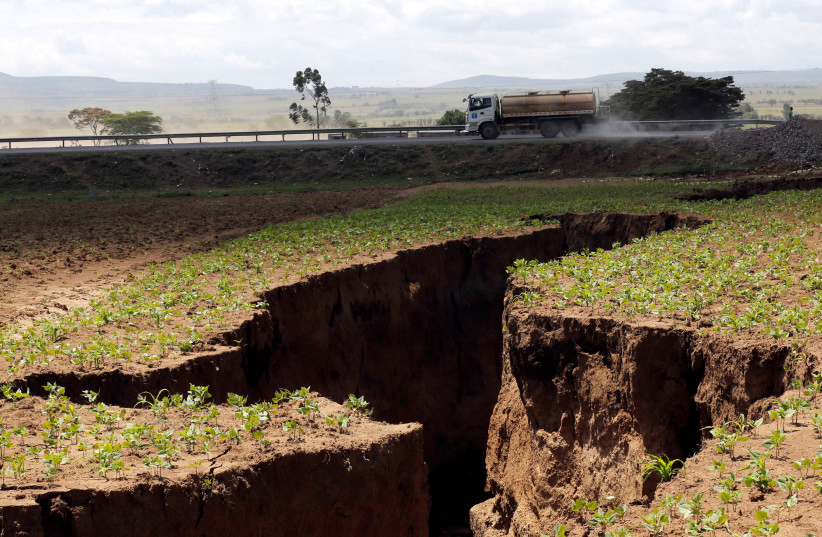
This ongoing shift is a reminder that Earth’s surface, though it may seem solid and unchanging, is in a constant state of flux. The birth of a new ocean and the reshaping of a continent are just parts of Earth’s ever-evolving story—a story that we, as inhabitants of this planet, are fortunate enough to observe and study.
The world’s oceans play a critical role in shaping Earth’s climate, biodiversity, and geological features. Covering about 71% of the Earth’s surface, they are divided into five major oceans: the Pacific, Atlantic, Indian, Southern, and Arctic. Here’s an overview of each ocean along with insights into when they formed in Earth’s planetary evolution.
The Earth’s oceans began forming over 4 billion years ago, shortly after the planet’s formation. Water vapor released from volcanic activity condensed to form the early oceans as the planet cooled. Most of the water may have originated from comet impacts and volcanic outgassing. Oceans played a crucial role in creating a stable climate and facilitating the development of early life around 3.8 billion years ago.
The formation of the modern oceans we know today was driven by tectonic processes over hundreds of millions of years, primarily as a result of the shifting and breakup of supercontinents like Rodinia, Pangaea, and Gondwana. These oceans continue to evolve as tectonic plates move, reshaping Earth’s surface.
Note: Materials provided above by The Brighter Side of News. Content may be edited for style and length.
Like these kind of feel good stories? Get The Brighter Side of News’ newsletter.
The post Scientists discover the formation of Earth’s sixth ocean appeared first on The Brighter Side of News.

