When René Descartes watched a mechanical figure move with lifelike precision in the 17th century, the scene unsettled him. The machine behaved like a person, yet no one believed it could feel. That tension remains today. As artificial intelligence systems write fluent text and solve complex problems, the same question returns in modern form. What separates lived experience from advanced computation?
That question sits at the center of a new study led by researchers from major universities working at the intersection of neuroscience, philosophy, and theoretical biology. Writing in a peer-reviewed journal, the team argues that the long-running debate over artificial consciousness misses a key point. The problem, they say, is not whether machines can perform intelligent tasks. The problem is that scientists still misunderstand how biological brains compute in the first place.
You are entering this debate at a moment of deep uncertainty. A recent review of 22 major theories of consciousness found almost no agreement on what subjective experience requires. Without shared criteria, claims about machine consciousness remain speculative. As artificial systems grow more capable, that lack of clarity shapes both public discussion and scientific disagreement.
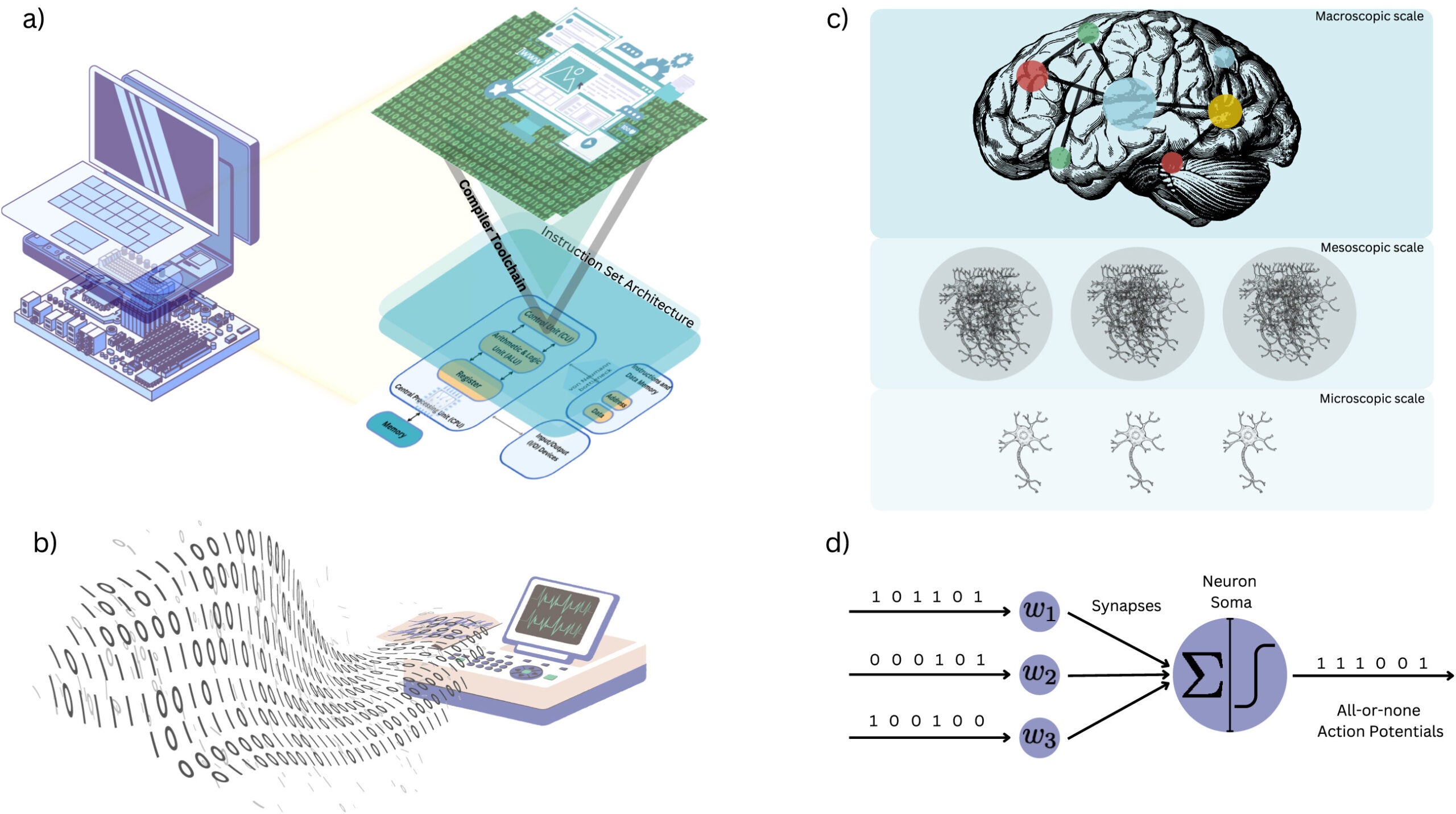
Most arguments about artificial consciousness fall into two camps. One is computational functionalism. This view holds that consciousness arises from the right kind of information processing. Under this idea, the physical material does not matter. Neurons, silicon, or any other medium could, in principle, produce experience if organized correctly.
The second camp is biological naturalism. This view argues that consciousness depends on the specific biological processes of the brain. Neurons, metabolism, and physical structure are not optional details. They are central to how experience exists. From this perspective, consciousness cannot be separated from living tissue.
The new paper challenges both positions. The authors argue that functionalism underestimates the role of physical dynamics. Biological naturalism, they say, often stops short of explaining what makes biological computation distinctive. To move forward, they propose a third framework they call biological computationalism.
The researchers begin with a basic claim. Brains do not compute like digital machines. Biological computation unfolds across multiple scales at once. Molecular activity, synaptic signaling, cellular behavior, and large-scale network dynamics all interact continuously. No single level can be isolated as the source of conscious processing.
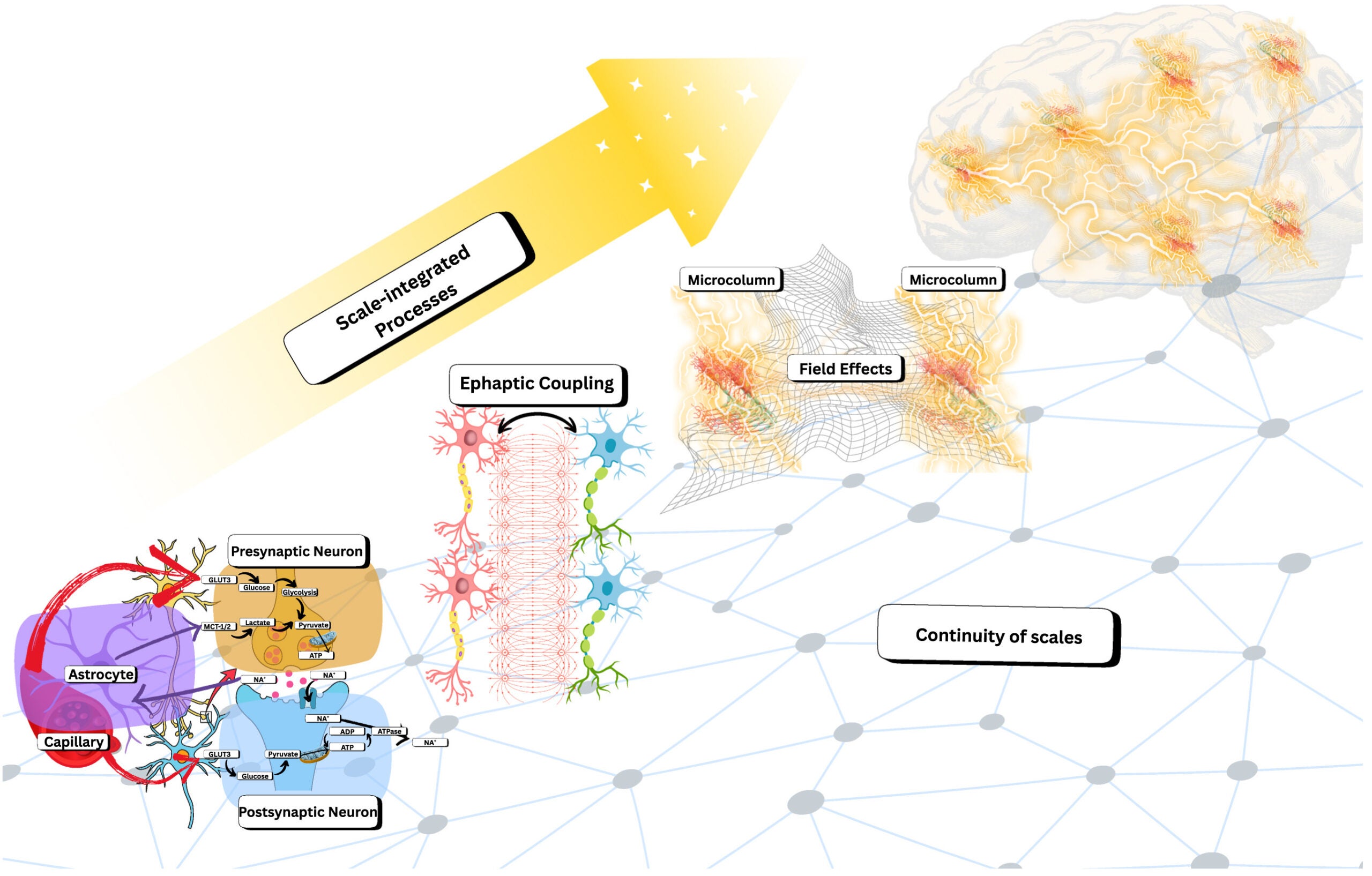
This tight coupling matters. Studies show that strong coordination across scales increases during wakeful states and weakens under anesthesia. Consciousness appears when the system behaves as an integrated whole, not when information is processed in isolated layers.
Digital systems work differently. They separate memory, processing, and control. Information moves through clean modules. In brains, that separation does not exist. Changing activity at one scale alters the entire computation.
Metabolism plays a central role in this structure. The human brain represents only about two percent of body mass, yet it consumes roughly 20 percent of the body’s energy. That constraint shaped brain evolution.
Neurons constantly adjust their behavior to conserve energy. Many rely on graded electrical signals rather than all-or-nothing spikes. These continuous signals transmit more information per unit of energy. They allow neurons to adapt in real time without exhausting metabolic resources.
This efficiency is not a side effect. It is a design principle. Energy limits force the brain to reuse signals, compress information, and integrate activity across scales. According to the authors, these constraints help explain why consciousness feels unified rather than fragmented.
Modern artificial intelligence inherits the architecture of digital computers. Data are stored in memory. Algorithms manipulate symbols. Hardware and software remain separate. Even neural networks operate within this framework, despite their biological inspiration.
Brains do not. Biological computation blends discrete events with continuous dynamics. Electrical fields, chemical gradients, and ionic diffusion influence how neurons interact. These processes bind distant regions into shared patterns of activity.
Weak electric fields alone can alter firing thresholds or synchronize neural populations. These interactions do not rely on synapses. They emerge from the physics of brain tissue itself.
At the level of individual neurons, dendrites play a key role. They are not passive cables. Their branching structures perform complex, nonlinear computations. In artificial systems, similar functions require multiple layers of processing.
At larger scales, rhythmic brain activity shapes when signals matter. Oscillations coordinate timing across regions. They act like a grammar for neural communication, defining which signals combine and which are ignored.
New research also points to the role of fluid motion in the brain. Cerebrospinal fluid flows interact with neural rhythms. These dynamics may carry information relevant to cognition.
Taken together, these features point toward a view of consciousness as a multiscale physical phenomenon. Experience emerges from continuous interaction across levels, not from abstract symbol manipulation.
This view helps explain why artificial systems can mimic intelligent behavior without possessing experience. Digital systems process information in steps. Brains operate as unfolding physical processes shaped by energy limits and real-time dynamics.
“Our research team argued that scaling current AI systems would not produce consciousness. Doing so improves performance, not structure. If synthetic consciousness is possible, it will require new forms of hardware,” lead researcher Borjan Milinkovic from the Paris-Saclay Institute of Neuroscience told The Brighter Side of News.
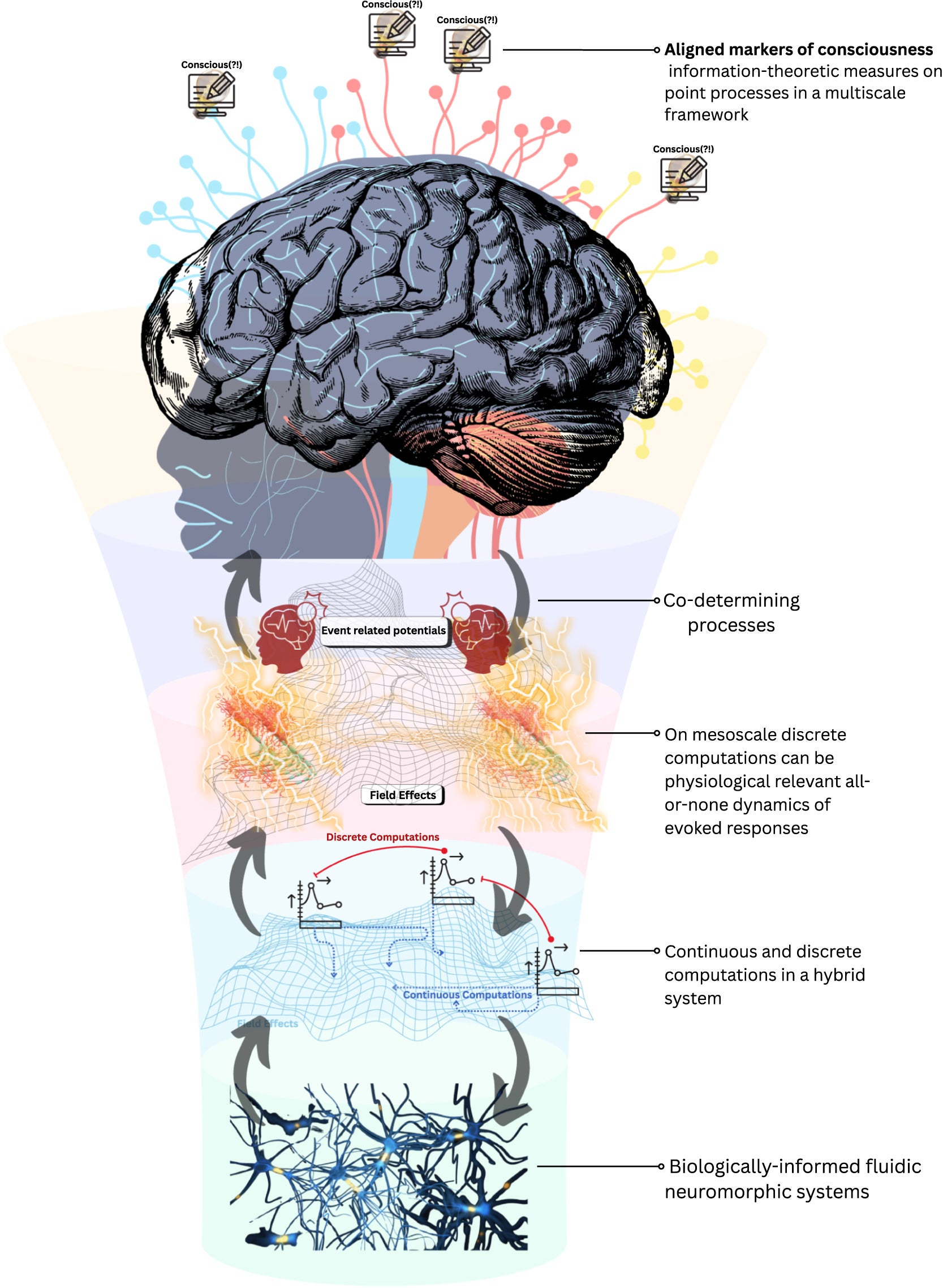
“Early neuromorphic chips attempted to mimic neural behavior physically. More recent work explores ion-based and fluidic devices, where computation arises from diffusion, gradients, and nonlinear transport. These systems remain experimental, but they move closer to biological principles,” he continued.
If new computing substrates emerge, scientists will need better tools to evaluate them. Traditional measures focus on single scales. New multiscale metrics track how information flows between levels and how global patterns constrain local activity.
Such tools may help distinguish genuine conscious-like dynamics from systems that merely imitate intelligent output.
The authors conclude that brains do not run programs. They are programs in motion. In biological systems, the algorithm cannot be separated from the physical process that realizes it.
This does not mean consciousness belongs only to biology. It means that any system capable of experience must share key properties with biological computation. It must be hybrid, scale-inseparable, and energetically grounded.
The challenge ahead is not finding the right code. It is discovering the right kind of computing matter.
Research findings are available online in the journal Neuroscience & Biobehavioral Reviews.
Like these kind of feel good stories? Get The Brighter Side of News’ newsletter.
The post Scientists rethink consciousness in the age of intelligent machines appeared first on The Brighter Side of News.

