A powerful solar storm arrived last May and pushed Earth’s protective systems harder than anything seen in more than twenty years. When waves of charged material erupted from the Sun and slammed into the planet on May 10 and 11, 2024, the impact set off a chain of rapid changes in the space around you. What scientists uncovered from this event offers the clearest picture yet of how an extreme solar storm can squeeze Earth’s plasma layers, distort the upper atmosphere, and disrupt the technology people rely on every day.
The storm, widely called the Gannon or Mother’s Day superstorm, marked the strongest geomagnetic event since the early 2000s. It was driven by a series of massive solar eruptions that hurled billions of tons of particles toward Earth. The force of that energy compressed the region of charged particles surrounding the planet, known as the plasmasphere, to levels never recorded by modern instruments.
One spacecraft happened to orbit in the right place at the perfect moment. The Arase satellite, launched by JAXA in 2016, routinely travels through the plasmasphere measuring plasma waves and magnetic fields. During the peak of the storm, it crossed the region just as Earth’s magnetic shield tightened. This rare alignment gave scientists the first continuous, direct measurements of the plasmasphere collapsing to an extremely low altitude.
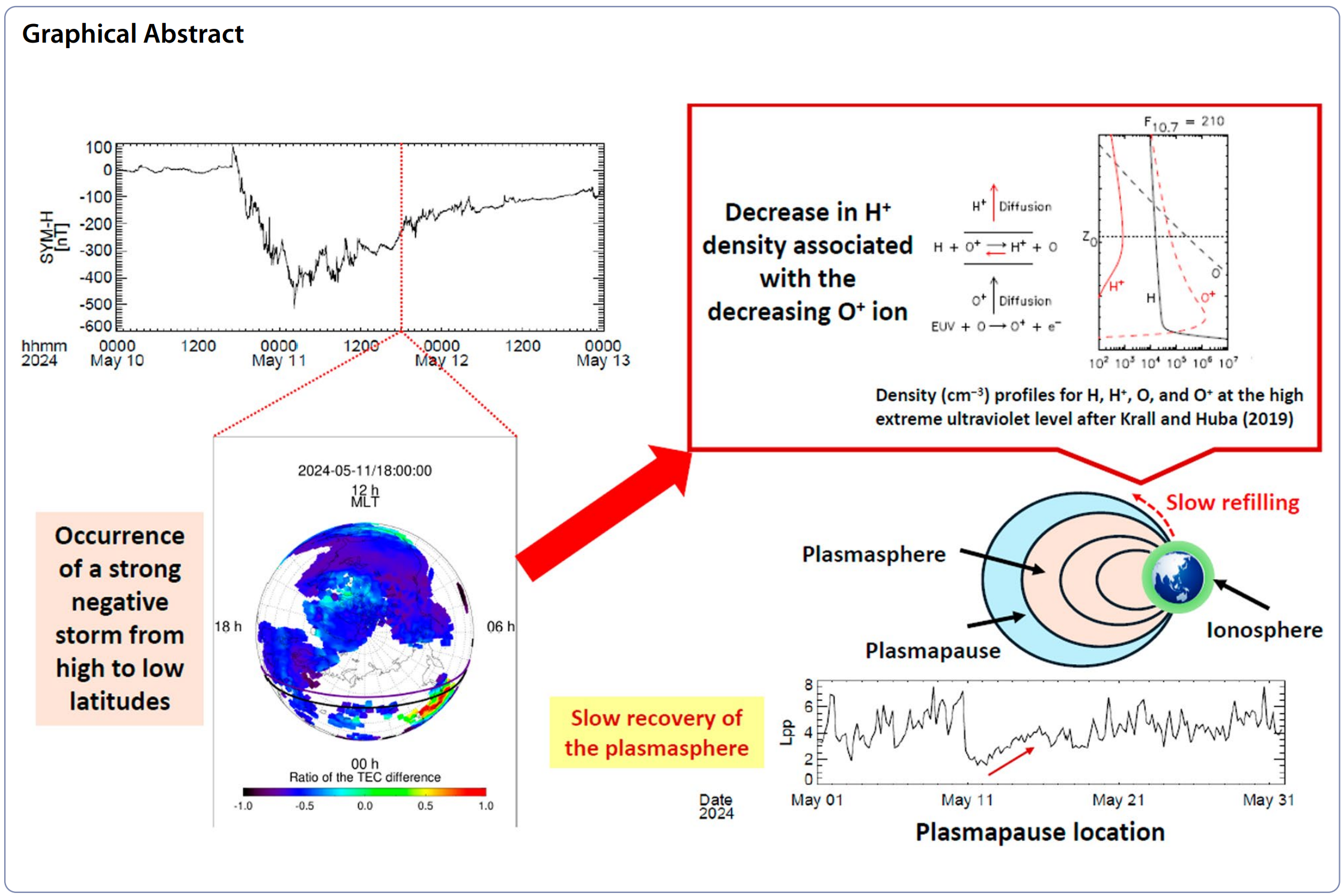
“We tracked changes in the plasmasphere using the Arase satellite and used ground-based GPS receivers to monitor the ionosphere, the source of charged particles that refill the plasmasphere,” said Dr. Atsuki Shinbori of Nagoya University’s Institute for Space-Earth Environmental Research. “Monitoring both layers showed us how dramatically the plasmasphere contracted and why recovery took so long.”
Under normal conditions, the plasmasphere stretches tens of thousands of kilometers above Earth and acts as a buffer against harmful radiation. But during the storm’s most violent hours, its outer edge fell from about 44,000 kilometers to only 9,600 kilometers. That means five sixths of the layer disappeared in less than half a day. The collapse was so deep that several satellites found themselves in regions where data cut out or instruments malfunctioned.
Although the plasmasphere shrank quickly, it took far longer to expand again. The particles that rebuild the layer come from the ionosphere, but the storm weakened the ionosphere at the same time. Within an hour of impact, high-latitude regions near the poles saw a surge of particles that flowed toward the polar cap. This movement created a “tongue of ionization” as charged particles streamed along magnetic field lines. But the early surge did not last.
As the storm faded, the ionosphere entered what scientists call a negative phase. Intense heating changed the chemistry of the upper atmosphere and sharply reduced oxygen ions, which play a key role in forming hydrogen particles that refill the plasmasphere. With fewer particles available, the recovery slowed dramatically. What normally takes one or two days stretched to more than four.
![The relationship between the location of the plasmapause and geomagnetic activities (Kp [max12]) observed during May 1–31, 2024. The black and red points indicate the locations of the plasmapause for the in- and out-bound passes, respectively. The black and red lines are linear regression lines between the Kp (max12) and Lpp values for the in- and out-bound passes, respectively](https://www.thebrighterside.news/uploads/2025/11/storm-3.webp?auto=webp)
“The negative storm slowed recovery by altering atmospheric chemistry and cutting off the supply of particles to the plasmasphere,” Dr. Shinbori said. “This link between negative storms and delayed recovery had never been clearly observed before.”
People on the ground saw their own signs of the storm. Bursts of colorful auroras swept across skies far outside the polar regions. Charged particles that usually stay near the poles traveled along compressed magnetic field lines toward the equator. Places like Mexico, southern Europe, and Japan experienced rare displays of lights usually reserved for the Arctic or Antarctic.
For many observers, the auroras were a moment of wonder. For scientists, they were a sign of how deeply the storm disturbed the magnetic field. The farther south or north the lights appear, the stronger the storm.
During the storm, several satellites reported electrical problems or temporary failures. GPS accuracy dropped, radio signals struggled, and some space-based communication links faded. These disruptions happen because the storm reshapes the layers that guide radio waves and affect satellite orbits.
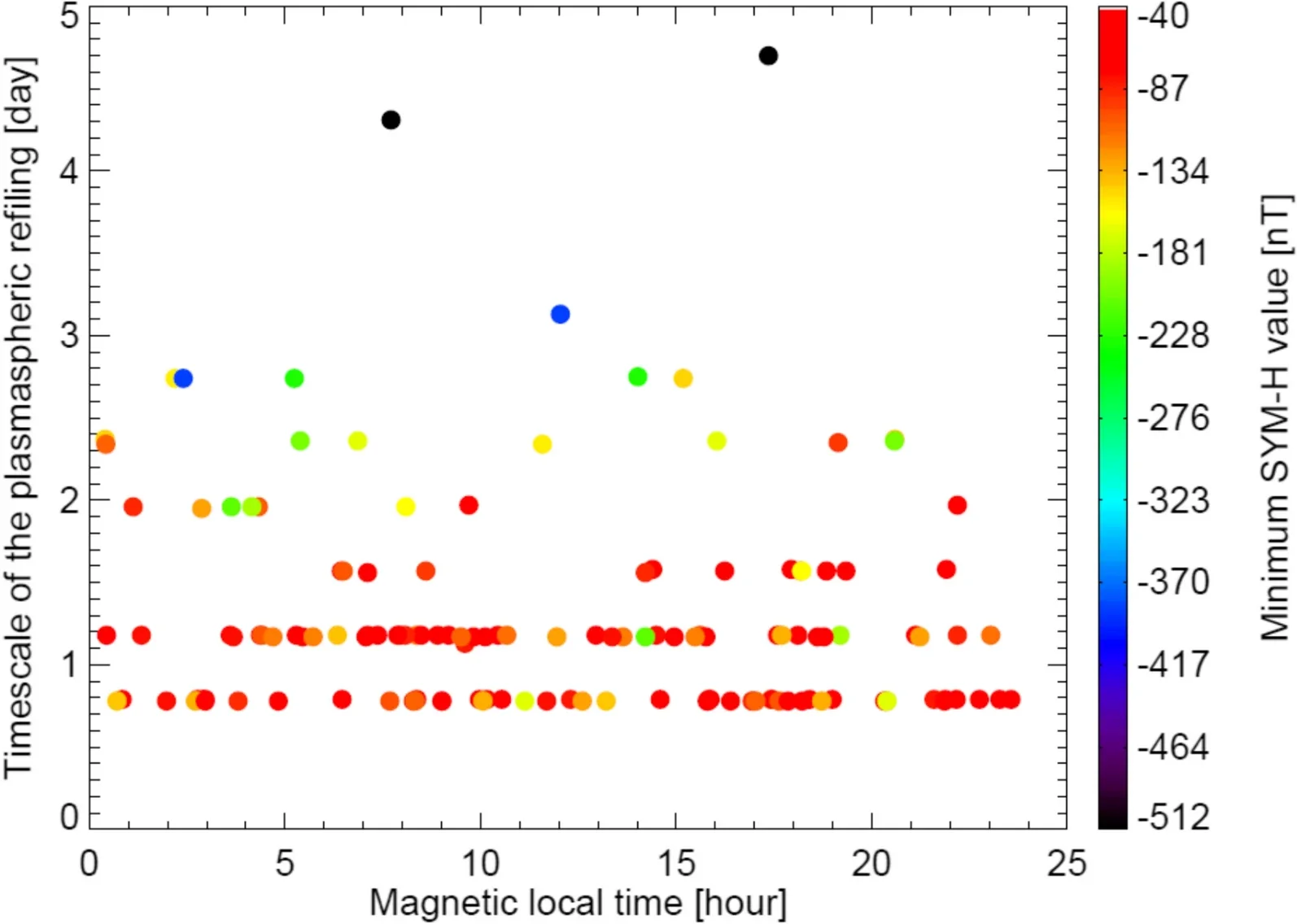
The study also revealed that the storm produced unusual belts of electrons close to Earth. These belts can increase radiation exposure to satellites and create unpredictable conditions for spacecraft. Understanding how long the plasmasphere takes to rebuild after a collapse helps engineers plan for hazards and improve designs for future missions.
The findings offer a detailed view of energy moving through Earth’s space environment during an extreme event. The storm pushed the plasmasphere into a state scientists had not seen since Arase began operations in 2017. It also highlighted that the strongest solar storms can push Earth’s defenses to their limits and take days to recover.
The research team believes these insights will improve future space weather forecasting. Knowing how fast conditions can worsen and how slowly they can heal gives scientists a clearer foundation for predicting disruptions to navigation, satellites, and global communication.
Research findings are available online in the journal Earth, Planets and Space,.
Like these kind of feel good stories? Get The Brighter Side of News’ newsletter.
The post Superstorm squeezed Earth’s plasmasphere to record low – disrupting tech around the world appeared first on The Brighter Side of News.

