For decades, scientists have asked whether language simply reports conscious thought or helps shape it. New insights from researchers at the University of Liège suggest the answer sits somewhere in between. A critical review led by Charlène Aubinet, a neuropsychologist and speech therapist with the university’s Coma Science Group, pulls together findings from brain imaging, psychology, and clinical studies to rethink how language and awareness interact.
Researchers have long agreed that you can be conscious without words. Feelings, pain, sights, and sounds do not require speech. Still, language may play a larger role in shaping conscious experience than once believed. The new review shows that not all language works the same way and that different levels of language connect to different levels of awareness.
“We have discovered a fundamental distinction between different levels of language processing,” Aubinet explains. Basic processes, like detecting speech sounds or recognizing simple words, can happen even when consciousness is deeply reduced. That includes deep sleep, anesthesia, or severe brain injury. More complex language, such as understanding full sentences or abstract ideas, appears to need a much higher level of awareness.
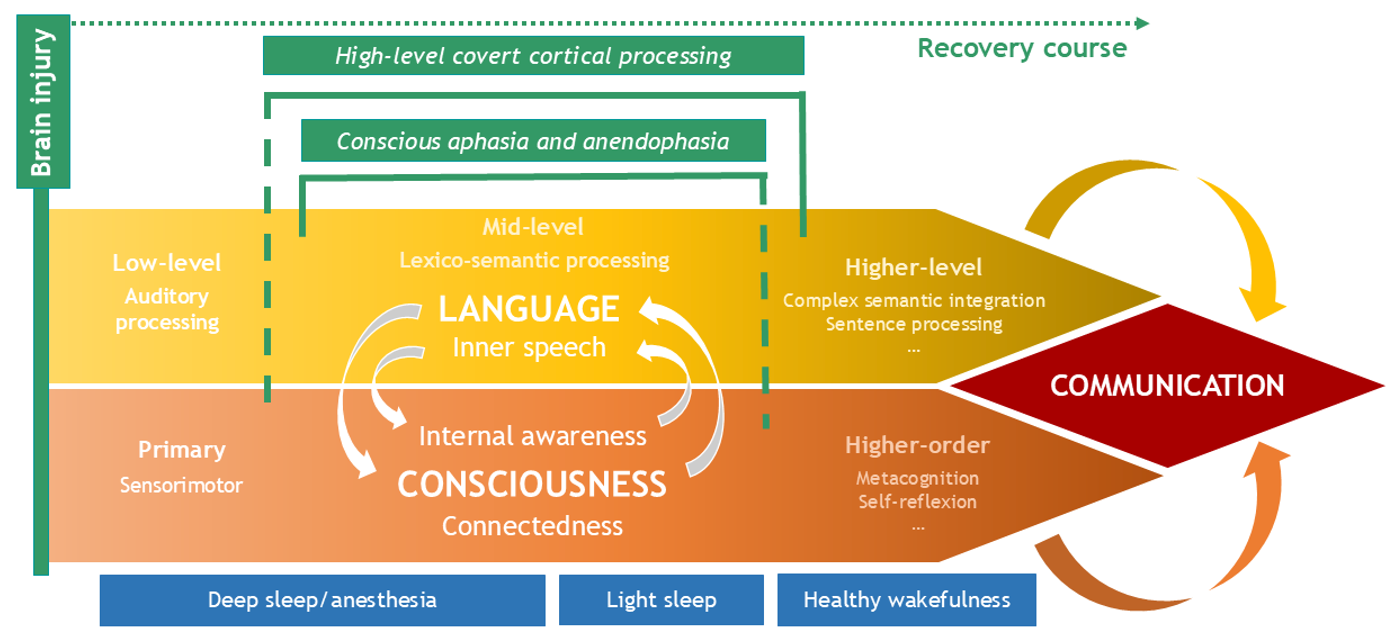
Sleep and anesthesia offer scientists a rare chance to study the brain as consciousness fades and returns. During light and deep sleep, the brain still reacts to sound. Studies using EEG and brain scans show that sleeping brains can track syllables and simple words. However, the ability to link words into phrases or follow a story often disappears during non-REM sleep.
One study played spoken sequences built from repeating syllables, words, phrases, and sentences. While awake, the brain tracked all levels of language. During sleep, it followed sounds but not larger meaning units. Similar results appeared in experiments using movie stories. Even in deep sleep, the brain responded to sound, but regions linked to understanding plots stayed quiet. In rare cases, REM sleep showed hints of higher-level processing, though this varied by person.
Anesthesia tells a similar story. Under deep anesthesia, brain activity linked to language shrinks to basic auditory areas. Regions that help integrate meaning and context fall silent. Across these settings, simple language features survive, but deeper understanding fades as consciousness drops.
Severe brain injury adds urgency to the language-consciousness debate. In coma, there is no wakefulness. Some patients later move into unresponsive wakefulness, then into minimally conscious states. Doctors often rely on language-based signs, like following commands or speaking words, to judge recovery.
Brain recordings complicate that picture. Some patients show clear brain responses to language even when they cannot respond outwardly. Aubinet notes that this calls for caution. “It calls for caution in interpreting the absence of verbal responses as a sign of unconsciousness,” she says.
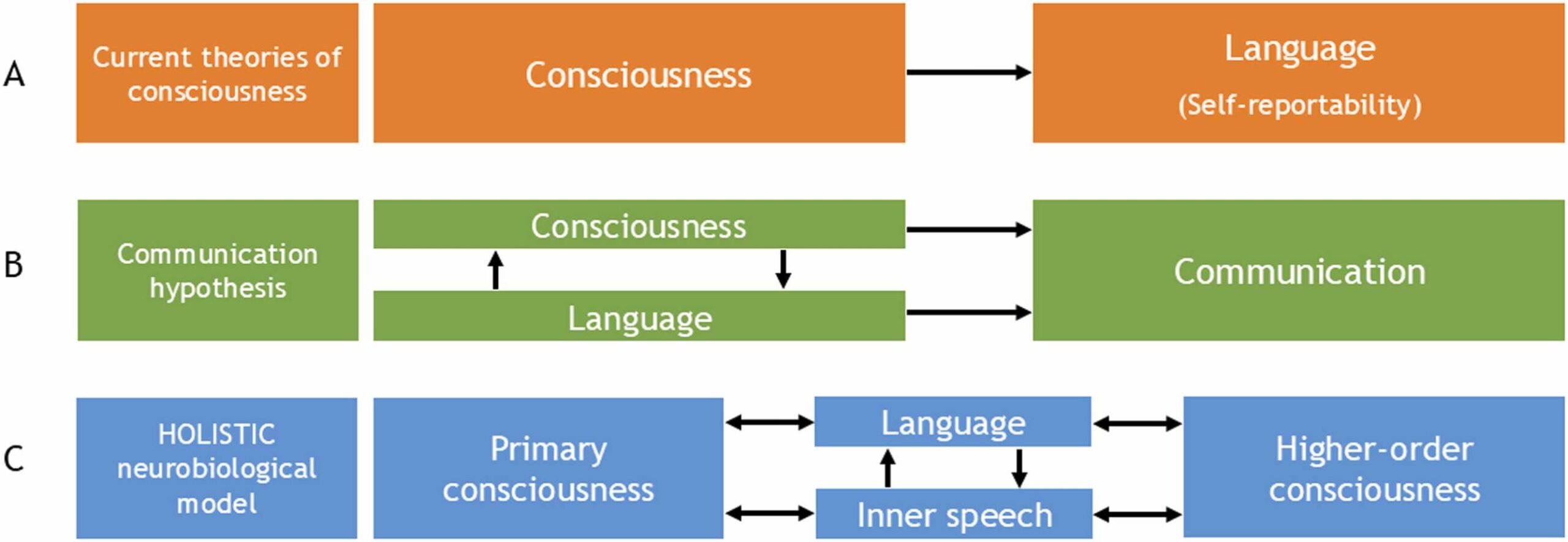
In many cases, language processing and consciousness recover together. More striking, language signals can sometimes appear before clear signs of awareness. Studies show that patients whose brains track phrases or sentences early after injury often have better outcomes months later. Language responses may predict recovery, not just reflect it.
Language does not just follow consciousness; it can also influence what enters awareness. Lab studies with healthy volunteers show that words can guide perception. Hearing or reading a correct label can help you spot a hidden object faster. Wrong labels can slow detection.
Emotion words can also tip the balance. In visual rivalry tasks, seeing an emotion-related word can make a matching facial expression stay in awareness longer. In attention experiments, meaningful objects break through mental blind spots more easily than unfamiliar shapes.
Inner speech adds another layer. That quiet voice in your head may support self-awareness and reflection. When researchers block inner speech during tasks, people report less awareness of mind wandering. When inner speech is encouraged, awareness seems to increase. Not everyone experiences inner speech the same way, though. Some people report little or none, a condition sometimes called anendophasia. How that difference shapes consciousness remains an open question.
Aphasia, a language disorder caused by brain damage, also sheds light on the link. Most people with aphasia remain conscious, but many struggle with self-monitoring and awareness of their limits. About one in four may not fully recognize their own language problems.
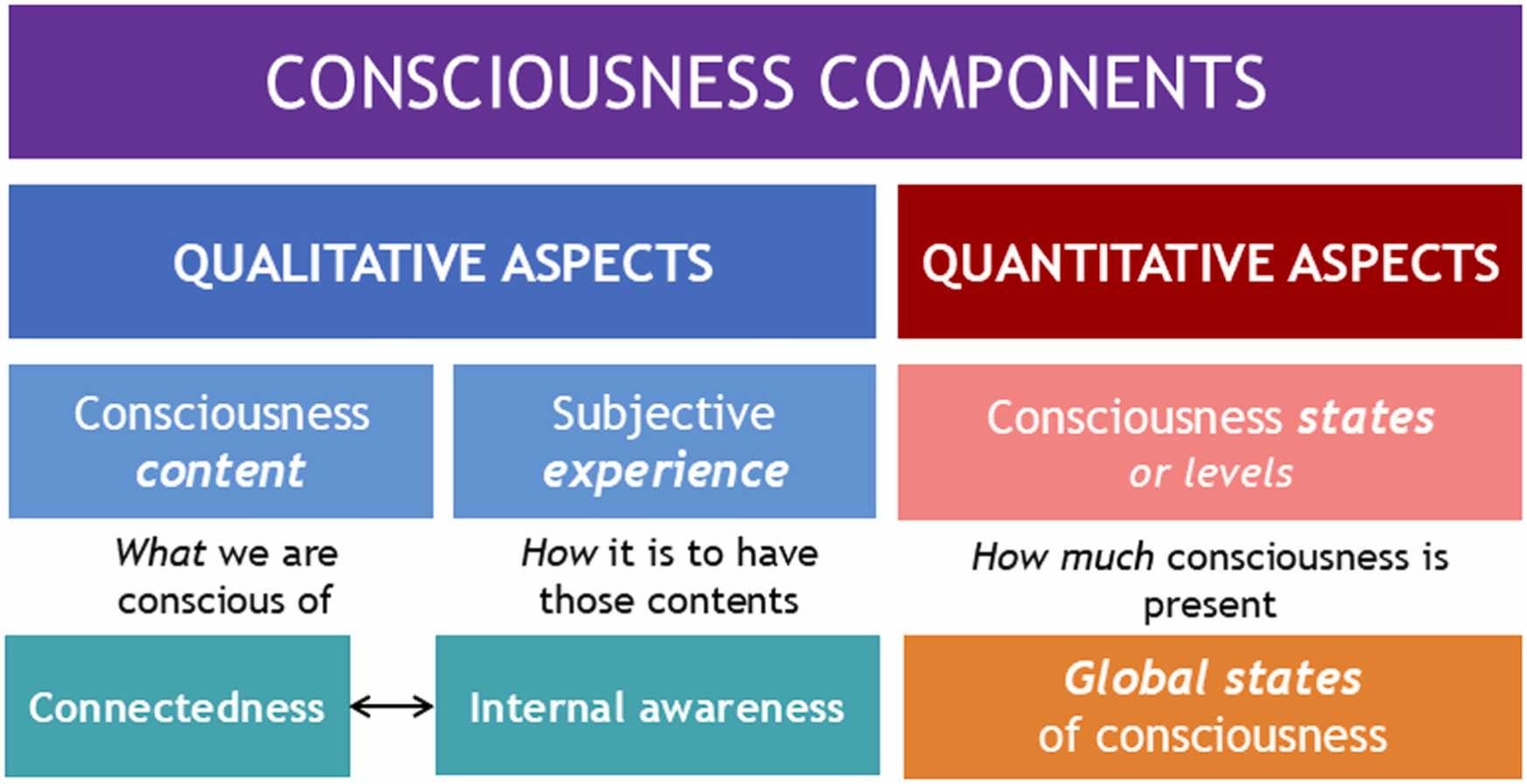
Studies show that these metacognitive issues often track with language deficits. Training that targets self-awareness can improve communication, suggesting a two-way relationship. Language supports awareness, and awareness helps language recover.
Despite strong patterns, the authors urge caution. Brain signals tied to meaning can overlap with sound features, making results hard to interpret. Brain scans also risk overreading, since active areas do not always reveal exact mental processes.
There is also a deeper problem. Consciousness is often measured using language itself. Following a verbal command is a key test for awareness. That creates a loop where language tests consciousness and consciousness explains language. New methods, including nonverbal brain measures, aim to break that loop.
Overall, the review argues for a balanced view. Language does not create consciousness, but it is not just a bystander. Basic language can survive without awareness. Rich understanding tends to fade when consciousness drops. At the same time, words and inner speech can shape what you notice, think about, and reflect on.
These findings could change how doctors assess patients with brain injuries. Detecting hidden language processing may prevent misdiagnosis and improve care decisions.
The work also guides future research on sleep, anesthesia, and disorders of consciousness. Beyond medicine, the study deepens understanding of how language supports self-awareness, learning, and communication.
That knowledge may inform education, therapy, and even the design of brain-computer tools.
Research findings are available online in the journal Neuroscience & Biobehavioral Reviews.
The original story “The hidden role of language in consciousness” is published in The Brighter Side of News.
Like these kind of feel good stories? Get The Brighter Side of News’ newsletter.
The post The hidden role of language in consciousness appeared first on The Brighter Side of News.

