Some amputated limbs heal into scars. Others begin building themselves back.
That split has long sat at the center of regeneration research. Salamanders and frog tadpoles can regrow lost limbs, while mammals cannot. Scientists have debated for decades whether the gap comes from missing genes, different body plans, or some deeper evolutionary tradeoff. A new study points to a more immediate factor: the air around the wound, and how cells read it.
A recent article in Science reports that researchers from Pr. Can Aztekin’s lab at the Max Planck Institute and EPFL found that the amount of oxygen present in the area surrounding the injured limb significantly affects the development of the limb’s regenerative ability. The study compared amputated limbs of frog tadpoles with developing limb buds of mouse embryos. It was found that increased oxygen inhibits, rather than stimulates, limb regeneration.
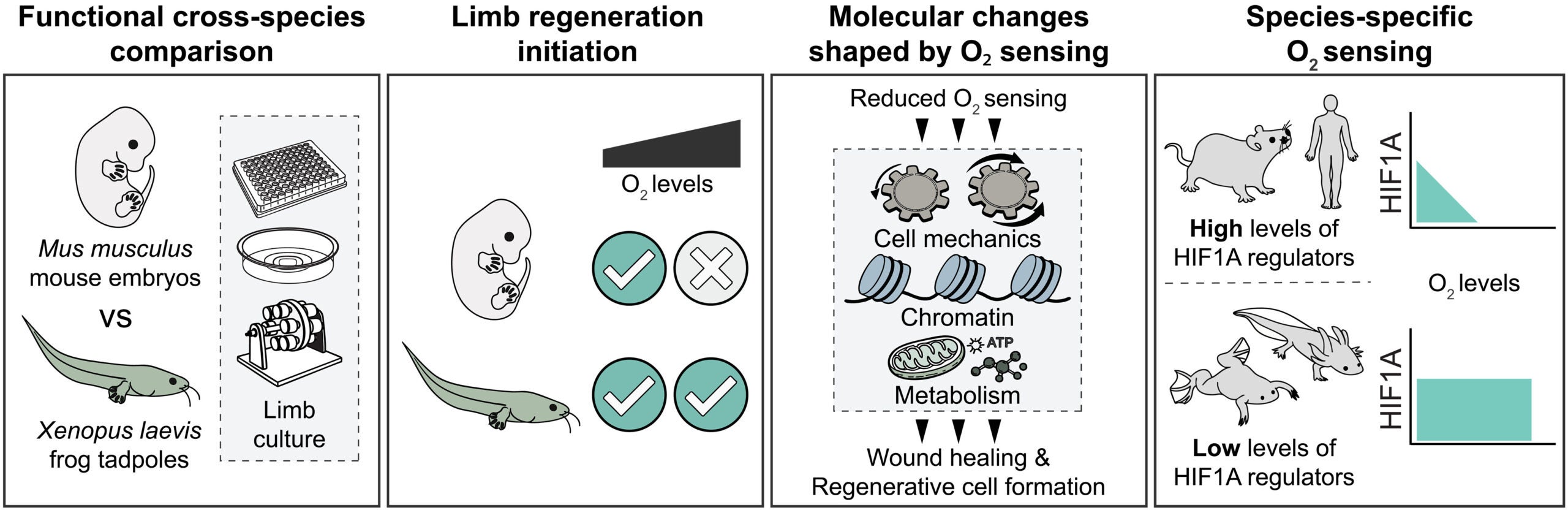
In the immediate period following a limb amputation, cells must be able to respond to the amount of oxygen in their environment. The regenerative capacity of an animal is based on how the cells react to the amount of oxygen available. While amphibians engage an immediate regenerative capability, this is not true for mammals. Their ability to regenerate limbs tends to stop at some point.
While there has been a strong emphasis on researching limb regeneration in amphibians, few researchers have studied regeneration in mammals as thoroughly. A direct comparison has not been possible to date. In amphibians, the natural process that occurs with wounds is regeneration over time, with the result being a fully healed limb. However, the process is much slower in mammals, where scarring can occur and take over before regeneration begins.
The purpose of the current research was to determine if oxygen is one of the factors involved in limb regeneration. Many amphibians develop within aquatic environments with lower levels of oxygen, and many animals capable of regenerating also develop in such conditions. In contrast, mammalian tissues typically develop and are exposed to much greater levels of oxygen after being injured.
However, the fact that frogs develop in aquatic environments does not mean that oxygen is the primary driver of limb regeneration. The researchers conducted a series of experiments to test oxygen at different levels to determine whether it impacted regeneration.
They amputated frog tadpole limbs and used mouse embryonic limb tissues. These were placed in controlled environments where one group of samples was maintained at lower levels of oxygen, similar to aquatic conditions, and another group was maintained at higher levels, similar to atmospheric conditions. They tracked several variables, including how quickly wounds closed, how fast cells moved, changes in gene activity, shifts in metabolism, and alterations in epigenetic markers associated with DNA packaging.
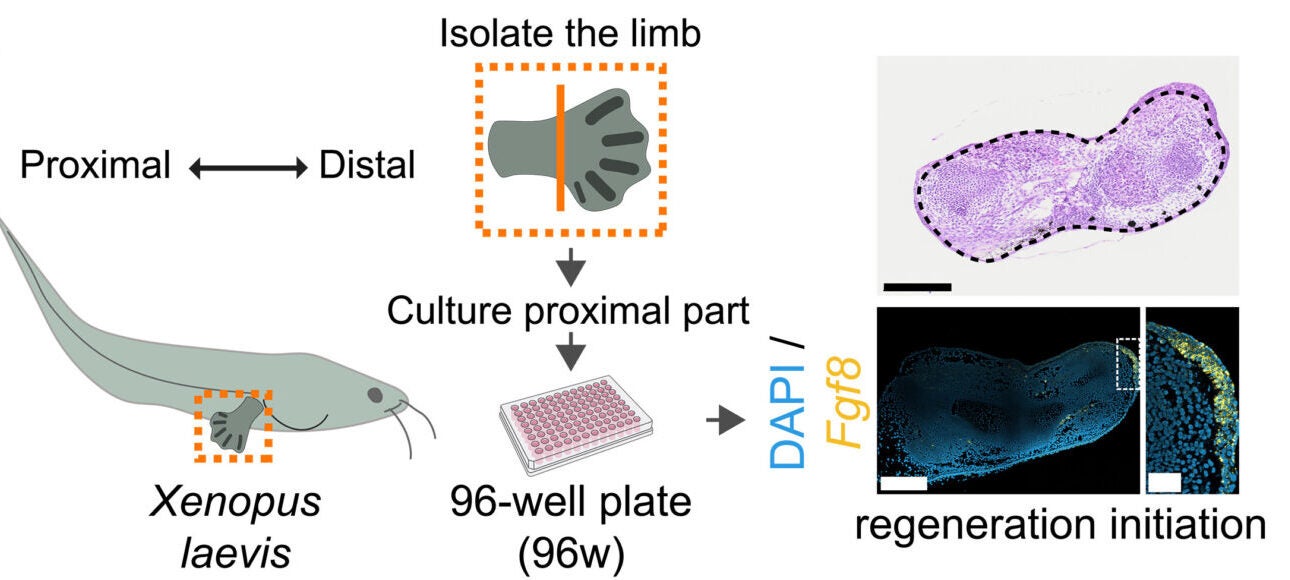
A major focus of the research was a protein called HIF1A (hypoxia-inducible factor 1 alpha), which plays an important role in how cells respond to changes in oxygen levels. HIF1A is stable when oxygen levels are low, which allows it to regulate the expression of genes associated with the repair and regeneration of tissues.
There were significant differences in how quickly and to what extent each of the tissues developed after being subjected to low oxygen levels.
Mouse limb tissues responded in ways that resembled frog tissues. The HIF1A protein produced similar changes when stabilized under low oxygen conditions. These effects differed from samples exposed only to atmospheric oxygen levels. This suggests that sensing oxygen levels, rather than simply being exposed to them, plays a role in producing the observed changes.
In addition, the research found rapid morphological changes in the cellular organization of mouse limb tissues that resembled those seen in frogs. The mobility of skin cells increased, and their mechanical properties changed. The cells also relied more on glycolysis, a mechanism for producing energy under low-oxygen conditions. There was also evidence of alterations in chemical modifications of proteins associated with DNA that are linked to regenerative functions.
This does not mean that a mouse can grow back a complete limb, and the authors do not claim that. However, the findings show that there is some form of a “regeneration toolbox” present in mammalian tissues during the early stages of tissue repair.
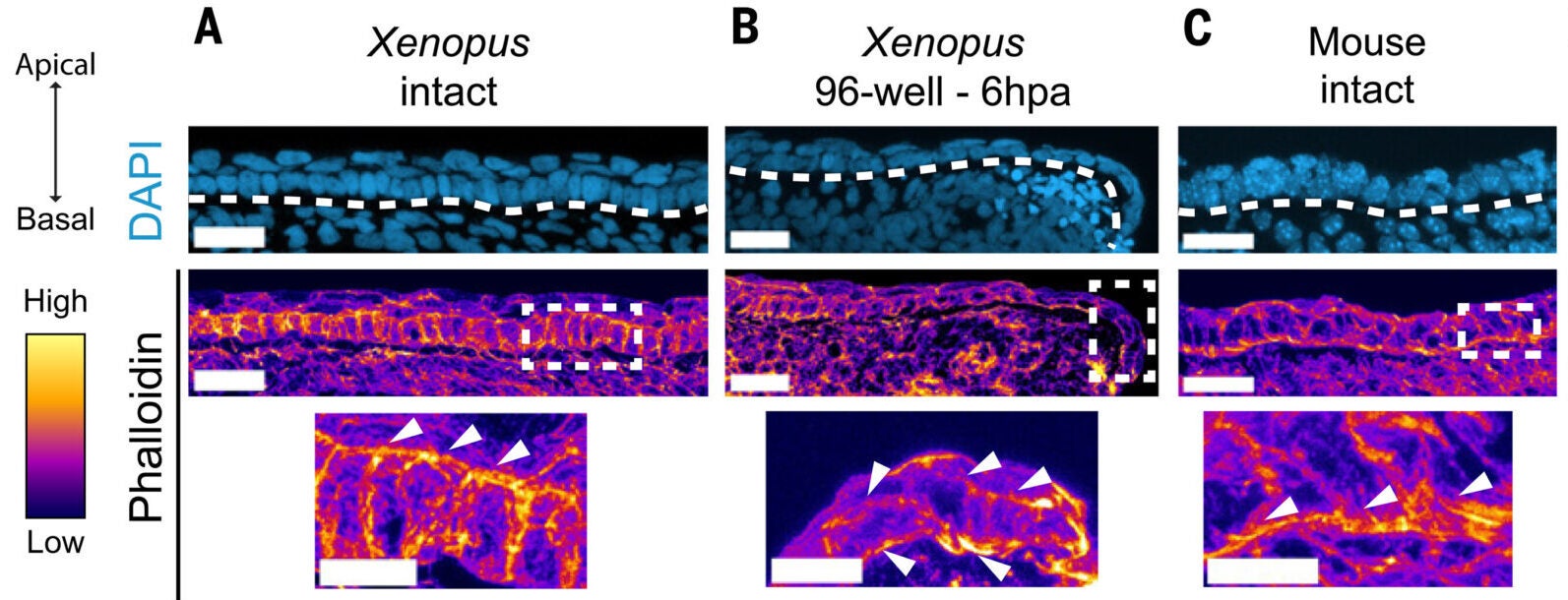
“Many previous studies have shown that both regenerative animals (amphibians) and mammals share many of the same genes, and that this may mean that mammals do still possess a ‘regenerative ability’; however, it has never been clear whether mammalian tissue can actually initiate limb regeneration and what prevents them from doing so,” says Aztekin.
Aztekin further elaborates: “Partially, the reason why mammalian cells cannot initiate limb regeneration appears to be due to a suppression of these programs when adequate amounts of oxygen are sensed by the cells following injury.”
In contrast, frog tadpoles exhibit different characteristics.
Tadpoles regenerate their limbs with high efficiency across a range of oxygen levels, including levels higher than what terrestrial animals are typically exposed to. Molecular analysis indicated that frog cells sustain HIF1A activity even under high-oxygen conditions. Frogs also retain low levels of expression of genes known to inhibit the pathway leading to HIF1A activation.
The differences observed in frogs extend beyond a single species. By integrating data on frogs, axolotls, mice, and humans, the authors identified a broader pattern. Amphibians‘ capacity for regeneration is affected by oxygen levels, while mammals respond to oxygen by suppressing regenerative responses immediately following injury.
In addition, the researchers found that reducing oxygen levels was necessary to initiate certain regenerative responses in mouse tissues. When oxygen levels were lowered, early regenerative processes began. Without reduced oxygen, these processes did not occur. However, full limb regeneration involves additional factors beyond oxygen reduction alone.
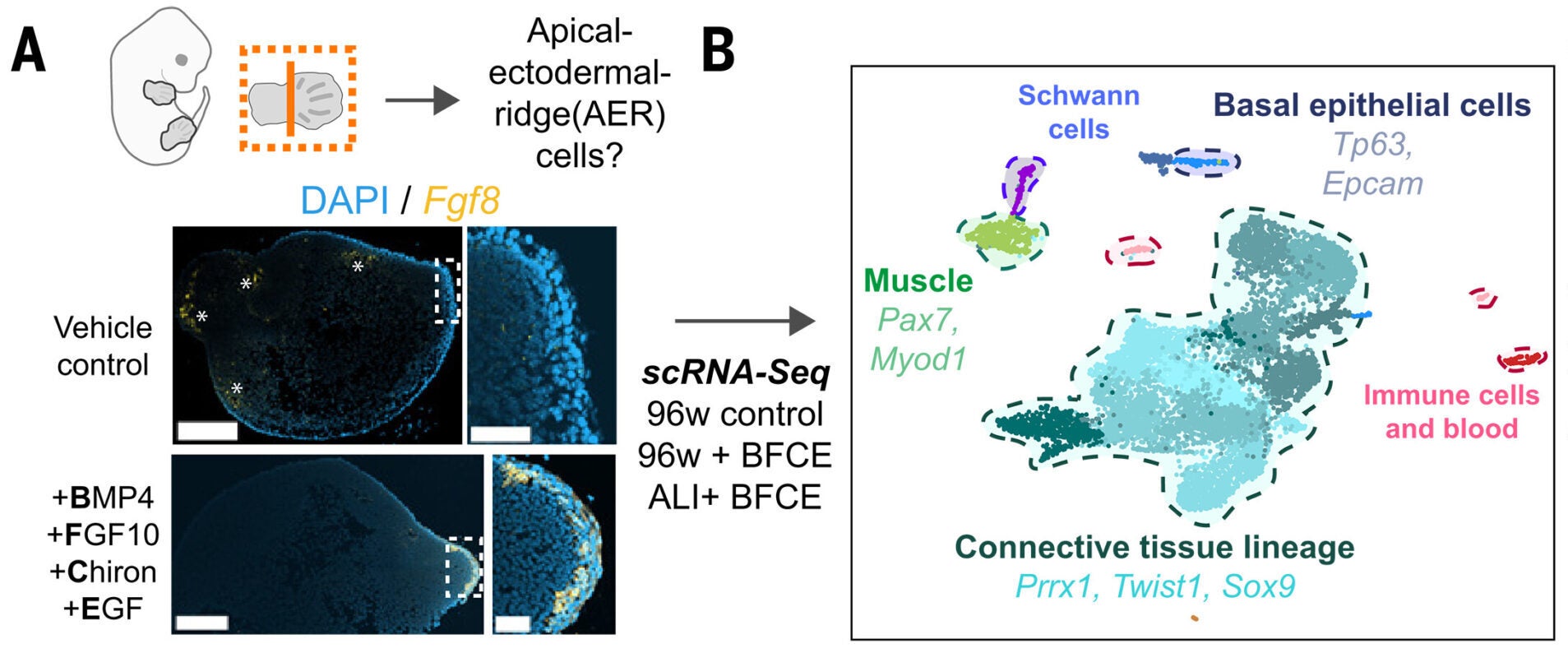
The findings demonstrate that regeneration is not regulated by a single factor. Multiple influences shape how mammalian tissues respond after injury. The study also narrows the gap between amphibians and mammals, suggesting that the difference is not as absolute as once thought.
“We are very excited about our findings,” said Aztekin. “By directly comparing species that can and cannot regenerate, we have given a new twist to a question that has been asked for hundreds of years. Regeneration programs can be created in mammalian tissue, and this research has laid out a pathway toward generating limbs.”
The research does have limitations. It was conducted using frog tadpoles and embryonic mouse tissues, not adult mammals. The early regenerative response in adult mammals differs from that of amphibians, and additional barriers exist in adult organisms.
Nevertheless, the research narrows the question of what separates a regenerated limb from a scarred one.
The differences between a regenerating limb and a scarring limb may not be limited to the presence of certain genes. They may also depend on the amount of oxygen in the surrounding environment and how quickly cells detect changes in oxygen levels. The amount of time available before the regenerative window closes is another factor.
The practical implications of this study do not suggest that humans will regrow limbs in the near future. However, the findings indicate that mammalian tissues may have more regenerative potential than previously believed, especially in the earliest stages of healing.
This opens new avenues of research. Scientists can explore whether altering oxygen sensing or extending the time before the regenerative window closes improves healing outcomes. The research also identifies HIF1A and related pathways as possible targets for reducing scar formation. Future studies will likely clarify how oxygen influences whether tissues regenerate or form scars.
Research findings are available online in the journal Science.
The original story “The missing ingredient in limb regeneration may be oxygen” is published in The Brighter Side of News.
Like these kind of feel good stories? Get The Brighter Side of News’ newsletter.
The post The missing ingredient in limb regeneration may be oxygen appeared first on The Brighter Side of News.


Leave a comment
You must be logged in to post a comment.