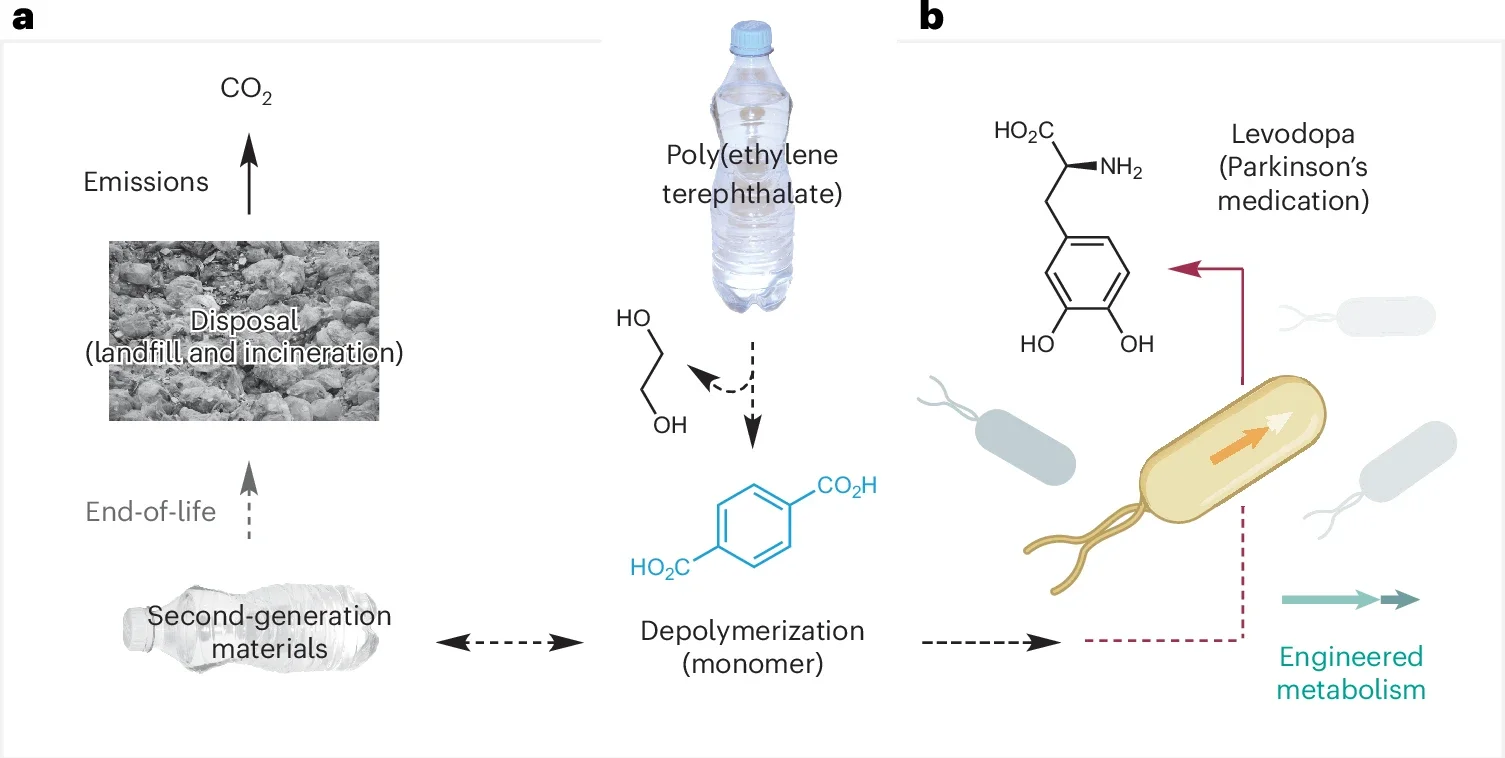
Plastic waste is becoming an increasing problem, with 50 million tonnes of single-use plastic being produced each year. Plastics are used in the packaging of food and drinks. However, they usually do not get recycled as intended and are instead disposed of via landfill, incineration, or the environment.
Researchers at University of Edinburgh have developed a method of converting plastic waste into L-DOPA, a common drug treatment for patients suffering from Parkinson’s disease. Parkinson’s disease is a neuromuscular disorder caused by the slow deterioration of dopamine-producing neurons in the human brain. Presently, approximately 250 tonnes of L-DOPA are produced worldwide each year, which will likely increase as the incidence of the disease continues to rise. At present, all L-DOPA production is synthesized using fossil fuels.
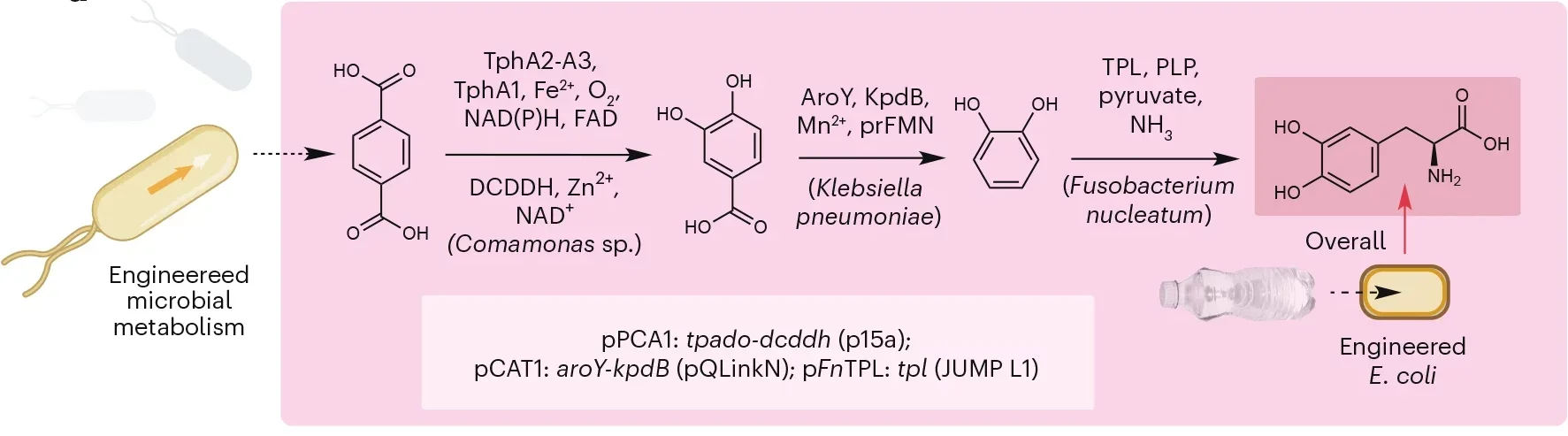
University of Edinburgh’s research group has developed a sustainable bioprocess using plastic (PET) as the primary carbon source for the production of L-DOPA. Researchers broke down PET into its component building blocks and thus created terephthalic acid before introducing engineered strains of E. coli to chemically convert the terephthalic acid into L-DOPA.
Four steps make up the pathway through which plastic waste becomes L-DOPA. Seven different genes encode these four steps. The enzymes responsible for each step come from a varied number of bacteria found around the world. These enzymes were combined to form two different types of bacteria that work together, one in front of the other, to complete the pathway.
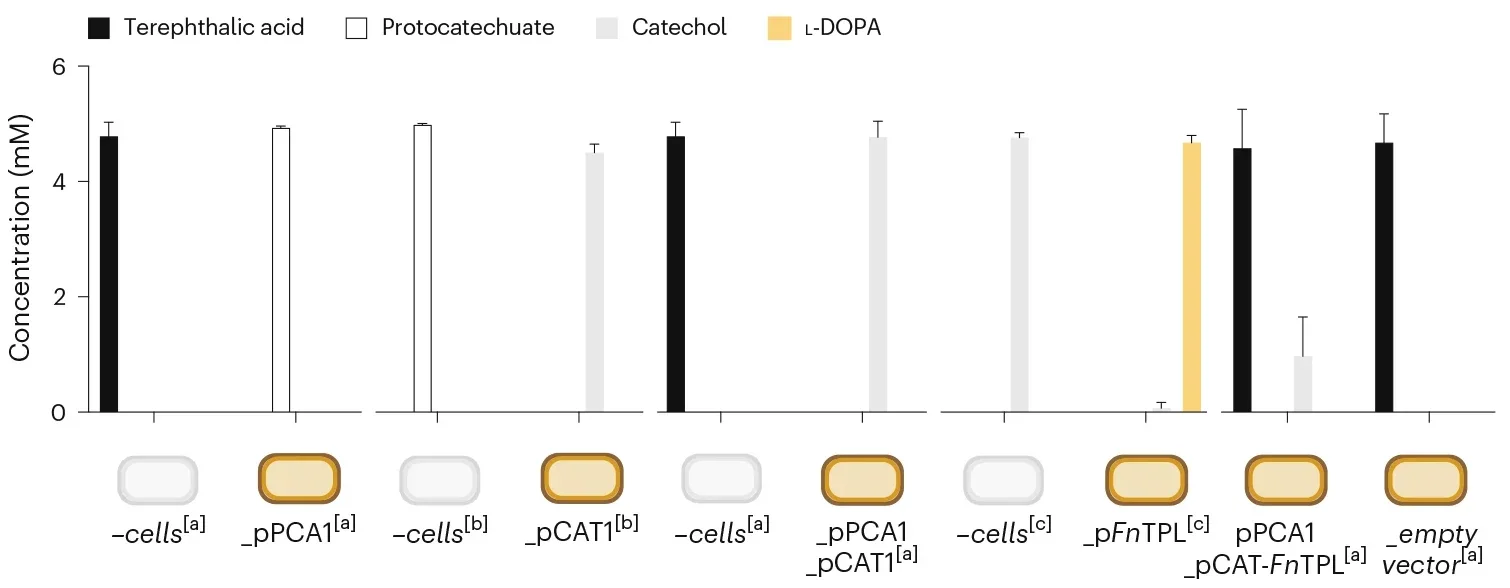
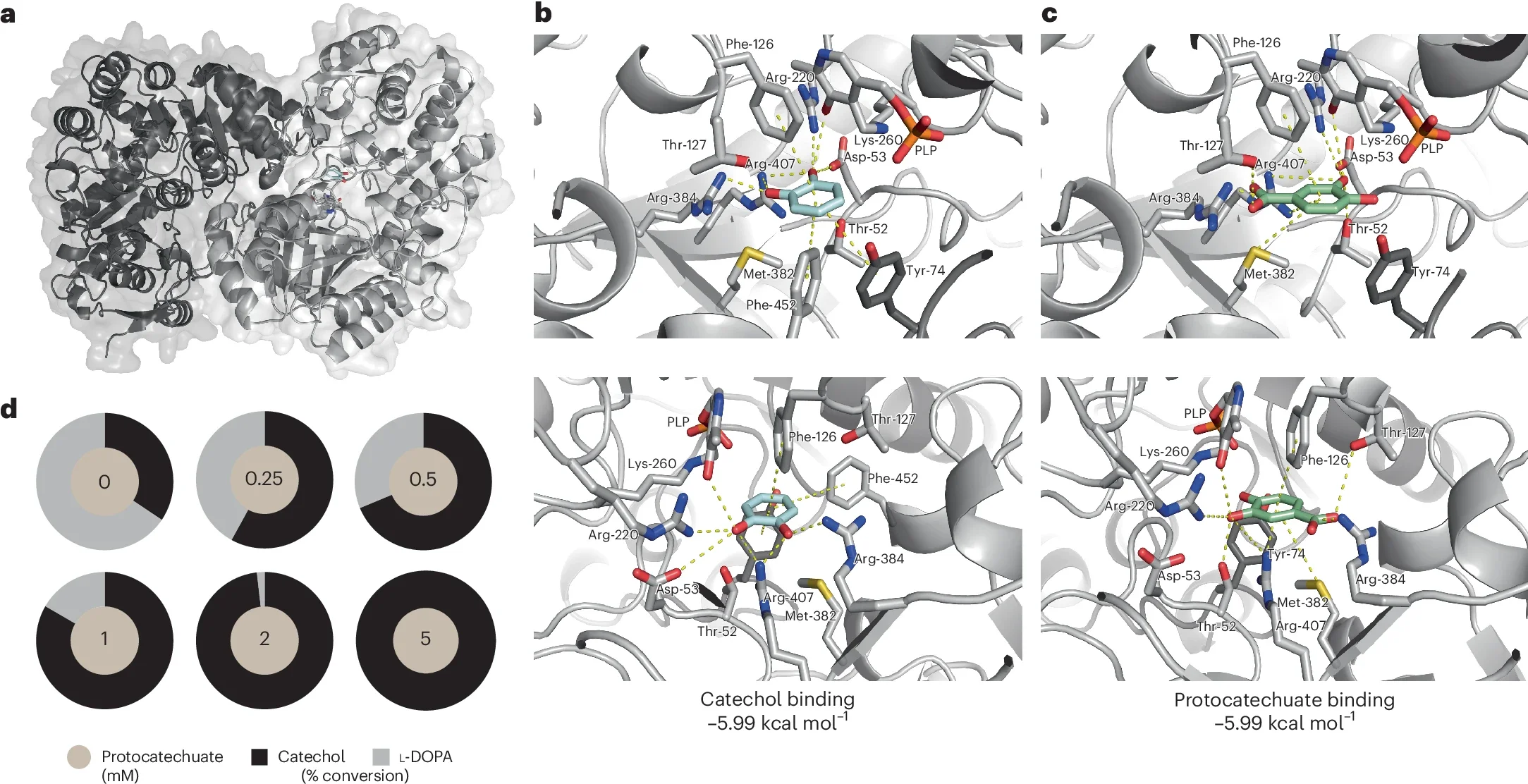
The two-step method used to produce L-DOPA required much more development time compared to the single-step method. While developing the first type of bacteria, the research team found that during the reaction there was an accumulation of intermediate compounds. These compounds inhibited the bacteria’s enzymes responsible for converting the plastic waste to L-DOPA.
As a result, the reaction was being blocked due to the accumulation of the intermediate compounds, resulting in an incomplete pathway. The researchers were able to resolve the issue by developing a separate strain of bacteria to carry out the second step of the pathway. This step occurred after the first bacteria produced the intermediate compound.
“This is just the beginning of what we can do with these strains of bacteria,” Wallace stated. “If we can take plastic waste and convert it into drugs to treat neurological disorders, think about all of the other drugs that can come from this technology. Plastics are an environmental issue, but they also contain a tremendous quantity of carbon, thus making them one of the largest unused resources of carbon that we have.”
This research was published in Nature Sustainability. Funding from UK Research and Innovation and the Industrial Biotechnology Innovation Centre provided support, and the company Impact Solutions participated in this research.
Preparing to scale up to a larger volume of L-DOPA production to show the practicality of making it from plastic waste was one of the main objectives of this research. The research team successfully scaled up the production of L-DOPA to 0.9 grams of L-DOPA per litre of liquid from PET plastic waste that had been chemically broken down.
Using industrial plastic waste generated from hot stamping foils, which produces around 40,000 tonnes of PET waste each year, the researchers achieved 5 g/L of the drug. They also isolated the drug as a solid using standard pharmaceutical purification methods.
The amount produced was said to equal a number of clinical doses usually prescribed for patients diagnosed with early-onset Parkinson’s disease. Importantly, the process can be used to create drugs not only from clean laboratory-grade materials but also from post-consumer plastic waste.
A post-consumer plastic bottle collected at the University of Edinburgh was also used as feedstock. Although the actual conversion rate of plastic waste to drug was lower than that of pure feedstock due to the residual presence of plasticisers in the post-consumer waste material, it was nonetheless possible to obtain measurable drug quantities through the process.
The research group also investigated whether the carbon dioxide produced during a stage of the reaction could be recaptured. In doing so, the research team cultured microalgae alongside the bacterial cultures. The algae absorbed the CO₂ produced from the bacterial reaction through photosynthesis.
While the researchers classify this as preliminary, it indicates that this could lead to a process that approaches a carbon-neutral state in the future.
The current chemical routes used to produce L-DOPA are based on fossil fuel-derived feedstock and are therefore dependent on non-renewable resources. Conversely, the bacterial process utilizes plastic waste as its feedstock. This means it has the potential to be entirely sustainable, as all aspects of this process are derived from non-fossil sources.
Moreover, this process has the potential to eliminate synthetic steps and produce L-DOPA under environmentally mild conditions, using only water and operating at near-neutral pH. Using this method also means that no exotic chemicals are required.
The PET associated with the final medication remains the same carbon framework throughout the entire process. Therefore, no new fossil fuels are needed in the manufacture of the medicine. Instead, the drug is generated from leftover plastic remnants of bottles.
Additionally, the study indicated that glucose obtained from excess bread waste can support the bacteria. The bacteria consume the glucose without loss of efficiency, increasing the circularity of the overall system.
According to Dr. Liz Fletcher of the Industrial Biotechnology Innovation Centre, the important message is that “Turning used plastic bottles into a Parkinson’s medication is not only an innovative recycling approach; it is about redesigning production methods to utilise efficient systems that are in harmony with the environment and provide real benefits in people’s lives.”
This research has been partially supported through a £14 million research and development effort by the Engineering and Physical Sciences Research Council through the Carbon Loop Sustainable Biomanufacturing Hub. The hub focuses on transforming industrial waste into value-added products such as pharmaceutical ingredients.
The researchers are clear on the current status of the research. It represents a proof-of-concept demonstration of an approach that has yet to be developed into a full-scale production system.
There are major challenges associated with scaling bacterial biotransformation processes to industrial quantities. Laboratory results alone do not fully address these issues.
There are many additional steps to consider. Currently, the bacterial strains depend on the use of antibiotics to maintain the engineered gene pathways. This will not be possible to implement on an industrial scale.
Instead, the genes will eventually be inserted directly into the bacterial genome. The full life-cycle and cost-benefit analysis of the overall environmental impact will also have to be performed during the actual manufacturing process. This will determine whether the process produces any net benefit compared with laboratory results.
Additionally, the potential for chemical contamination from post-consumer plastics in the eventual medication must be verified before it can be used therapeutically.
On a global scale, approximately 100 million tonnes of plastics are discarded annually. This amount is far greater than the total amount of pharmaceuticals produced.
The researchers make it clear that this approach is not intended to serve as a complete waste solution for plastics. Instead, it could contribute to a broader strategy for creating additional value from currently unusable waste streams.
The researchers believe there are possibilities for future products using this same bio-upcycling platform. These could include more complex drug substances, as well as flavors, fragrances, cosmetics, and industrial chemicals.
From a pharmaceutical perspective, the immediate impact is that a scalable biological production method could reduce reliance on petrochemical sources. It could also reduce the cost of plastic production materials while generating additional value from plastic that would otherwise incur disposal costs.
In a broader sense, the research indicates a pathway that conventional mechanical recycling cannot achieve. Mechanical recycling gradually degrades the quality of the material over time.
In contrast, chemical conversion of plastic into value-added compounds such as pharmaceuticals extracts significantly higher value. It can also avoid the high-temperature and toxic solvent processes typically associated with plastics processing.
If this production method is demonstrated to be efficient for large-scale production, it will provide another tool for managing a waste stream that existing systems have struggled to address.
Research findings are available online in the journal Nature Sustainability.
The original story “The plastic bottle that became a Parkinson’s drug” is published in The Brighter Side of News.
Like these kind of feel good stories? Get The Brighter Side of News’ newsletter.
The post The plastic bottle that became a Parkinson’s drug appeared first on The Brighter Side of News.


Leave a comment
You must be logged in to post a comment.