Zoë Jenkins doesn’t think of herself as a volunteer in the traditional sense. The 22-year-old, who oversees recruitment for a youth engagement nonprofit called Civics Unplugged, has a broader definition in mind. “When we typically think of service it can be very narrow,” she said. “Of, like, kids picking up litter or engaging in food drives. That all definitely counts as service. But I think for me, how I think about it is just people helping other people. And that’s, I think, a really broad bucket.”
That bucket, it turns out, is quite full.
A new survey from The Allstate Foundation and Gallup finds that about 8 in 10 people aged 12 to 25 have engaged in some form of community service or volunteering. The number cuts against a common narrative: that younger generations are checked out, self-absorbed, or simply indifferent to the world around them. What the data actually suggests is more nuanced. Young people are giving back, but often in ways that slip past the traditional metrics nonprofits use to count them.
About 7 in 10 respondents said they had helped someone with a task at least a few times in the past week. Not through a formal program. Not logged in a volunteer management system. Just people helping people, as Jenkins put it, which is precisely the kind of service that tends to go uncounted and undervalued.
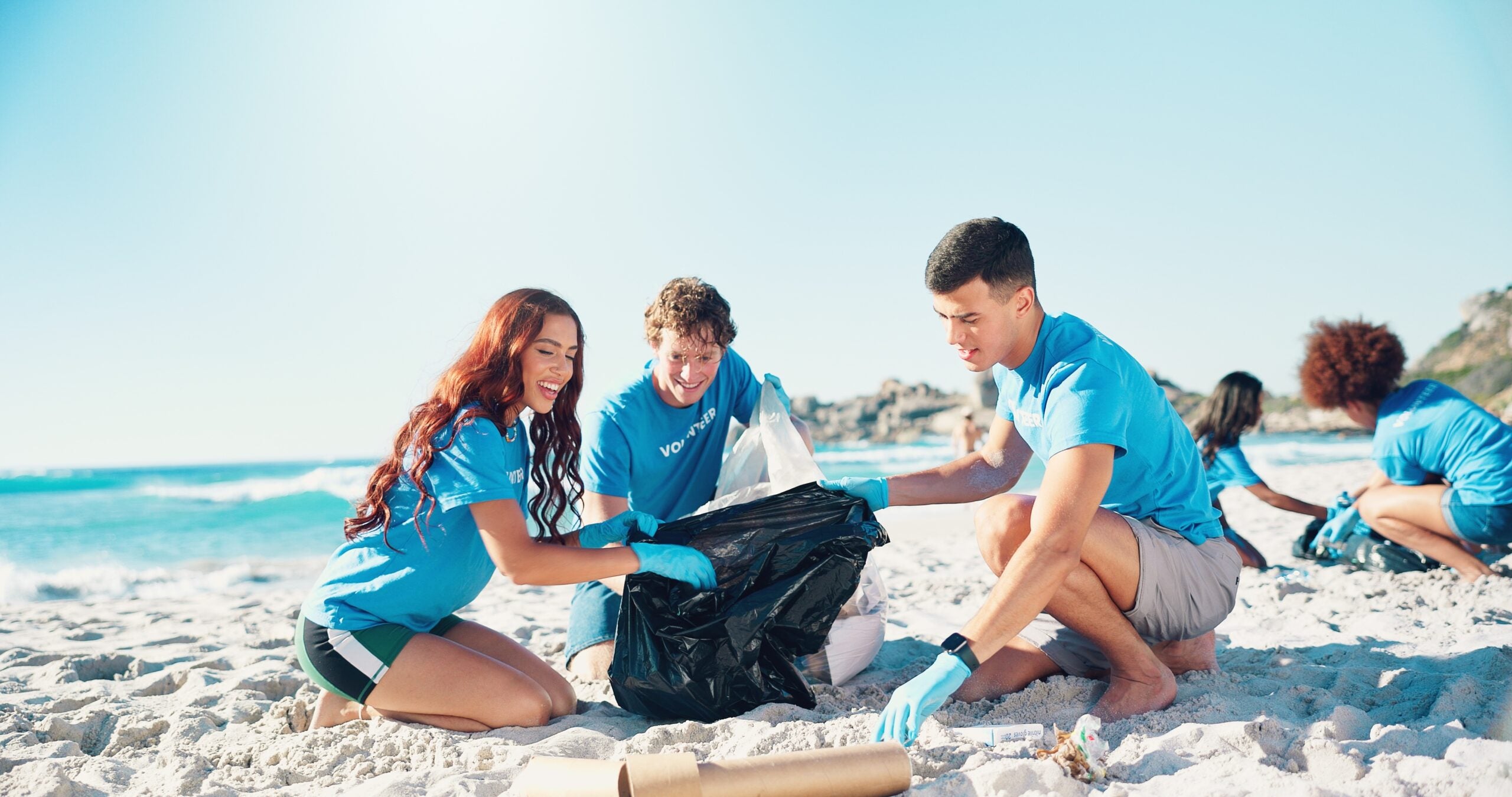
Among young people who volunteer, roughly two-thirds told Gallup that helping others or making a difference was a major reason for their participation. About 6 in 10 said contributing to their community was a top motivation, and around half pointed to supporting a cause they were passionate about.
What’s notable is how little of that service is coerced. Only about 1 in 10 young volunteers said all of their service activities were required, through school or a club. Roughly 4 in 10 said none of their volunteer work was mandated at all.
Greg Weatherford II, Director of The Allstate Foundation and Social Impact, told The Brighter Side of News, “Our organization tries not to rank one form of service above another. A student building a nonprofit from scratch and a teenager writing an encouraging letter to a nervous classmate both count”. “We so applaud the young people that build complex nonprofits that solve complex issues”, he continued. “Equally important is the young person that’s taking time to write a letter to a classmate who may just be needing to have some extra encouragement as they get ready to take their school test or just navigate a new semester.”
That framing matters, because it challenges how service has historically been measured and celebrated. The metrics favored by most nonprofits, hours logged, recurring commitments, formal sign-ups, tend to favor a style of volunteering that younger people are less likely to pursue. And if those metrics are the only ones being watched, the picture looks worse than it is.
The most common form of service among young people, according to the Gallup survey, involves donating or organizing donations of food, clothing, or other items. About half of respondents reported doing this. About 3 in 10 had fundraised for a cause, and roughly 2 in 10 had raised awareness for one.
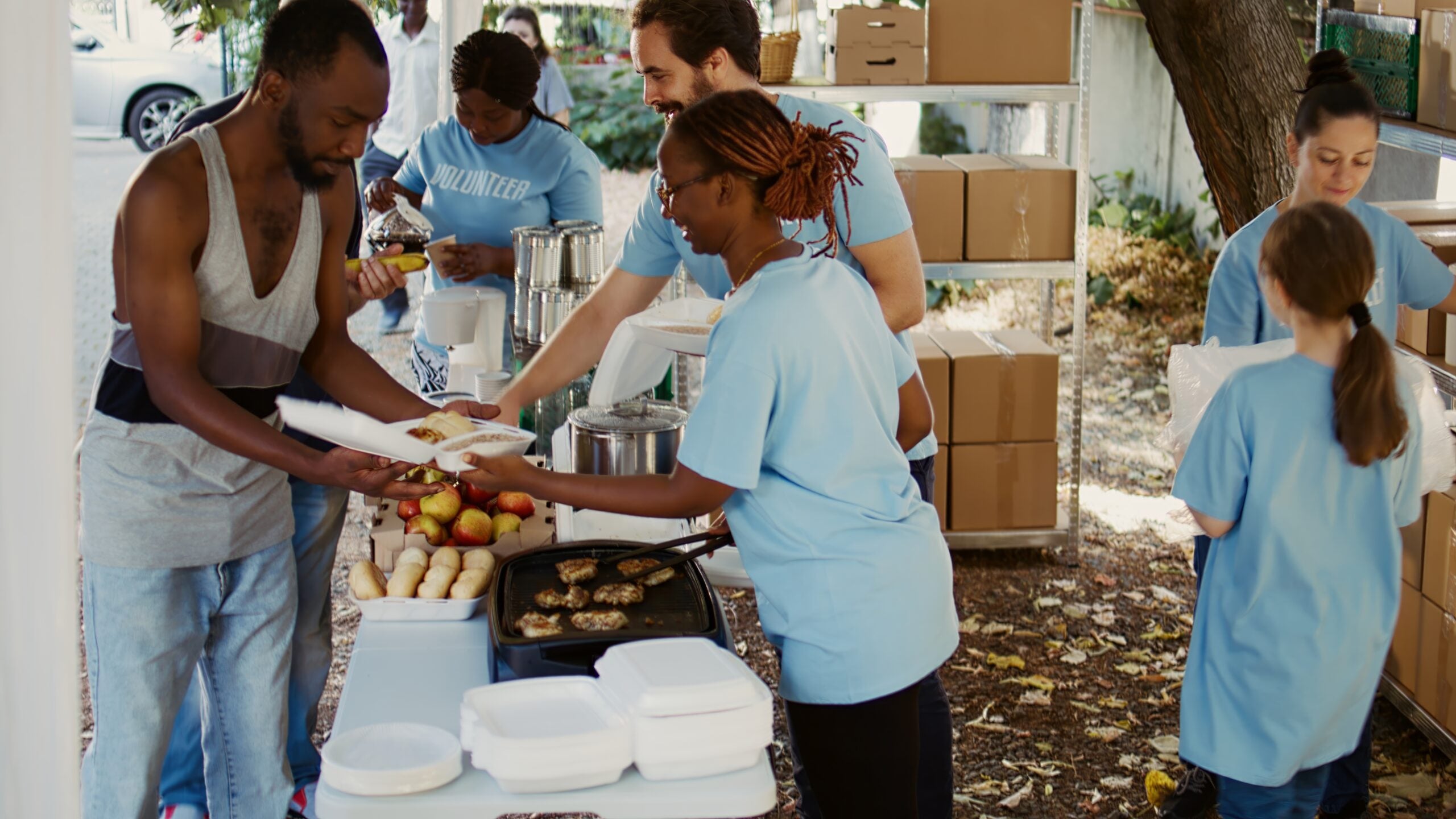
Alex Quian, a senior manager at The Allstate Foundation Youth Empowerment Program, pointed to accessibility as the key factor. Donation drives don’t require transportation. They don’t demand complex scheduling or a long-term commitment. Peers can organize them quickly, and social media makes it easier to mobilize networks around a cause within hours.
Jenkins sees this as something more than convenience. “Young people are perhaps more aware than ever of the power of money,” she said. The ability to rally others behind a cause, to turn a personal concern into collective action, resonates with a generation that has grown up watching crowdfunding campaigns and viral fundraisers reshape what’s possible for ordinary people without institutional backing.
Still, barriers remain. About half of young people who said they never volunteer told Gallup that not knowing where to find opportunities had held them back. A similar share cited a lack of time. Those aren’t apathy, they’re logistical problems, and they point to a gap between what young people say they want to do and what’s actually been made easy for them.
About half of young volunteers told Gallup their service experiences allowed them to make choices, assist with planning, or help lead at least sometimes. The Allstate Foundation has identified increasing that figure as a priority, directing funding toward youth-led volunteer opportunities.
The data on when young people do lead is telling. Most often, leadership means choosing which activity to participate in. They are given far fewer chances to set goals, decide how a project will be accomplished, or take genuine charge of an experience.
Jenkins has observed this pattern directly. Young volunteers are frequently slotted into activities designed for much younger children, highway cleanups and canned food drives that offer little room for creativity or real decision-making. “It’s not that young people don’t care,” she said. “We’re not necessarily providing the right opportunities that actually let young people feel like they’re showing up as their full selves.”
She suggested that nonprofits think more carefully about age-appropriate engagement. The service opportunity that works for a ten-year-old is not the same one that will hold the attention or respect of a twenty-year-old. For older Gen Z volunteers, she proposed storytelling as one example of a higher-engagement activity, something that draws on their voice and experience rather than just their labor.

The American Red Cross has been paying attention. The organization reported a 25 percent increase in Gen Z volunteers from 2024 to 2025, making them its fastest-growing and largest age group. Matt Bertram, vice president of volunteer services, credited the rise largely to the expansion of the organization’s more than 1,400 self-run youth clubs, most of them housed in high schools.
These clubs operate with significant flexibility. Students manage their own engagement with the Red Cross mission, choosing from a range of activities that includes community preparedness training, blood drives, international humanitarian law campaigns, and fundraisers for measles and rubella prevention. There’s no required minimum. Clubs can do a little or a lot, depending on what their members are ready for.
The Red Cross also shifted its communication channels after young people said they wanted to hear from the organization through email and text rather than other means. And in a small but meaningful change, underage applicants can now directly trigger a parental consent request when signing up, removing one more procedural friction point.
Bertram is candid about the reality that volunteers’ capacity changes. High schoolers become college students. Early-career professionals face new time constraints. The Red Cross has responded by building out short-term and project-based service options alongside more traditional long-term commitments. “There’s lots of folks who want to do traditional volunteering. There’s lots of folks who want to do a one-time project,” he said. “If we can continue to work hard to put all those people together, that’s how we’ll build that workforce of the future.”
The practical challenge for nonprofits is not convincing young people to care. The survey data suggests they already do. The challenge is structural: creating entry points that match how young people actually live, building opportunities that offer real responsibility rather than token participation, and measuring service in ways that capture what’s actually happening rather than only what’s being formally logged.
Organizations that continue to define volunteering narrowly, by hours, by recurring commitment, by traditional program formats, will keep underestimating a generation that is already helping. Those that expand their definition and lower their barriers may find the volunteer base they’ve been looking for has been there all along.
The original story “The quiet ways young people are showing up and giving back” is published in The Brighter Side of News.
Like these kind of feel good stories? Get The Brighter Side of News’ newsletter.
The post The quiet ways young people are showing up and giving back appeared first on The Brighter Side of News.


Leave a comment
You must be logged in to post a comment.