Losing hair is natural—most people shed about 50 to 150 hairs daily. But when the loss becomes noticeable, showing bald patches or clumps falling out, it’s more than simple shedding. More than half of all women and over 80% of men will experience noticeable hair loss at some point, often well before middle age.
If you’re curious whether hair loss worries vary across the United States, you’re not alone. Recent research analyzing federal health records and online searches has revealed interesting differences between states—and several reasons behind them.
Hair loss isn’t a single problem; it comes in many forms, each with unique causes and solutions. The most common is androgenetic alopecia. Known widely as pattern baldness, it affects nearly 80 million Americans. Men usually lose hair around their temples or crown, while women typically notice thinning across the scalp.
Another common type is alopecia areata, an autoimmune disease causing patchy baldness anywhere on the body, but most often on your head. Meanwhile, telogen effluvium—a reaction to physical or mental stress—usually resolves itself within months if you manage the underlying issue.
Treatments like chemotherapy can also trigger anagen effluvium, a form of hair loss that typically reverses after treatment ends. Traction alopecia happens from regularly pulling your hair too tightly, which can lead to permanent loss if ignored.
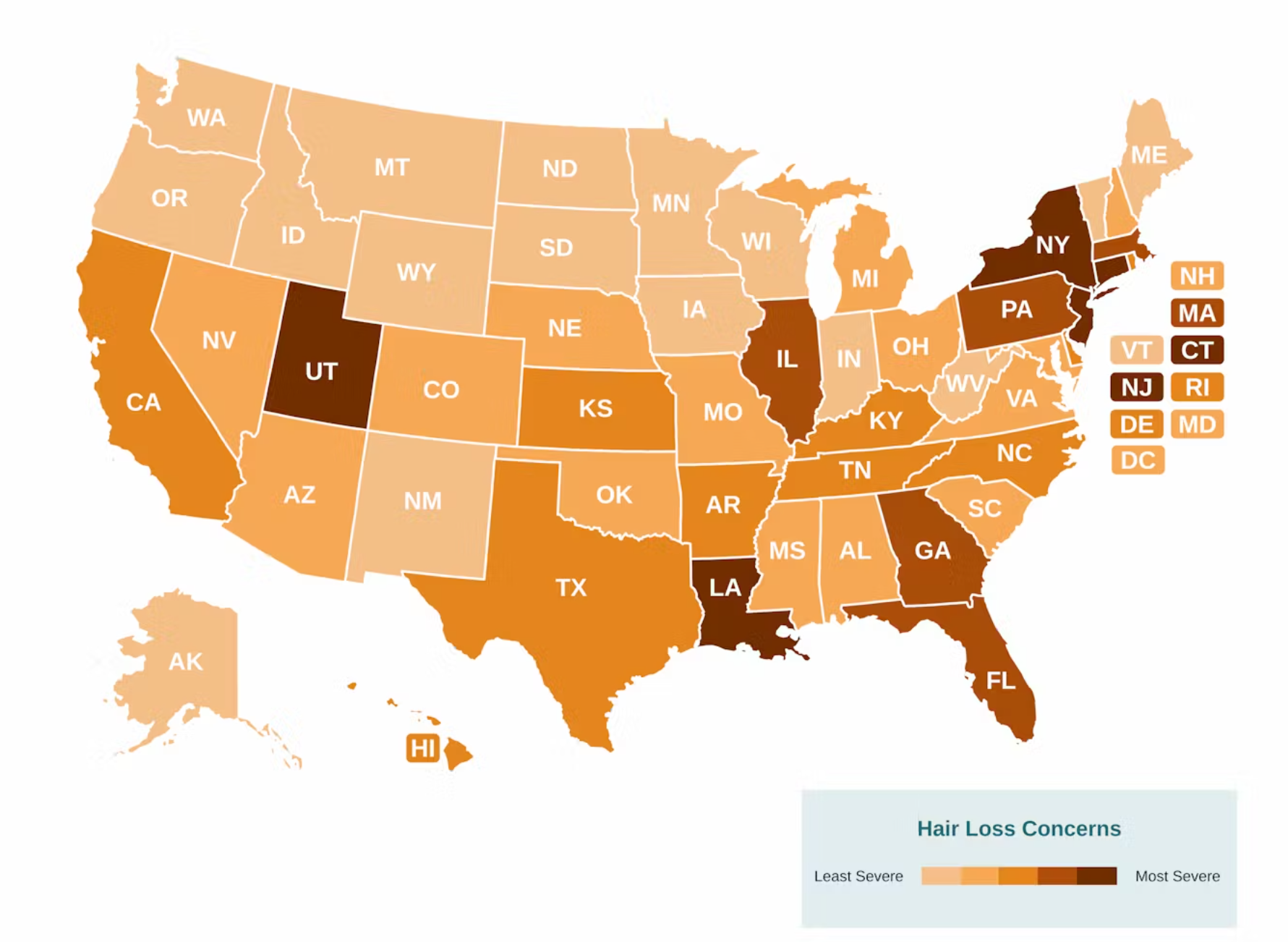
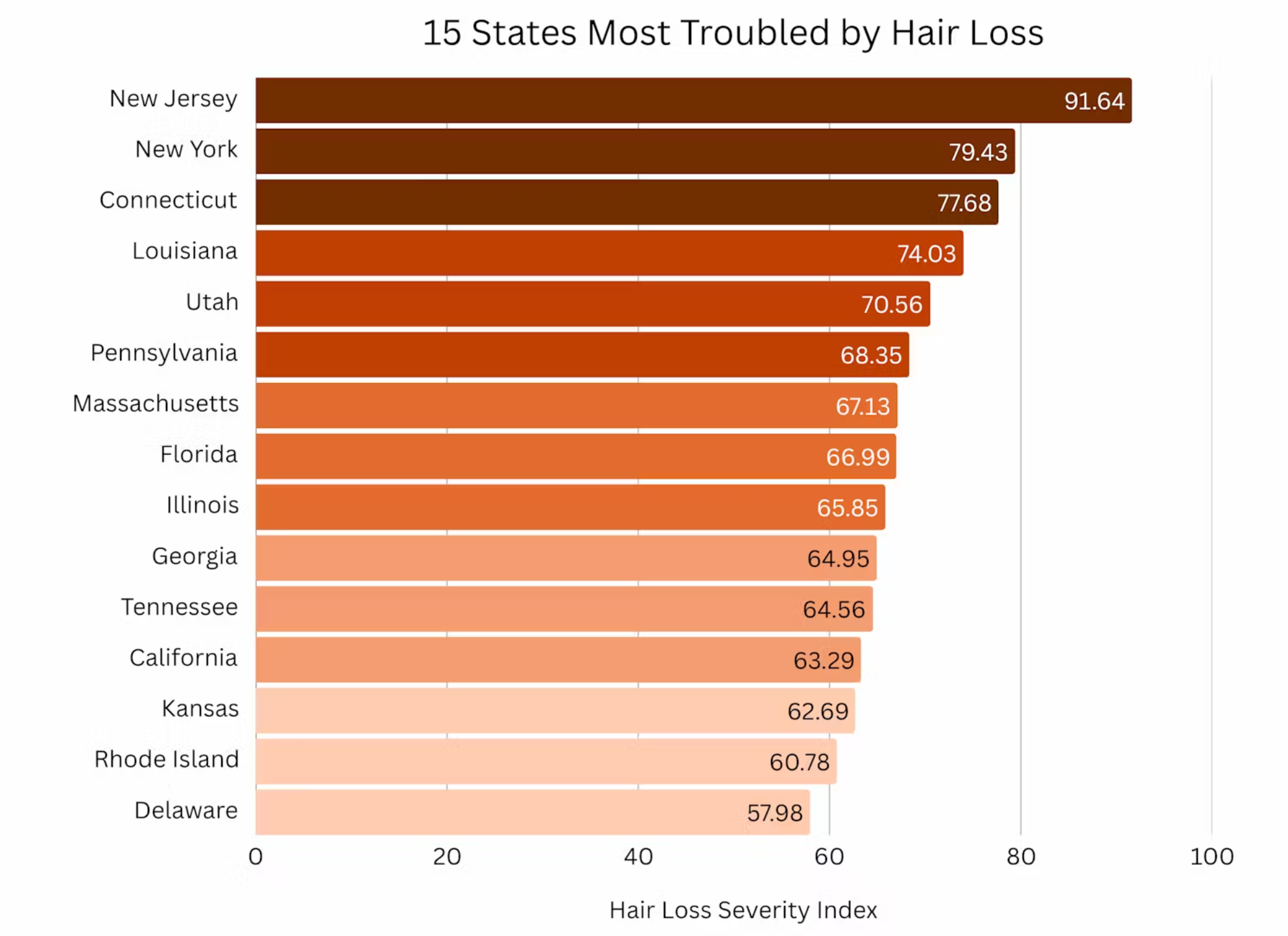
You might expect hair loss concerns to be uniform across the country, but that’s not the case. Research reveals the New York metropolitan area—especially New York, New Jersey, Connecticut, and Pennsylvania—shows the highest anxiety over hair thinning.
Why? These states also rank among the most stressed and have high levels of pollution, two factors known to accelerate hair loss. Environmental contaminants like PFAS and heavy metals found in New Jersey’s water systems are strongly linked to hair thinning. Additionally, New York and surrounding states often score high in studies measuring vanity, indicating residents care deeply about their appearance.
Southern states including Louisiana, Georgia, and Tennessee also express significant worry about hair loss. These states have high tobacco use rates—smoking is linked with pattern baldness—and large Black populations. Black communities experience higher rates of iron deficiency anemia, a nutritional issue known to cause hair loss.
Interestingly, states worried about hair loss aren’t just clustered in one area. Utah, Kansas, and California also rank highly, partly due to their poor air quality. Scientific studies indicate pollution can interfere with hair growth, increasing hair thinning concerns.
The chart below lists out the rankings of all 50 states and the District of Columbia.
| Overall ranking | Search magnitude (Google Trends) | Drug claims magnitude (Part D) | |
| New Jersey | 1 | Highest | Average |
| New York | 2 | Very High | Very High |
| Connecticut | 3 | Very High | Very High |
| Louisiana | 4 | Very High | Highest |
| Utah | 5 | Very High | Very High |
| Pennsylvania | 6 | Very High | High |
| Massachusetts | 7 | High | Very High |
| Florida | 8 | Very High | Average |
| Illinois | 9 | Very High | Average |
| Georgia | 10 | Very High | Average |
| Tennessee | 11 | Very High | Average |
| California | 12 | High | Very High |
| Kansas | 13 | High | Very High |
| Rhode Island | 14 | High | Very High |
| Delaware | 15 | High | Very Low |
| North Carolina | 16 | High | Average |
| Kentucky | 17 | High | High |
| Arkansas | 18 | Average | High |
| Texas | 19 | Average | High |
| Hawaii | 20 | High | Very Low |
| Colorado | 21 | Average | Average |
| Mississippi | 22 | Average | High |
| South Carolina | 23 | High | Low |
| Arizona | 24 | High | Very Low |
| New Hampshire | 25 | Average | Low |
| Alabama | 26 | Average | Low |
| Michigan | 27 | Average | Average |
| Maryland | 28 | Average | Lowest |
| Virginia | 29 | Average | Low |
| Nebraska | 30 | Low | High |
| District of Columbia | 31 | Low | High |
| Oklahoma | 32 | Average | Average |
| Missouri | 33 | Low | Very High |
| Ohio | 34 | Low | High |
| Nevada | 35 | Average | Very Low |
| New Mexico | 36 | Low | Very Low |
| Idaho | 37 | Low | Low |
| Minnesota | 38 | Low | Low |
| Indiana | 39 | Low | Average |
| Washington | 40 | Low | Low |
| Oregon | 41 | Low | Low |
| Iowa | 42 | Very Low | High |
| Wisconsin | 43 | Very Low | Low |
| West Virginia | 44 | Very Low | Average |
| Wyoming | 45 | Very Low | Very Low |
| Montana | 46 | Very Low | Very Low |
| Maine | 47 | Very Low | Very Low |
| South Dakota | 48 | Very Low | High |
| North Dakota | 49 | Very Low | Very High |
| Vermont | 50 | Very Low | Low |
| Alaska | 51 | Lowest | Very Low |
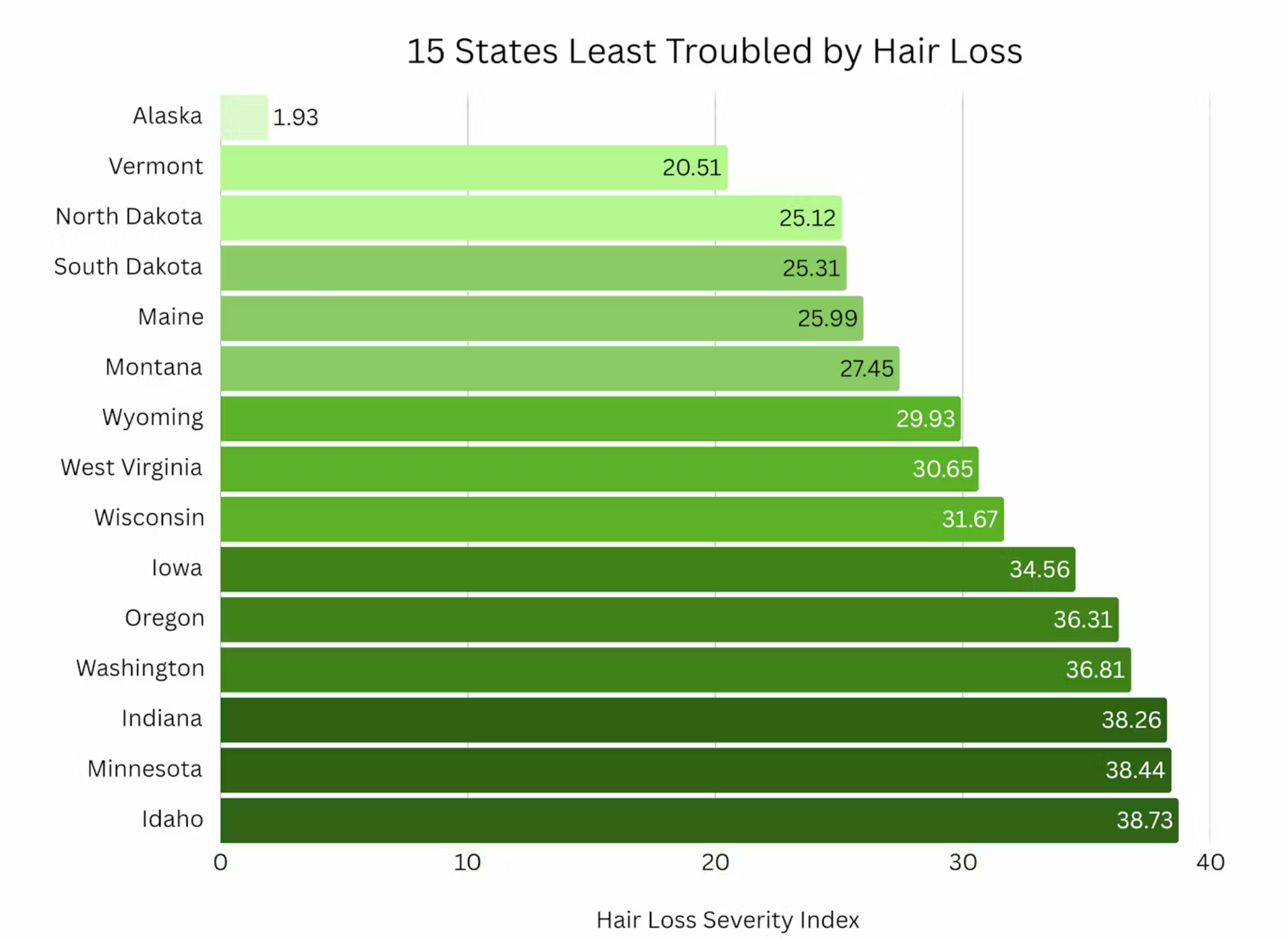
On the flip side, residents of western and midwestern states—including Alaska, Montana, Wyoming, and South Dakota—aren’t nearly as concerned. Alaska, ranking lowest overall, benefits from factors like fewer genetic predispositions to baldness among its Native populations. Alaska Natives and Indigenous Americans typically experience less hair loss genetically.
States like Oregon, Washington, and Maine, known for their cooler, cloudier climates, have fewer sunny days, limiting UV damage to hair. Researchers also note colder climates might protect against seasonal hair shedding. Moreover, many of these states have lower obesity rates and cleaner drinking water, both favorable for maintaining healthy hair.
But the most surprising connection could be stress levels. Many low-concern states are also ranked among the least stressful places to work. Less workplace stress can significantly lower your risk of stress-related hair loss, like telogen effluvium.
If you’re worried about losing your hair, understanding the type of hair loss matters most. The good news is that many forms, especially non-scarring ones like telogen effluvium and early-stage traction alopecia, can be reversed or improved with treatment. Usually, once the underlying cause—such as stress or damaging hairstyles—is addressed, your hair may regrow naturally within months.
However, pattern baldness, though non-scarring, can’t be permanently cured. It requires ongoing treatment like minoxidil to maintain hair growth. Around 93% of hair loss cases fall into this reversible category, leaving just 7% as permanent (scarring) losses. Permanent loss usually arises from untreated autoimmune conditions or long-term damage from tight hairstyles.
If caught early, most hair loss conditions can be managed effectively with medication, lifestyle adjustments, or medical intervention. The key is recognizing the signs early and addressing them quickly.
Researchers gathered extensive data from federal Medicare drug claims and analyzed search trends from Google. They considered hundreds of thousands of online searches each month for phrases related to hair loss, weighted by relevance and clarity of intent. The final state rankings combined these factors, along with an examination of environmental, health-related, and social variables.
New Jersey topped the worry scale due to intense search activity and pollution concerns, while Alaska’s residents demonstrated the least concern by a wide margin. Ultimately, no single cause explains all regional differences. Instead, it’s a complex blend of genetics, environment, lifestyle, and social attitudes toward appearance and health.
Research findings are available online at Innerbody.com.
Note: The article above provided above by The Brighter Side of News.
Like these kind of feel good stories? Get The Brighter Side of News’ newsletter.
The post These U.S. states are most troubled by hair loss – here’s why appeared first on The Brighter Side of News.

