In April 2026, NASA’s Artemis II mission carried four astronauts around the Moon and back, sending Reid Wiseman, Victor Glover, Christina Koch, and Jeremy Hansen farther from Earth than any humans before them. The Orion spacecraft, launched on the Space Launch System rocket, did not land on the lunar surface. It was not meant to.
The mission was a test, built to find out whether Orion could safely carry people into deep space and bring them home again. Still, its biggest result was hard to miss. Artemis II reached about 252,756 miles from Earth’s surface, setting a new record for human distance from home and reviving a part of space travel that had gone quiet for more than half a century.
That is why the mission feels bigger than a single flight. Artemis II did practical work, checking life support, navigation, and the demands of a trip around the Moon. It also did something older and more emotional. It made the history of space travel feel unfinished.
One way to understand that history is to picture it not as a list of missions, but as a map. First came the space just above Earth, where people learned how to survive in orbit and where satellites began changing life below. Then came the Moon, the first truly distant place humans reached. Beyond that came the planets, where robotic spacecraft turned remote points of light into weather, rock, ice, clouds, and terrain. Farther still came comets, asteroids, Pluto, and the dark outer edge of the solar system, where machines kept going long after human beings stopped.
The first steps were small only in hindsight.
In April 1961, Yuri Gagarin became the first human in space and the first person to orbit Earth aboard Vostok 1. The Soviet mission reached roughly 203 miles above Earth’s surface. That number now sounds modest beside later records, but the real question was not distance. It was survival. Could a person endure launch, weightlessness, orbit, and reentry? Gagarin’s flight answered yes, and in doing so changed space from something people watched into somewhere they could go.
NASA soon pushed crewed flight higher and made it more useful. Gemini 11, flown by Pete Conrad and Richard Gordon in September 1966, reached an apogee of about 850 miles above Earth’s surface. The point was not just altitude. The mission practiced rendezvous and docking, the sort of careful orbital work that later helped make lunar travel possible. Spacecraft were no longer just carrying passengers. Astronauts were learning how to work.
Not every milestone came from dramatic records. Soyuz, first flown in crewed form in 1967 by the Soviet Union and later operated by Russia, spent most of its long life in low Earth orbit. It carried crews, docked with stations, and returned people safely home. Over time it served Salyut, Mir, and the International Space Station. Soyuz mattered because it made human spaceflight steady. The machine did not turn each launch into a spectacle. It turned it into a system.
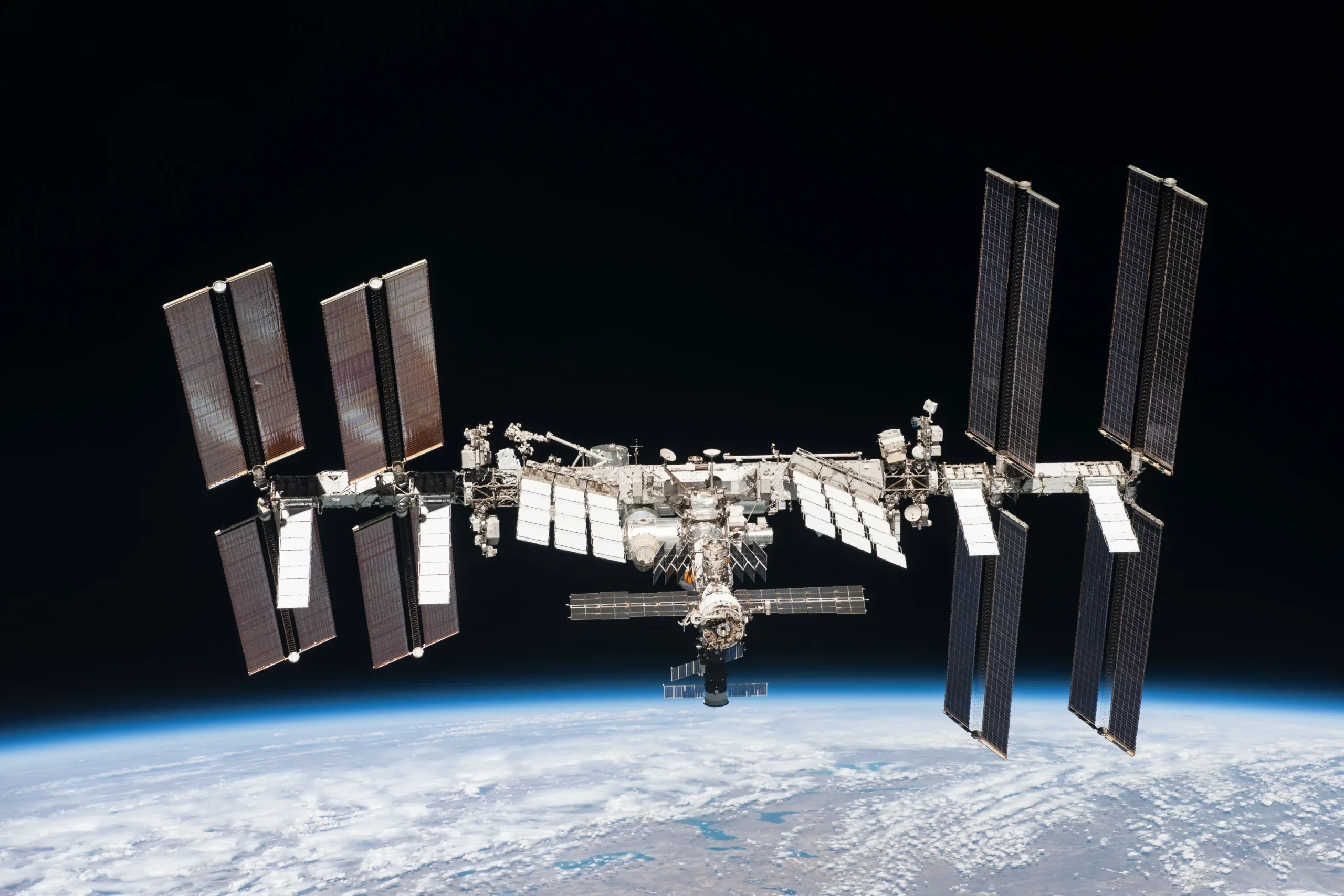
The International Space Station extended that idea. Built through a partnership led by the United States and Russia, with major contributions from Europe, Japan, and Canada, the ISS circles about 250 miles above Earth’s surface. It never matched lunar missions in sheer distance. That was never the point. Its purpose was long-term research and learning how humans can live and work in space for months at a time. The station showed that spaceflight did not always have to mean leaving faster and going farther. It could also mean staying.
Satellites widened the meaning of space in another direction. The Syncom program, developed by the United States in the 1960s, helped open the age of communications satellites in geosynchronous orbit, about 22,300 miles above Earth’s surface. They did not carry people, but they changed what human technology could do from space. Live television, weather monitoring, military coordination, and global communications all grew from this expanding reach. In the modern era,
Starlink has pushed that logic further. Orbiting much lower, at about 342 miles above Earth’s surface, SpaceX’s satellite network represents a crowded and highly practical use of near-Earth space. If Syncom hinted at space as infrastructure, Starlink made the point impossible to miss.
Then came the moment when Earth orbit stopped being enough.
Apollo 8, launched in December 1968, carried Frank Borman, Jim Lovell, and William Anders on the first crewed mission to leave Earth orbit and circle the Moon. The spacecraft reached about 230,000 miles from Earth’s surface. Its purpose was to prove that humans could navigate to lunar distance, enter lunar orbit, and return safely. The Earthrise photograph became its most famous image, but the larger fact mattered more. People had left Earth behind and gone to another world.
Apollo 11 turned that into one of history’s fixed points. In July 1969, Neil Armstrong, Buzz Aldrin, and Michael Collins flew to the Moon aboard a Saturn V rocket. Armstrong and Aldrin landed in Eagle while Collins remained in orbit. The mission traveled roughly 238,900 miles from Earth’s surface, and it did what it set out to do: land humans on the Moon and bring them back. The event became so famous that it can seem inevitable in memory. It was not. It was the moment the Moon stopped being a destination in theory and became a place where human footprints existed.
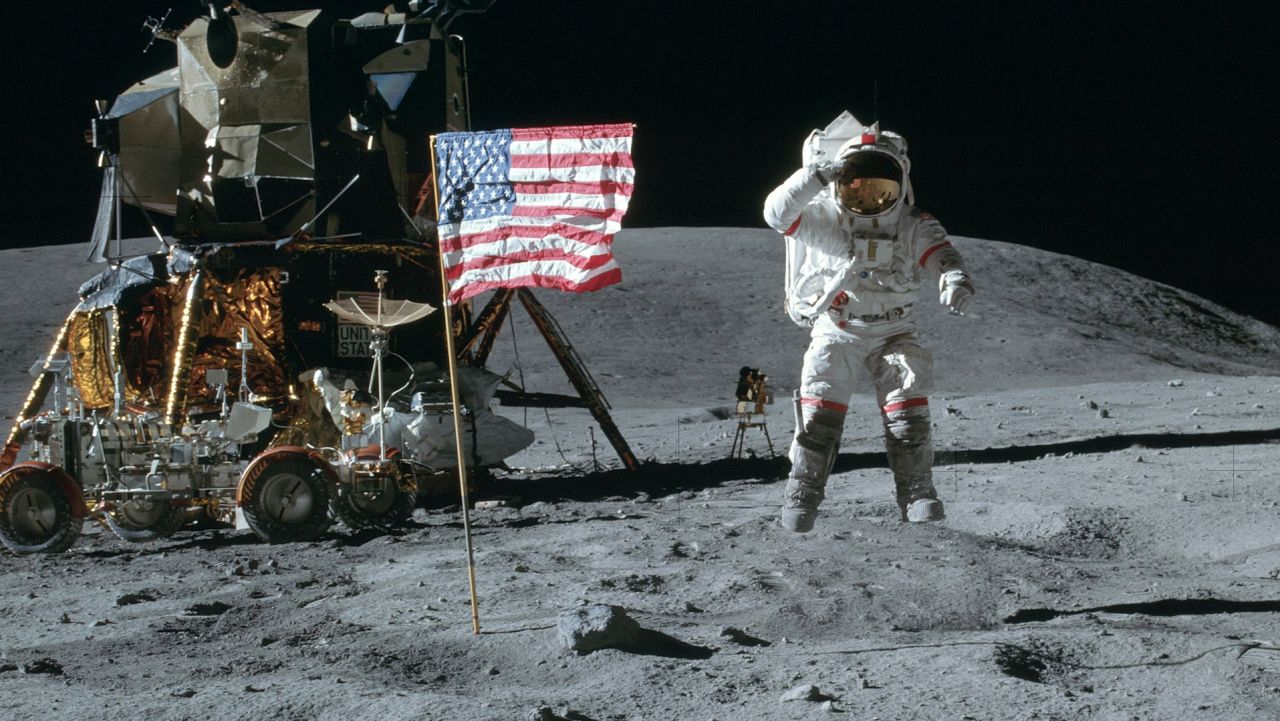
Apollo 13, launched in April 1970, followed with a very different kind of significance. Jim Lovell, Jack Swigert, and Fred Haise were headed for the Moon when an oxygen tank explosion crippled the spacecraft. The landing was canceled. Survival took over. As the damaged craft looped around the Moon on a free-return path, the crew reached about 248,655 miles from Earth’s surface, setting the human distance record that stood until Artemis II. Apollo 13 entered history as an emergency, but it also marked the outer edge of human travel for decades.
The Moon did not remain only an American and Soviet story. China’s Chang’e-4 landed on the lunar far side in 2019, reaching about 239,000 miles from Earth’s surface. India’s Chandrayaan-3, launched in 2023, traveled about 229,500 miles on its way to a successful landing near the Moon’s south polar region, making India the first nation to achieve a soft landing near that area. By then, the Moon was no longer just a Cold War symbol. It had become a shared target in a wider international effort.
That is what gives Artemis II its particular place. It was not a landing like Apollo 11, and it was not a crisis like Apollo 13. It was a test flight, calm by design. Yet by pushing the human line out to 252,756 miles from Earth’s surface, it made lunar-distance spaceflight feel current again. The mission suggested that deep-space travel by people may be returning not as a short race, but as part of a longer program.
While human beings paused near the Moon, robotic spacecraft kept moving outward.
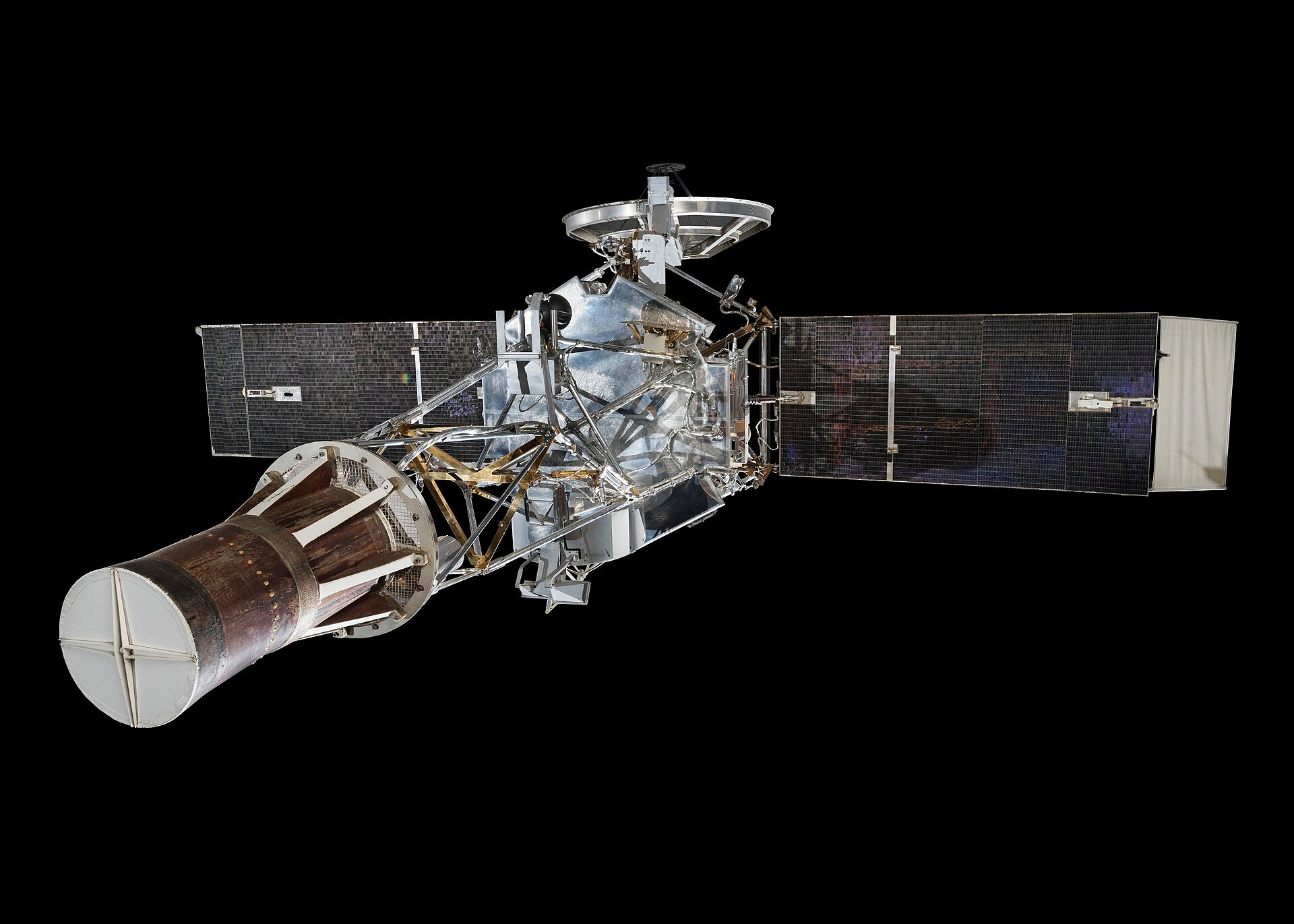
The planetary era began in 1962 with Mariner 2, which flew past Venus after traveling about 36 million miles from Earth. Its data showed that Venus was intensely hot and hostile, not a cloud-covered world of tropical speculation. A decade of imagination gave way to measurement.
Mars became another major step. NASA’s Perseverance rover traveled about 293 million miles from Earth’s surface before landing in Jezero Crater in 2021. Its goals were to study Martian geology, search for signs of ancient microbial life, and collect rock samples that may one day return to Earth. The mission also worked with Ingenuity, the small helicopter that made the first powered flights on another planet. By that point, robotic exploration was not just reaching distant worlds. It was operating on them with precision.
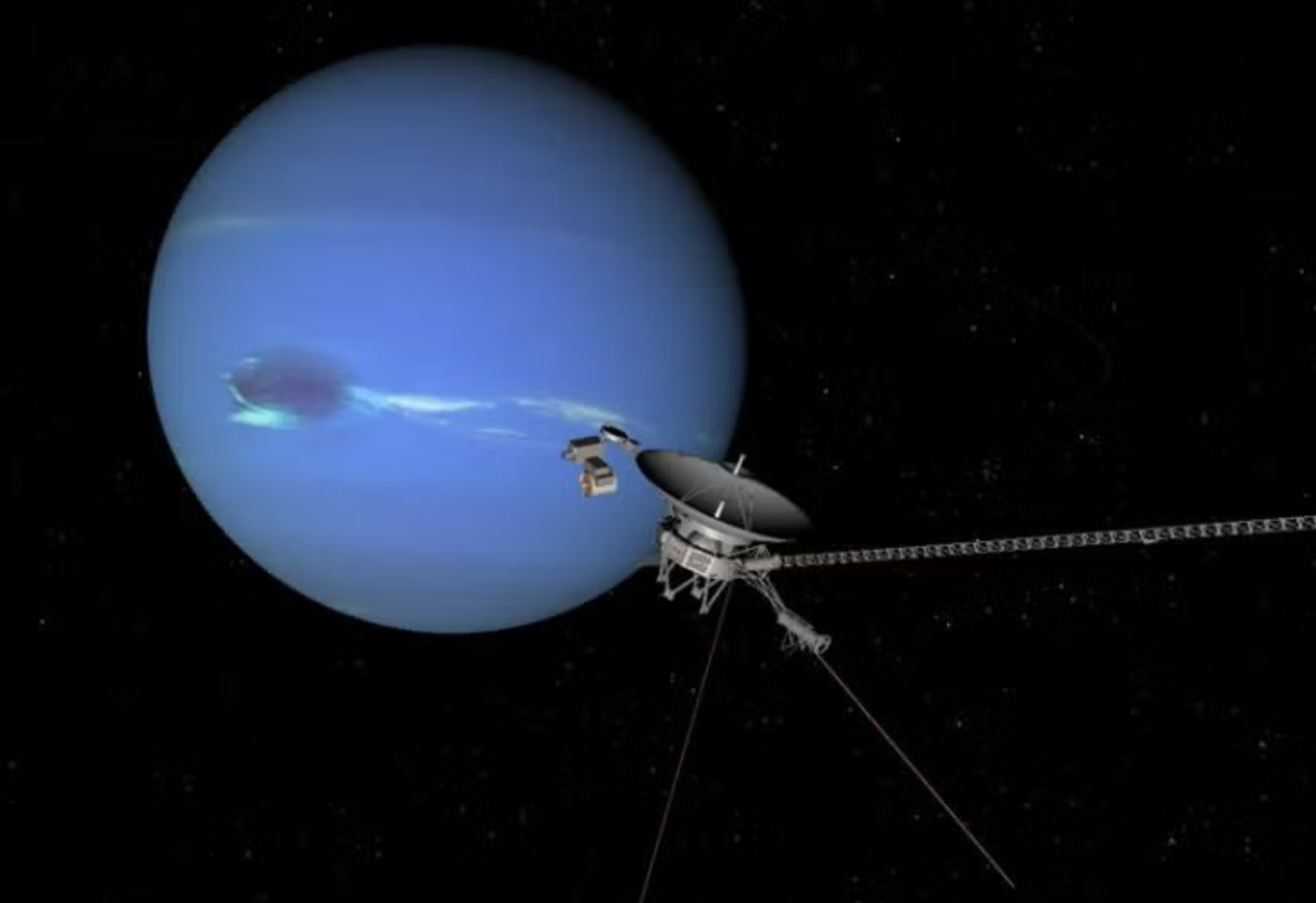
Voyager 2 pushed farther and changed the outer solar system from abstraction into detail. Launched in 1977, it became the only spacecraft ever to visit Uranus and Neptune. It passed Uranus in 1986, then Neptune in 1989, revealing moons, rings, violent weather, and a strangely tilted magnetic field. Today it is about 13.2 billion miles from Earth’s surface, still traveling through interstellar space.
Other missions made deep space feel less like empty distance and more like a place with texture. Rosetta traveled roughly 500 million miles to comet 67P/Churyumov-Gerasimenko and released the Philae lander onto its surface. Hayabusa2 reached the asteroid Ryugu, collected samples, and returned them to Earth.
New Horizons crossed around 3 billion miles to Pluto, then delivered the first detailed views of mountains, icy plains, and unexpectedly complex geology on a world once known mostly as a moving dot.
Voyager 2 became the great explorer of the outer planets, visiting Jupiter, Saturn, Uranus, and Neptune before continuing outward to a current distance of about 13.2 billion miles from Earth’s surface.
Voyager 1, launched a few weeks later in 1977, followed a faster path that took it past Jupiter and Saturn and then out toward interstellar space. NASA lists Voyager 1 at 164.7 astronomical units from Earth in its latest posted status, which is more than 15 billion miles from Earth’s surface, making it the most distant human-made object ever created.
There is one more way humanity has reached into space, and it did not ride on a rocket. For more than a century, Earth has been sending radio waves outward at the speed of light. If you count true broadcasting rather than earlier point-to-point signaling, a commonly cited starting point is Reginald Fessenden’s Christmas Eve transmission in 1906, the first radio program of voice and music sent over long distances.
That means the oldest layer of our radio “bubble” is now about 119 light-years from Earth. In practical terms, those signals would have swept past every planet in our own solar system long ago and reached many nearby exoplanets as well. They would already have passed worlds such as Proxima Centauri b, about 4 light-years away, Ross 128 b at about 11 light-years, the Tau Ceti planets at about 12 light-years, the TRAPPIST-1 system at about 40 light-years, and LHS 1140 b at about 49 light-years.
You might be asking whether any of those worlds are close enough that a reply could already have made it back. For that to happen by April 2026, a planet would need to be within about 60 light-years of Earth, because the message has to travel out and a reply has to travel back. By that measure, the answer is yes, at least in terms of distance.
Any civilization on planets around Proxima Centauri, Ross 128, Tau Ceti, TRAPPIST-1, or LHS 1140 would have had enough time to receive our earliest broadcasts and send back an immediate radio response that could have reached Earth by now. More distant worlds would not have had time to complete that round trip yet.
So even before humans traveled to the Moon, and long before spacecraft crossed the outer solar system, Earth had already begun announcing its presence to a surprisingly large part of the galaxy.
From the first fragile orbit of Vostok 1 to Artemis II’s record-setting journey around the Moon, the story of space travel is really the story of how humanity keeps widening its horizon. Satellites turned orbit into part of everyday life, Apollo carried people to another world, robotic probes pushed across the planets and beyond them, and our radio signals raced ahead of us into the galaxy.
Step by step, mission by mission, humans have reached farther from Earth than earlier generations could have imagined. Yet the larger truth may be that this story is still in its early chapters.
Artemis II shows that the human journey outward is not over, and every new launch suggests that the distance between Earth and the rest of the universe may keep shrinking in the years ahead.
The original story “To the Moon and beyond: Artemis II and humanity’s reach into space” is published in The Brighter Side of News.
Like these kind of feel good stories? Get The Brighter Side of News’ newsletter.
The post To the Moon and beyond: Artemis II and humanity’s reach into space appeared first on The Brighter Side of News.


Leave a comment
You must be logged in to post a comment.