For decades, we have been taught that the universe is expanding faster and faster. That belief has influenced our view of distant galaxies, how cosmologists have built their theories, and how researchers have described a mysterious, repulsive force we reference as dark energy. This idea even won scientists the Nobel Prize in Physics. Recently, however, new evidence suggests that this narrative could be more complex and much more personal than we may have once thought.
A team based in Yonsei University in South Korea analyzed thousands of measurements of distance based on Type Ia supernovae, long regarded as reliable beacons for measuring the expansion of the universe. These bright explosions of stars have been used as “standard candles”, which means that the brightness of the supernova is expected to be the same, after making some well-tested corrections.
These supernovae are explosive events, and while you may never see one yourself, they have served as the basis for nearly every major conclusion regarding dark energy. The new analysis suggests that those assumptions should be carefully re-investigated.
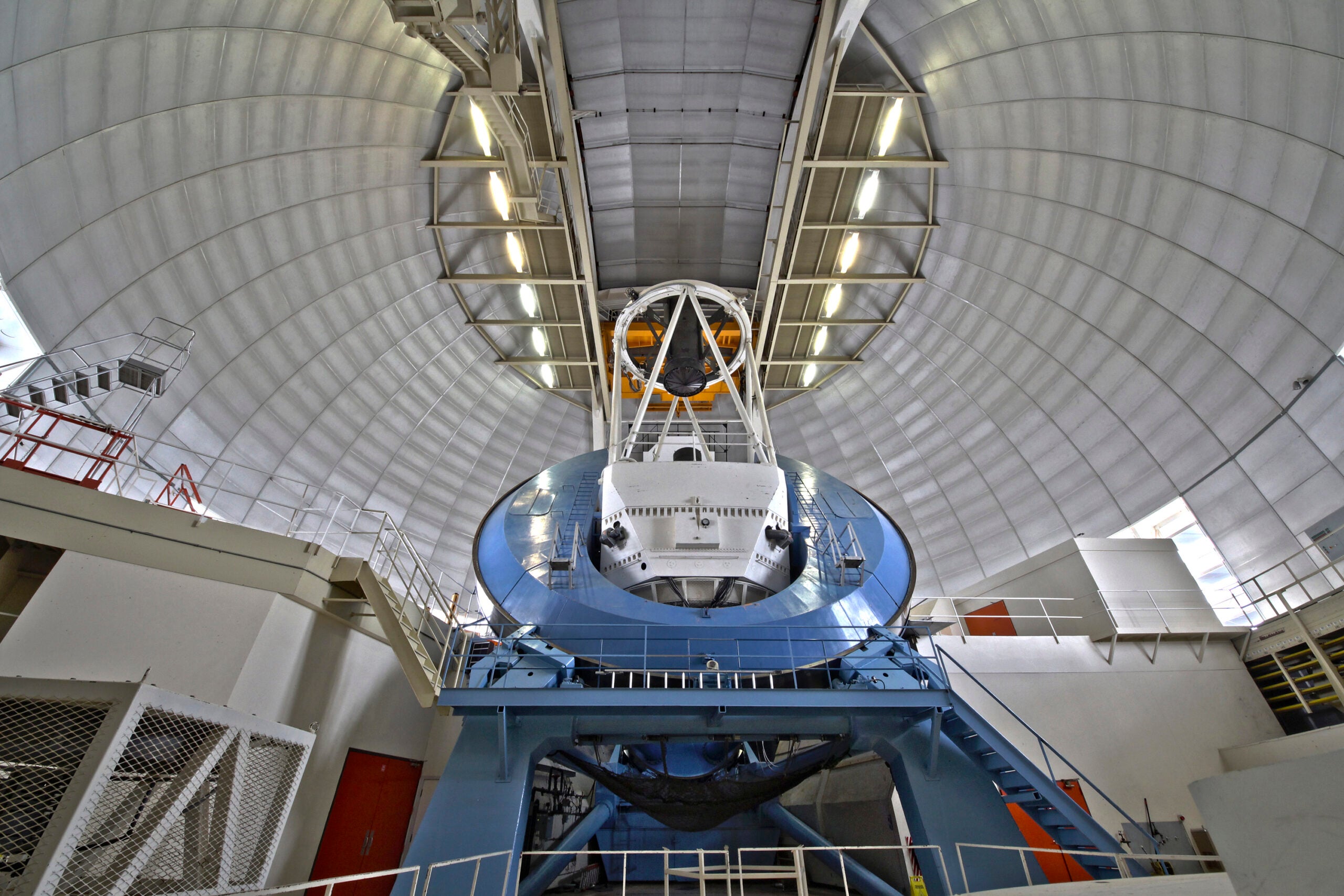
When we are told that the distant supernovae appear dimmer than expected, the conclusion we draw is that the universe is accelerating. However, that dimness is based on the idea that all standardized Type Ia supernovae emit the same intrinsic brightness, regardless of the age of their respective stars. The team at Yonsei found this not to be true.
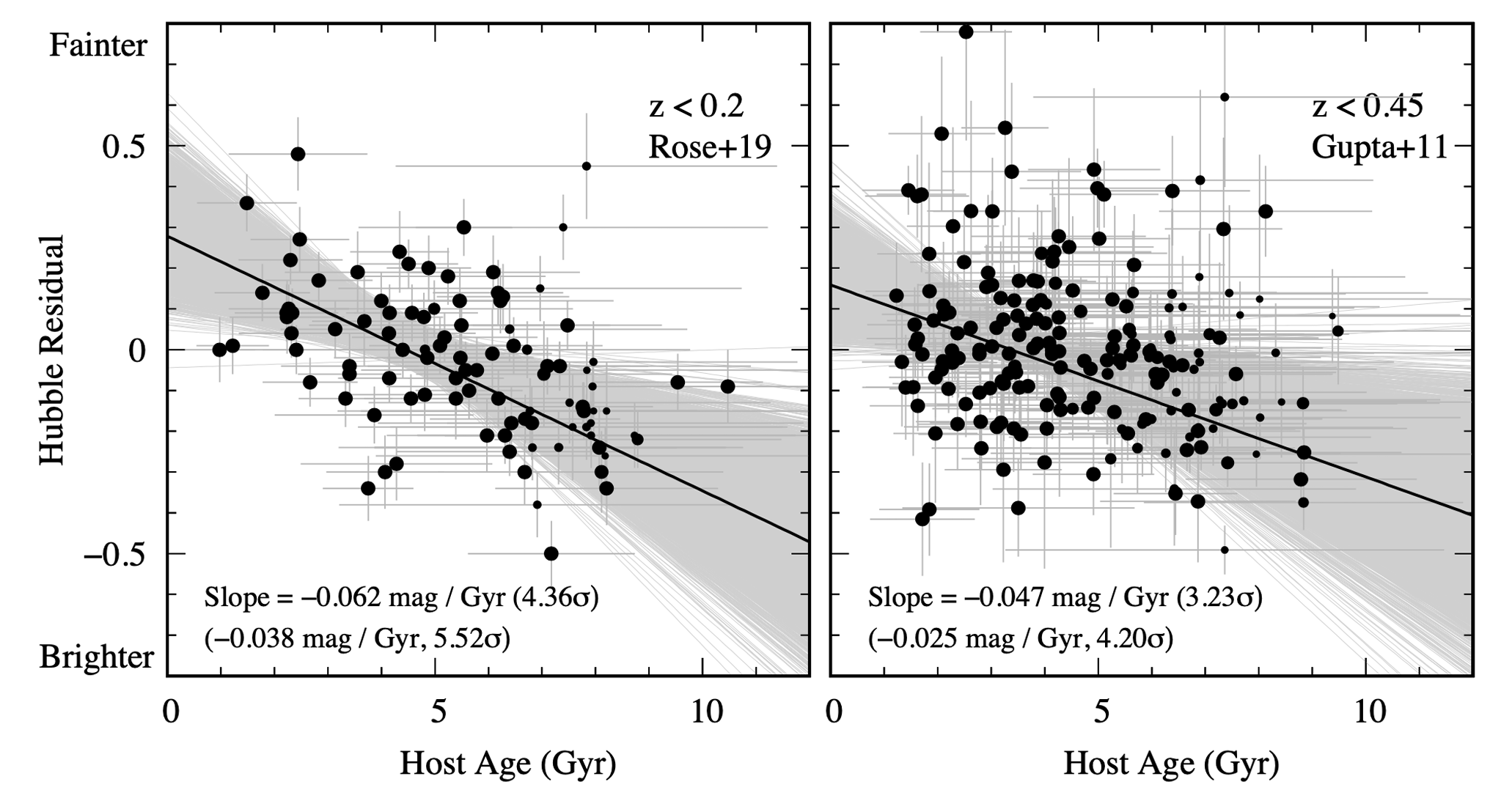
By directly measuring the ages of 300 host galaxies, the researchers found something surprising with extremely high confidence. Once standard corrections were applied, supernovae from younger stars were consistently fainter, while explosions from older stars were brighter. The effect is unspectacular but very powerful. It adds up as you go deeper into space and backward in time. When the team corrected for the age-related bias, the whole cosmic expansion story changed.
We may not think twice about the distances to a distant star, but this study shows that it alters how bright a supernova appears post-standardization. Over billions of years of galaxy formation, all galaxies are going to produce different mixtures of young and old stars. Thus, the average Type Ia supernova in a distant galaxy will carry a systematic brightness offset in the data compared to a Type Ia in a closer galaxy. After fixing for this effect in the data, the results no longer fit the expectations of a universe driven by a static force of dark energy.
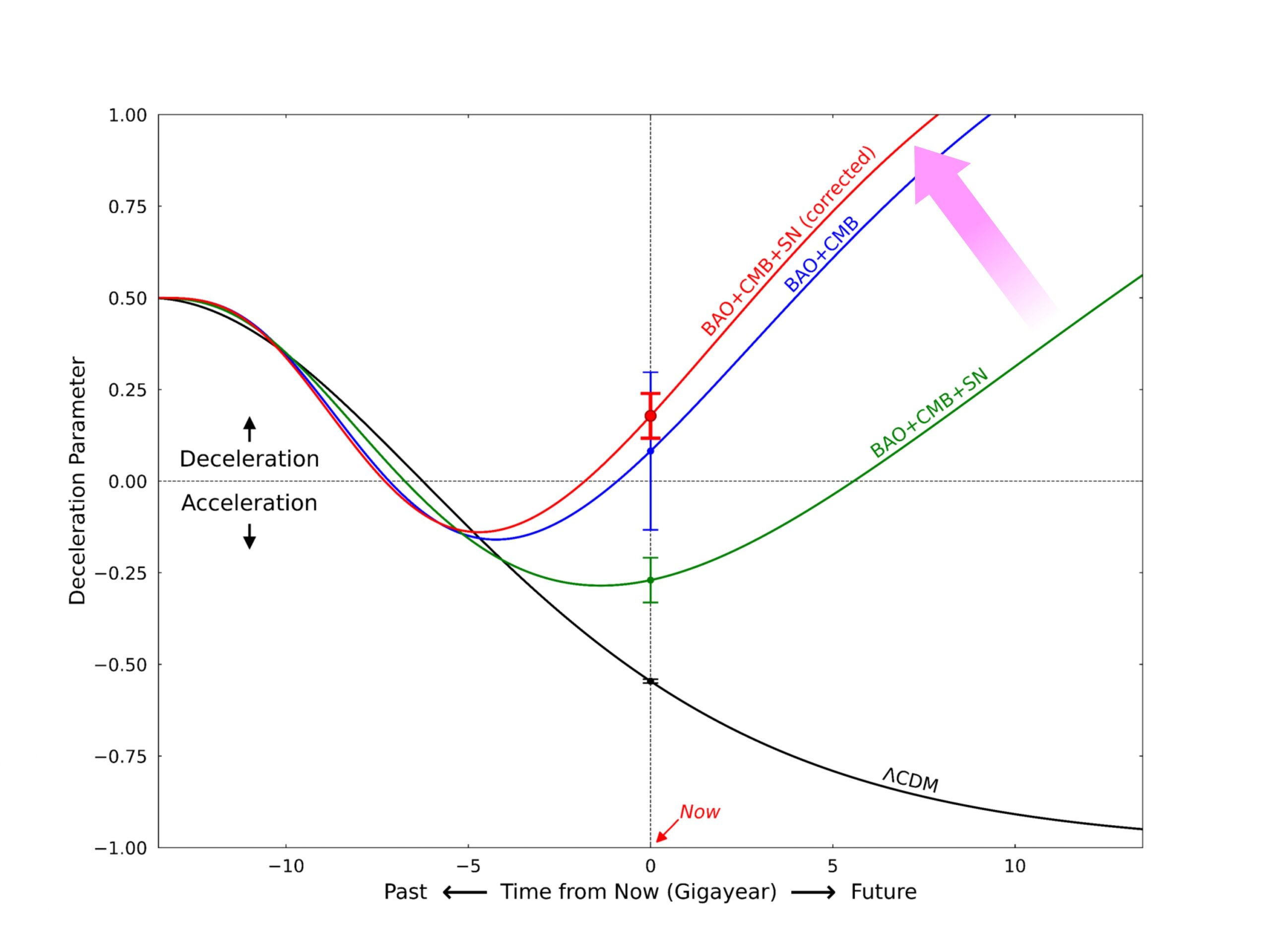
After removing the age-related bias, the supernova data fit much better with results from the baryon acoustic oscillation and the cosmic microwave background. These independent probes act like rulers for the early Universe. The data tells the same consistent story without the input of supernovae.
What the combination of corrected supernova data suggests is even more remarkable. The Universe is likely not accelerating right now. It may have already entered a slowed-decelerating phase. Lead researcher Professor Young-Wook Lee called the findings “remarkable” and claimed they show dark energy changing much more rapidly through time than previously understood.
If you’ve grown accustomed to thinking of dark energy as a constant push ubiquitous through all of space, this shift can feel somewhat unsettling. And yet this is how science works. A detail that feels small, like the age of the star behind a supernova, can ripple out into the scientific community and force you to rethink foundational concepts.
A question of how the universe behaves is not just a question of physics. It is part of how we think about beginnings, endings, and our place in an infinite and fragile universe. If dark energy evolves, then we live in a universe that is far more dynamic than previously imagined. The long-term fate of that universe becomes uncertain. The universe may not expand indefinitely and may not do so increasingly fast for as long as we can understand those forces.
This also touches the well-known Hubble tension, an ongoing disagreement on how fast the universe expands. If younger supernovae behave differently from older supernovae and that difference is not accounted for, the distance ladder used to measure cosmic distance may be incorrect. Correcting that bias might bring the local Hubble constant value down, which may help in reducing the difference between early universes and late universes.
In order to test their data, the Yonsei team used an “evolution-free” method. They used a selected sample of only supernovae from young, closely matched galaxies across all distances. Furthermore, these data showed the same trend as the corrected full sample. That was an important independent check.
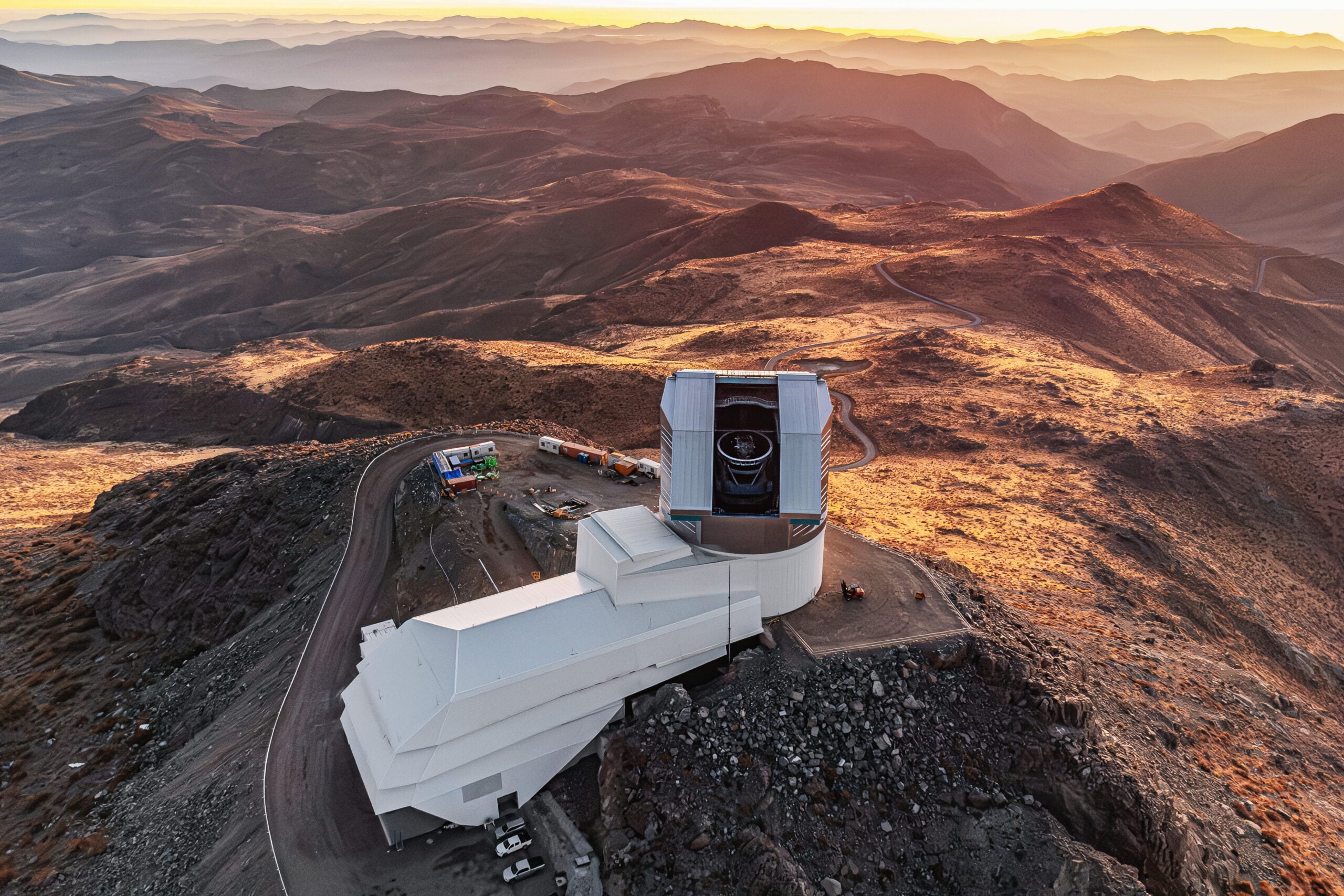
Looking forward, astronomers expect an explosion of new data from the Vera C. Rubin Observatory. In the next five years, they will monitor and measure more than 20,000 galaxies that host a supernova. They will also be able to measure stellar ages to a far better precision than is feasible at this point. Those measurements may be able to prove whether the cosmic shift suggested by the results of this study is real or whether another layer of complexity is yet to be presented in the cosmos.
As we think about the results, it is helpful to remember that science is rarely settled after one result. The universe has plenty of mysteries that challenge our assumptions. Still, this work demonstrates something hopeful: more answers are on the way, and they may produce better clarity about the cosmos that you space calls home.
Research findings are available online in the journal Monthly Notices of the Royal Astronomical Society.
Like these kind of feel good stories? Get The Brighter Side of News’ newsletter.
The post Universal expansion may be slowing down rather than speeding up appeared first on The Brighter Side of News.

