Life feels lighter when you sense you can steer it. That feeling, the quiet belief that your choices matter, sits at the center of a new global study on happiness and well-being. Researchers at Finland’s Aalto University report that autonomy, the sense of freedom of choice and control over how life turns out, links to higher happiness and life satisfaction across the world. Yet the strength of that link shifts with money and culture, growing sharper in wealthier and more individualistic countries.
The research tackles a long argument in psychology and social science. Some scholars say autonomy is a universal human need. Others say it is prized most in rich, individualist societies, while people in tougher conditions may focus on more urgent needs. The Aalto team concludes both sides have a point.
“We found that autonomy is connected with well-being no matter what part of the world you look at, but there’s also a cultural element,” said Frank Martela, a philosopher and psychology researcher at Aalto University. “A sense of autonomy in your life matters more for well-being in rich, individualistic countries, like the Nordics, but it might be valued less in poorer countries where other factors are more pressing.”
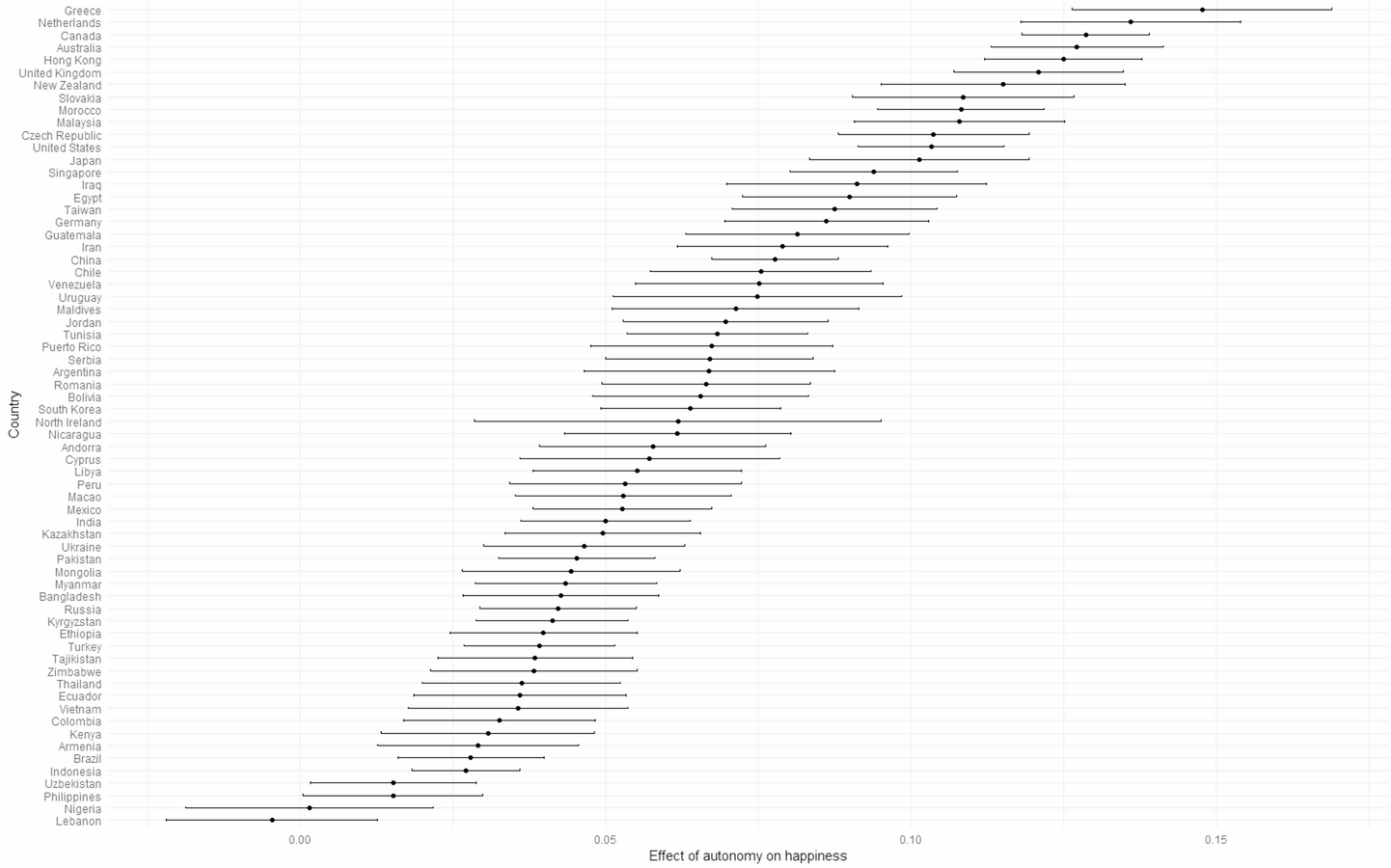
The study draws on interviews with nearly 100,000 people in 66 countries. It uses a measure of national wealth based on per capita GDP adjusted for purchasing power. It also relies on a newer way to gauge whether a culture leans individualistic or collectivist. Together, those pieces let the researchers ask a practical question: where does autonomy matter most, and what should policy focus on if the goal is better lives?
The team used data from the World Values Survey, collected between 2017 and 2023. To capture well-being, the survey asked two direct questions, one about happiness and another about life satisfaction. To measure autonomy, it asked how much “freedom of choice and control you feel you have over the way your life turns out.”
That single prompt carries a lot of emotional weight. It reflects whether you feel trapped or empowered. It reflects whether your daily choices feel real, or only symbolic.
The study then connected those personal answers to two country-level measures. Wealth came from per capita GDP (PPP). Culture came from a recently developed metric called the Global Collectivism Index, which tries to avoid common flaws in older measures of individualism.
“Other metrics include things like good physical working conditions, which at face value have nothing to do with collectivism,” Martela said. “The GCI focuses more on behavioural indicators of collectivism that can be objectively measured.”
The index draws on patterns such as shared transportation and shared households. Martela notes it is not perfect, but he calls it the best available tool right now.
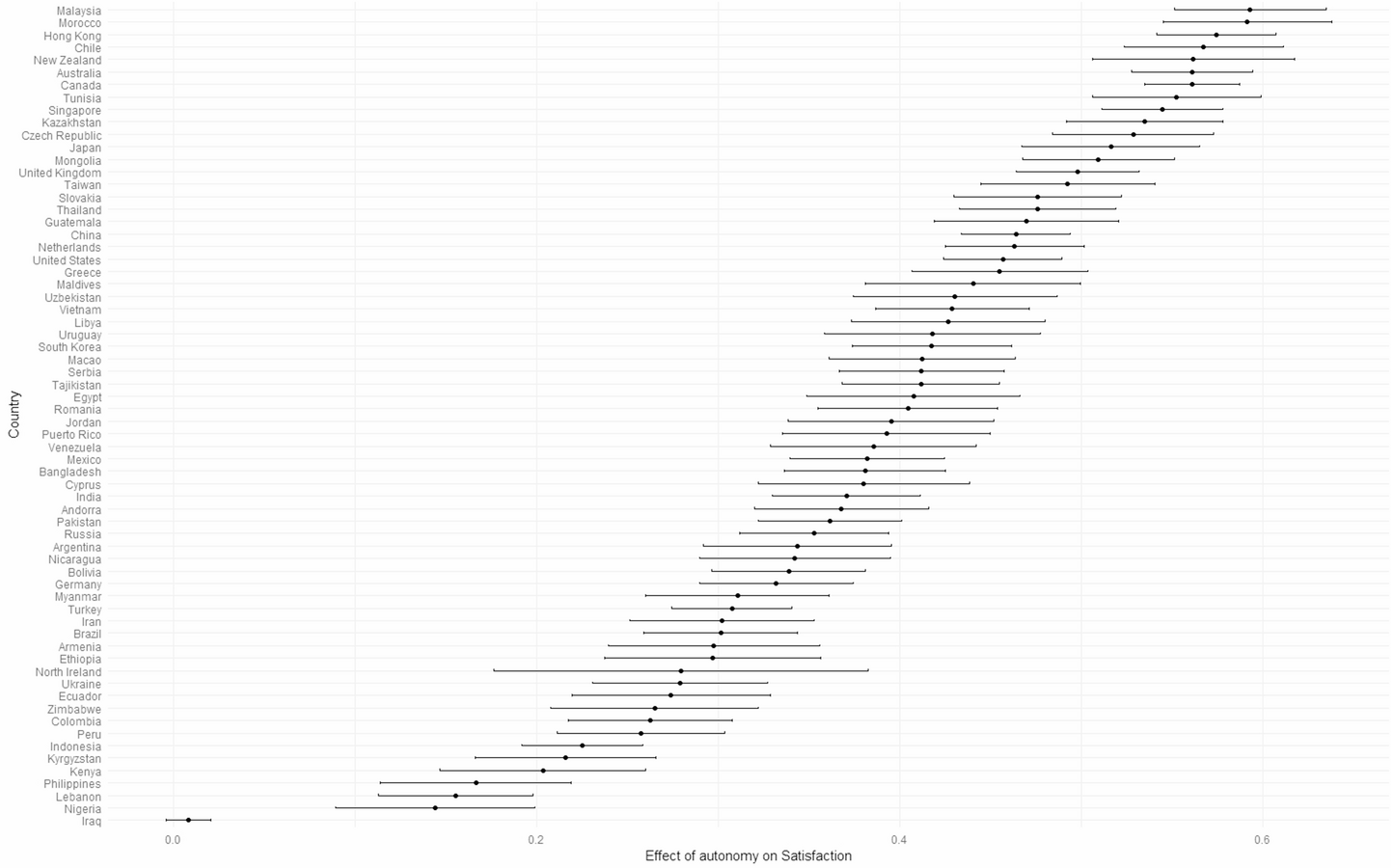
Across the countries studied, autonomy showed up as a consistent companion to well-being. People who reported more freedom and control tended to report higher happiness and greater life satisfaction.
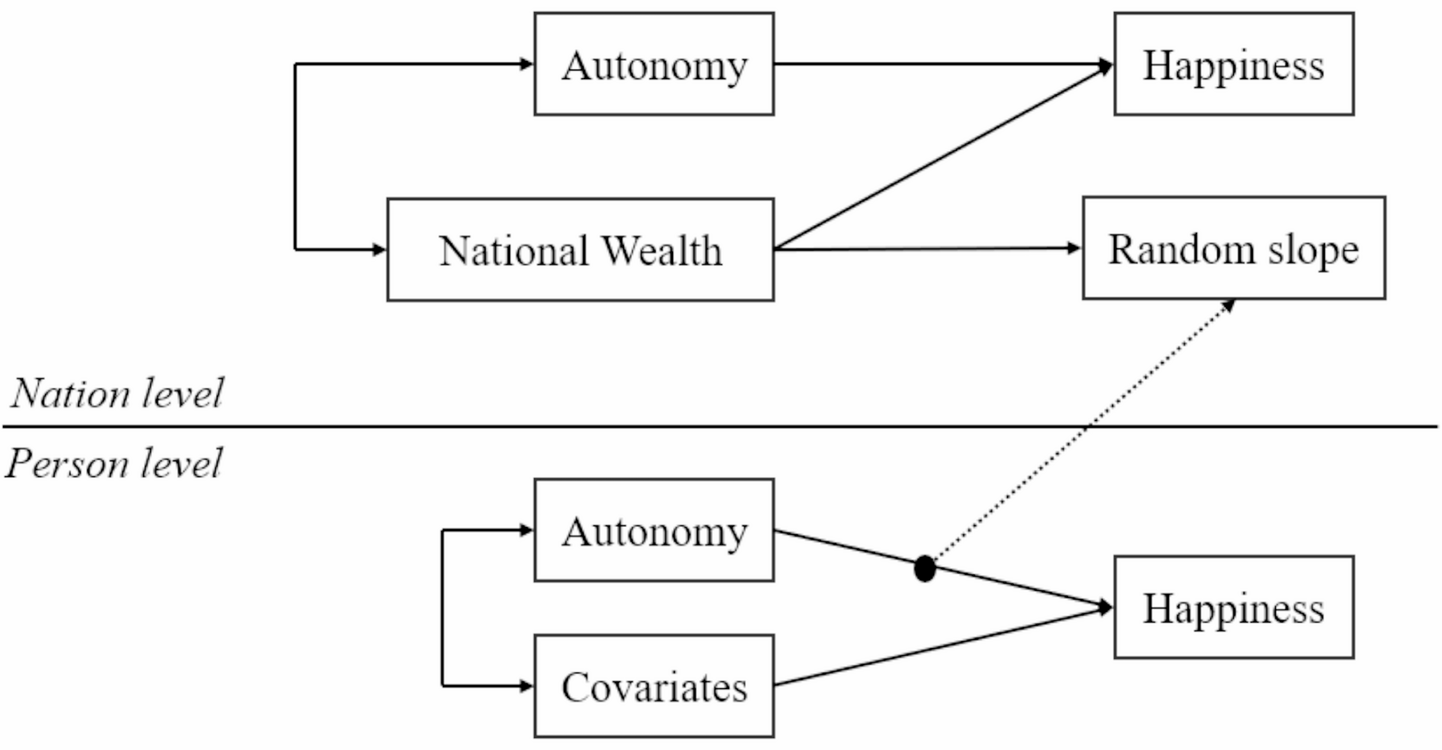
At the same time, the study found a clear pattern: the autonomy-well-being link grows stronger in richer countries and in more individualistic cultures. That does not mean autonomy stops mattering elsewhere. Instead, it suggests the emotional payoff of autonomy changes depending on the setting.
In places where daily life is shaped by scarcity, instability, or basic survival pressures, other needs may crowd the stage. Autonomy can still matter, but it may compete with more immediate concerns. In wealthier nations, where more people can meet basic needs, autonomy may become a more central driver of how good life feels.
Martela says this helps settle the long debate.
“There have been two views on autonomy. There’s a theory that autonomy is a universal human need, so it should be connected to well-being no matter the culture and individual preferences,” he said. “Others have argued that autonomy is something especially valued in wealthy and individualist countries, while other needs are more important in other contexts. Our study basically shows that both are right.”
This nuance changes how you interpret global happiness rankings and national well-being conversations. It suggests that “more freedom” can mean different things depending on where you live and what pressures surround you.
The research has a direct message for policy-makers: improving well-being is not one-size-fits-all. Martela argues the best approach depends on a country’s starting point.
“Because both autonomy and national wealth seem to be important predictors of well-being, the best advice depends a bit on the state of the country,” he said. “If a country is very poor, then increasing the national wealth tends to be a good way of increasing well-being; especially if this gain in wealth is fairly distributed. But the richer a nation becomes, the more it should pay attention to autonomy.”
That last line carries an important twist. In richer societies, well-being policy may shift from only building safety nets to also shaping the conditions of everyday choice. Autonomy is not just a political concept tied to elections or civil rights. It can show up at work, at school, in health care, and in the way social systems treat people.
Martela stresses that point.
“Even work life can be something where people experience more or less autonomy,” he said. “Since we know autonomy is a basic need, we should consider how we can support it on different levels and through different institutions in our societies.”
That idea brings the study close to home. You might feel autonomy in flexible schedules, respectful managers, and fair rules. You might lose it in unstable jobs, rigid systems, or decisions made about you without you. The study suggests those feelings are not trivial. They tie to well-being in a measurable way.
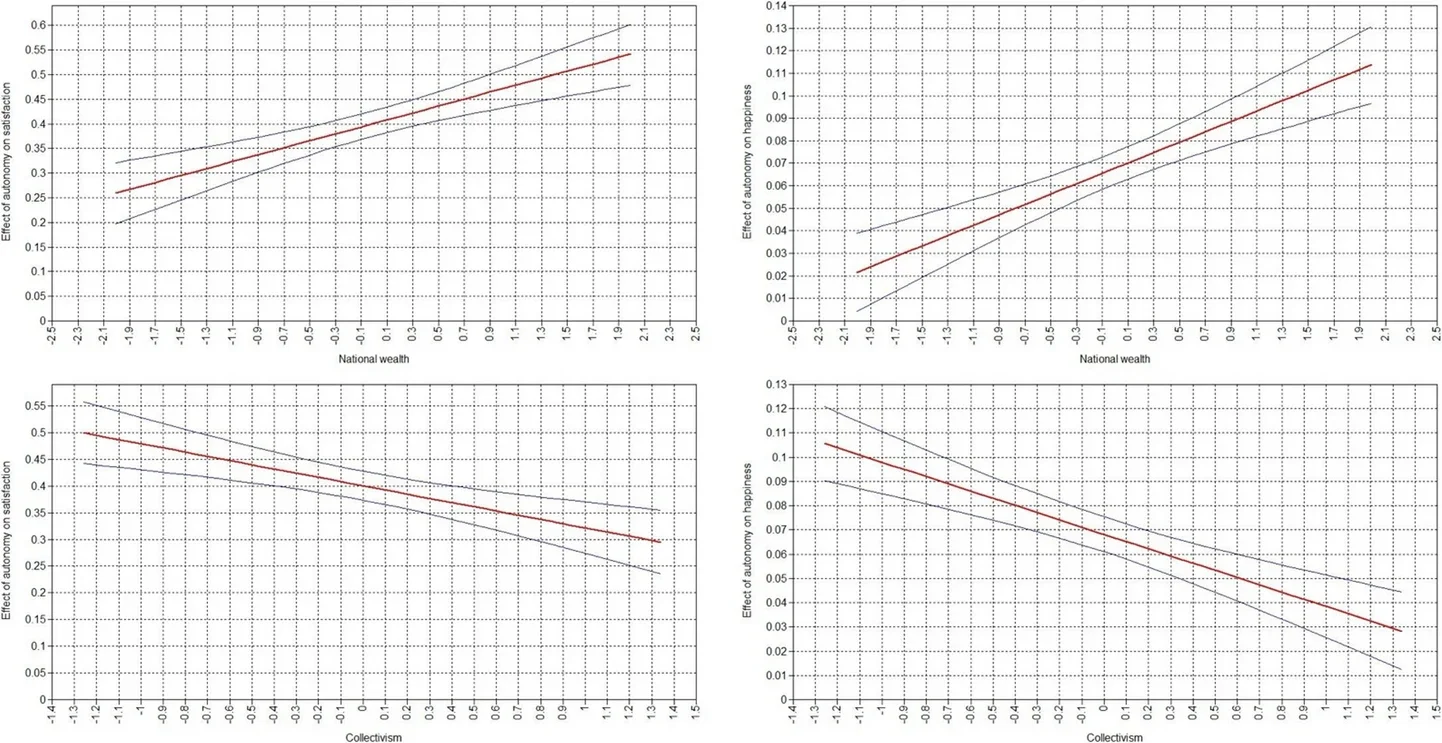
The findings give policy-makers a clearer map for improving well-being. In lower-income countries, efforts that raise national wealth, especially when gains reach most people, may yield large well-being benefits. As countries become wealthier, the research suggests a shift in priorities. Policies that strengthen people’s sense of control and choice could have a growing impact on happiness and life satisfaction.
For researchers, the study supports treating autonomy as a universal ingredient of well-being while still studying cultural and economic context. It also highlights the value of better tools for measuring individualism and collectivism, since older measures may mix culture with unrelated factors. With improved metrics, future work can more precisely identify what kinds of autonomy matter most, such as at work, in family life, or in public services.
For society, the study offers a human message. A life that feels self-directed tends to feel better, and building environments that protect choice and dignity can support mental and emotional health on a large scale.
Research findings are available online in the journal Social Indicators Research.
The original story “Why freedom of choice feels more powerful in wealthy nations” is published in The Brighter Side of News.
Like these kind of feel good stories? Get The Brighter Side of News’ newsletter.
The post Why freedom of choice feels more powerful in wealthy nations appeared first on The Brighter Side of News.


Leave a comment
You must be logged in to post a comment.