A good three-point shot starts before the ball leaves your hands. It begins lower, with bent hips, knees and ankles, and with feet set wide enough to keep the body steady.
That is the takeaway from new research at the University of Kansas, where scientists used markerless motion capture to study how basketball players shoot from beyond the arc. Their results point to a simple idea that many coaches have long taught: the preparatory phase matters most. The shot is shaped in the setup, not just at release.
In the study, published in Frontiers in Sports and Active Living, researchers analyzed 24 male basketball players as each took 10 nonconsecutive three-point attempts from the top of the key. Eleven were classified as proficient shooters, meaning they made at least half their shots. Thirteen fell below that mark. On average, the proficient group shot 58.3%, while the nonproficient group shot 25.3%.
The clearest differences appeared before the upward shooting motion really got going. Proficient shooters showed greater flexion in the hips, knees and ankles, which lowered their center of mass. They also used a wider stance. Together, those features appeared to give them a more stable base and better conditions for producing the force needed for a longer shot.
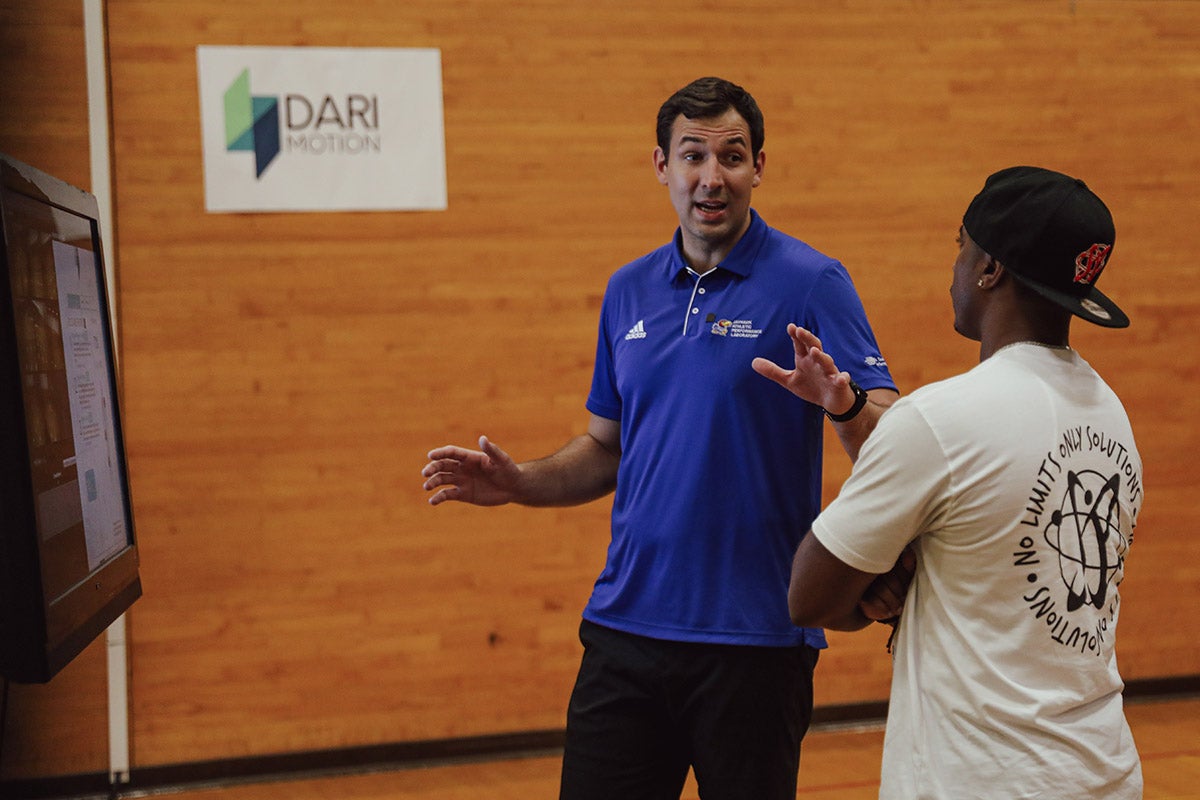
“If you look at heat maps of made shots in today’s game, everything is happening around the perimeter or at the rim,” said Dimitrije Cabarkapa, associate director of KU’s Jayhawk Athletic Performance Laboratory. “So we wanted to examine what makes a more proficient three-point shooter.”
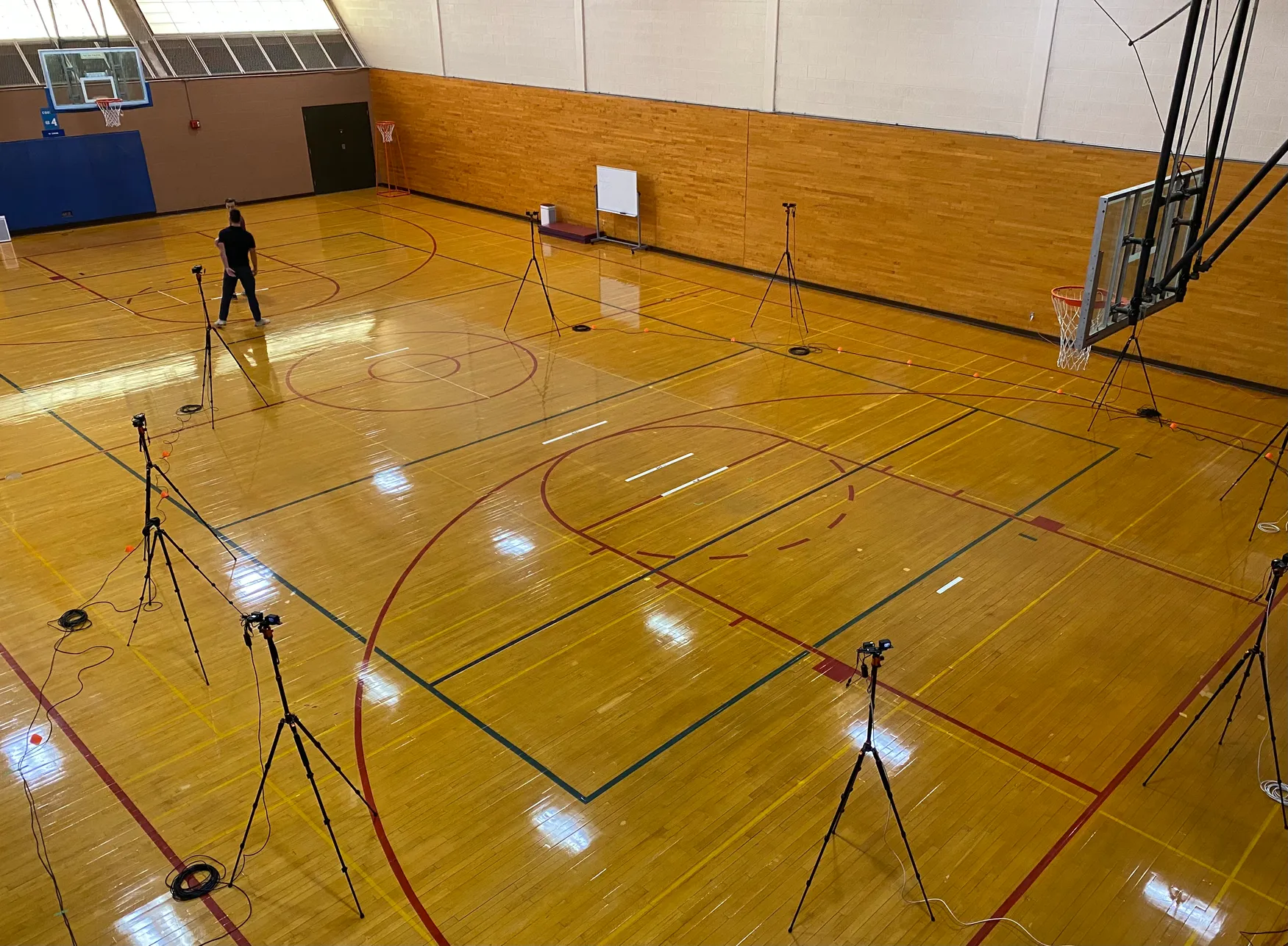
The lab, part of the Wu Tsai Human Performance Alliance, used the DARI markerless motion capture system, which let the team collect data without attaching markers to the body. Cabarkapa said the system can quickly measure features such as elbow, shoulder and knee flexion, foot alignment and angular velocities, with results available within 30 to 60 seconds.
The numbers showed sharp differences in the setup phase. Proficient shooters had smaller joint angles in the knees, hips and ankles during preparation, meaning more bend. They also had a lower elbow position relative to body height and a lower center of mass. Their stance width was greater as well. Hip movement stood out too, with proficient shooters producing higher peak and mean hip angular velocities.
“Having a wider stance is very important for stability,” Cabarkapa said. “Without that, a shooter cannot maintain a stable base and is going to be off balance.” He added that many people focus on the instant of release, but “the majority of factors that determine shooting success happen from the moment the player catches the ball and begins initiating the shooting motion.”
That finding lines up with an old coaching phrase Cabarkapa remembers from his playing days at James Madison University. His coach, Mike Deane, told players to think in four steps: catch, set, step and shoot. The new study suggests that the “set” portion may deserve more attention than it usually gets.
The Kansas team is already applying that idea outside the study. They are working with Cornell Jenkins, a former basketball player at Cal State Dominguez Hills and now a physicist, in a bid to set a Guinness World Record for the most consecutive made three-point shots.
Jenkins can regularly hit 30 to 40 straight three-pointers. When a miss finally comes, the researchers can compare that shot with the successful ones and look for small changes in his mechanics. The next phase of the project will bring Jenkins back to KU for more testing, including three-dimensional force plate analysis and work on how fatigue affects performance.
“This is where science meets practice,” Cabarkapa said. “We’re refining everything we do in order to better understand each factor that can optimize athlete performance.”
The study also had limits. The sample was small, with only 24 players. All participants were men, and the group did not include athletes across different competition levels such as college and professional basketball. The researchers also did not examine position-specific differences between guards, forwards and centers. And because the shots were taken without defenders, the results may not fully match the mechanics players use in real game situations, where pressure can change everything.
For coaches and players, the message is straightforward. Better three-point shooting may depend less on dramatic release changes and more on what happens first: getting low enough, staying balanced and building force from the ground up.
The study gives scientific backing to those familiar coaching cues and offers a way to measure them quickly, which could help training move from guesswork toward something more precise.
Research findings are available online in the journal Frontiers in Sports and Active Living.
The original story “To attempt world record, researchers discover the secret to better 3-point shooting” is published in The Brighter Side of News.
Like these kind of feel good stories? Get The Brighter Side of News’ newsletter.
The post To attempt world record, researchers discover the secret to better 3-point shooting appeared first on The Brighter Side of News.

