A heavy bag swings, gloves snap against leather, and the rhythm builds, three minutes on, one minute off. After six weeks of this pattern, something quieter changed inside the body.
There was a drastic decrease in blood pressure.
That is the result of a randomized controlled trial conducted by scientists from the University of Texas in El Paso that examines short-term boxing training and how it changes the cardiovascular profile of young adults who have been found to be pre-hypertensive.
“Hypertension is the foremost cause of heart disease and stroke and is also the leading cause of death in young people, and most do not know they have it,” says Alvaro Gurovich (PhD), the lead author of the study.
The trial included 24 participants (aged ~25 years), all of whom had blood pressure levels that put them at either high risk of developing hypertension or Stage 1 hypertension. No participants were previously regular exercisers.
Twelve of these participants were placed in a boxing training program, while the other twelve were assigned to a control group that followed an exercise program including stretching, balance, and light to moderate movements.
Each of the boxing workouts included 10 three-minute rounds separated by one-minute rest periods. In the first rounds of training, the participants were expected to be working at or near maximum cardiovascular capacity. In the final rounds, they were expected to work in moderation.
At the conclusion of the study, the boxing participants and the control group showed significant differences in their cardiovascular profiles.
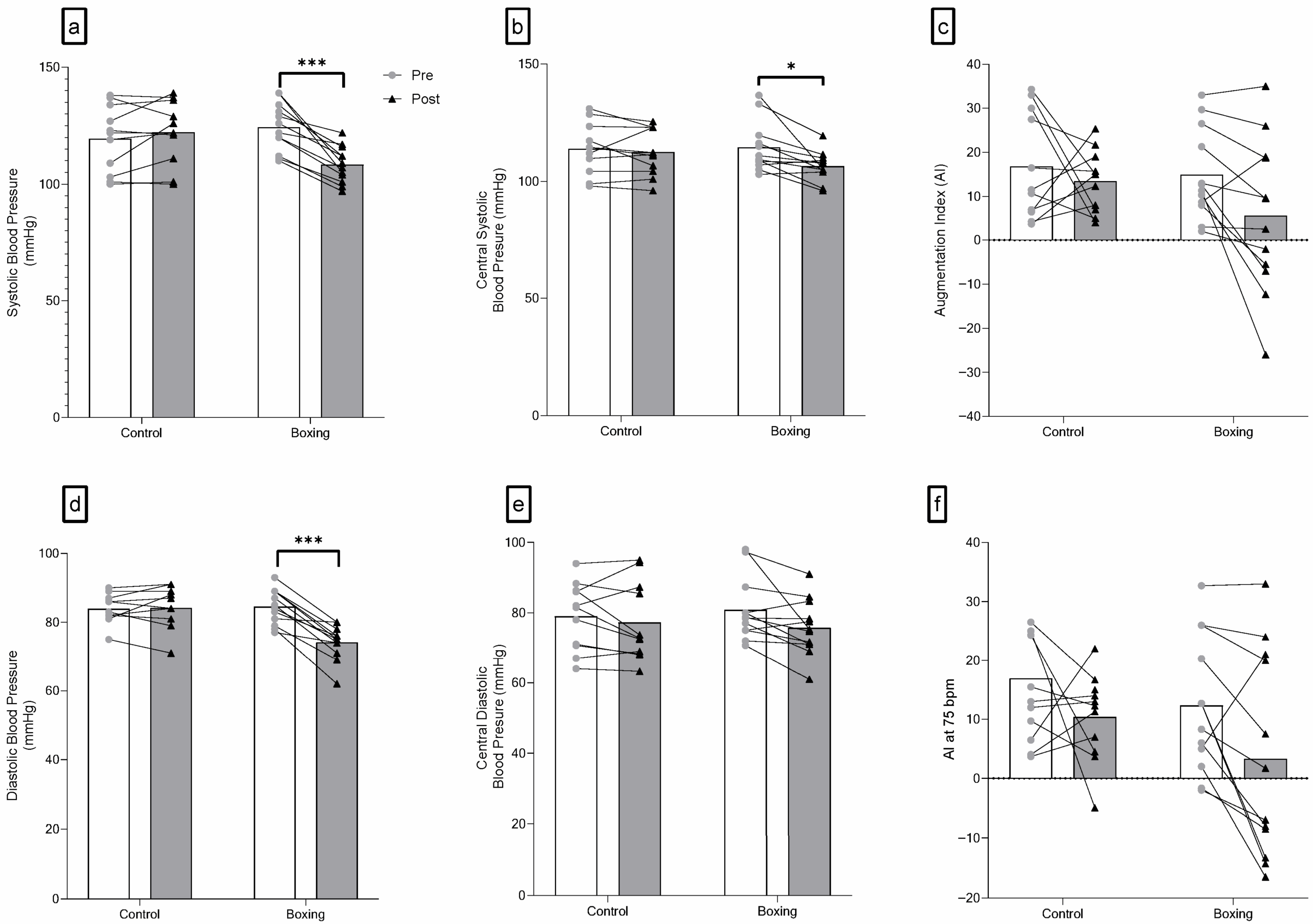
Both groups’ systolic (top number) blood pressure decreased, with an average drop of approximately 16 mmHg observed in the boxing participants. After boxing training, participants’ diastolic blood pressure dropped an average of 10 mmHg. According to the authors of the study, these findings are comparable to many of the same outcomes typically achieved with medications.
In addition, there was a decrease of approximately 8 mmHg in the systolic central blood pressure. The researchers stated that central blood pressure is more clinically relevant for determining heart and organ-related risks than conventional arm blood pressure measurements.
Blood vessels underwent structural remodeling as a result of boxing training.
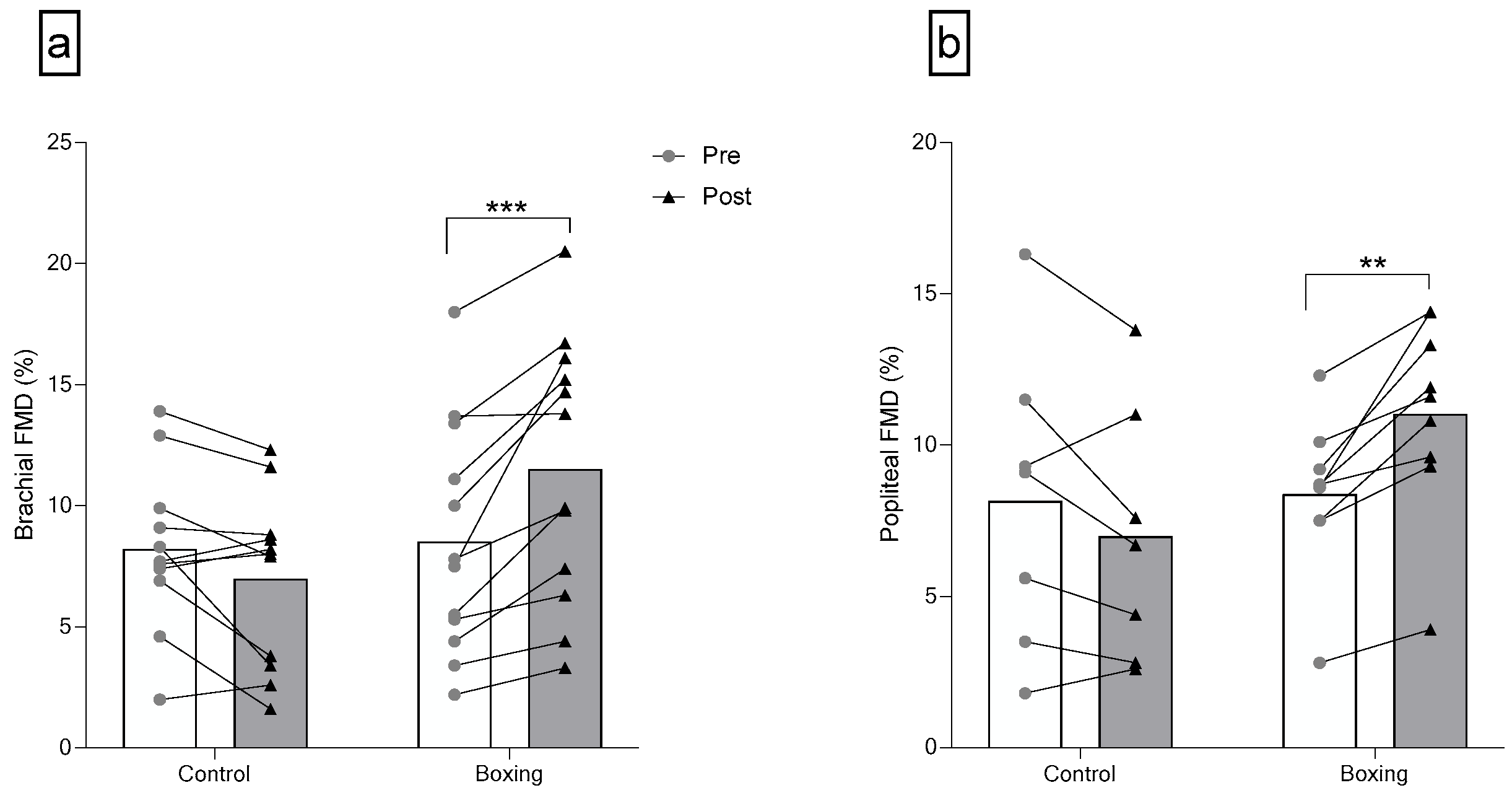
In addition to the drops in both systolic and diastolic pressures, each of the changes made by boxing training resulted in greater responsiveness of blood vessels. Boxing training improved endothelial function in both the legs and the arms, which is an indication of greater vessel regulation of blood flow.
“The results demonstrate that boxing training is not simply a fun way to exercise; it has a tangible impact on how your blood vessels operate,” said Dr. Gurovich.
Six weeks after training, the arteries were more receptive to increased blood volume and carried blood more easily. This change indicates that the risk of stroke and heart attack is lessened.
The researchers found that a portion of this improvement was due to increased levels of nitric oxide, which relaxes blood vessels. They measured this by the increased amount of nitric oxide metabolites in the boxing group of participants, a 27% increase.
Simultaneously, inflammatory markers were present to a much lesser degree than in those who did not participate in boxing training. There was a significant reduction in C-reactive protein, a cardiovascular risk marker, while the other inflammatory markers remained at baseline levels.
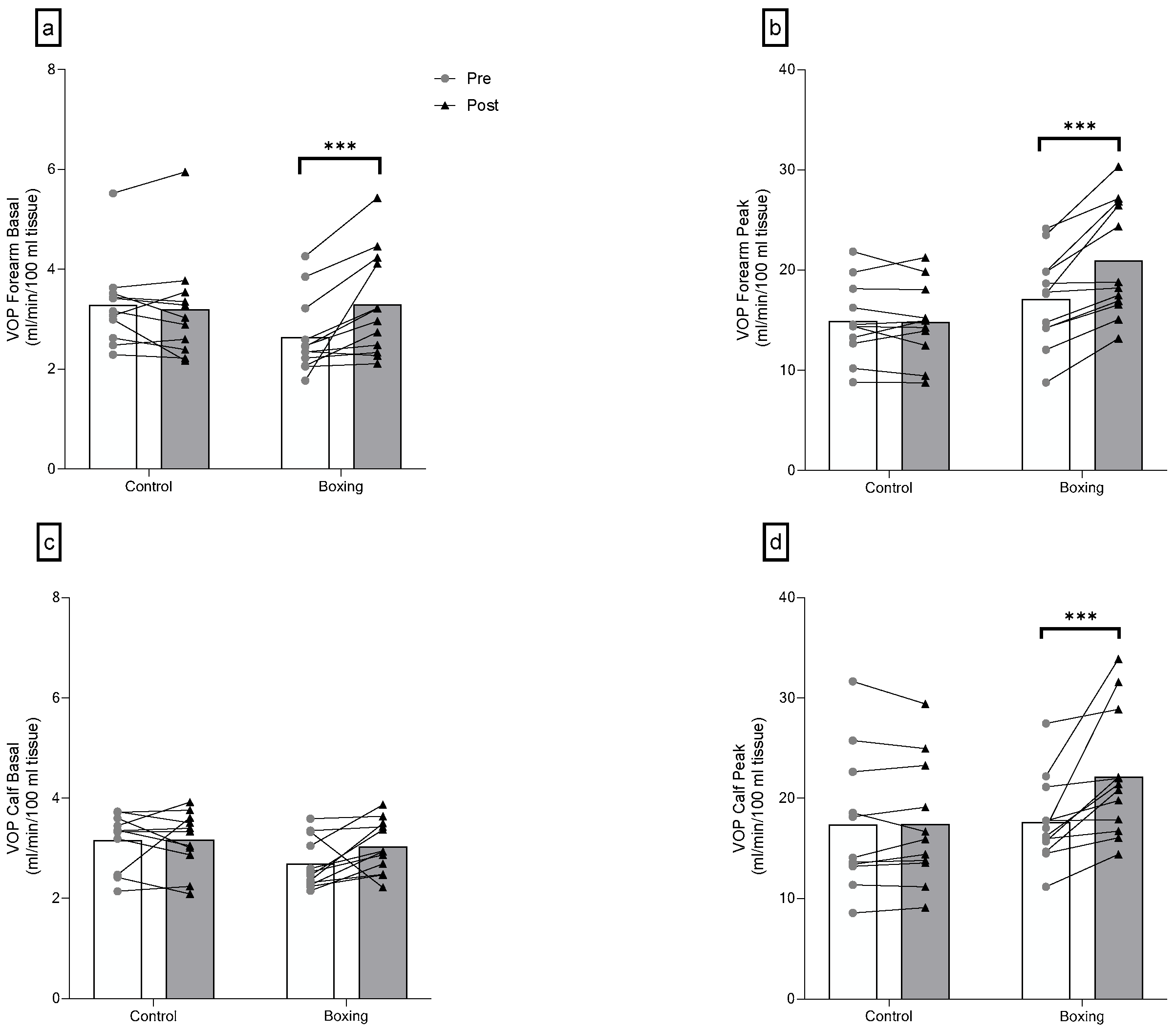
The increased amount of blood flow was measured by the amount of blood available in the forearms and calves of those who trained compared to those who did not. This indicates that the cardiovascular system was capable of supplying a larger volume of blood.
There was a relatively short timeframe of six weeks, and some measures, such as arterial stiffness measured by pulse wave velocity, showed no apparent improvement during this time. The existing literature indicates that it typically takes a longer period of sustained exercise training for changes in major arteries’ structure.
Additionally, some of the inflammatory markers showed no change during the course of the six weeks of exercise training in the boxing group. There was no indication of oxidative stress changes in the boxers at any time during the course of the training.
The research had additional limitations. All participants were young adult males, and therefore the results cannot be generalized to all populations. Within the research, the control group also had a significantly lower level of compliance with their scheduled training program than the training group, which may have affected the results. Finally, researchers did not comprehensively examine the diets of the participants, which may have affected blood markers.
Nevertheless, this study is the first to investigate the impact of boxing training on young male adults using a randomized controlled design.
“The results of this research exemplify the type of practical, applied science that our college stands for,” said Dr. Scott Kruse, PhD, Dean of the College of Health Sciences at UTEP.
Coronary artery disease accounts for 17.3 million deaths annually worldwide and continues to be the most prevalent risk factor for cardiovascular disease.
Individuals with early signs of hypertension are still exposed to the same levels of risk that individuals with a diagnosis of hypertension experience. Many young adults experience a “grey area.” Therefore, exercise is the main focus for their treatment, while the effects of medication may not be beneficial.
Exercise is an essential component of the hypertension treatment plan for individuals living with early-stage hypertension, although the best types of exercise to use and the levels of exercise necessary to help individuals reduce their blood pressure levels are still unknown.
Boxing provides a combination of several distinct characteristics. It includes short bursts of high intensity with brief rest periods, which require the cardiovascular system to quickly adapt to increased workload. It also involves repeated exposure to high-intensity loading in the long term, resulting in increased shear forces acting along the vessel walls.
The research indicates that the mechanisms of improvement after boxing training are likely a combination of lifestyle adaptations and structural changes to the arteries.
Research findings are available online in the journal Sports.
The original story “Six-week boxing routine lowers blood pressure in young adults” is published in The Brighter Side of News.
Like these kind of feel good stories? Get The Brighter Side of News’ newsletter.
The post Six-week boxing routine lowers blood pressure in young adults appeared first on The Brighter Side of News.

