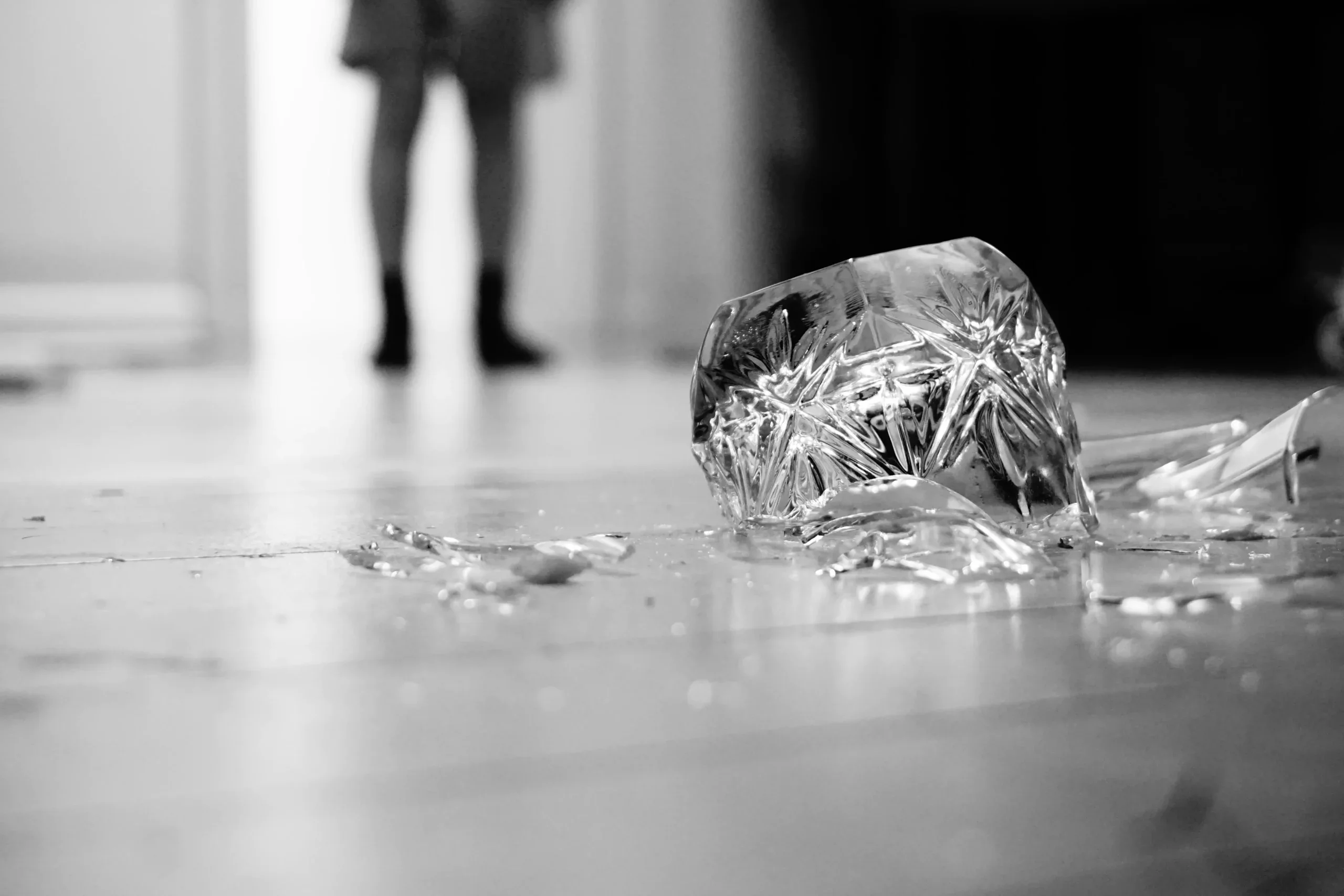
A glass slips from a hand, hits the floor, and bursts into fragments. The sound fades quickly. Heat spreads into the room. Nothing about the scene looks reversible.
Yet, in the language of physics, it is.
That tension sits at the center of one of the oldest questions in science. The equations that govern motion, energy, relativity, and even quantum behavior do not prefer a direction. Run them forward or backward, they still work. But daily life insists on a different story. Glass breaks but does not rebuild. Coffee cools but never reheats itself. Memory points backward, never forward.
So does the body.
You do not wake up younger than you were the night before. Cells wear down. Age accumulates in one direction. No one lives Tuesday, then Monday, then Sunday. In ordinary life, time has a grip. It leaves marks on faces, joints, skin, memory, and muscle. That one-way quality feels so natural that it hardly seems like a mystery until physics says it should not be.
Somewhere between clean mathematics and lived experience, time seems to pick a side.

The idea begins simply. Picture a billiard table. One ball rolls across the felt and strikes another. The second ball moves away. Now reverse the sequence. The motion still looks plausible. Nothing in the collision appears impossible.
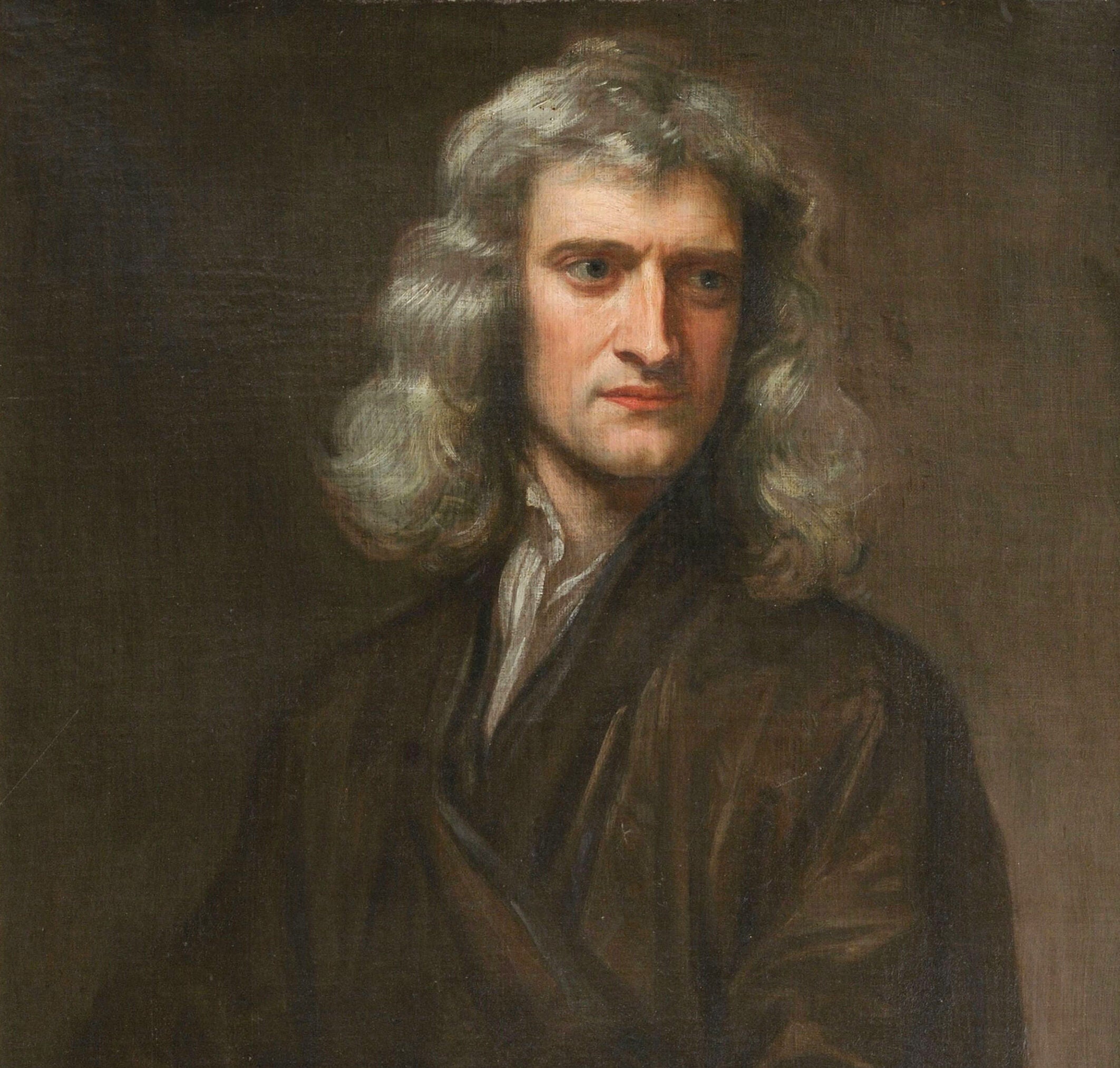
This symmetry runs deep. The laws associated with Isaac Newton, Albert Einstein, and even quantum theory all allow time to run in either direction without breaking the rules.
On paper, the universe has no preference.
But a shattered glass refuses to cooperate with that idea.
Play the scene backward and something feels wrong immediately. Shards do not leap from the floor and assemble into a perfect cup. The difference is not subtle. It is instinctive.
Aging belongs in that same family of irreversible things. Youth does not reassemble itself from old age any more than a broken cup does from scattered fragments. Hair does not ungray. Wrinkles do not quietly fold back into smooth skin on their own. Whatever time is doing, it is not merely ticking. It is carrying systems away from neat arrangements and toward messier ones.
The contradiction is real.
When the glass strikes the ground, nothing disappears. The motion converts into other forms. Some energy becomes sound. Some becomes heat. The fragments and even the floor grow slightly warmer. At the atomic level, particles vibrate more rapidly.
That detail matters.
Because if every piece of energy remains in the system, then in principle the process could reverse. The heat in the floorboards could push the shards upward. The fragments could collide in just the right way. Bonds could reform. The glass could land intact.
There is no rule in physics that forbids it.
That is the unsettling part.
The barrier is not law. It is likelihood.
The same logic gives aging its force. A young body is not one thing but a vast arrangement of organized processes, cells, repair work, heat flow, and chemical order maintained moment by moment. Keeping that order going costs energy. Over time, energy spreads, systems drift, and wear leaves a record. Physics does not say the process must happen with drama. It only says that staying perfectly ordered is not the statistically favored path.
To understand why the glass stays broken, it helps to shift away from atoms and think about something familiar.
Take a fresh deck of cards. Straight out of the box, it has a precise order. Shuffle once, and the order begins to slip. Shuffle many times, and the arrangement becomes effectively random.
Keep shuffling long enough, and one question emerges. Could the deck return to its original order?
Technically, yes.
Practically, almost never.
There is only one perfectly ordered arrangement of a 52-card deck, but about 8 followed by 67 zeros possible arrangements in total. So although the deck could, in principle, return to its original order, the odds are so tiny that for everyday purposes they might as well be zero.
The glass follows the same logic. There is one way for it to exist as a whole object. There are countless ways for it to exist as scattered fragments and dispersed heat.
The system drifts toward what is most probable.
Bodies do too. Aging is not a single dramatic break. It is the long accumulation of small changes that are easier to make than to undo. Order takes constant work. Disorder gets the odds.
This statistical tendency forms the backbone of what physicists call the second law of thermodynamics. It states that systems move toward greater disorder over time. That disorder has a name: entropy.
In this framework, time does not push events forward. Instead, the universe slides toward states that can occur in more ways.
A cup on a table is specific. Broken glass on the floor is not.
A brand-new deck in factory order is specific. A shuffled deck can look like almost anything.
A youthful body, holding together a huge number of coordinated processes, is also a special state. So is a living brain that can remember yesterday, move an arm, and wonder what tomorrow will bring. None of that comes for free. It is maintained against the statistical grain.

The shift from order to disorder gives time its direction.
It also explains why certain events feel irreversible, even when the equations suggest they should not be.
Entropy is not limited to broken objects. It touches every action.
Raise an arm, and the body burns stored energy. Heat leaks into the surroundings. The total disorder increases. A star fusing hydrogen into helium does something similar. It releases light and heat, spreading energy into space.
Each process moves energy from concentrated forms into more diffuse ones.
That spread cannot be undone in any practical sense. Once heat disperses, gathering it back into its original form would require an extraordinarily unlikely alignment of microscopic events.
The same logic that keeps the glass broken keeps the universe evolving.
And it keeps life expensive. Every movement, every heartbeat, every act of repair pays a cost in energy and throws a little more heat into the world. Life is not an exception to entropy. It is a temporary local arrangement that survives by spending energy.
The phrase “arrow of time” often appears in discussions like this. It refers to the one-way direction in which events unfold.
That direction, according to this view, is not imposed from outside. It emerges from probability.
There are simply more ways for systems to become disordered than to become ordered.
Time follows the path of least resistance through those possibilities.
And it never looks back.
This is why yesterday can be remembered but tomorrow cannot. The past contains traces, broken glass on the floor, warmth in the room, age in the body. The future has not yet produced those marks. Entropy leaves records behind as it climbs.
Extend this idea far enough, and it leads to a stark conclusion about the fate of the universe.
At present, the cosmos contains sharp contrasts. Stars burn hot. Space remains cold. Structures form, from galaxies to living systems. These differences allow processes to occur. Energy flows from one place to another.
Over immense stretches of time, those differences fade.
Stars exhaust their fuel. Heat spreads. Energy evens out.
The end state, often described as a heat death, is not an explosion or collapse. It is a quiet leveling. Energy becomes evenly distributed. No region stands out as hotter or colder than another.
Without differences, no work can occur.
Without work, nothing changes.
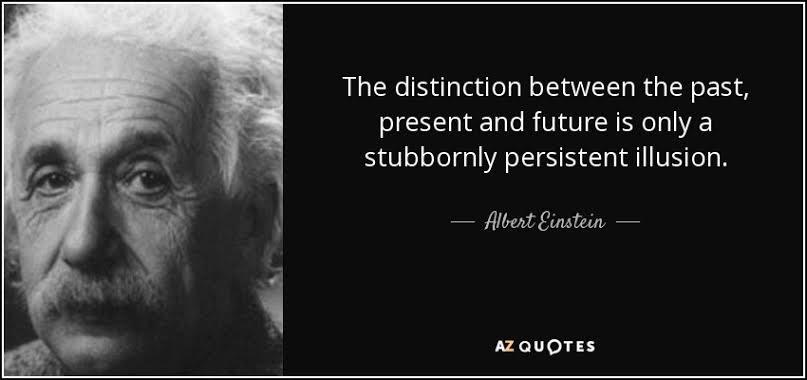
In that state, the arrow of time loses its meaning. If no event distinguishes one moment from the next, the distinction between past and future disappears.
The universe becomes static.
That distant future highlights something easy to overlook.
The present is unusual.
There is still enough order for stars to shine, for planets to form, and for complex systems to emerge. The imbalance that drives entropy also powers structure. Life itself depends on gradients, on differences between hot and cold, high and low energy.
This moment, in cosmic terms, is temporary.
And rare.
That includes the span of a human life. Aging may be one face of entropy, but so is metabolism, growth, movement, memory, and awareness. The same one-way rule that carries the body toward decline also makes living processes possible in the first place. A world with no gradients, no energy flow, and no entropy increase would also be a world with no change, no action, and no life.
The broken glass on the floor becomes more than an everyday annoyance.
It marks a direction.
Each fragment, each faint increase in temperature, traces the movement from order toward disorder. The process is ordinary, yet it reflects a principle that governs everything from human aging to the evolution of galaxies.
There is no hidden force pushing events forward. There is only probability, working quietly through countless interactions.
And it is enough.
The original story “Physics claims the past and future are identical — so why do we age” is published in The Brighter Side of News.
Like these kind of feel good stories? Get The Brighter Side of News’ newsletter.
The post Physics claims the past and future are identical — so why do we age appeared first on The Brighter Side of News.

