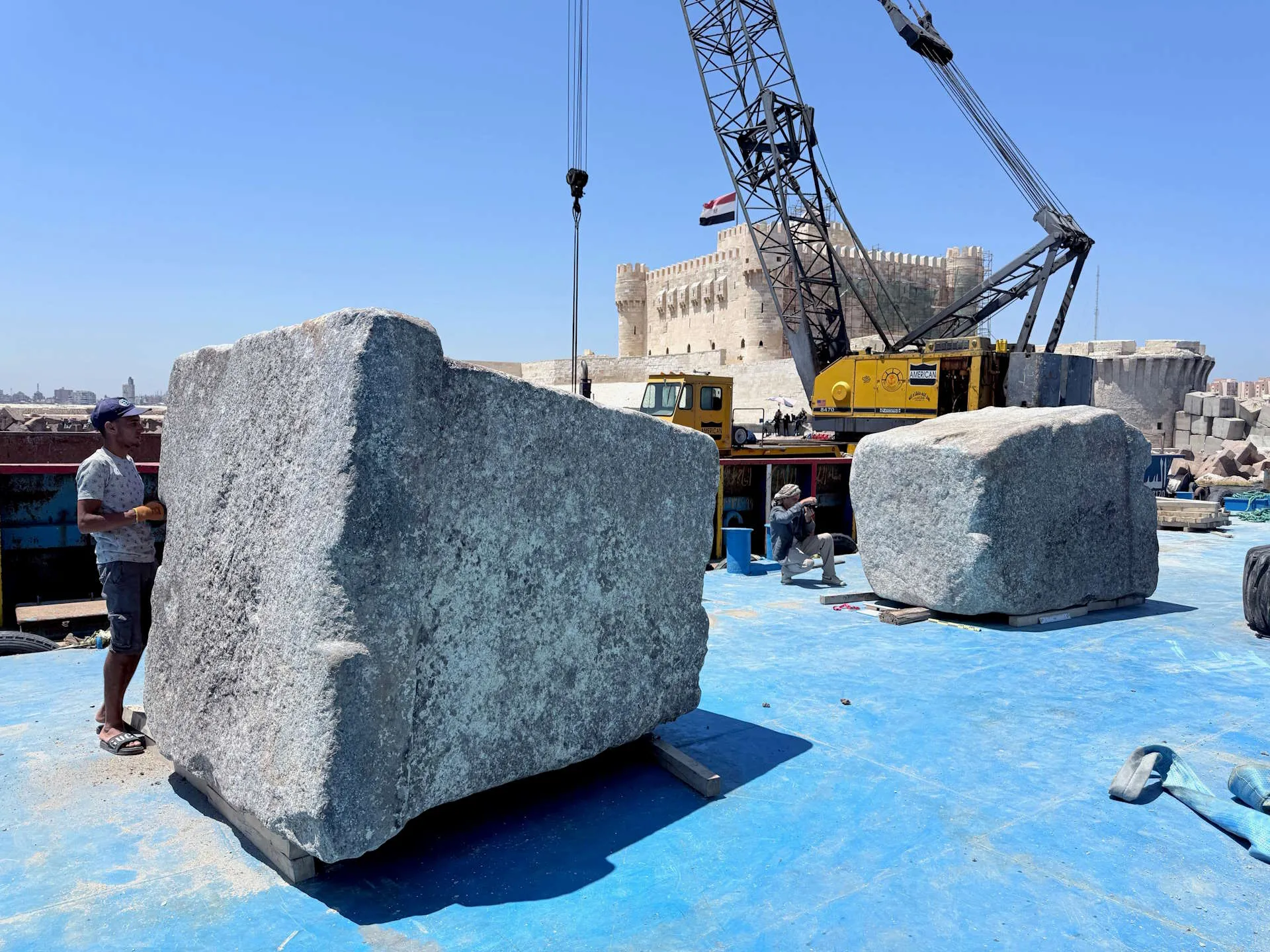
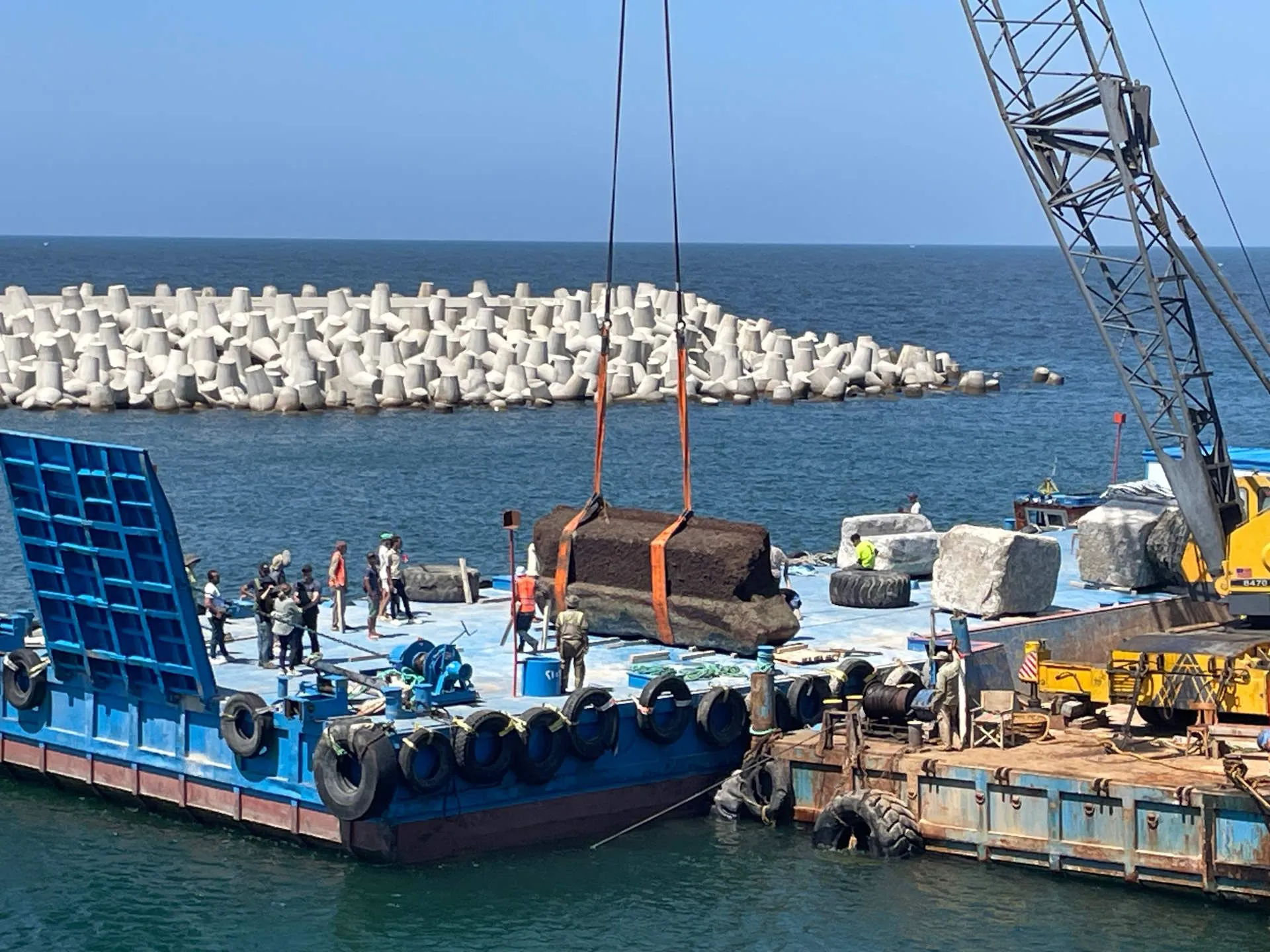
Massive stone blocks are rising from the floor of Alexandria’s harbor, and with them, one of the ancient world’s most famous monuments is starting to take shape again. Archaeologists have recovered 22 large architectural pieces linked to the Lighthouse of Alexandria, the legendary tower that once stood at the harbor entrance and ranked among the Seven Wonders of the Ancient World.
The blocks, some weighing between 70 and 80 tons, were lifted from the seabed as part of the PHAROS project, a French-led mission focused on documenting, scanning, and digitally reconstructing the lost lighthouse. The newly recovered pieces include monumental door elements such as lintels, jambs, a threshold, and large foundation slabs. Among the finds is part of a previously unknown pylon featuring an Egyptian-style doorway from the Hellenistic period.
That makes this more than a dramatic salvage operation. Each stone offers a clue to the original design of a structure that stood for centuries, shaped the identity of Alexandria, and later disappeared into earthquake damage, dismantling, and reuse.
The excavation is being led by archaeologist and architect Isabelle Hairy of France’s National Centre for Scientific Research, or CNRS, under the authority of Egypt’s Ministry of Tourism and Antiquities. Once brought ashore, the blocks are being studied in detail before moving into the next phase of the project, a high-precision digital scan that will help place them back into a virtual version of the monument.
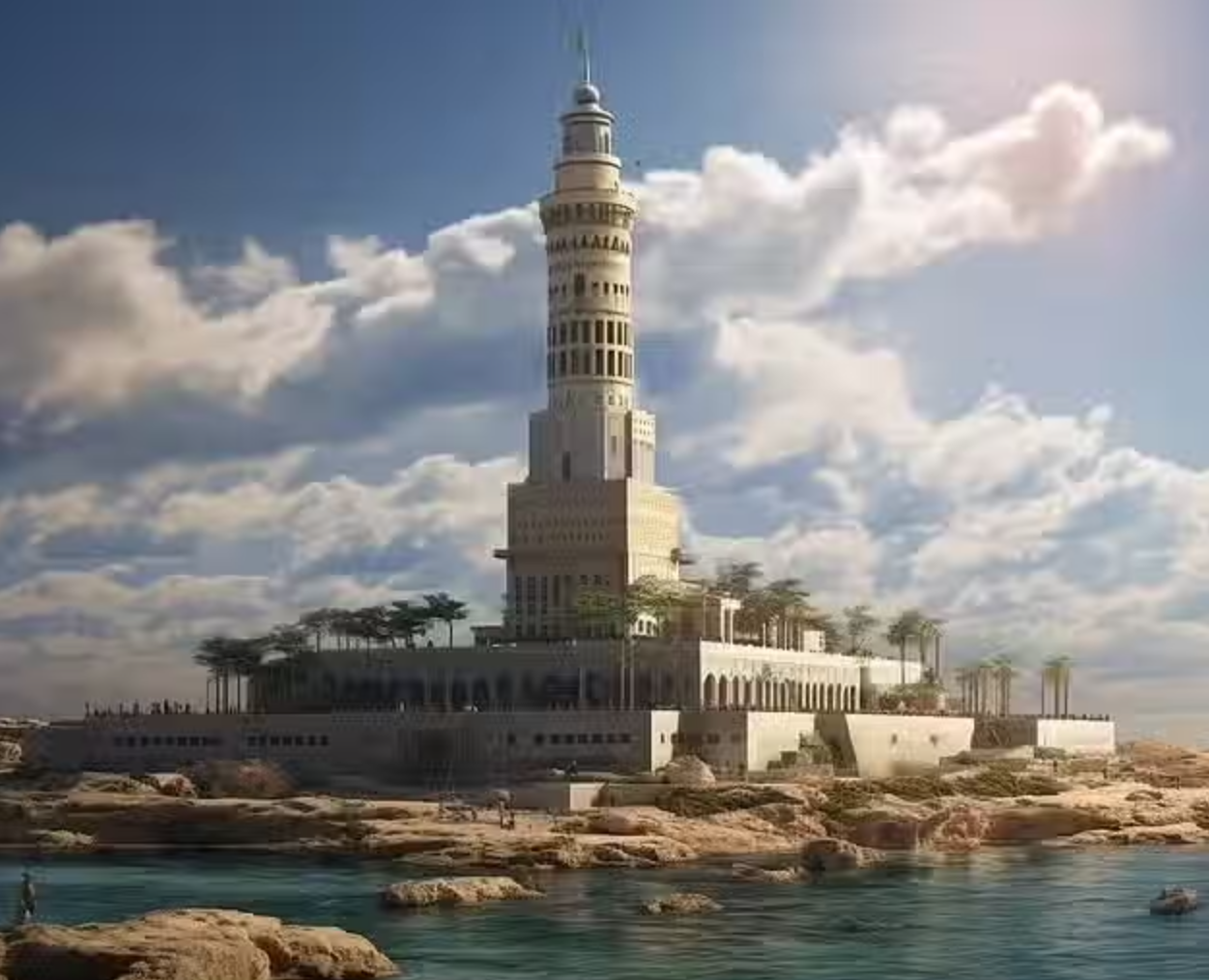
The Lighthouse of Alexandria, also known as the Pharos of Alexandria, was built in the early third century BCE during the reign of the Ptolemies. It stood on Pharos Island, marking the edge of Alexandria’s harbor and helping guide ships along a dangerous coastline. In a city built to project power, trade, and cultural influence, the lighthouse did all three at once.
Ancient accounts place its height at more than 100 meters, making it one of the tallest structures of its time, second only to the pyramids. Its design was distinctive: a square lower section, an octagonal middle, and a cylindrical upper stage. At the top, a fire burned as a navigational signal, likely fueled by wood or oil, while polished metal mirrors reflected its light toward the sea.
Writers from the ancient world described the tower not simply as a landmark, but as an essential working part of the port. According to the material gathered for the current project, the lighthouse allowed sailors to approach the harbor in darkness and carried clear military and strategic value as well. Julius Caesar recognized its importance during a military campaign, noting that control of the lighthouse meant control of the harbor.
Its scale also made a political statement. Alexandria was one of the Mediterranean’s great centers of trade and learning, and the lighthouse advertised that status from far out at sea. For merchants, sailors, officials, and visitors, it was likely among the first things they saw when approaching the city.
The structure endured for centuries. It survived repeated earthquakes and remained standing in some form for more than 1,600 years before final destruction between the 14th and 15th centuries. After it ceased operating, many of its stones were taken and reused in the construction of the Qaitbay Fortress, built in 1477 on the same site.
The underwater remains of the lighthouse were first discovered in 1994 and explored in a major mission the following year by French archaeologist Jean-Yves Empereur. That work changed the study of the monument by moving it out of legend and scattered historical references and back into physical archaeology. For the first time in centuries, researchers could examine substantial remains of the structure in the place where it had fallen.
Since then, three major excavation efforts have added to that picture. The latest phase, led by Hairy and her team, marks a new stage because it combines traditional archaeological recovery with large-scale digital reconstruction tools. Over the past ten years, more than 100 submerged blocks have already been identified and scanned underwater along Alexandria’s coast. The 22 pieces now raised from the seabed add some of the largest and most significant elements yet recovered for direct study.
Their size alone says something about the original monument. A doorway framed by stones weighing up to 80 tons belonged to a building made to impress, orient, and dominate. These were not minor decorative fragments. They were core architectural components from a structure built to be seen across distance and remembered across generations.
One of the more intriguing finds is the newly identified pylon. Its doorway appears to blend Egyptian design with Greek construction methods, matching Alexandria’s role as a Hellenistic city shaped by both traditions. That detail may help researchers better understand how the lighthouse fit into the wider architectural culture of its time, rather than treating it as a purely isolated engineering feat.
The harbor itself has become an archive. The stones lying underwater preserve evidence not just of the lighthouse’s collapse, but of the different phases of its destruction and reuse. Some pieces may reveal where elements once stood in relation to each other. Others may help answer which parts of the tower were rebuilt after earthquakes, and which features belonged to its original design.
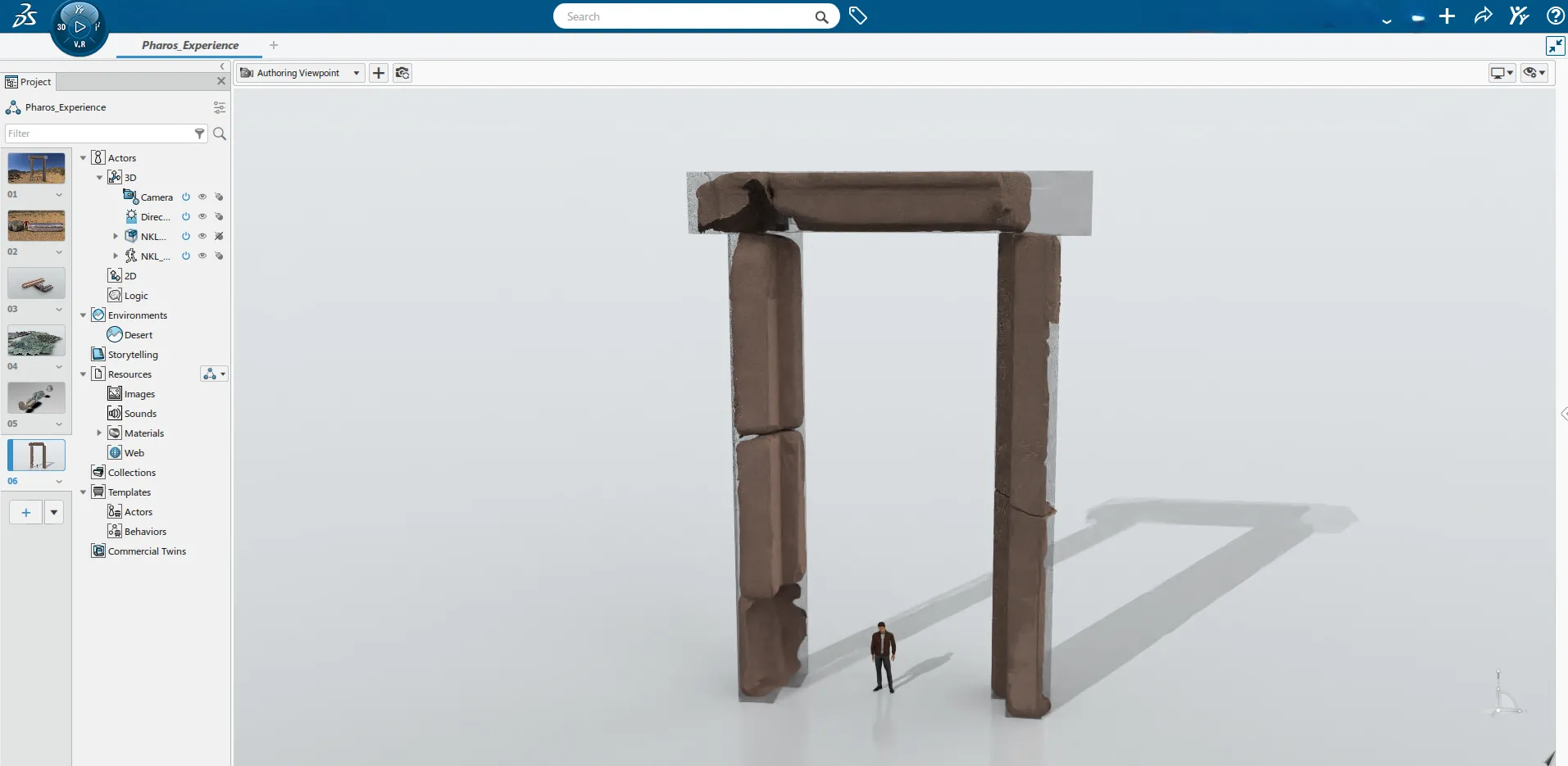
The PHAROS project does not aim to rebuild the lighthouse in stone. Instead, it is creating a digital twin, a virtual reconstruction based on scans of the recovered pieces, historical records, and surviving visual references.
The newly recovered blocks will be processed using photogrammetry, a method that combines thousands of photographs to create accurate three-dimensional models. Those models will then join the growing digital archive built from the more than 100 blocks already documented underwater. Volunteer engineers from Dassault Systèmes will use that data to test where each block may have belonged in the structure.
This process turns reconstruction into a kind of architectural investigation. Rather than forcing the stones into a predetermined image of the lighthouse, the team can test different arrangements and structural possibilities in a virtual environment. If a set of blocks appears to belong to a gateway or platform, the digital model can help show whether the proportions and placement actually work.
That matters because the lighthouse survives only in fragments. Earthquakes destroyed parts of it, while other sections were looted, dismantled, or incorporated into later structures. A virtual model allows researchers to work with uncertainty in a controlled way, comparing ancient descriptions with actual stone dimensions and construction logic.
The digital reconstruction also opens a way to study how the monument may have collapsed. By simulating the structure as a whole, researchers can test ideas about its engineering strengths, long-term stability, and possible failure points. The model becomes not just a display tool, but a research tool.
The PHAROS project pulls together more than excavated stone. It also draws on ancient texts, coins, mosaics, traveler descriptions, and other depictions of the lighthouse gathered by archaeologists, historians, architects, and numismatists. These sources help fill in what the physical remains cannot fully answer on their own.
That broad approach reflects the problem the team is trying to solve. The Lighthouse of Alexandria survives in memory more clearly than in material form. It is one of history’s most famous buildings, yet no complete version remains standing. Reconstructing it requires putting damaged architecture into conversation with written descriptions and visual echoes scattered across centuries.
GEDEON Programmes, a French media company known for historical documentaries, helped fund the 1995 mission and is supporting the current one as well. It financed the barge and crane used to lift the newly recovered blocks and is producing a 90-minute documentary directed by Laurence Thiriat. The film is set to air on France Télévisions and international broadcasters.
The project’s public dimension is part of its appeal. The digital model will allow people to explore the lighthouse virtually, giving a wider audience access to a monument long lost beneath the sea. But the deeper value of the project lies in the slower work behind that access: careful lifting, scanning, comparing, and testing, one block at a time.
That pace may be the truest reflection of what archaeology looks like when dealing with a monument of this scale. There is no dramatic instant when the Pharos suddenly returns in full. Instead, its outline grows clearer with every recovered threshold, every scanned lintel, and every fragment matched against the historical record.
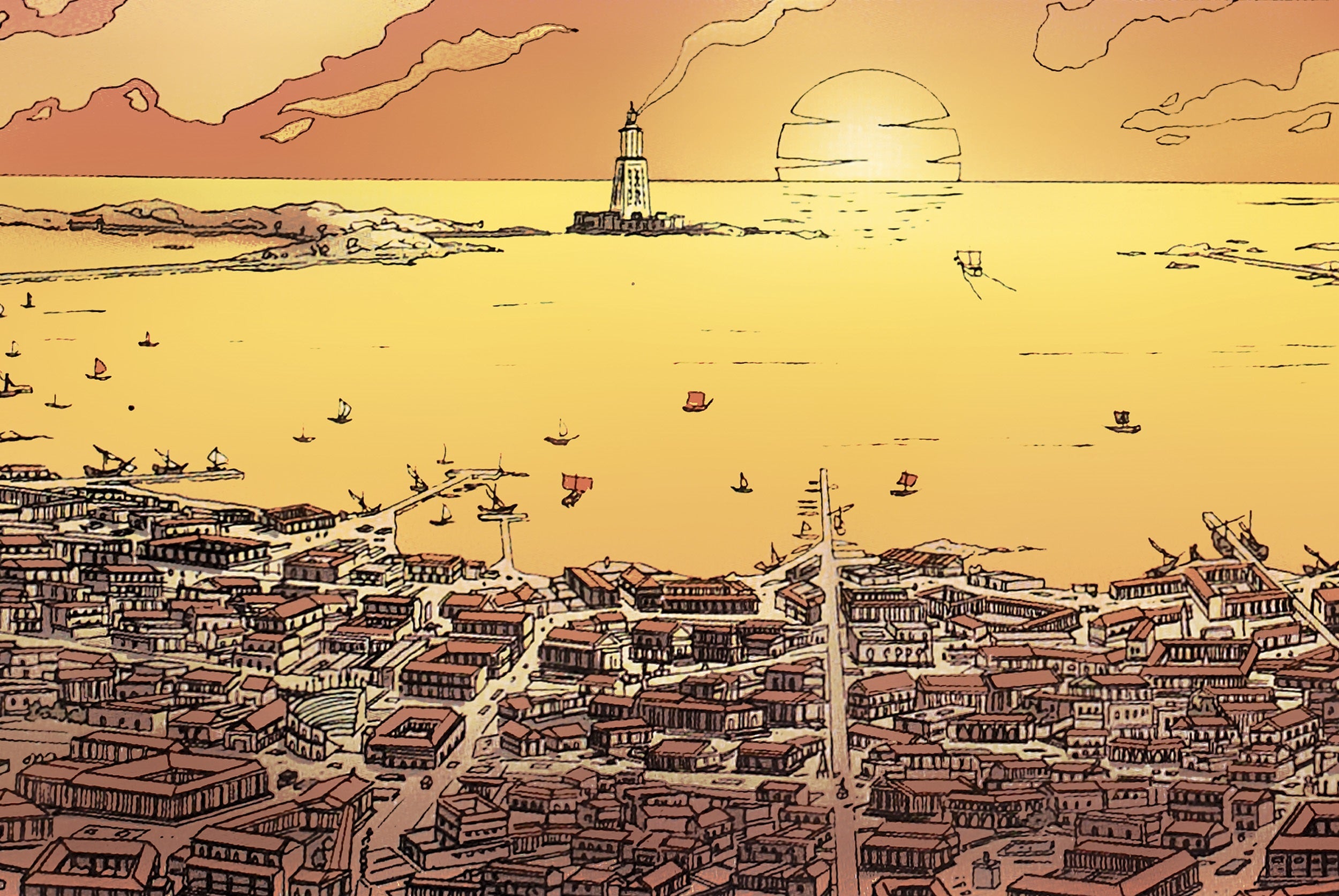
For centuries, the lighthouse guided ships into Alexandria. Now its fallen stones are guiding a different kind of search, one aimed at understanding how one of the ancient world’s greatest structures was imagined, built, used, damaged, and remembered. It is not being rebuilt in the harbor skyline. But through archaeology and digital modeling, it is beginning to stand again in another form.
This project opens the lighthouse to a wider public. Here are five quick facts about the lighthouse that are less commonly known.
The lighthouse is believed to have reached a height of 100 to 130 meters (330 to 430 feet), making it one of the tallest man-made structures of antiquity, surpassed only by the Great Pyramid of Giza and possibly the Red Pyramid.
The tower was constructed in three architectural sections: a square base, an octagonal midsection, and a cylindrical top. This unique structure enhanced both its stability and its ability to withstand strong coastal winds.
A large bronze mirror was used to reflect sunlight during the day, while fires lit at night served as a beacon. Some ancient legends claimed the mirror could be used to burn enemy ships, though that’s likely a myth.
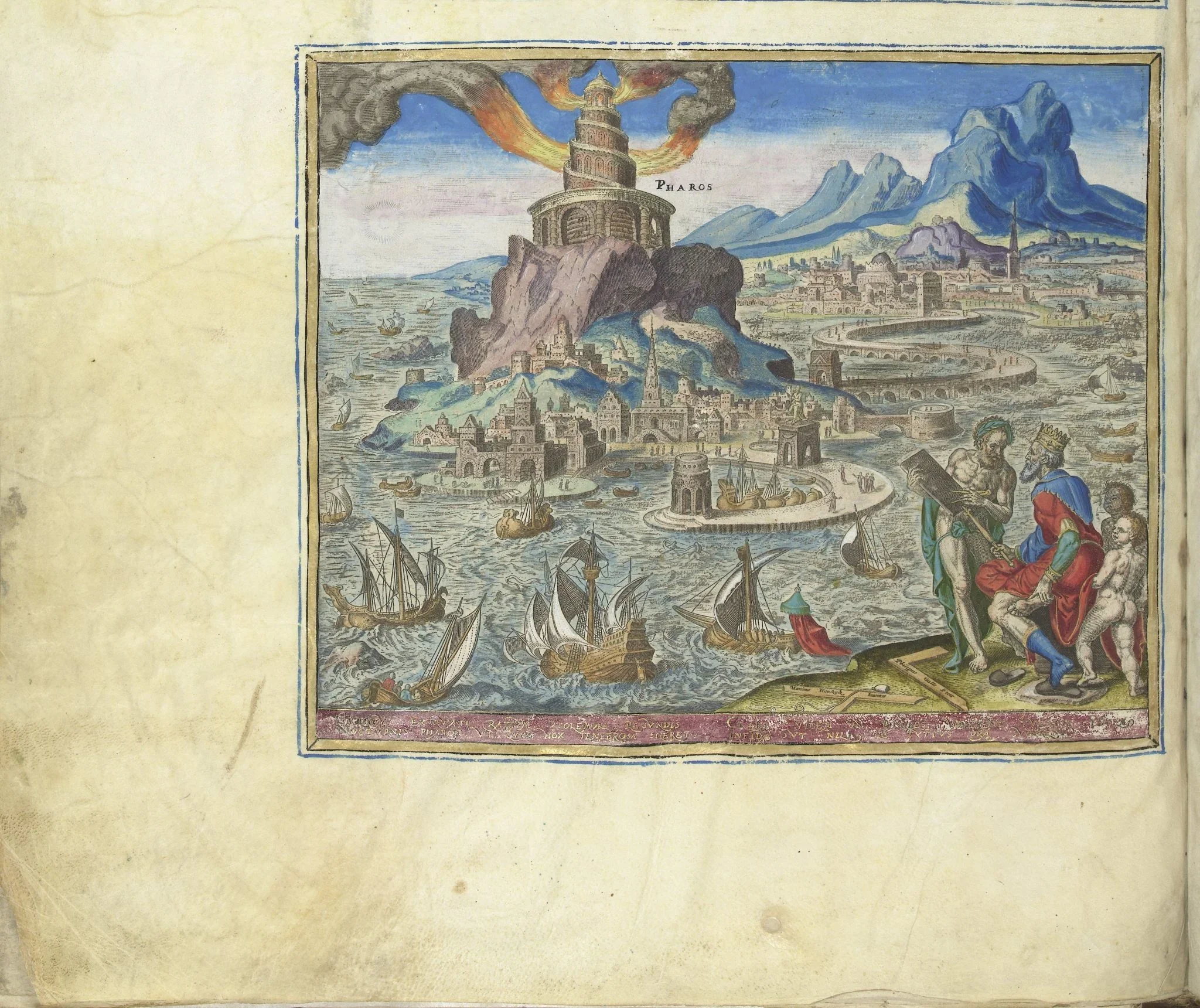
Between 956 and 1323 AD, a series of powerful earthquakes severely damaged the lighthouse. By the 14th century, it had fully collapsed, although remnants remained visible for centuries.
Unlike many ancient towers, the lighthouse may have featured a spiral ramp inside instead of stairs. This would have allowed pack animals to carry fuel to the top, showcasing an early use of mechanical efficiency in architecture.
The original story “After 2,000 years, giant stone block recovery is bring the Lighthouse of Alexandria back to life” is published in The Brighter Side of News.
Like these kind of feel good stories? Get The Brighter Side of News’ newsletter.
The post After 2,000 years, giant stone block recovery is bring the Lighthouse of Alexandria back to life appeared first on The Brighter Side of News.


Leave a comment
You must be logged in to post a comment.