Pterosaurs ruled the air long before birds did, and over more than 100 million years they grew into everything from small fliers to giants with wingspans above 10 meters. That range should have produced a striking variety of wing designs. Instead, modern scientific reconstructions often make them look oddly alike.
That mismatch sits at the center of a new study led by the University of Bristol, published in Paleobiology. The analysis argues that commonly published pterosaur wing reconstructions capture far less diversity than would be expected for animals that varied so much in size, ecology, and flight style.
No pterosaur fossil preserves a perfectly clear, undistorted full wing shape, which helps explain the problem. Some fossils preserve parts of the flight membrane, but none show the whole wing spread out in a way that settles the debate. As a result, scientists have had to build reconstructions from bones, limited soft-tissue evidence, and educated judgment about where membranes attached to the body and legs.
That has left major room for disagreement.
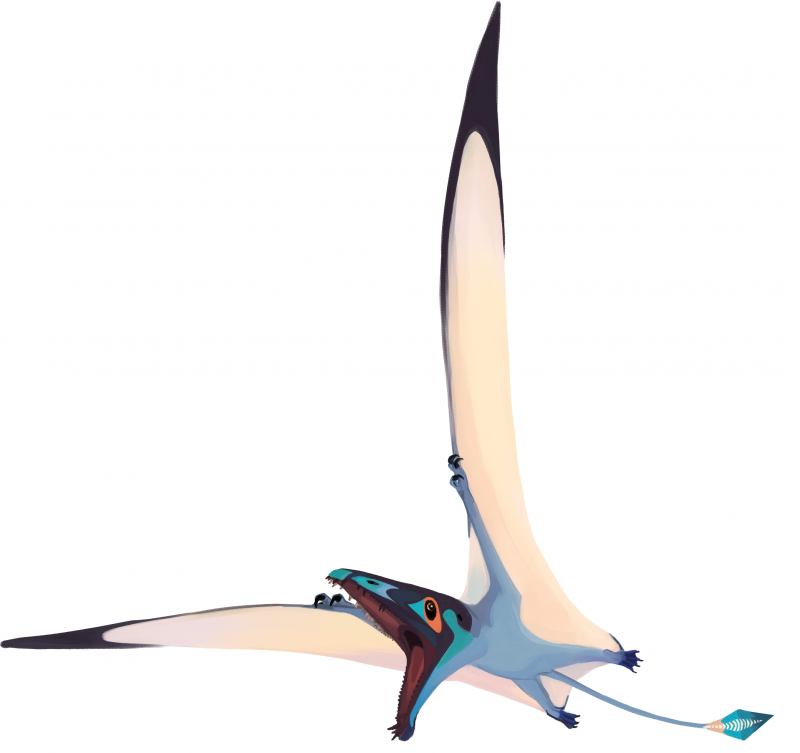
To test how well those reconstructions hold up, the team collected 79 wing planform reconstructions from the scientific literature, covering eight representative genera and two broader pterosaur groups. The sample ranged from animals with wingspans of roughly 40 centimeters to giants reaching about 10.5 meters.
Among them were familiar names such as Pteranodon, often treated as the standard “pterodactyl,” and Quetzalcoatlus, the largest animal known to have flown.
The researchers then used a method called theoretical morphospace. In simple terms, they built a map of possible wing shapes, extending beyond the forms already drawn in published reconstructions. That let them compare the shapes scientists have proposed with a broader landscape of shapes that could exist, then test how those forms performed under several flight-related measures.
Lead author Benton Walters of Bristol’s School of Earth Sciences said the central clue came from living fliers. “In living flying animals, such as birds and bats, different lifestyles are associated with distinct wing shapes and flight abilities. The lack of comparable diversity in pterosaur reconstructions suggests that the reconstructions are missing important variation.”
Five questions guided the study. First, the team asked whether reconstructions of the same genus clustered together. They also examined whether the results reflected genuine biological differences rather than the preferences of individual artists or researchers. Another goal was to determine whether modern reconstructions showed greater agreement than older ones. Researchers further tested whether the wings displayed the diversity predicted by previous flight studies. Finally, they explored whether different pterosaurs appeared adapted to distinct styles of flight.
Most of those tests went badly for the reconstructions.
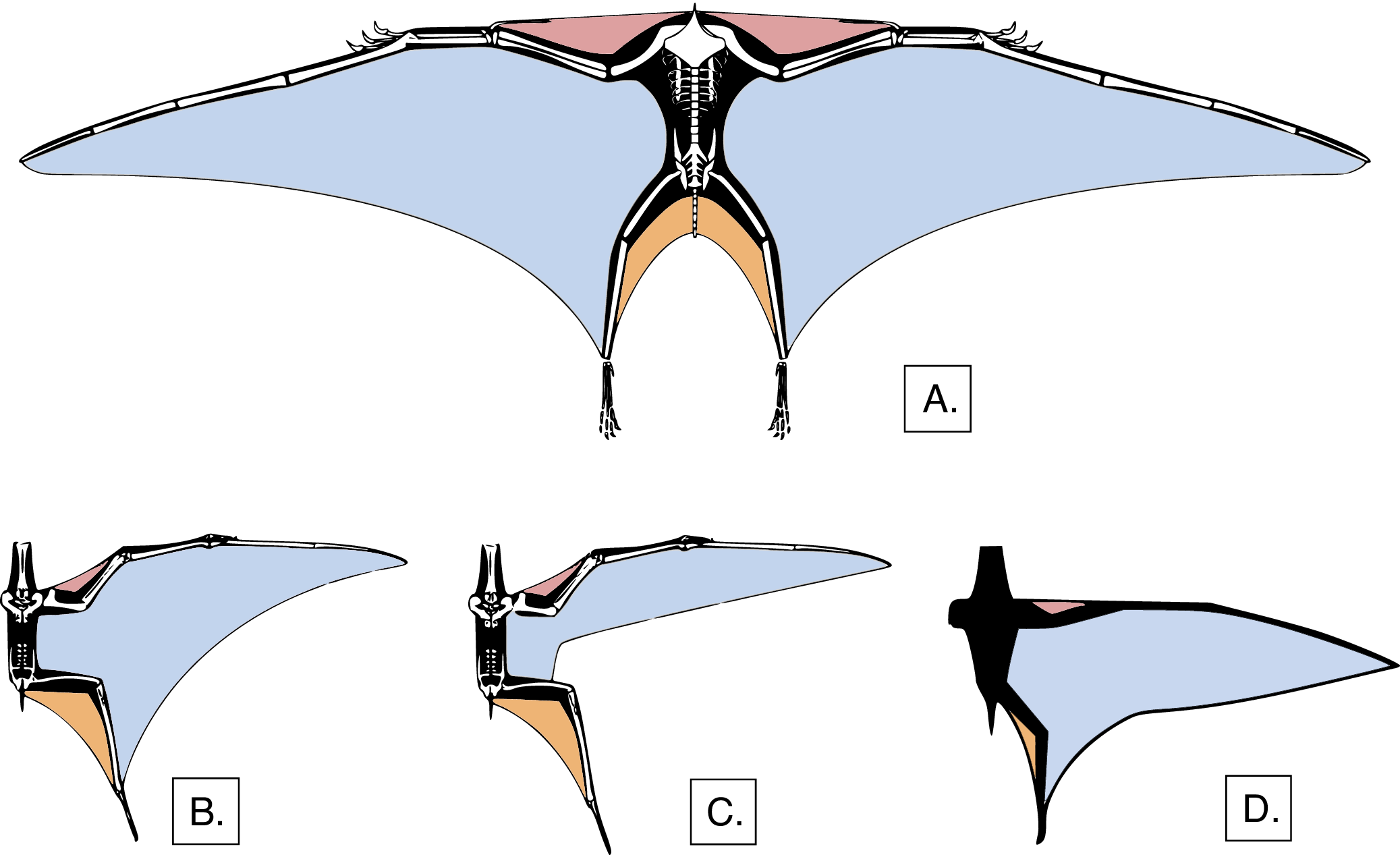
Examples of the same pterosaur genus often failed to group closely together, which means researchers still disagree too much about what a given animal’s wing actually looked like. At the same time, reconstructions of very different animals often overlapped in the same region of wing-shape space.
That is a problem. Small, forest-dwelling pterosaurs and giant soarers should not all look aerodynamically similar.
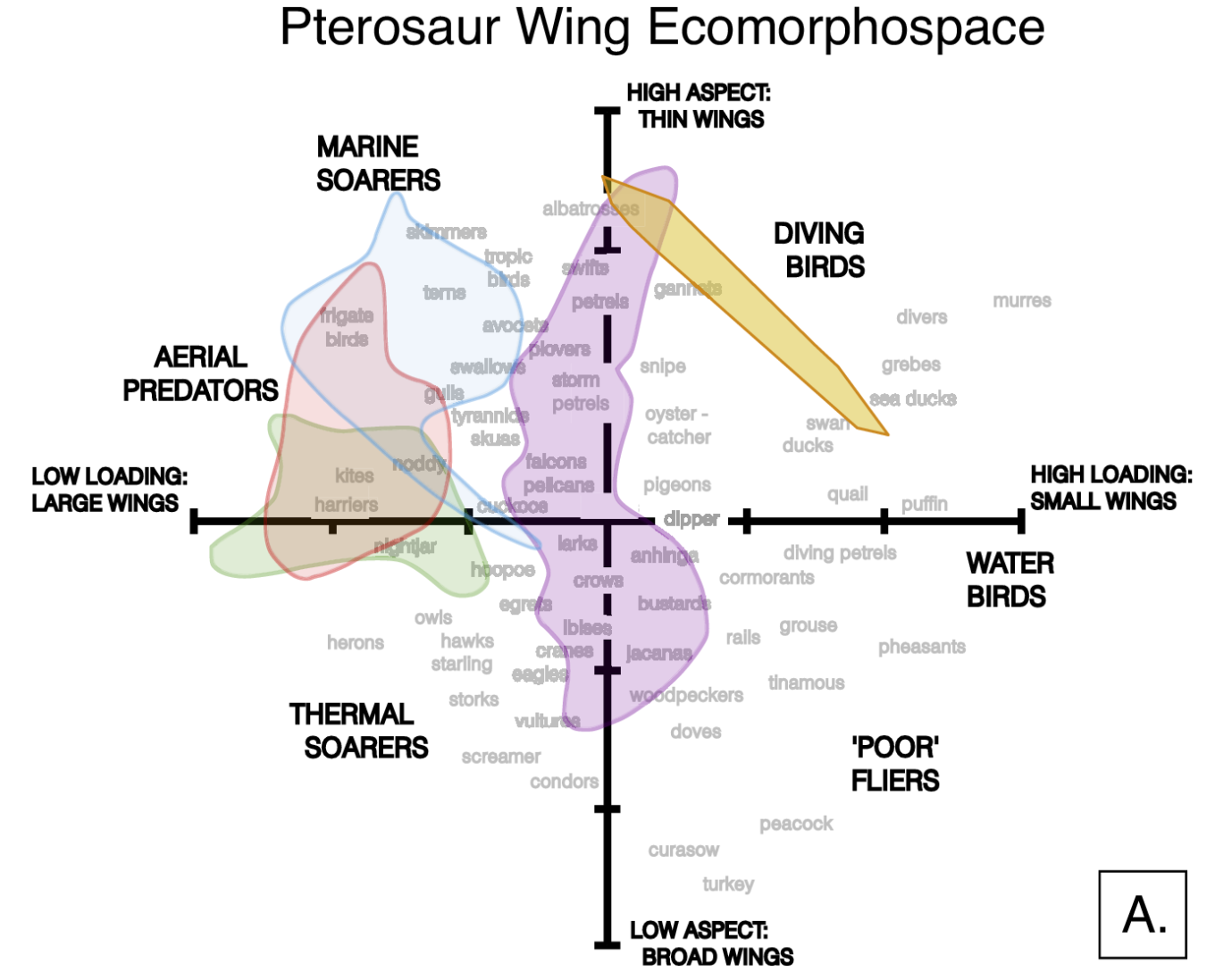
The overlap was especially striking between tiny forms such as Anurognathus and giants such as Quetzalcoatlus. In birds, wing shape tracks flight style strongly enough that large soaring species and small maneuverable fliers separate clearly. The pterosaur reconstructions did not show that kind of pattern.
The authors found one partial success. Reconstructions did not usually cluster by the individual who drew or published them, suggesting that personal artistic style was not the main issue. The bigger problem appears to be scientific disagreement over fundamental wing anatomy, especially the position of key attachment points and the curvature of the wing membrane’s trailing edge.
“Reconstructions of pterosaur wings are commonly made using measurements of the bones which support the wing, and information about the soft tissues gleaned from a handful of exceptional fossils, but there is still a lot that cannot be definitively stated from these alone,” Benton Walters said.
That uncertainty matters because small changes in attachment points can radically alter the width and shape of the wing. If the wing attaches higher on the body or leg, the chord becomes thinner. If the trailing edge curves differently, flight performance changes too.
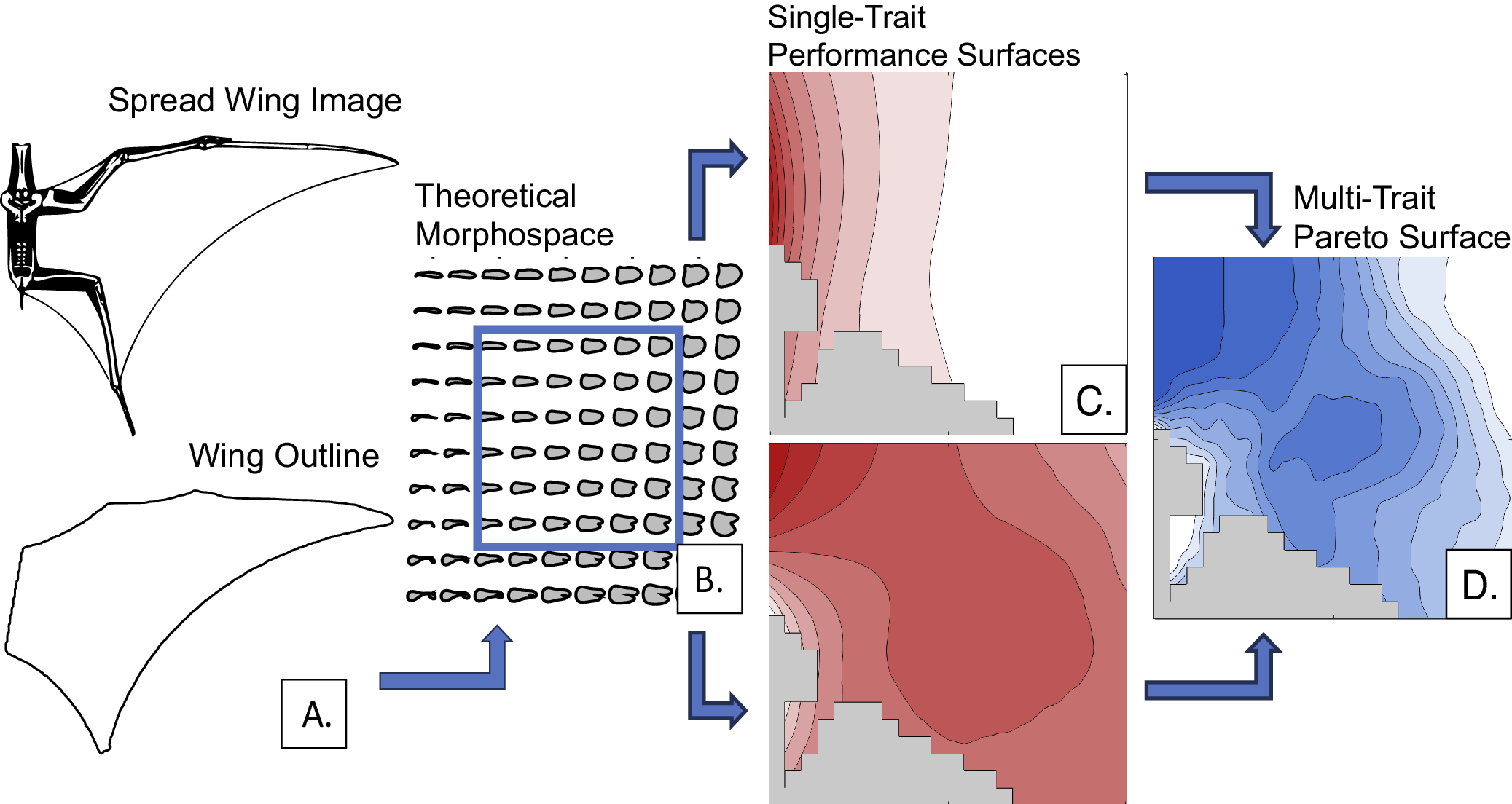
The team tested four flight-related metrics, including aspect ratio, pitch agility, second moment of area, and tip angle. They also combined these into broader flight-style categories tied to dynamic soaring, long-distance sustained flight, and aerial predation.
Here again, the published reconstructions were too uniform.
Overall, the authors found that current reconstructions do not capture the level of form and functional variation expected in a group that occupied such a wide range of ecological roles. A pterosaur adapted to oceangoing soaring should not land in much the same functional neighborhood as a smaller aerial hunter or a more robust early form thought to be a poorer flier.
“For a group of animals that existed for over 100-million years and includes both palm-sized and plane-sized animals, you would expect diversity in shape,” he added. “But wing shape was similar regardless of the pterosaur they depicted.”
That does not mean pterosaurs truly all flew the same way. It means the modern scientific picture may still be flattening their differences.
The study points to a larger issue in paleontology. Hard tissues such as bones fossilize far more readily than soft tissues such as wings, skin, and membranes. Yet those softer structures can determine how an extinct animal moved through the world. When they are only partly preserved, researchers are left reconstructing not just anatomy, but performance.
The paper does not claim to have solved pterosaur wing shape. Instead, it argues that the field needs a better standard for testing new reconstructions. The authors say current depictions are useful as visual shorthand, but not reliable enough to serve as firm functional models of living animals.
They also suggest that better imaging methods could help close the gap. Looking at fossils under forms of light beyond normal human vision may reveal details that older techniques missed, especially in soft tissues.
“This research provides a helpful guide to show where the scientific understanding of pterosaur wings is lacking and will be used as a benchmark to test new and improved reconstructions of pterosaurs as our understanding of these amazing creatures improves.”
That may be the most important point. Pterosaurs remain central to the story of flight because they evolved powered flight independently and pushed vertebrate flying size to its limit. But one of the most recognizable prehistoric bodies in science is still, in crucial ways, unfinished.
This study gives paleontologists a clearer way to judge future pterosaur reconstructions instead of accepting familiar wing outlines at face value.
It also warns against drawing strong conclusions about pterosaur flight style from life reconstructions alone.
As imaging and analytical methods improve, researchers may be able to rebuild those wings with more confidence, which could sharpen ideas about how different pterosaurs hunted, traveled, launched, landed, and occupied very different aerial niches over deep time.
Research findings are available online in the journal Paleobiology.
The original story “Pterosaurs had far more diverse wing shapes than scientists previously knew” is published in The Brighter Side of News.
Like these kind of feel good stories? Get The Brighter Side of News’ newsletter.
The post Pterosaurs had far more diverse wing shapes than scientists previously knew appeared first on The Brighter Side of News.


Leave a comment
You must be logged in to post a comment.