As the planet heats up and climate warnings grow more urgent, scientists are studying ideas that once sounded like science fiction. One of the most controversial involves changing the sky itself.
A new study from the University of Exeter suggests that a climate engineering technique called stratospheric aerosol injection, or SAI, could help protect the Amazon rainforest from severe climate damage. Using advanced climate models, researchers found that artificially cooling the planet may allow the rainforest to store more carbon and remain more productive, even under extremely high carbon dioxide levels.
The findings, published in the journal Earth System Dynamics, arrive at a moment of growing concern for the Amazon. Scientists increasingly fear that rising temperatures and deforestation could push the rainforest toward large-scale dieback, threatening one of the planet’s most important carbon sinks.
“Surprisingly, in these three scenarios, we find that the Amazon rainforest is most productive in the scenario with SAI geoengineering,” said co-author Professor Peter Cox, Director of Exeter’s Global Systems Institute.
Stratospheric aerosol injection aims to cool Earth by reflecting a portion of sunlight back into space. The concept mimics what happens after major volcanic eruptions, which release particles high into the atmosphere and temporarily lower global temperatures.
In an SAI system, scientists would inject sulfur dioxide into the stratosphere. There, the gas would form reflective aerosol particles that reduce incoming solar radiation.
The idea falls under a broader category called solar radiation modification. Supporters argue it could buy time if global warming becomes too severe. Critics warn it carries major ethical, political and environmental risks.
Some scientists worry that reducing sunlight could harm crops and forests. Others fear it could disrupt rainfall patterns or encourage governments to delay cutting greenhouse gas emissions.
The new study focused on a central question: What would happen to plant growth and carbon storage if SAI were deployed in a warming world?
Researchers analyzed three climate scenarios using five advanced Earth System Models.
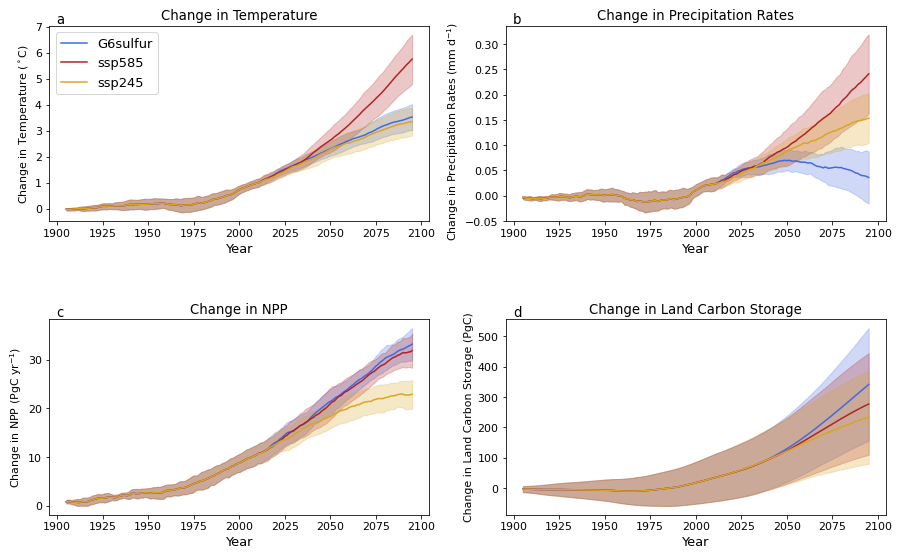
The first scenario, known as SSP585, represented a future with very high greenhouse gas emissions and continued heavy fossil fuel use. The second, SSP245, modeled a middle-ground future with moderate climate action.
The third scenario, called G6sulfur, combined high carbon dioxide levels with stratospheric aerosol injection. In this case, sulfur dioxide was continuously added to the stratosphere from 2020 through 2100 to lower temperatures.
The goal was to reduce warming from the high-emissions pathway down to temperatures similar to the medium-emissions scenario.
Scientists then compared two important measures of ecosystem health. One was net primary productivity, or NPP, which reflects how much carbon plants absorb through photosynthesis after accounting for respiration. The other was land carbon storage, which includes carbon stored in vegetation, soil and dead organic matter.
By the end of the century, the high-emissions scenario produced about 6 degrees Celsius of warming above pre-industrial levels. Both the moderate-emissions and SAI scenarios remained closer to 3.5 degrees Celsius.
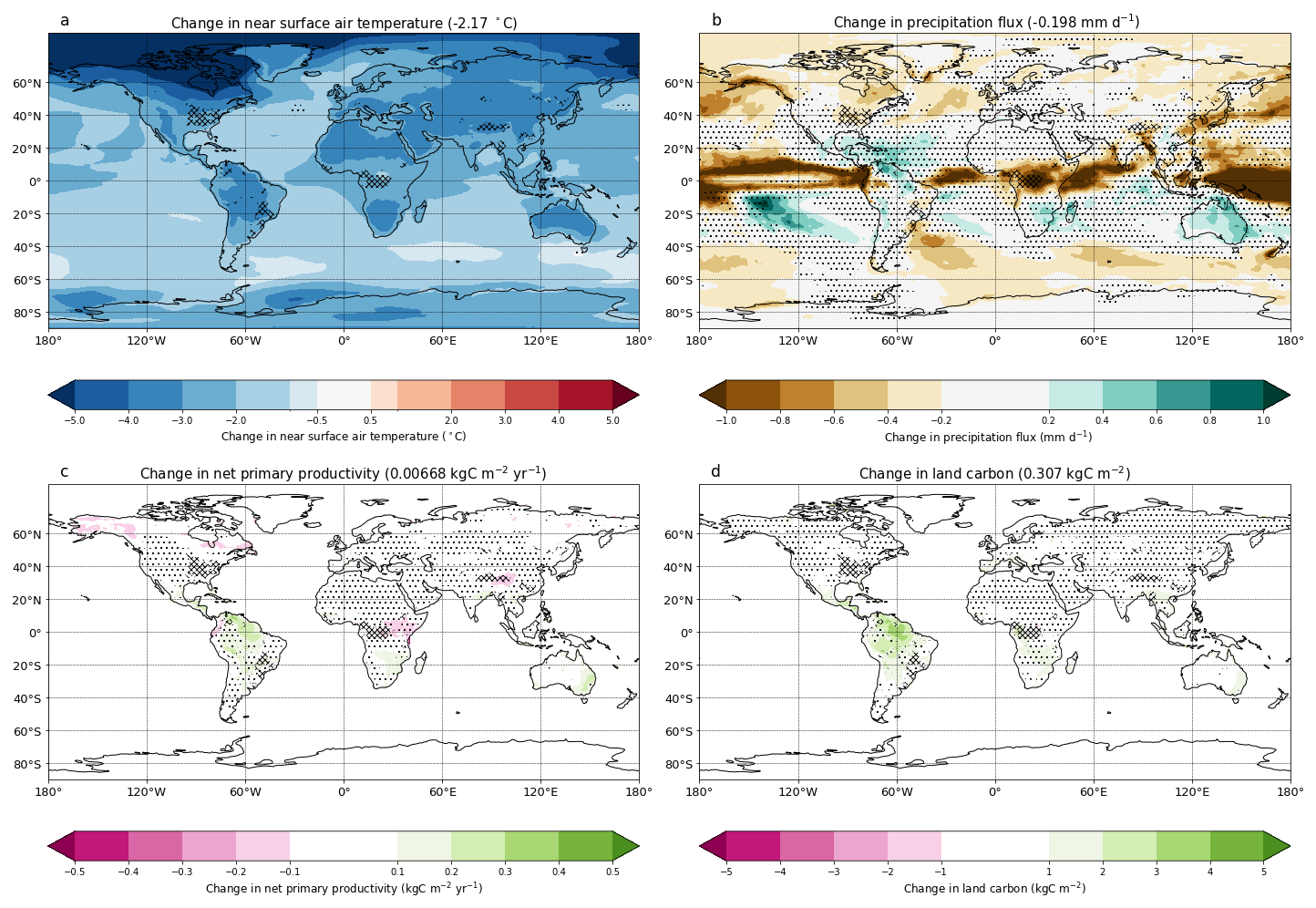
Compared with the high-emissions future, SAI lowered global temperatures by about 2.2 degrees Celsius. Cooling was strongest in northern regions, especially near the poles.
Rainfall patterns changed as well. Global precipitation dropped by roughly 6.4% under SAI compared to the high-emissions scenario. Some tropical areas became drier, while others saw more rain.
Despite these shifts, four of the five models projected increased land carbon storage under SAI. The largest gains appeared in tropical forests, especially the Amazon.
Researchers found that Amazon land carbon storage increased by 10.8% compared with the high-emissions scenario. Compared with the medium-emissions pathway, the Amazon still stored 8.6% more carbon under SAI.
The reason came down largely to temperature.
In the hottest climate scenario, excessive warming reduced forest growth and increased soil respiration, which releases carbon back into the atmosphere. Artificial cooling helped limit those losses, allowing forests and soils to retain more carbon.
The Amazon rainforest plays a major role in regulating Earth’s climate. It stores vast amounts of carbon and helps shape rainfall patterns across South America and beyond.
But the region faces mounting pressure. Rising temperatures, deforestation and drought threaten to weaken the forest’s ability to recover from stress.
Scientists fear that if conditions worsen enough, large sections of the rainforest could shift into a drier ecosystem with far less biodiversity and carbon storage capacity.
Under the high-emissions scenario, one model projected vegetation carbon losses of up to 40% in parts of northeastern Amazonia. When SAI was added, much of that projected loss disappeared.
Even though some areas became drier under SAI, cooler temperatures reduced plant stress and lowered respiration rates. Higher carbon dioxide levels also increased plant water-use efficiency, helping vegetation cope with reduced rainfall.
Lead author Isobel Parry, from Exeter’s Department of Mathematics and Statistics, said the findings suggest SAI could provide emergency protection if the world fails to control climate change fast enough.
“The best protection for the Amazon rainforest in the long-term is a combination of reduced rates of both deforestation and anthropogenic climate change, but SAI might provide some emergency protection if we fail to get climate change under control,” Parry said.
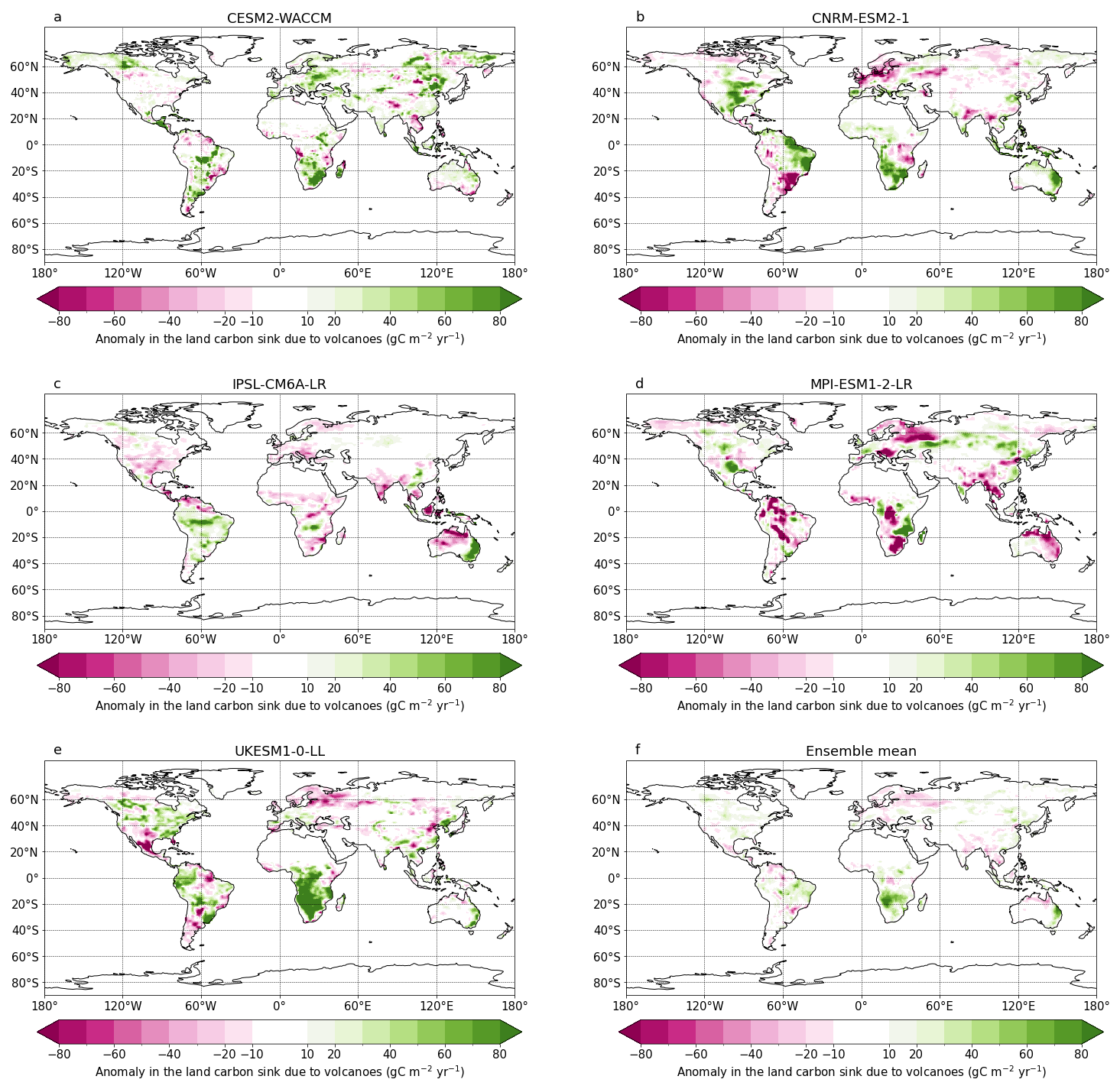
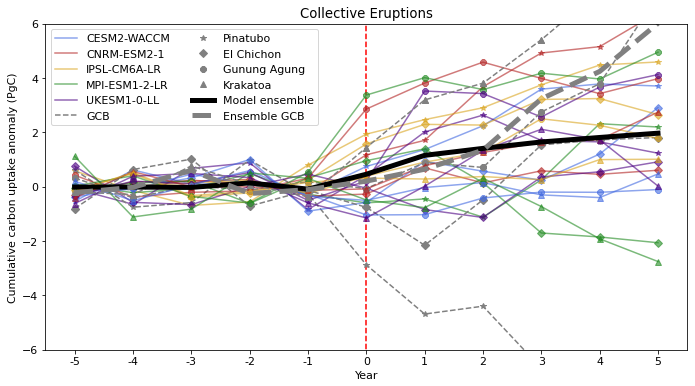
Because SAI has never been used on a global scale, scientists cannot directly test it in the real world. Instead, researchers examined major volcanic eruptions as natural comparisons.
Events such as the 1991 eruption of Mount Pinatubo injected aerosols into the stratosphere and temporarily cooled the planet. Climate models reproduced many of the same land carbon responses observed after these eruptions.
After volcanic cooling events, both models and observations showed increases in land carbon uptake. The researchers said this suggests SAI projections may be realistic, and possibly conservative.
The researchers stressed that SAI is not a replacement for cutting emissions. It does not remove carbon dioxide from the atmosphere. Instead, it masks some of the warming caused by greenhouse gases.
The study also highlighted regional risks.
Some tropical areas, including parts of Indonesia and central Africa, experienced reduced rainfall and lower ecosystem productivity in certain models. Less rainfall could increase wildfire danger, strain freshwater supplies and affect agriculture.
Another major concern involves what scientists call the “termination effect.” If SAI stopped suddenly while greenhouse gas levels remained high, temperatures could rise extremely quickly.
Researchers also noted that current models cannot capture every possible consequence. Groundwater changes, shifts in cloud behavior and effects from diffuse sunlight remain difficult to predict fully.
Still, the study suggests that climate engineering deserves careful scientific discussion rather than outright dismissal.
Global temperatures continue to climb despite decades of climate negotiations. Scientists warn that several climate tipping points may become more likely as warming intensifies.
That reality has pushed once-taboo ideas like geoengineering into mainstream scientific debate.
The Exeter study does not argue that humanity should deploy SAI tomorrow. Instead, it offers evidence that the technique could reduce some climate risks for vulnerable ecosystems like the Amazon.
The research also highlights the difficult choices ahead. Humanity may eventually face a future where emission cuts alone are not enough to prevent severe environmental damage.
Whether the world chooses to alter the atmosphere intentionally remains deeply uncertain. But studies like this are forcing scientists, policymakers and the public to confront questions that once seemed impossible.
This research could influence how scientists and governments think about climate emergency strategies in the future. The findings suggest that stratospheric aerosol injection may help preserve major ecosystems like the Amazon by limiting extreme warming and reducing carbon losses from forests and soils.
The study also provides new information for climate modeling and risk assessment. Researchers can use these findings to better understand how forests respond to different combinations of carbon dioxide, temperature and rainfall changes.
However, the work also reinforces the importance of reducing greenhouse gas emissions and slowing deforestation. The authors stress that geoengineering should not replace traditional climate action. Instead, it may serve as a temporary safeguard if warming becomes dangerously severe.
As climate risks grow, studies like this could shape future international debates about whether humanity should consider large-scale climate intervention technologies and how such systems would be governed safely and fairly.
Research findings are available online in the journal Earth System Dynamics.
The original story “Can geoengineering save the Amazon Rainforest?” is published in The Brighter Side of News.
Like these kind of feel good stories? Get The Brighter Side of News’ newsletter.
The post Can geoengineering save the Amazon Rainforest? appeared first on The Brighter Side of News.


Leave a comment
You must be logged in to post a comment.