Every fastball asks a small ligament in the elbow to do a job it was never built to handle. That strain has become one of baseball’s defining costs, with torn ulnar collateral ligaments, or UCLs, sidelining pitchers for months and sometimes changing careers for good.
Now, new work from the University of Waterloo suggests some of that damage may not be inevitable.
Using computer modelling, researchers found that professional pitchers may be able to lower stress on the UCL through changes in mechanics without necessarily sacrificing velocity. The finding points to what Cedric Attias, who led the study as a graduate student in mechanical engineering, described as unused room for efficiency in the throwing motion.
“Our simulation found solutions that suggest there’s untapped efficiency out there,” Attias said. “Our goal isn’t to tell pitchers to throw softer. It’s to help them throw smarter.”
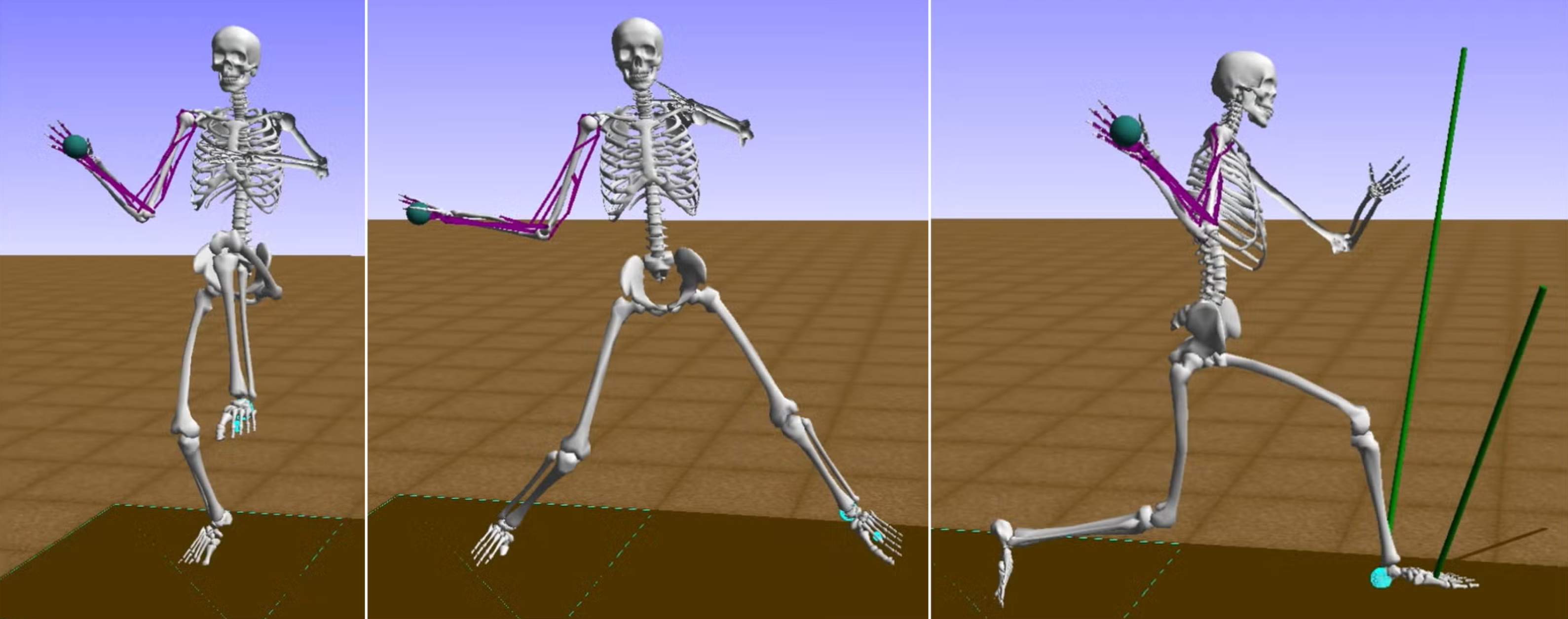
The research centered on one of the most fragile structures in the pitching motion. The UCL is a small band of tissue on the inside of the elbow that helps stabilize the joint. In baseball, it is notorious for breaking down under repeated high-speed throwing, leading to Tommy John surgery and a long rehabilitation process that not every pitcher survives at an elite level.
To understand what drives that strain, the Waterloo team built a detailed digital skeleton that included muscles, ligaments and joints. The model let them examine the powerful twisting forces placed on the elbow during pitching, especially the load carried by the UCL.
Their analysis identified two major factors that placed the greatest demand on the ligament: a high arm slot, meaning the angle of the throwing arm, and tilting the torso away from the pitching arm during the delivery.
In other words, the way a pitcher reaches a given speed may matter as much as the speed itself.
“This ligament is especially vulnerable because it’s small, has a poor blood supply and wasn’t designed for movement this extreme or repetitive,” said Attias, who was supervised by Dr. John McPhee in the Motion Research Group, or MoRG, at Waterloo.
That point matters in a sport where high velocity is rewarded, but the physical bill often arrives later. Because pitching requires repeated explosive motion, even a modest reduction in stress per throw could matter over time. The study does not suggest pitchers can eliminate strain on the UCL, but it does suggest that some of the danger may be shaped by mechanics that can change.
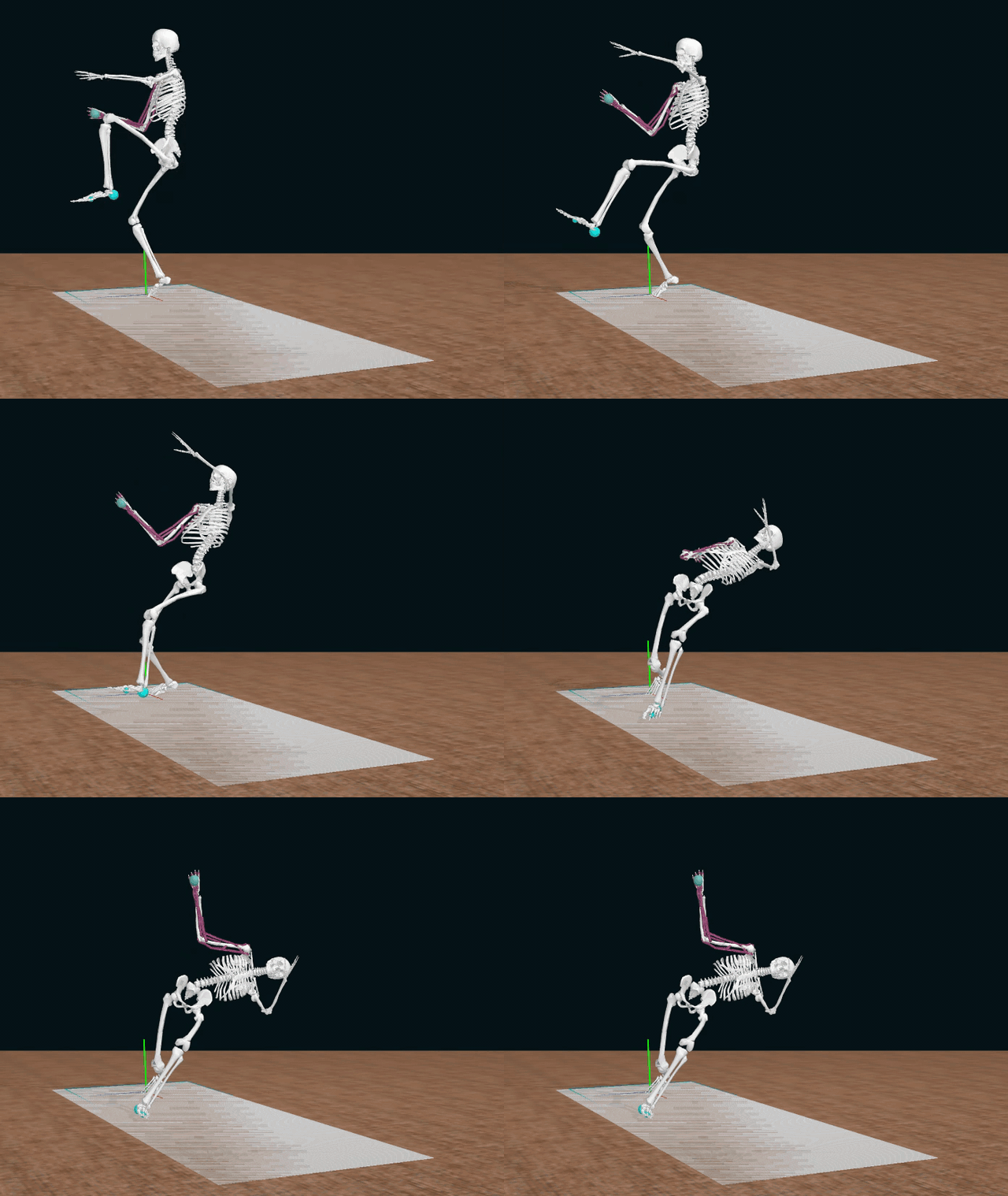
One of the most striking conclusions from the model was that two pitchers throwing at the same speed may not be exposing their elbows to the same level of risk.
“We confirmed that mechanics matters tremendously,” said Attias, who now works as a biomechanist for the Seattle Mariners of Major League Baseball with fellow Waterloo Engineering and MoRG alumnus Dr. Keaton Inkol.
“We showed that one pitcher throwing 93 miles an hour with controlled, upright mechanics puts meaningfully less stress on the UCL than someone using a more extreme technique to reach the same speed.”
That finding cuts against a familiar assumption in baseball, where injury discussions often focus heavily on radar-gun readings. Velocity still matters in the model, but it is not the whole story. Arm slot, torso tilt and even lower-body movement helped shape how much load reached the elbow.
The researchers say those insights could eventually be used in more than one way. At the professional level, teams may be able to use this kind of modelling to predict and avoid expensive injuries. At younger levels, it could help coaches teach pitching deliveries that are safer before bad habits become ingrained.
The promise is practical: not a new surgery, not a pitch limit, but a better map of how the body pays for velocity.
The simulation also produced a few vivid examples of how different mechanics sit along a spectrum.
At the low-stress, low-speed end, Attias said the delivery that best minimized elbow stress was strikingly similar to the mechanics of Tyler Rogers, a Toronto Blue Jays pitcher known for an extreme submarine style. That does not mean every pitcher should copy him. It does suggest, however, that a radically different arm path can sharply alter the burden placed on the elbow.
At the other extreme, the model imagined a player capable of throwing 110 miles an hour, a speed no one has reached. That hypothetical pitcher would likely look less like a conventional baseball thrower and more like a cricket bowler, with a huge trunk tilt and an almost vertical arm angle.
Those examples help frame the larger point. There is no single perfect pitching motion, and not every mechanically efficient delivery is practical in competitive baseball. But the model indicates that the body solves the problem of speed in different ways, some of them much harsher on the elbow than others.
That may be why the study’s most important contribution is not a fixed prescription, but a tool. Rather than arguing for one universal delivery, the research opens the possibility of identifying safer individual adjustments that still preserve performance.
For a game that keeps losing pitchers to the same injury, that kind of precision could be valuable.
The findings suggest pitchers may not always have to choose between staying healthy and throwing hard.
If coaches, trainers and teams can identify mechanics that reduce UCL stress while preserving velocity, they may be able to lower injury risk before a ligament fails.
That could matter most in development, where young pitchers are still learning movement patterns, but it also has clear value in professional baseball, where a single elbow injury can reshape a season, a contract or an entire career.
Research findings are available online in the journal Multibody System Dynamics.
The original story “How pitchers can protect their elbows without giving up velocity” is published in The Brighter Side of News.
Like these kind of feel good stories? Get The Brighter Side of News’ newsletter.
The post How pitchers can protect their elbows without giving up velocity appeared first on The Brighter Side of News.

