Malaria may have shaped early human life across Africa far earlier than once thought, steering where people could safely live and when groups stayed apart. By tracing ancient mosquito habitats, researchers found an overlooked disease barrier running through humanity’s deep past.
For decades, scientists believed climate was the main force guiding where early humans lived across Africa. Shifting rain patterns opened green corridors. Expanding deserts cut populations apart. Wet and dry cycles pushed groups into new landscapes or trapped them in isolated regions.
But a new study suggests another powerful force may have quietly shaped human history for tens of thousands of years: malaria.
Researchers from the Max Planck Institute of Geoanthropology, the University of Cambridge and several collaborating institutions found evidence that malaria likely influenced where ancient human groups could safely live between 74,000 and 5,000 years ago. Their findings suggest the disease helped separate populations across Africa long before agriculture emerged.
The study paints a striking picture of early human life. Ancient people were not only adapting to changing climates and dangerous predators. They were also navigating invisible threats carried by mosquitoes.
Scientists no longer believe modern humans emerged from a single birthplace in Africa. Instead, growing genetic and archaeological evidence suggests our species developed through interactions between many populations spread across different regions of the continent.
These groups lived in varied environments, from grasslands to forests to coastal zones. Over time, they mixed, separated and adapted to local conditions.
Most theories explaining these population patterns have focused heavily on climate. Yet disease may have played an equally important role.
The research team investigated whether Plasmodium falciparum malaria shaped human settlement patterns during a crucial period in human evolution. This span included major migrations within Africa and the eventual movement of humans beyond the continent.
“We used species distribution models of three major mosquito complexes together with palaeoclimate models,” explained lead author Dr. Margherita Colucci of the Max Planck Institute of Geoanthropology and the University of Cambridge. “Combining these with epidemiological data allowed us to estimate malaria transmission risk across sub-Saharan Africa.”
Studying diseases from tens of thousands of years ago is difficult. Ancient medical records do not exist, and direct evidence of pathogens rarely survives.
To solve this problem, researchers turned to mosquitoes.
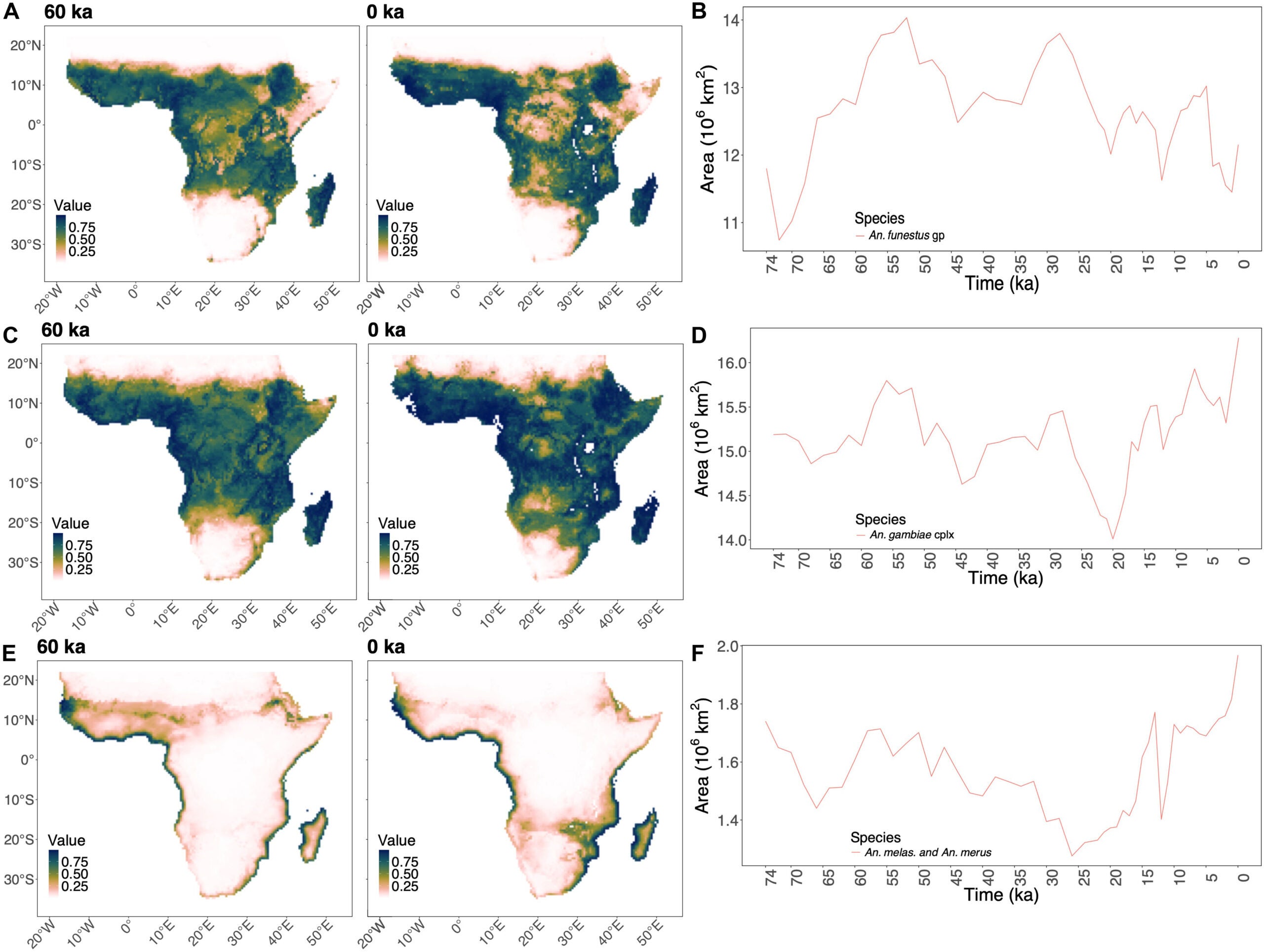
The team focused on three mosquito groups responsible for much of modern malaria transmission in sub-Saharan Africa. These included members of the Anopheles gambiae complex, the saltwater-breeding mosquitoes Anopheles melas and Anopheles merus, and the Anopheles funestus group.
Using modern mosquito occurrence data, scientists built species distribution models that linked mosquito survival to environmental conditions. The models included factors such as rainfall, temperature, vegetation density, terrain and distance from coastlines.
Researchers then projected those models backward in time using paleoclimate simulations that reconstructed African climates over the last 74,000 years.
The climate data covered thousands of years of environmental change. The models included 19 environmental variables and tracked how landscapes shifted through time.
The resulting mosquito maps closely matched present-day mosquito distributions, giving researchers confidence in their reconstructions.
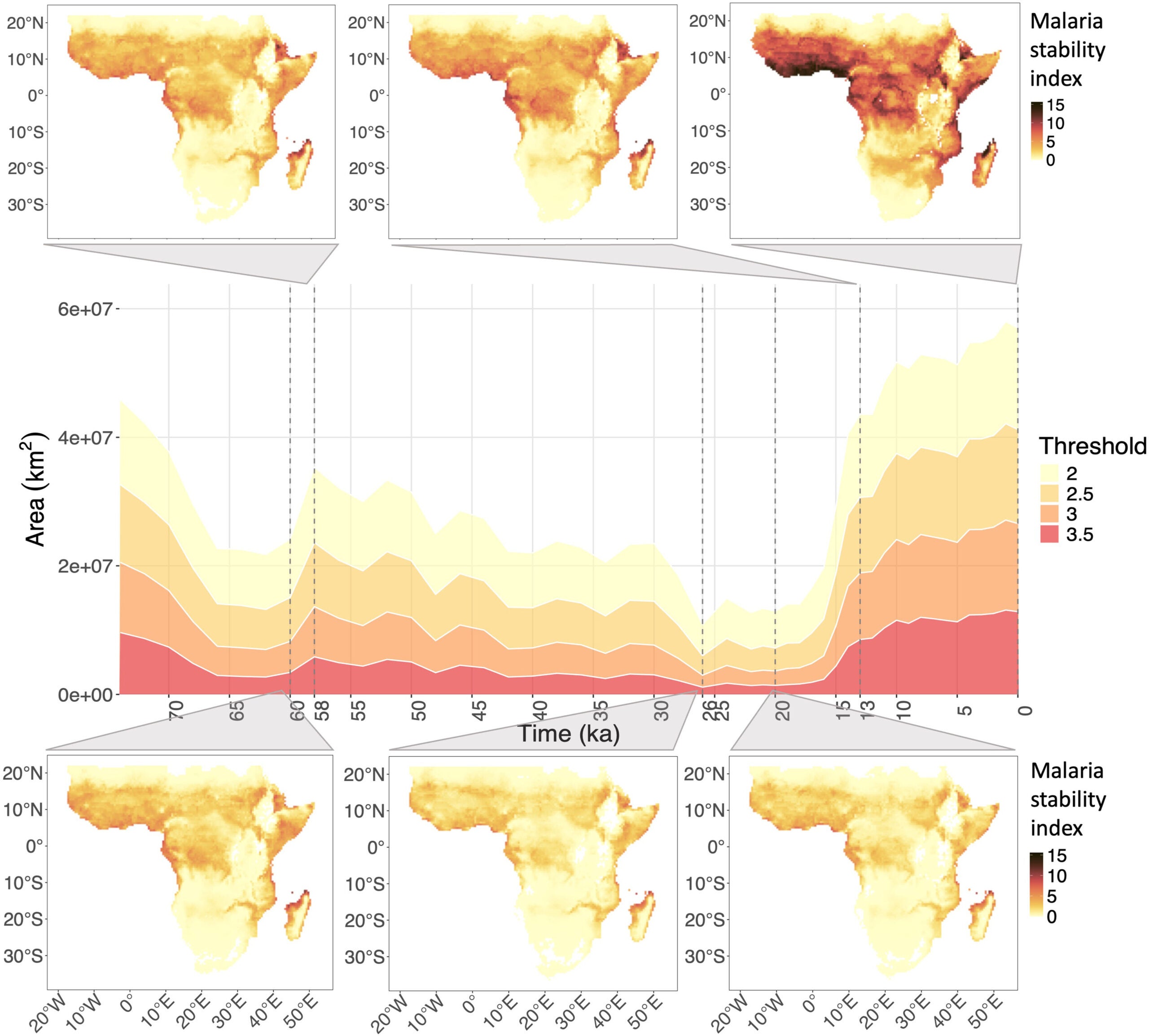
After reconstructing mosquito habitats, scientists created a malaria stability index. This index estimated how likely malaria transmission could remain stable in different regions if the parasite were present.
The index did not measure actual infections. Instead, it measured environmental suitability for long-term malaria transmission.
The results revealed that malaria risk generally increased across sub-Saharan Africa over time.
One major rise occurred between 60,000 and 50,000 years ago, roughly during the period when humans began dispersing more widely beyond Africa. Another large increase appeared around 13,000 years ago, after the Last Glacial Maximum.
Importantly, this second rise happened before agriculture became widespread around 8,000 years ago. That finding challenges the idea that farming alone caused malaria to spread.
Instead, climate conditions themselves may have allowed the disease to become widespread long before humans settled into permanent agricultural communities.
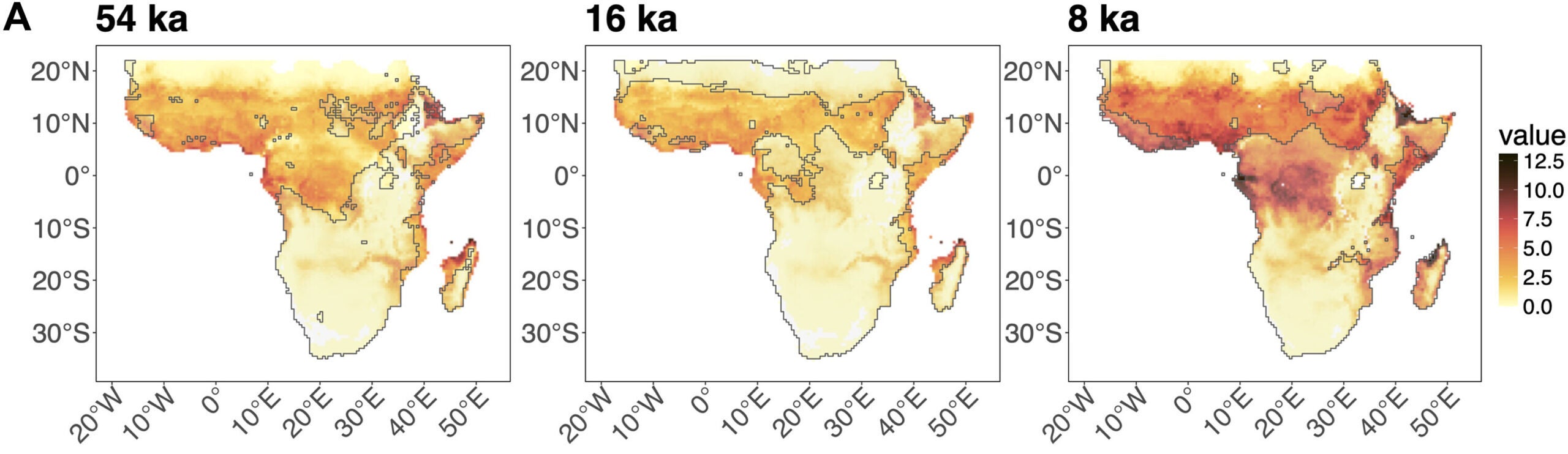
To test whether malaria influenced where people lived, researchers compared their malaria maps with independent reconstructions of ancient human habitats based on archaeological evidence.
The comparison revealed a consistent pattern.
Regions with high malaria transmission potential rarely overlapped with core human settlement areas. Ancient humans appeared to avoid places where malaria risk was highest, or they could not survive there long-term.
“The effects of these choices shaped human demography for the last 74,000 years, and likely much earlier,” said Professor Andrea Manica of the University of Cambridge. “By fragmenting human societies across the landscape, malaria contributed to the population structure we see today. Climate and physical barriers were not the only forces shaping where human populations could live.”
This pattern persisted for tens of thousands of years. From 74,000 years ago until roughly 13,000 years ago, human core habitats consistently showed lower malaria risk than surrounding regions.
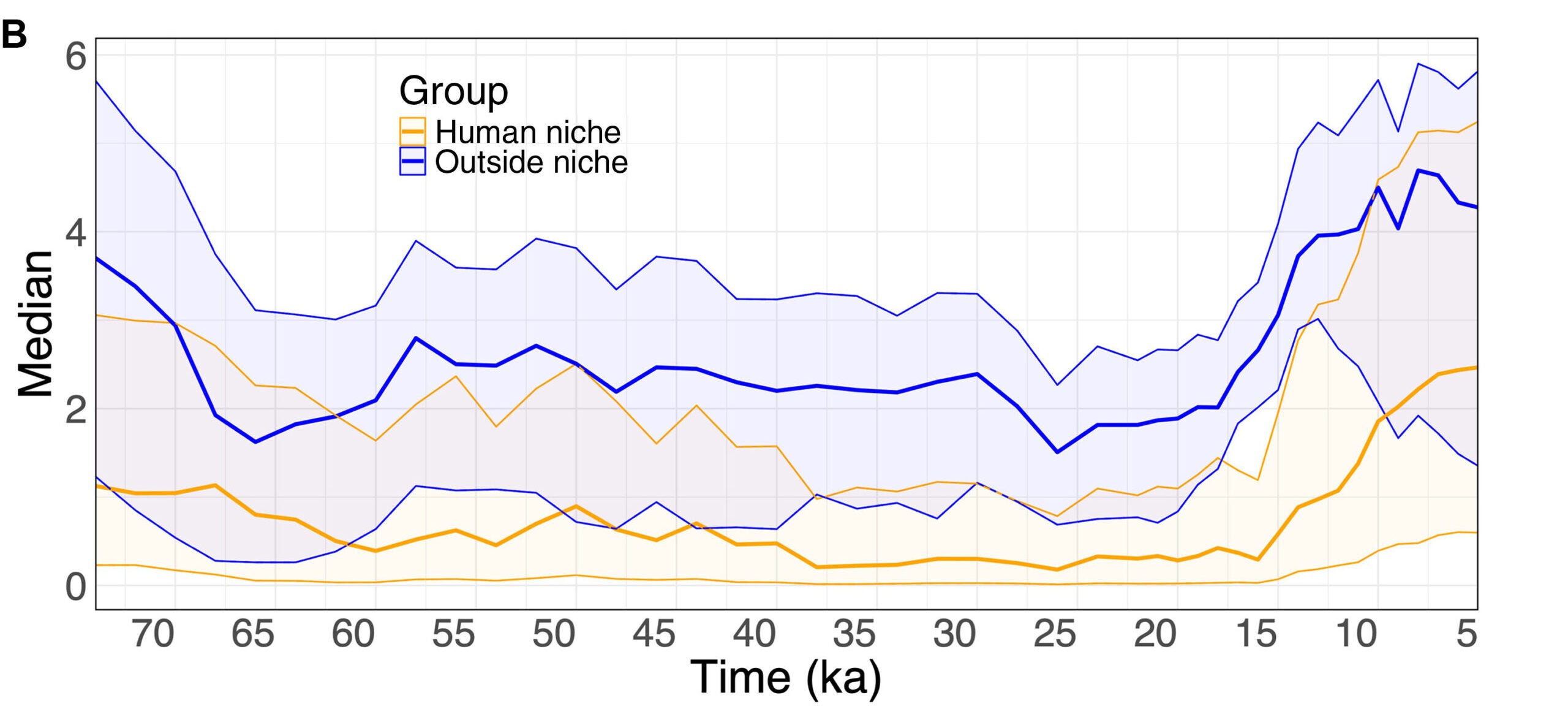
The findings suggest malaria acted like an invisible barrier across parts of Africa, limiting movement and reducing contact between populations.
The study also showed how malaria may have reshaped migration corridors and connections between human groups.
At certain times, habitable pathways opened between regions such as the Sahara and the Ethiopian highlands. At other times, those connections disappeared as malaria risk rose.
These changing disease landscapes may have influenced which populations mixed genetically and which remained isolated for long periods.
Researchers believe these patterns contributed to the deep population structure seen in modern humans today.
The work also aligns with genetic evidence tied to malaria resistance.
One well-known example is the sickle cell mutation, which helps protect against severe malaria. Scientists estimate this mutation emerged in Africa between 25,000 and 22,000 years ago.
The timing fits the study’s finding that malaria became increasingly widespread before agriculture expanded.
Archaeological evidence hints that ancient people may have recognized disease risks even if they did not understand germs or parasites.
Some ancient bedding sites contain aromatic plants with insect-repelling chemicals. Other evidence suggests humans avoided swampy river regions during seasons when mosquitoes likely thrived.
These choices may have helped reduce exposure to insect-borne illnesses.
“This study opens up new frontiers in research on human evolution,” said Professor Eleanor Scerri of the Max Planck Institute of Geoanthropology. “Disease has rarely been considered a major factor shaping the earliest prehistory of our species, and without ancient DNA from these periods it has been difficult to test. Our research changes that narrative and provides a new framework for exploring the role of disease in deep human history.”
The researchers acknowledge that their work relies on several assumptions. They assume mosquito climate preferences remained broadly stable over tens of thousands of years.
Still, additional tests using other mosquito species produced similar results.
The broader conclusion remains clear: disease ecology likely influenced human evolution far more than previously recognized.
For generations, scientists have described human history largely through climate, technology and migration. This research suggests another layer shaped those same stories quietly in the background.
Some of the most powerful forces affecting our ancestors may have been invisible.
This study could reshape how scientists study human evolution and ancient migration. It introduces disease as a major environmental factor alongside climate and geography. Future research may now examine how other pathogens influenced where humans and animals could survive.
The findings may also improve understanding of how diseases spread under changing climate conditions today. By studying how malaria responded to environmental shifts in the distant past, researchers may better predict how modern mosquito-borne illnesses could expand into new regions as temperatures and rainfall patterns change.
The work also highlights how human adaptation is deeply connected to disease pressure. Genetic traits tied to malaria resistance may now be understood within a broader environmental and evolutionary context. This could improve research into human genetics, immunity and population history.
More broadly, the study reminds humanity that diseases have shaped civilization long before written history. Understanding those ancient pressures may help scientists prepare for future public health challenges in a warming world.
Research findings are available online in the journal Science Advances.
The original story “Malaria may have shaped human evolution for thousands of years” is published in The Brighter Side of News.
Like these kind of feel good stories? Get The Brighter Side of News’ newsletter.
The post Malaria may have shaped human evolution for thousands of years appeared first on The Brighter Side of News.

