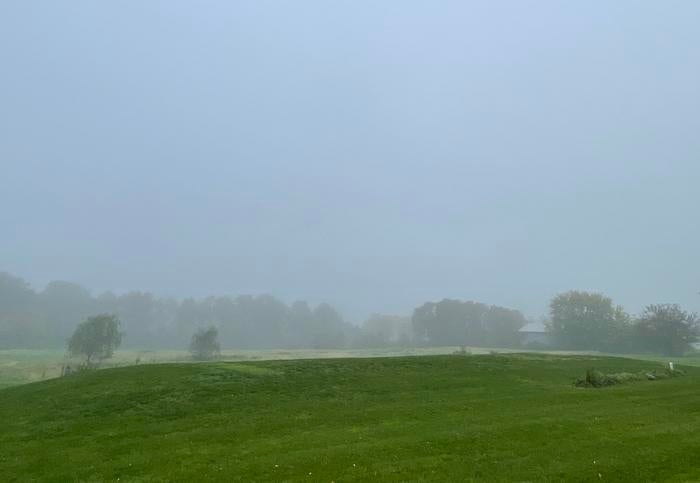
Before sunrise in central Pennsylvania, fog can settle low and still over the landscape, quiet enough to seem almost empty. But inside those suspended droplets, Arizona State University researchers found something far less passive: bacteria that are alive, dividing, and feeding on airborne pollutants.
That finding pushes fog out of the category of simple weather and into something more biologically active. In a study published in mBio, the team reports that radiation fog, the kind that forms close to the ground in calm air, acts as a temporary water habitat for microbes. Some of the most common bacteria in those droplets appear able to consume formaldehyde, a toxic air pollutant that contributes to ozone smog and can harm human health.
“There’s very limited knowledge about what kinds of bacteria are present in fogs, which are like clouds at the ground level,” said lead researcher Thi Thuong Thuong Cao, who worked on the project as a PhD student in ASU’s School of Molecular Sciences and is now a postdoctoral researcher at Virginia Tech.
The question that guided the work was straightforward but important: which bacteria are present in fog, and are they actually active there?
“If they are growing, then the droplets are a habitat. That’s a mindset change,” said co-author Ferran Garcia-Pichel, director of the ASU Biodesign Center for Fundamental and Applied Microbiomics.
Scientists have known for years that bacteria drift through the atmosphere and turn up in clouds. What has remained murkier is whether those microbes are simply passing through or truly living in those watery spaces.
To get at that, the ASU team tracked 32 radiation fog events over two years in central Pennsylvania. Radiation fog gave them an advantage. Unlike moving clouds or advection fog, it forms locally in stagnant air masses, which made it easier to compare the same air before, during, and after a fog event.
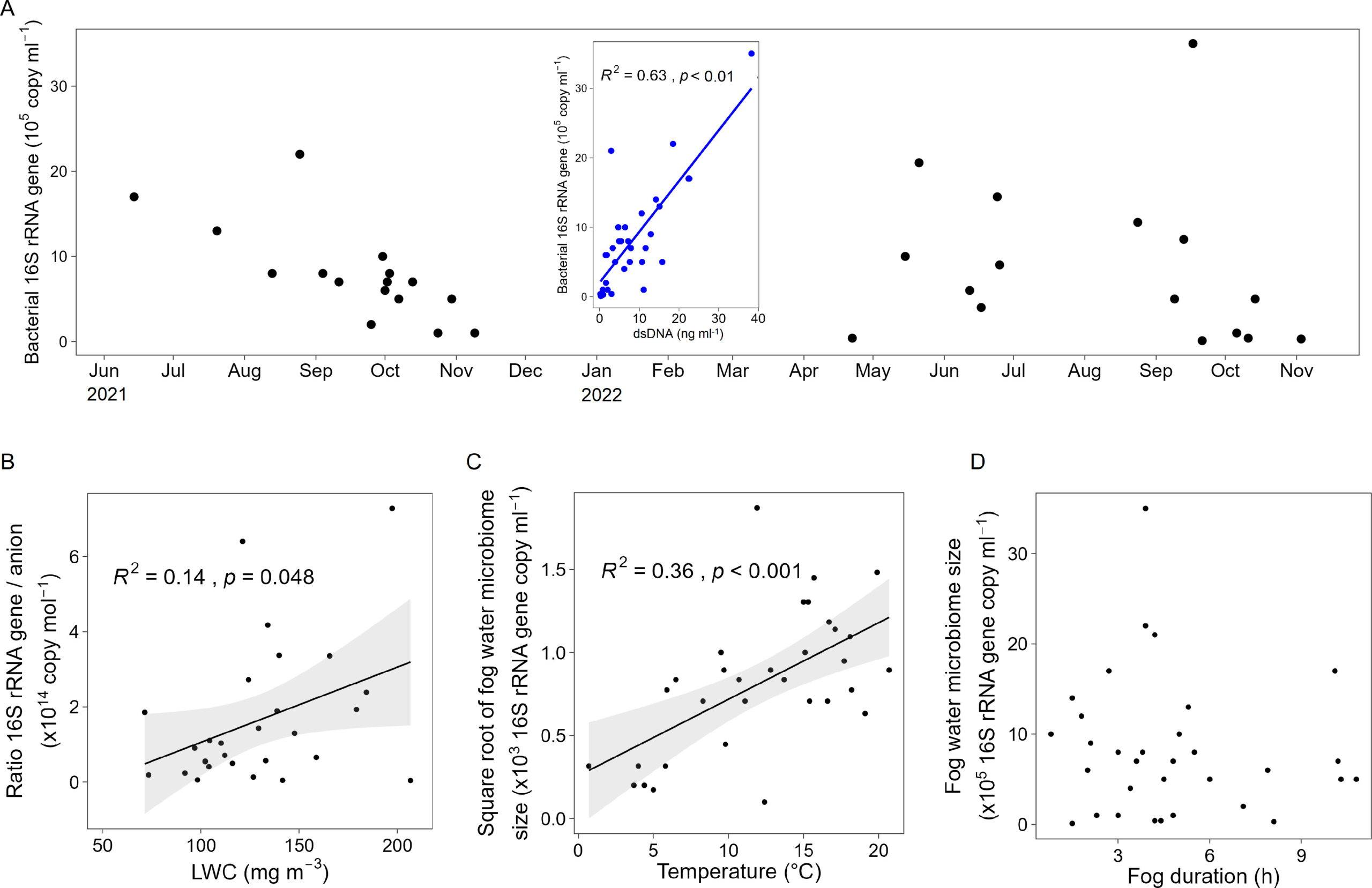
What they found was a surprisingly dense microbiome in the fog water. On average, the droplets contained around 10^6 bacterial 16S rRNA gene copies per milliliter of liquid water. The researchers also found that bacteria made up most of the biological load in the fog water.
The number can sound abstract until it is scaled to something familiar. Garcia-Pichel said a thimbleful of fog water contains about 10 million bacteria. He added that when all the droplets are considered together, the bacterial concentration is in the same range found in ocean water.
Not every droplet carries life. Fewer than 1% of fog droplets contain bacteria, the team found, but the total adds up because fog contains so many droplets packed into a small space.
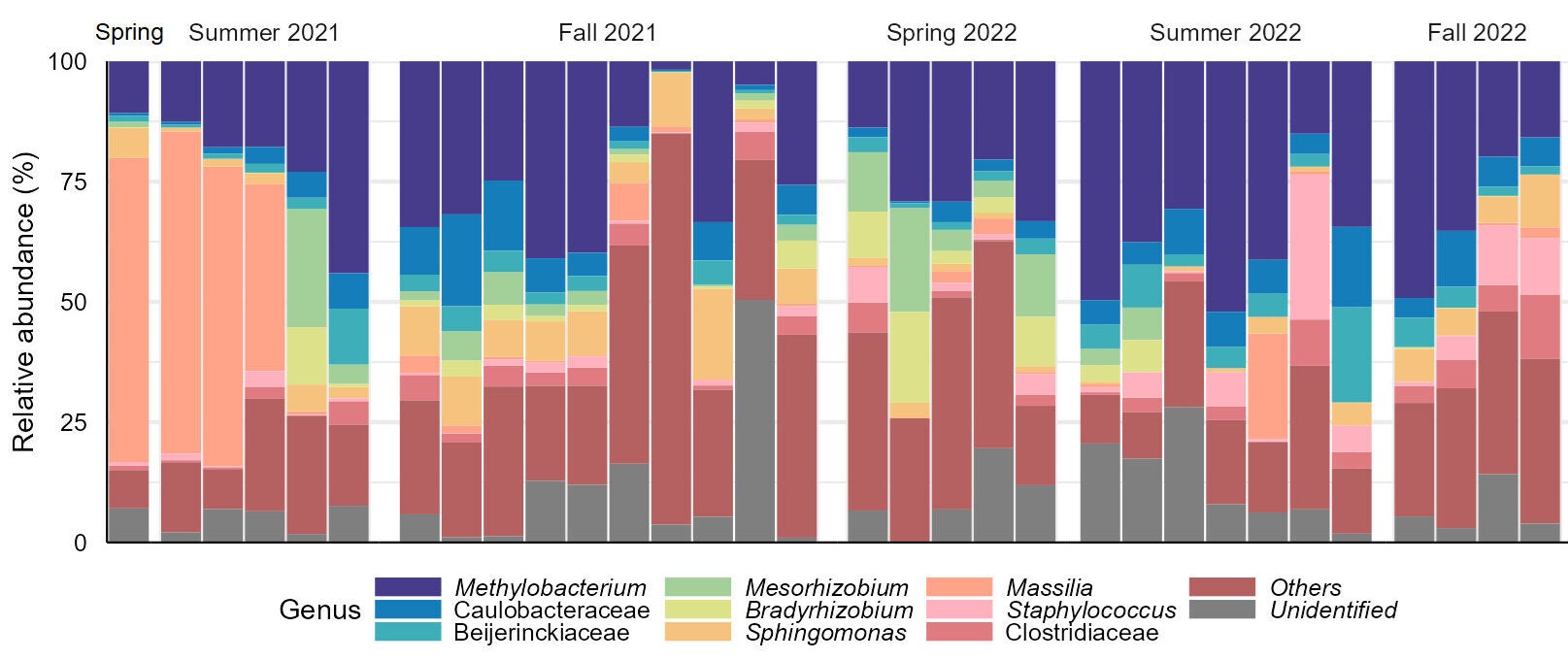
Among the microbes in the fog, one group stood out again and again: Methylobacterium. In the 32 fog events, bacteria in that group made up an average of 29% of all sequencing reads, making them the most consistently dominant residents of the fog water microbiome.
That mattered because Methylobacterium are known for feeding on simple one-carbon compounds. One of those compounds is formaldehyde.
Formaldehyde is common in the atmosphere and can be present in fog water. In the Pennsylvania samples, it appeared at concentrations between 6 and 25 micromolar. The fresh fog water removed it quickly, with degradation rates roughly 200 times faster than rates previously measured elsewhere in cloud water.
The team saw strong signs that biology was driving that drop. When they filtered the fog water to remove particles, the activity nearly stopped. Killed controls showed that about 95% of the formaldehyde loss could be attributed to biological processes.
Cao also examined the cells directly. “We observed them under the microscope to see that, yes, the bacteria are getting bigger and they’re dividing, so there is growth,” she said. “We also found that they’re using the formaldehyde as food to support their growth.”
The strongest case that fog is a habitat, not just a transport system, came from several lines of evidence that pointed in the same direction.
Bacteria inside fog droplets were much larger than those in the dry aerosol fraction during fog events. The average hydrated cell volume in droplets was 8.5 cubic micrometers, compared with 1.6 cubic micrometers in interstitial aerosol particles. The frequency of dividing cells was also higher in droplets, averaging 2.4%, compared with 1.0% in the aerosol particles.
Fog water communities also looked different from the bacterial communities in clear air before fog formed, and from the interstitial aerosols present during the fog itself. Only a small number of bacterial variants appeared preferentially enriched in droplets, but Methylobacterium dominated that short list.
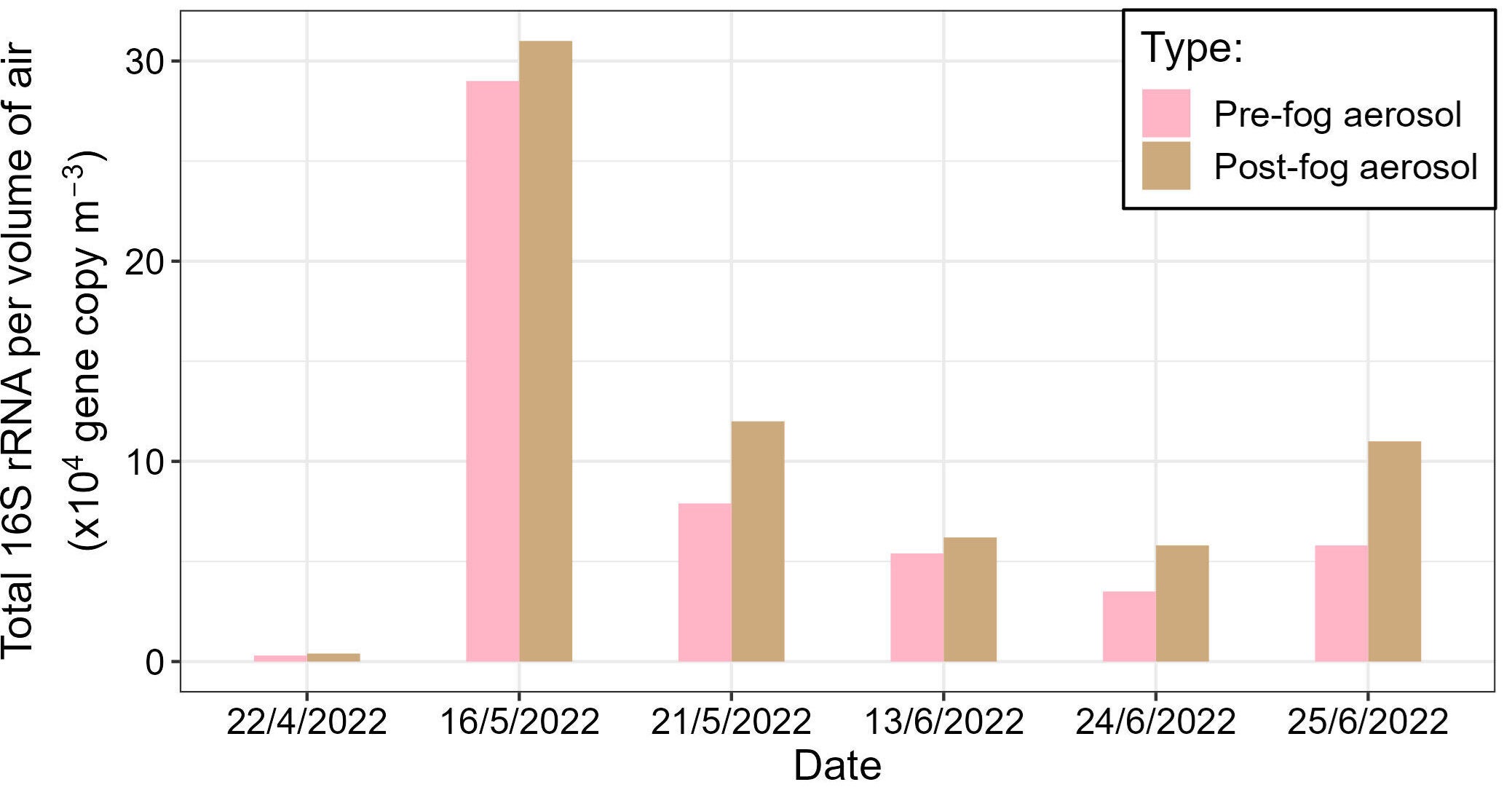
The researchers also looked at what happened to the airborne microbiome after fog events. In six paired before-and-after comparisons, post-fog air contained significantly more bacteria than pre-fog air, with an average increase of 45%. The increase ranged from 7% to 90%.
The study argues that the simplest explanation is in situ growth, though not growth alone. The number of bacteria did not rise with fog duration, and the analysis suggests that wet deposition likely removes cells over time even as some are reproducing.
The work also showed limits to what formaldehyde can explain. The bacteria degraded it so quickly that the researchers concluded they were not using most of it just to build new biomass. At high levels, formaldehyde is toxic, so much of that activity likely serves as detoxification.
Laboratory studies of two isolated Methylobacterium strains backed that idea. Both could grow on formaldehyde as their sole carbon source, and both degraded it actively, but both also showed toxicity at higher concentrations. One strain, SUH_01, tolerated formaldehyde better than the other.
The findings matter beyond microbiology because they suggest fog is doing atmospheric work that has not been fully accounted for.
For one thing, the study raises questions about fog harvesting, a practice promoted in some places as a sustainable freshwater source. The researchers say fog water should not be assumed to be clean simply because it condenses from air. It contains substantial numbers of bacteria, and some, including Methylobacterium, can be opportunistic pathogens.
The work also points to a possible tradeoff. Fog droplets may act as local detoxification hubs by hosting bacteria that break down volatile contaminants. Removing fog water from the atmosphere could, in principle, also remove some of that cleaning capacity.
“If we harvest fog, we are getting rid of our little friends in the air,” Garcia-Pichel said. “We don’t know if that’s going to make a big impact or not, but we should be considering that.”
The results may also affect atmospheric modeling. Co-author Pierre Herckes, a professor in the School of Molecular Sciences, said bacteria could matter especially at night, when sunlight-driven chemistry slows down. “At nighttime, for example, there isn’t that much atmospheric chemistry going on,” he said. “But if the bacteria are still doing their thing even during the nighttime, they can be important.”
The study does not answer every question. The authors note that other volatile compounds in fog may also feed these microbes, and the roles of those chemicals remain untested. They also found that photoheterotrophy, while genetically possible in their isolates, did not appear likely to play a major role under the dark conditions typical of nighttime radiation fog.
Still, the broader picture is hard to ignore. Fog, the study suggests, is not just a veil over the land. For a few hours at a time, it becomes an aquatic world in the sky, one where microbes live, grow, and quietly alter the chemistry around us.
Research findings are available online in the journal mBio.
The original story “Nature’s air purifier: Fog is alive and it’s cleaning our air” is published in The Brighter Side of News.
Like these kind of feel good stories? Get The Brighter Side of News’ newsletter.
The post Nature’s air purifier: Fog is alive and it’s cleaning our air appeared first on The Brighter Side of News.

