A pair of stubborn molecules, prized because they can survive deep time, just passed an important Mars test by failing a very different one on Earth.
The molecules are pristane and phytane, hydrocarbons tied closely to living organisms. They have long attracted interest as possible biosignatures, chemical traces that might hint at ancient life on Mars. But when researchers examined those compounds in the Murchison meteorite, a famous space rock that fell in Australia in 1969, the result pointed in another direction. The molecules did not behave like fresh biological leftovers. Instead, they looked more like contamination from petroleum.
That may sound like bad news for the search for life. In one way, it is the opposite.
The work gives scientists a tougher and more realistic way to tell whether certain organic molecules are biological, non-biological, or simply picked up after a rock reaches Earth. It also gives a trial run to an instrument built for ESA’s Rosalind Franklin rover, part of the ExoMars mission, which is scheduled to begin searching for organic molecules on Mars in 2030.
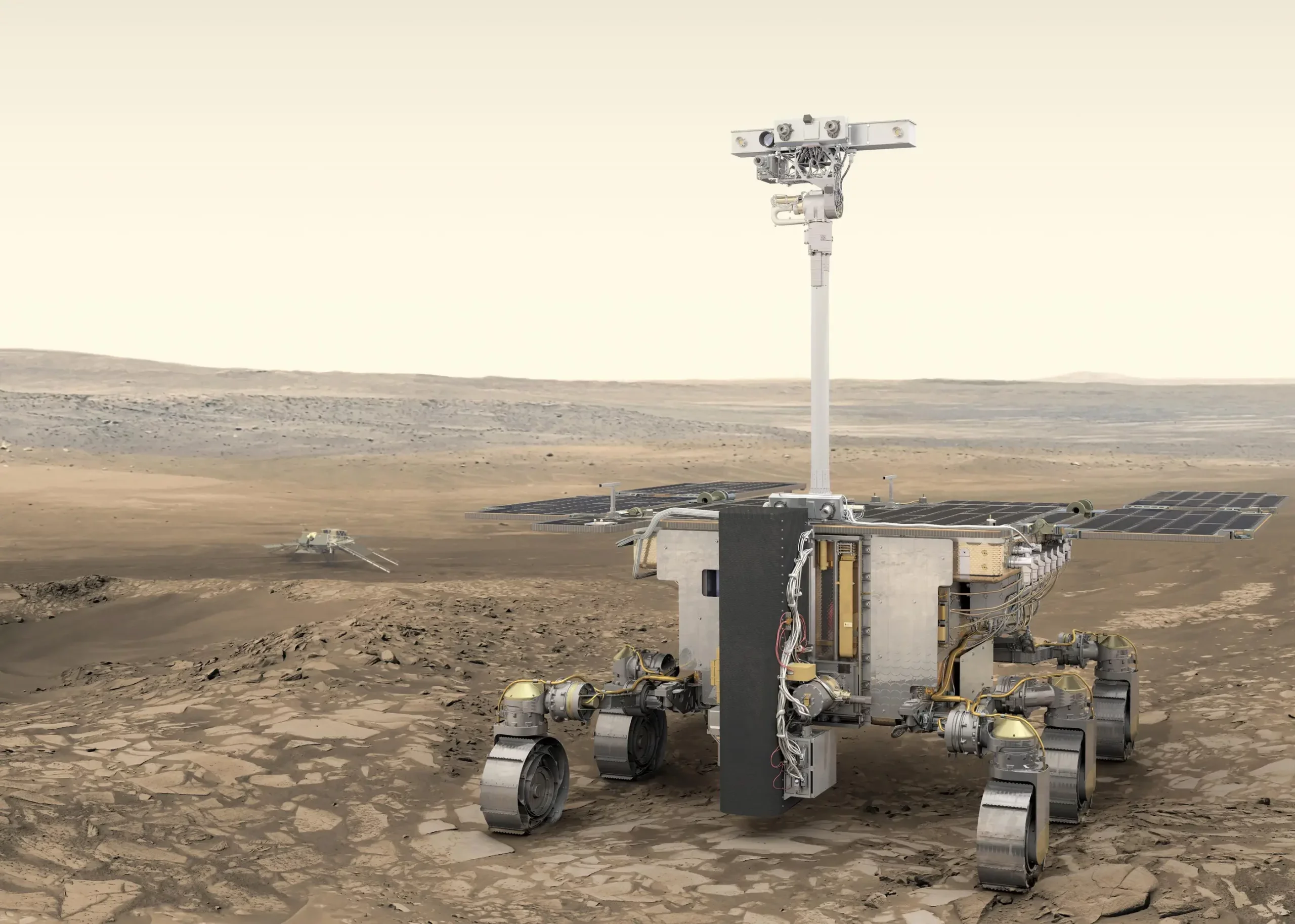
“If life once existed on Mars, then molecules like pristane and phytane represent important molecular biosignatures that could have survived to this day,” said Guillaume Leseigneur of the Max Planck Institute for Solar System Research, lead author of the new study.
Mars was once warmer, wetter, and wrapped in a thicker atmosphere than it is now. Whether simple life ever emerged there remains unknown. NASA rovers have found organic molecules in Martian rock, but none can be tied unambiguously to life.
That is where chirality enters the story.
Some organic molecules can exist in mirror-image forms, called enantiomers. They are built from the same atoms, but arranged like left and right hands. In living systems, those mirror forms are usually not split evenly. Life tends to favor one form over the other. In non-living chemistry, both forms are expected to appear in roughly equal amounts.
“Chirality is a valuable tool in the search for past extraterrestrial life,” said co-author Uwe Meierhenrich of Côte d’Azur University.
Pristane and phytane are especially appealing because they are stable and because their biological origins on Earth are well known. Pristane comes from chlorophyll breakdown products, and phytane can come from chlorophyll or archaeal lipids. Over time, heat and pressure can erase that original imbalance, a process called racemization. In mature petroleum, the molecules can end up nearly evenly mixed.
That distinction matters on Mars. The planet lacks the plate tectonics and deep burial histories that drive strong thermal alteration on Earth. In principle, that could make chirality a cleaner clue there than it is here.
To see whether the Mars Organic Molecule Analyzer, or MOMA, could handle this challenge, the team used replicas of the same chromatographic tubes that the rover will carry. MOMA combines a gas chromatograph, a mass spectrometer, furnaces, and a laser. Heated rock samples release volatile compounds, which then move through coated capillary tubes. Because mirror forms interact differently with those coatings, they can separate in time.
In the new measurements, the team achieved chiral separation of pristane and phytane for the first time with identical MOMA tube replicas.
“Chiral separation of pristane and phytane requires high instrument sensitivity and measurement accuracy, both of which we show MOMA can achieve”, explained co-author and MOMA team member Fatma Yesil Sahan from MPS.
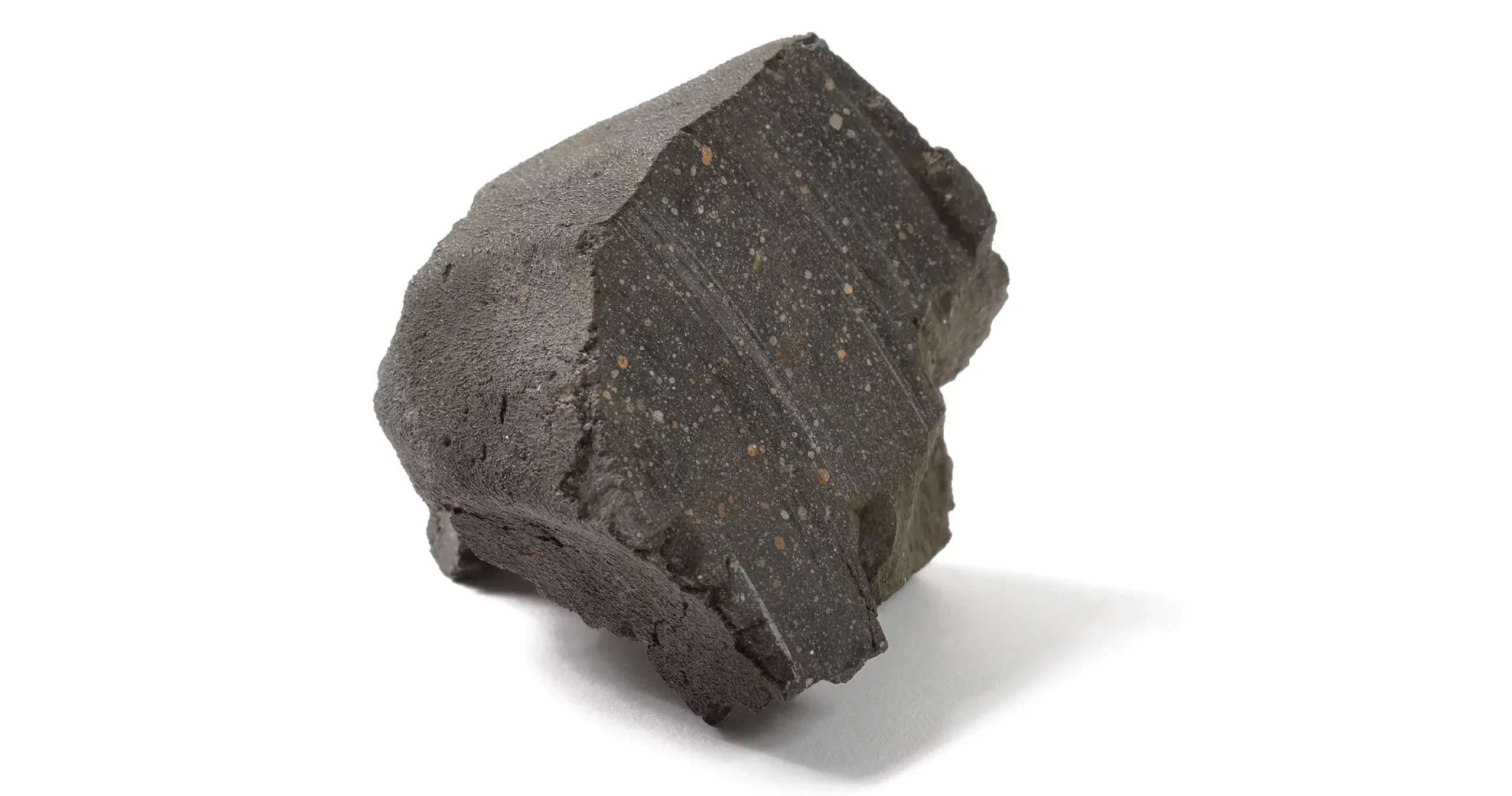
For a Mars stand-in, the researchers turned to the Murchison meteorite, a carbon-rich chondrite loaded with organic compounds. Some of those molecules are thought to be indigenous to the meteorite. Others may have arrived later through terrestrial contamination. Earlier studies had already raised doubts about whether its pristane and phytane were truly extraterrestrial.
The team also analyzed extracts from three oil shales, Green River, Messel, and Bächental, which differ in age and maturity. These served as comparison samples because the stereochemistry of pristane and phytane changes as organic matter matures into petroleum.
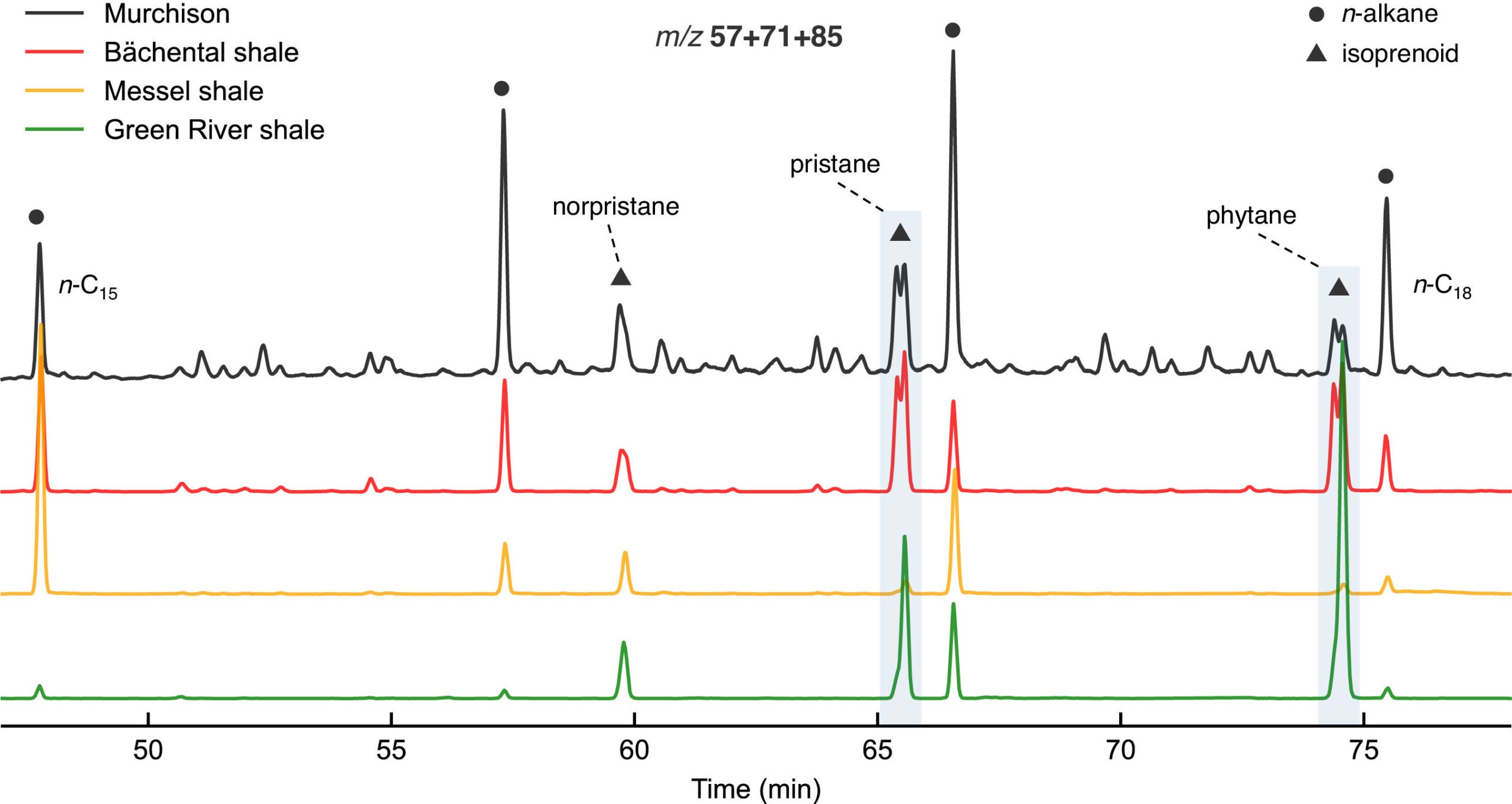
The surprise was not that Murchison contained pristane and phytane. It was how those molecules were arranged.
In the meteorite, all chiral variants of pristane and phytane appeared in equal proportions within the study’s error bars. That racemic pattern does not match fresh biomass, which would strongly favor the biological forms. It also rules out a direct contribution from the biosphere and, according to the authors, makes contamination from biodegraded material unlikely.
The pattern did match something else: mature petroleum.
The oil shale samples showed a clear trend. The younger and less mature Green River and Messel shales retained a strong “biological excess,” while the older Bächental shale was much closer to racemic. By the time organic matter is pushed through enough heat and pressure to form mature oil, that original chiral preference largely disappears.
“Petroleum forms in these rocks over millions of years at great depths under the influence of heat and pressure”, said co-author Manuel Reinhardt from the University of Göttingen.
That, the team argues, is the most plausible explanation for what turned up in Murchison. The meteorite likely picked up petroleum-derived contaminants after entering Earth’s environment, probably through aerosols produced by fossil fuel burning.
Studies from past decades have found pristane and phytane in airborne particles from vehicle exhaust, urban air, and even relatively clean coastal air. The researchers note that such contamination may build up quickly on exposed rock surfaces. Earlier work found measurable amounts of these compounds on the Allende meteorite just seven days after its fall.
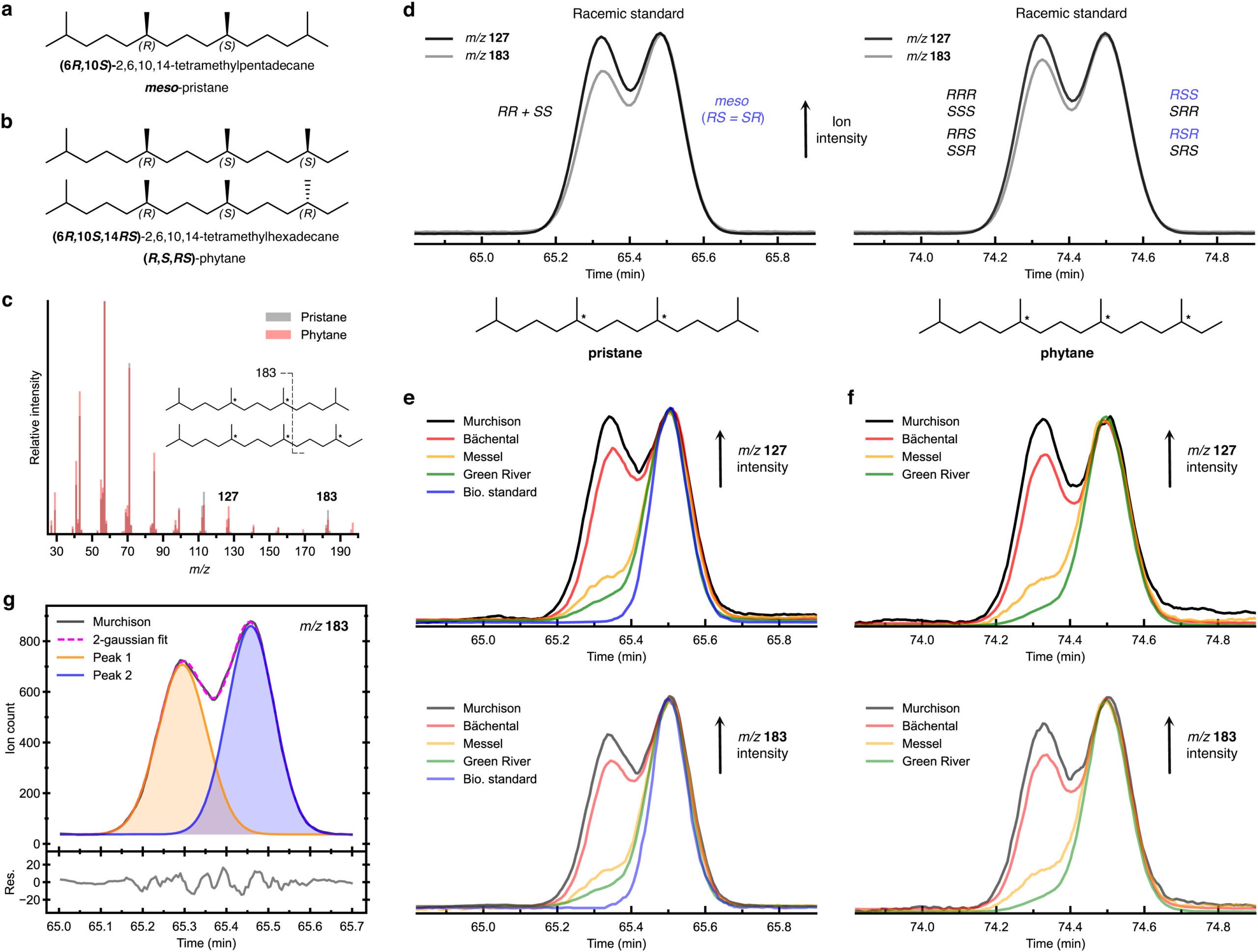
The study also reports something new at the analytical level: a slight difference in how the diastereomers of pristane and phytane fragment in mass spectrometry. The authors say that may help future efforts distinguish biological from non-biological isoprenoid hydrocarbons even more efficiently.
None of this proves that Mars ever hosted life. It does something more practical. It sharpens one of the tools scientists plan to use when they go looking.
On Mars, the presence of pristane or phytane alone would not be enough. Their chirality could matter just as much as their detection. A strong preference for the biological forms would be more interesting than a simple molecular match. A racemic pattern, by contrast, could point to non-biological chemistry or later alteration.
The findings also underline how careful scientists must be with meteorites. Organic molecules found in space rocks do not automatically come from space. Some may come from the air we breathe and the fuels we burn.
This study gives the ExoMars team a successful test of MOMA’s ability to separate difficult chiral hydrocarbons, a capability that could be important once Rosalind Franklin begins examining Martian samples.
It also offers a practical screening method for meteorites and other ancient materials by helping researchers distinguish indigenous compounds from terrestrial contamination.
Beyond planetary science, the work raises broader questions about how petroleum-derived aerosols move through the atmosphere and settle onto exposed surfaces, including scientific specimens.
Research findings are available online in the journal Earth and Planetary Science Letters.
The original story “New analysis finds signs of life on Mars actually came from Earth” is published in The Brighter Side of News.
Like these kind of feel good stories? Get The Brighter Side of News’ newsletter.
The post New analysis finds signs of life on Mars actually came from Earth appeared first on The Brighter Side of News.


Leave a comment
You must be logged in to post a comment.