Tuberculosis remains one of the world’s deadliest infectious diseases, killing 1.23 million people in 2024, according to the World Health Organization. One reason it is so hard to treat is physical: the bacterium Mycobacterium tuberculosis wraps itself in an unusual outer membrane that blocks many drugs before they can do any damage.
That barrier, known as the mycomembrane, is not just sturdy. It is selective, allowing some molecules through while keeping others out. For drug developers, that has created a basic problem. A compound may look promising on paper, but if it cannot cross that outer layer, it may never reach its target inside the cell.
Now a team led by the University of Massachusetts Amherst has developed a way to speed up that search. Writing in Nature Microbiology, the researchers describe a paired approach that first tests which compounds can get through the mycomembrane, then uses those results to predict the behavior of others from chemical structure alone.
“Mtb is unique,” said Sloan Siegrist, an associate professor of microbiology at UMass Amherst and one of the study’s senior authors. “Not only does it have two membranes that protect the cell from antimicrobial chemical compounds that we might use to kill it, its outer membrane is unlike any other biological barrier out there.”
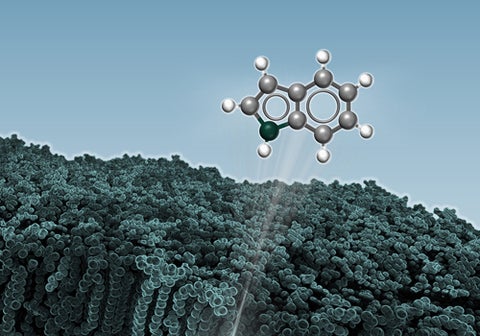
For years, one of the biggest bottlenecks in tuberculosis drug research was scale. There are huge numbers of candidate compounds, but researchers traditionally had to check them one by one.
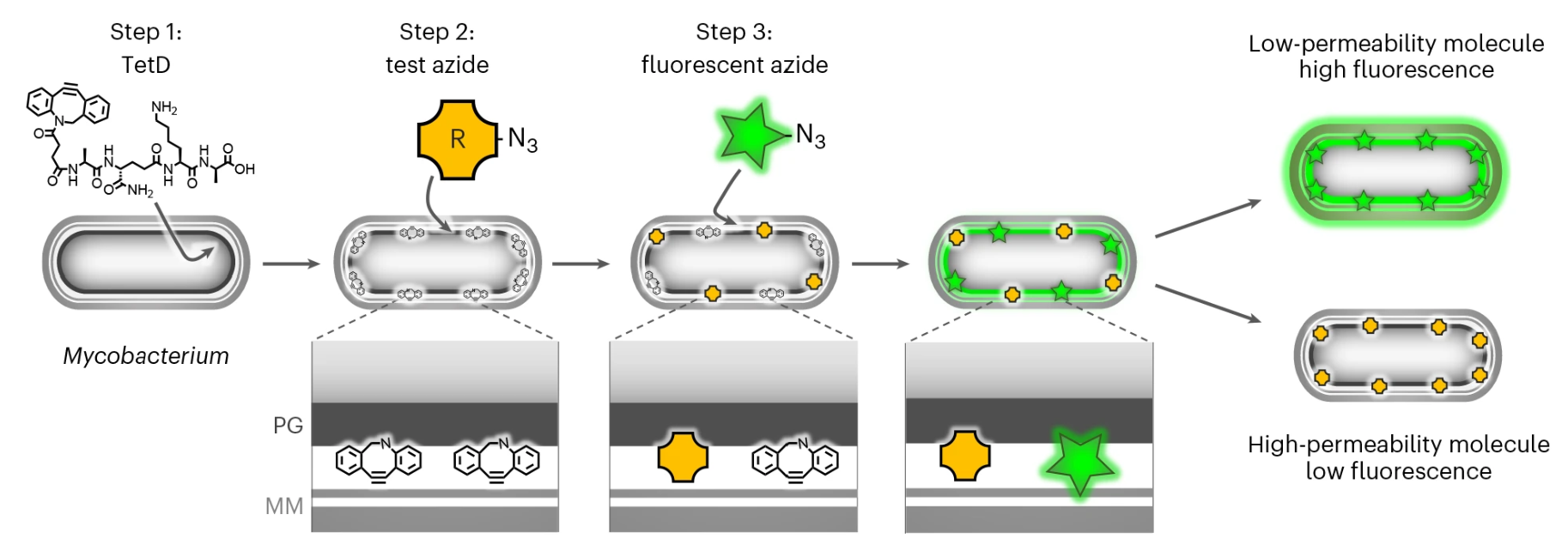
That began to change with a technique called Peptidoglycan Accessibility Click-Mediated AssessmeNt, or PAC-MAN. Siegrist and collaborators had introduced the method earlier, and in the new work they used it to screen more than 1,500 azide-tagged small molecules against M. tuberculosis and a related model organism.
PAC-MAN does not measure whether a drug kills the bacterium. Instead, it measures whether a test molecule can reach the space just inside the mycomembrane. That distinction matters. A compound can fail for several reasons, but PAC-MAN isolates one of the earliest hurdles, getting past the outer coat.
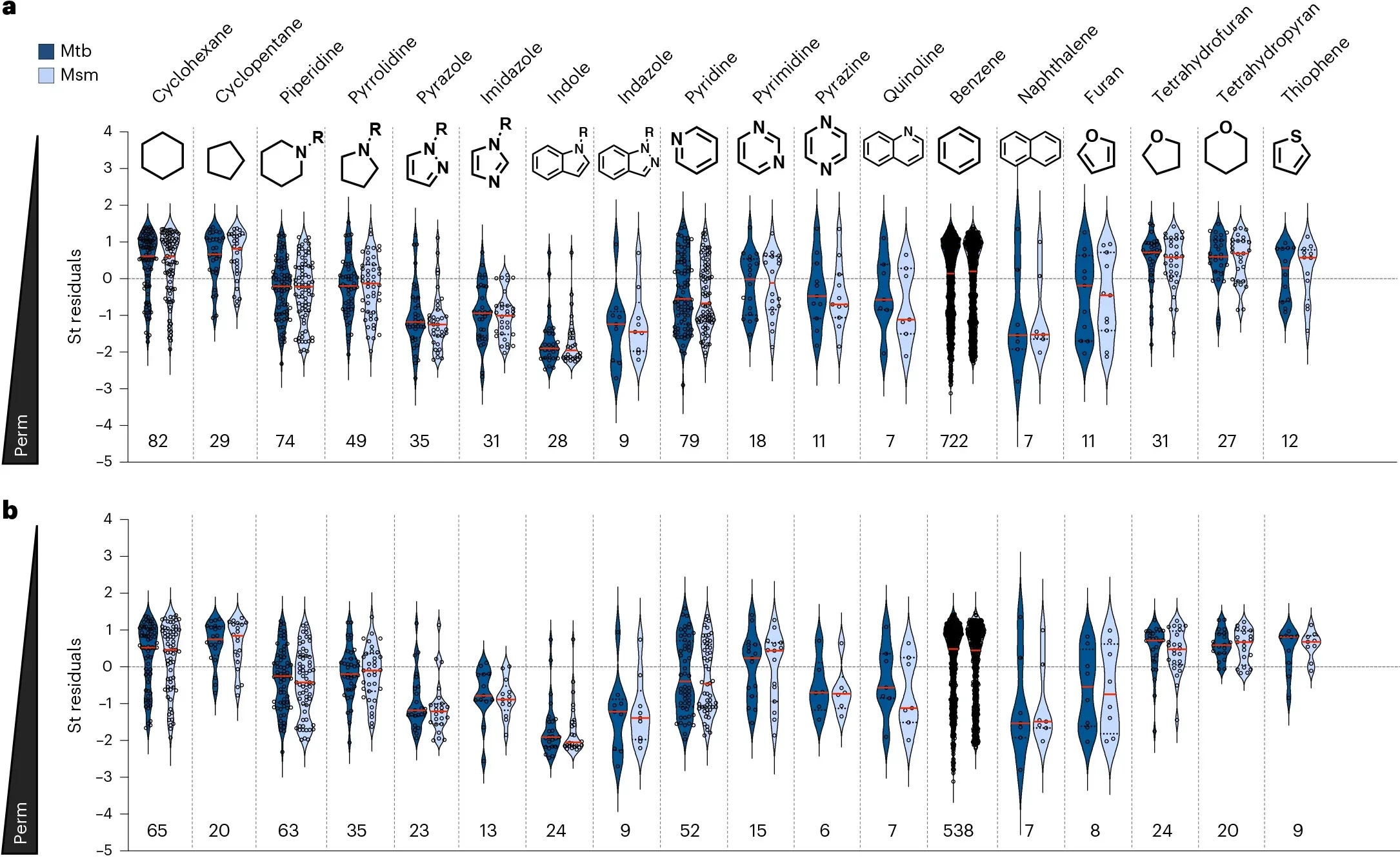
With that broad screen in hand, the team began looking for patterns. Some ring-shaped chemical structures were linked to better passage through the membrane, while others were associated with poorer entry. Aromatic nitrogen-containing heterocycles such as indole, imidazole and pyrazole stood out as positive correlates. By contrast, structures such as cyclopentane and cyclohexane tended to track with lower permeability.
The picture grew more complicated when the group examined standard chemical traits such as lipophilicity and polar surface area. Across the full dataset, those relationships were weak or inconsistent. But when compounds were grouped by scaffold, clearer patterns emerged. The effect of a property depended strongly on the rest of the molecule.
That finding helps explain why simple rules have not been enough. A feature that helps one class of compounds cross the mycomembrane may do little, or even the opposite, in another.
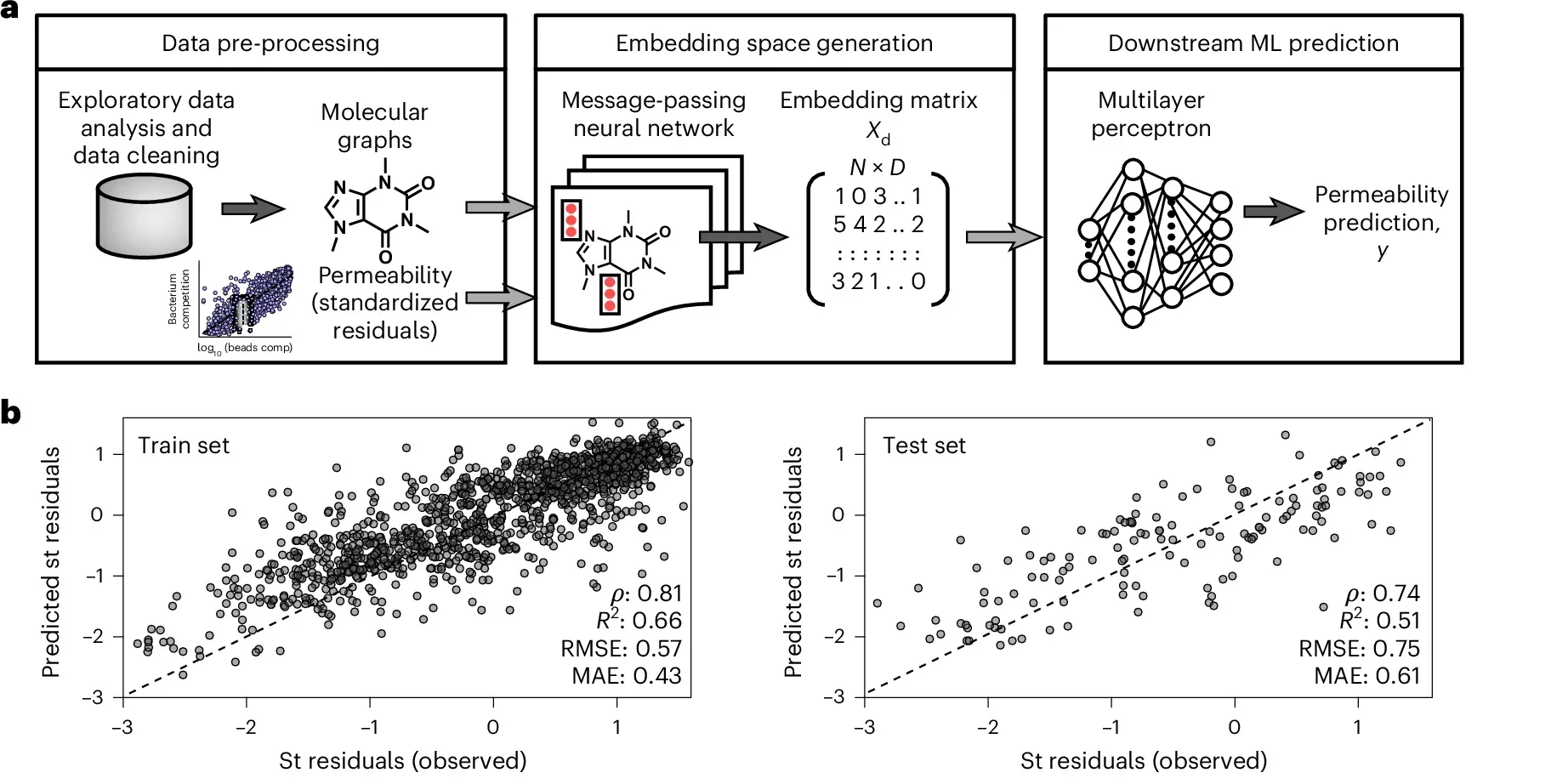
To push beyond the screening data, the researchers built a machine learning model called MycoPermeNet. Led in part by Anna Green, an assistant professor in UMass Amherst’s Manning College of Information and Computer Sciences, the model was trained on PAC-MAN results and the chemical structures of the test molecules.
“Small molecules can be particularly difficult to analyze computationally,” Green said. “Because they come in all different sizes with a wide range of molecular connections, you can’t describe them with a single measurement, by weight, say, or size.”
Once trained, MycoPermeNet could predict how easily a compound would cross the mycomembrane from its chemical structure alone. It also highlighted which molecular features mattered most in those predictions.
“The mycomembrane lets some molecules through and keeps others out,” Green said. “There must be something about this membrane, and about the chemistry of each molecule, that decides which ones get in, and our combined tools help us figure out which ones can get through, and why.”
The model performed well on held-out test data, and when it ranked the most permeable scaffolds, indole-like and other nitrogen-containing aromatic structures rose to the top again. That agreement with the screening results gave the team confidence that the model was learning real chemical relationships rather than memorizing a list.
The researchers then tested whether those chemical clues could actually guide molecule design. In several different compound series, they swapped certain ring structures for others and checked whether permeability changed in the way the model and screening data predicted.
Again, indole emerged as especially important. In peptide-based test molecules, replacing phenylalanine side chains with tryptophan, which contains an indole group, improved mycomembrane permeation. Similar patterns appeared in experiments on octyl tridecaptin derivatives, where a benzene-to-indole substitution was linked to better predicted and observed passage through the membrane.
The effect did not guarantee better antibacterial performance in every case. In one compound series, changes in membrane permeability did not track cleanly with growth inhibition, suggesting that the mycomembrane is not always the main barrier limiting a drug. Other factors, including target binding, metabolism and efflux, can still control whether a molecule works.
Still, across larger datasets, the same permeability-linked features often lined up with whole-cell anti-tuberculosis activity. Those correlations appeared in screens against intact M. tuberculosis cells, but not in a screen against a purified bacterial enzyme, a result that supports the idea that the membrane barrier itself is shaping which compounds succeed.
The authors argue that this matters because tuberculosis drug development often stalls before a candidate even gets a fair chance. A molecule that cannot enter the cell may be discarded without revealing whether its underlying target was worth pursuing.
The new approach does not deliver a finished tuberculosis drug, but it could make the search for one faster and smarter. PAC-MAN offers a way to measure mycomembrane passage at scale, while MycoPermeNet gives researchers a way to prioritize compounds before making or testing them.
Together, those tools could help chemists redesign existing leads, screen large libraries more efficiently and focus on molecules more likely to reach the inside of M. tuberculosis cells.
The study also highlights a caution for drug design: traits that help compounds cross other bacterial membranes do not necessarily apply to tuberculosis, whose outer barrier appears to follow its own chemical rules.
Research findings are available online in the journal Nature Microbiology.
The original story “PAC-MAN and AI join forces to fight the world’s deadliest infection” is published in The Brighter Side of News.
Like these kind of feel good stories? Get The Brighter Side of News’ newsletter.
The post PAC-MAN and AI join forces to fight the world’s deadliest infection appeared first on The Brighter Side of News.


Leave a comment
You must be logged in to post a comment.