Red meat has long occupied a near-mythic place in the story of human evolution. It is often cast as the food that helped make us human, feeding bigger brains, stronger bodies, and more complex societies. But a sweeping new review in The Quarterly Review of Biology argues that the story no longer ends there.
The same food source that may once have helped early humans survive is now tied to chronic disease, environmental damage, and a global food system whose scale looks nothing like anything in the human past.
In the review, Juston Jaco, Kalyan Banda, Ajit Varki, and Pascal Gagneux from the University of California, San Diego pull together evidence from archaeology, anthropology, nutrition, epidemiology, and molecular biology. Their conclusion is not that meat was a mistake. It is that modern red meat consumption has drifted far from its original biological and ecological setting.
“The nature, scale, and context of red meat consumption today differ drastically from those of our evolutionary past,” the authors write.
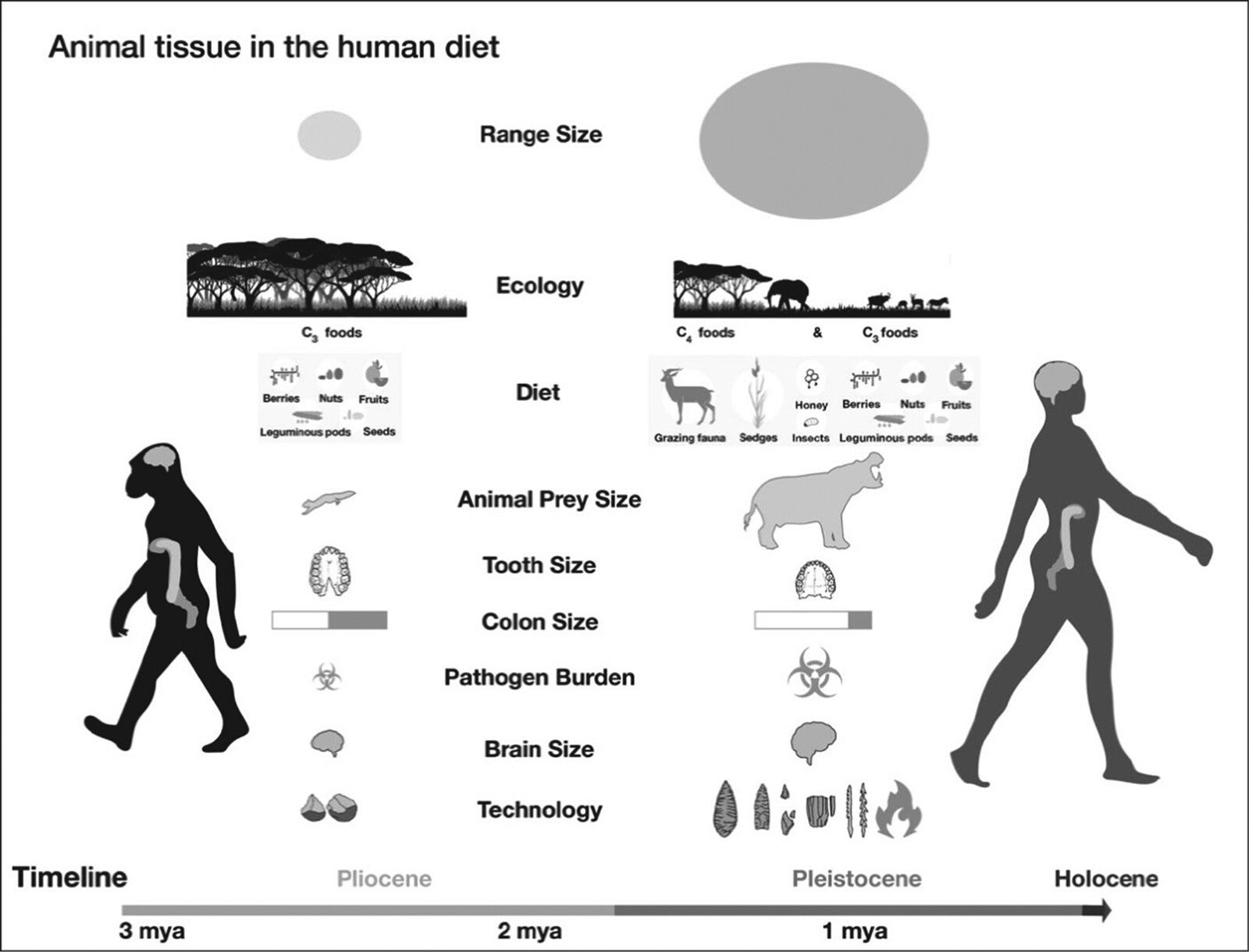
The review pushes back on a familiar image of early humans as hunters chasing lean cuts of large game. That picture may say more about modern food culture than ancient diets.
Animal bones and stone tools survive in the archaeological record far better than plant foods, which means meat can loom larger in reconstructions of ancient diets than it actually did. The researchers argue that early hominins likely ate a flexible mix of foods, including plants, insects, eggs, aquatic animals, and animal tissues. When they did get large animals, they may have prized fat-rich parts more than lean muscle.
Bone marrow, organs, brain tissue, and other fatty tissues would have delivered dense calories and essential lipids. That matters because protein alone is not an ideal fuel for a growing brain. The review notes that lean muscle meat, so celebrated in many modern diets, is relatively poor as an energy source and costly to metabolize in large amounts.
“The cultural prominence of red meat in modern Euro-American diets, typically centered on steaks and roasts, reflects ideals and biases that influence assumptions about early hominin diets,” the authors write.
That point matters because it changes the old question. Instead of asking whether meat alone drove human brain expansion, the review favors a broader explanation: humans succeeded because they were dietary generalists.
For most of prehistory, people lived with irregular food supplies and wide dietary variety. That changed when farming took hold roughly 10,000 to 12,000 years ago.
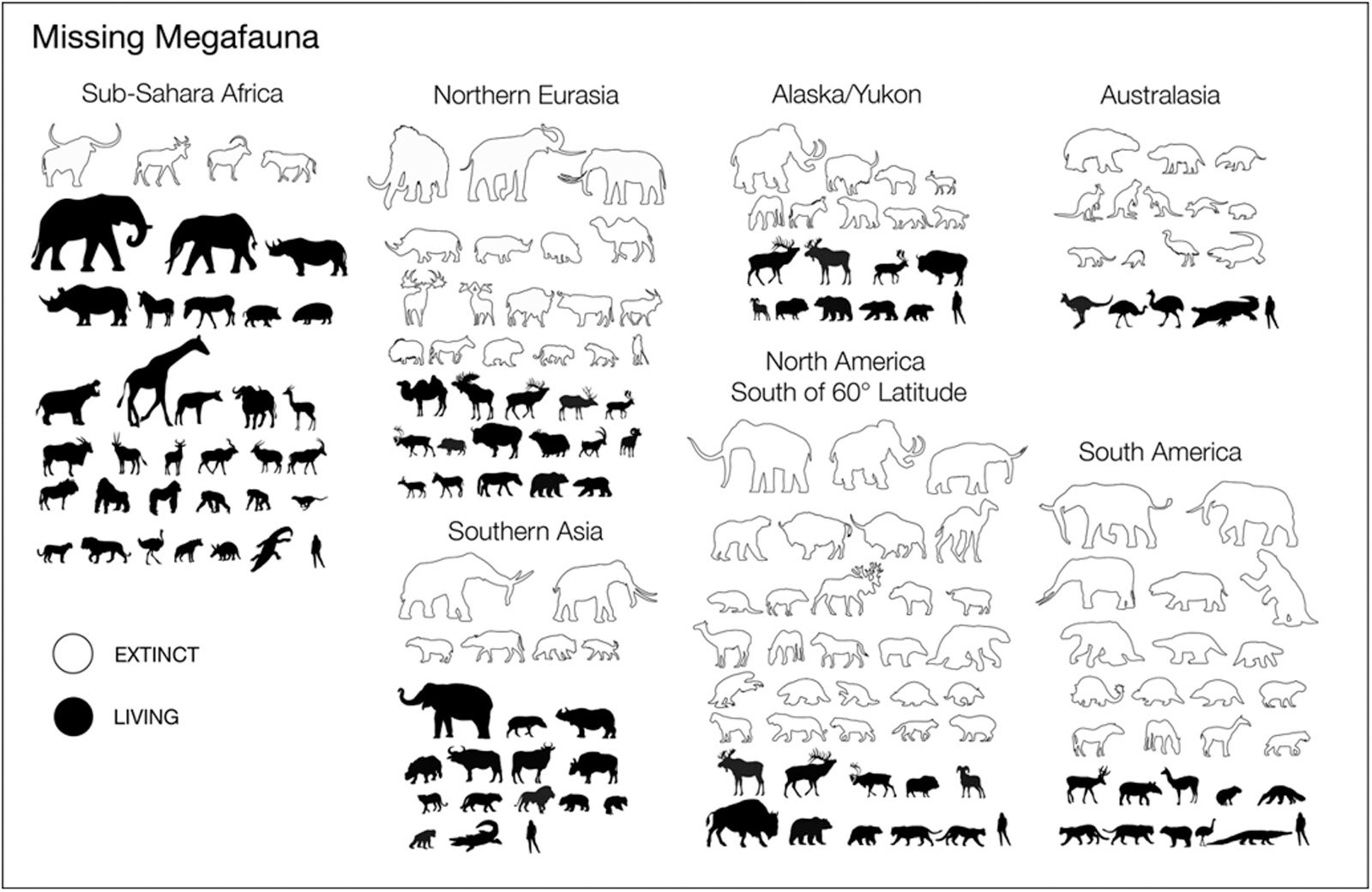
Agriculture made food more predictable and helped populations grow, but it narrowed the menu. Cereal-heavy diets became common, and the review notes that iron deficiency, rare among hunter-gatherers, became more frequent in farming societies because grain-rich diets can reduce iron absorption.
That transition was only the beginning. Industrialization, refrigeration, long-distance transport, synthetic fertilizers, and large-scale livestock production later transformed meat from an occasional, context-dependent food into a global commodity. The review notes that the global meat industry was valued at $1.3 trillion in 2021 and is projected to reach $1.6 trillion by 2028.
Consumption has risen with it. Between 1998 and 2018, global meat consumption increased by 58%, with low-income countries accounting for about 85% of that growth. At the same time, production has become more concentrated, more intensive, and more dependent on confined animal feeding operations.
This is where the authors say the evolutionary blessing starts to look more like a modern curse.
The review lays out a large body of epidemiological evidence linking red and processed meat to cardiovascular disease, type 2 diabetes, colorectal cancer, and higher overall mortality. Processed meat carries the strongest signal.
The International Agency for Research on Cancer classifies processed meat as carcinogenic to humans, Group 1, and unprocessed red meat as probably carcinogenic, Group 2A. One estimate cited in the review found that colorectal cancer incidence rises by 17% with daily consumption of 100 grams of total red meat and by 18% with 50 grams per day of processed meat.
Large cohort studies also found a dose-response pattern. In one pooled analysis of the Health Professionals Follow-up Study and the Nurses’ Health Studies, one daily serving increase was associated with a hazard ratio of 1.13 for total mortality for fresh red meat and 1.20 for processed red meat. Replacing one serving a day with other foods, especially plant-based options, was estimated to lower mortality risk by 7% to 19%.
The authors are careful not to oversell certainty. They note that people who eat more red meat often differ in other ways too, including body weight, exercise habits, education, smoking, and overall diet quality. That makes causality hard to pin down in nutrition research.
Still, the broad pattern holds across many studies.
Then the review turns to a mechanism the authors believe is especially important because it may be uniquely human.
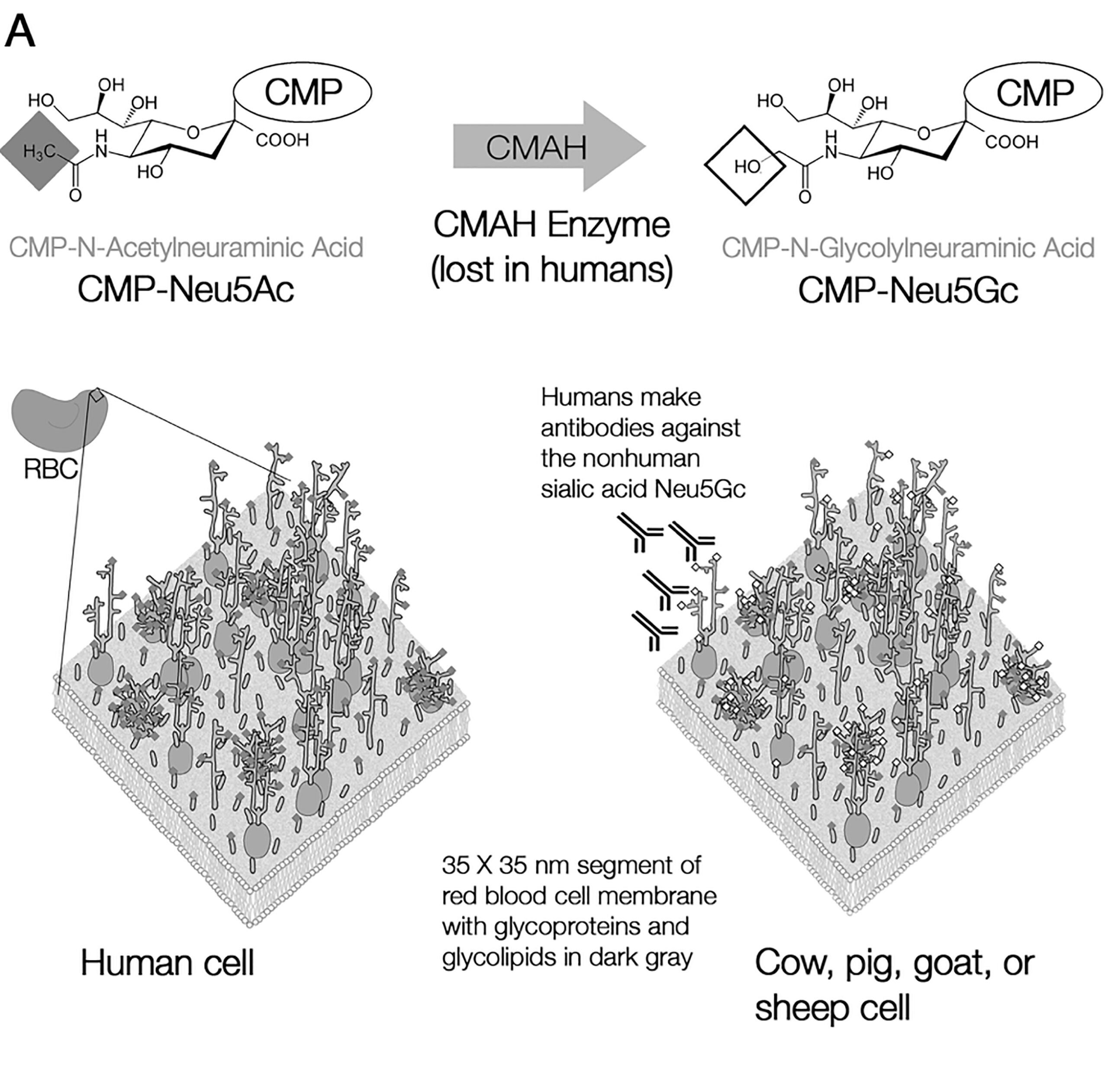
Humans lost the ability to make a sugar molecule called N-glycolylneuraminic acid, or Neu5Gc, around 2 million years ago. Yet Neu5Gc remains abundant in beef, pork, and lamb. When people eat those foods, small amounts of the molecule can be incorporated into human tissues. Because the immune system recognizes it as foreign, it may help trigger chronic low-grade inflammation.
The authors call this process “xenosialitis.” They suggest it may help explain links between red meat and atherosclerosis, colorectal cancer progression, and possibly cognitive decline.
The health case is only half the story. The review argues that red meat production has become a major environmental burden.
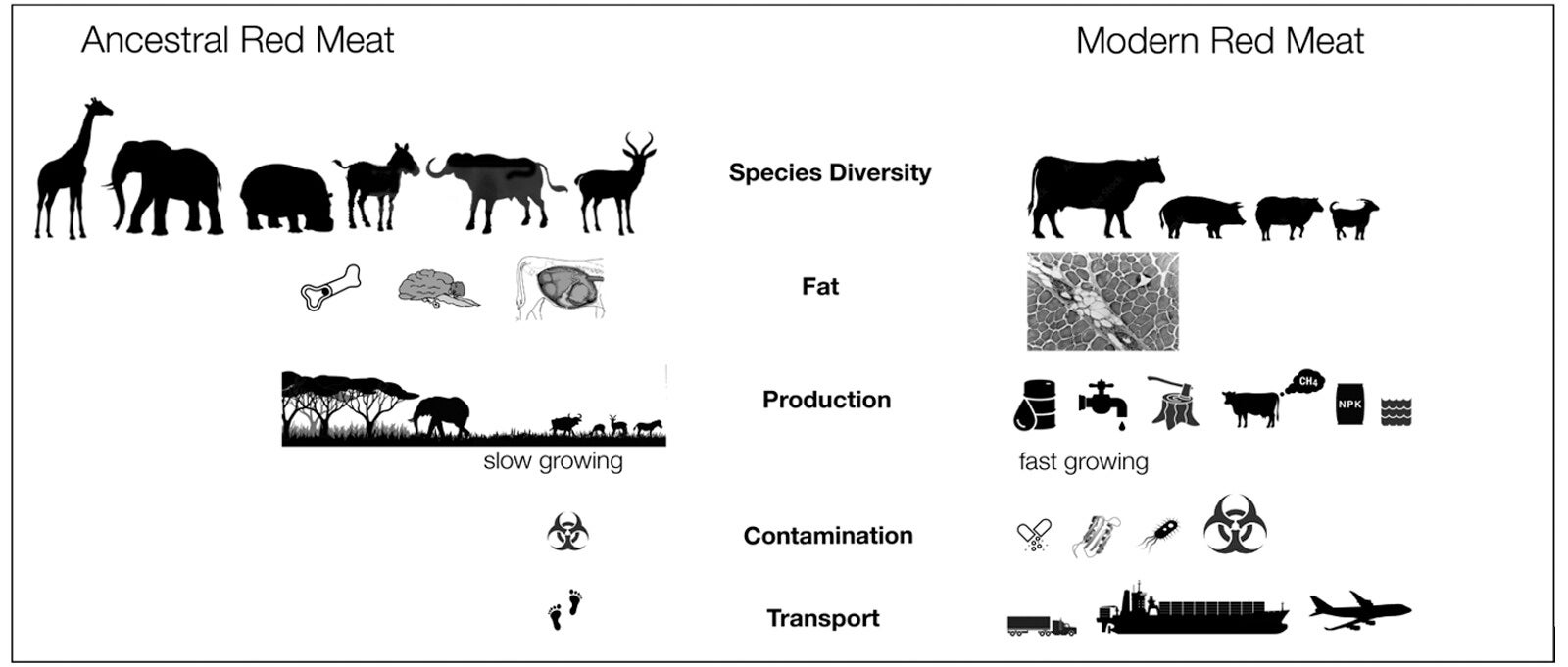
Industrial livestock production generates about 15% of global greenhouse gas emissions, the authors write, through carbon dioxide, methane, and nitrous oxide. Cattle are especially important because methane from enteric fermentation is a potent warming gas. The review also points to deforestation, polluted waterways, eutrophication, biodiversity loss, and growing antibiotic resistance tied to large-scale livestock farming.
Over 60% of the Brazilian Amazon, the review states, has been cleared for cattle farming this century alone.
The numbers are striking elsewhere too. The paper cites annual slaughter and production involving more than 1.5 billion pigs, 574 million sheep, 479 million goats, and 302 million cattle. It argues that this scale creates conditions that amplify zoonotic disease risks while also pushing antibiotic use in agriculture, which in turn helps drive resistance.
That system bears little resemblance to the patchy, opportunistic, and varied animal food use that marked human evolution.
The review does not call for a total ban on red meat. Its message is narrower, and arguably more difficult: modern consumption should not be justified by a simplistic appeal to human ancestry.
Early humans were not living on supermarket cuts, processed meats, and industrial supply chains. Their diets were diverse, variable, and shaped by scarcity, ecology, and whole-animal use. That makes today’s heavy reliance on red and processed meat a poor stand-in for an “ancestral” diet.
For public health, the review strengthens the case for limiting red and especially processed meat, while shifting toward more varied diets built around plant foods and, where appropriate, lower-risk animal foods such as fish and poultry. For environmental policy, it adds one more argument that meat production cannot be treated as a private dietary matter alone. Its effects spill far beyond the dinner plate.
What once helped humans adapt, the authors argue, now needs adapting itself.
Research findings are available online in the journal The Quarterly Review of Biology.
The original story “Red meat once helped human evolution but now carries serious risks” is published in The Brighter Side of News.
Like these kind of feel good stories? Get The Brighter Side of News’ newsletter.
The post Red meat once helped human evolution but now carries serious risks appeared first on The Brighter Side of News.

