For decades, the story of urban growth has seemed almost self-writing: big cities get bigger, pull in talent and jobs, and keep widening the gap with smaller places. But that pattern, a new analysis suggests, may have an expiration date, and the timing could shape how the world plans for the next century.
Researchers from the Complexity Science Hub and ETH Zurich estimate that by 2100, about 38% of the world’s population will live in cities with more than one million people. That still points to a deeply urban future. But it is also far below what a simple continuation of recent trends would suggest, amounting to roughly 450 million fewer people in million-plus cities by the end of the century.
The difference matters because cities are where countries make some of their most expensive and lasting bets. Housing, transport networks, power systems, health services, water supplies, and climate defenses all depend on where populations are headed, and how quickly.
“Today, we estimate that share to be about 24%,” said Andrea Musso, a junior fellow at the Complexity Science Hub and PhD student at ETH Zurich, referring to the share of the global population living in cities of more than one million people.
The study, published in PNAS, argues that large cities do not keep the same growth advantage forever. In countries early in the urbanization process, the biggest cities often grow much faster than smaller ones. Jobs, universities, hospitals, and other services tend to cluster in those major hubs, drawing in people from elsewhere.
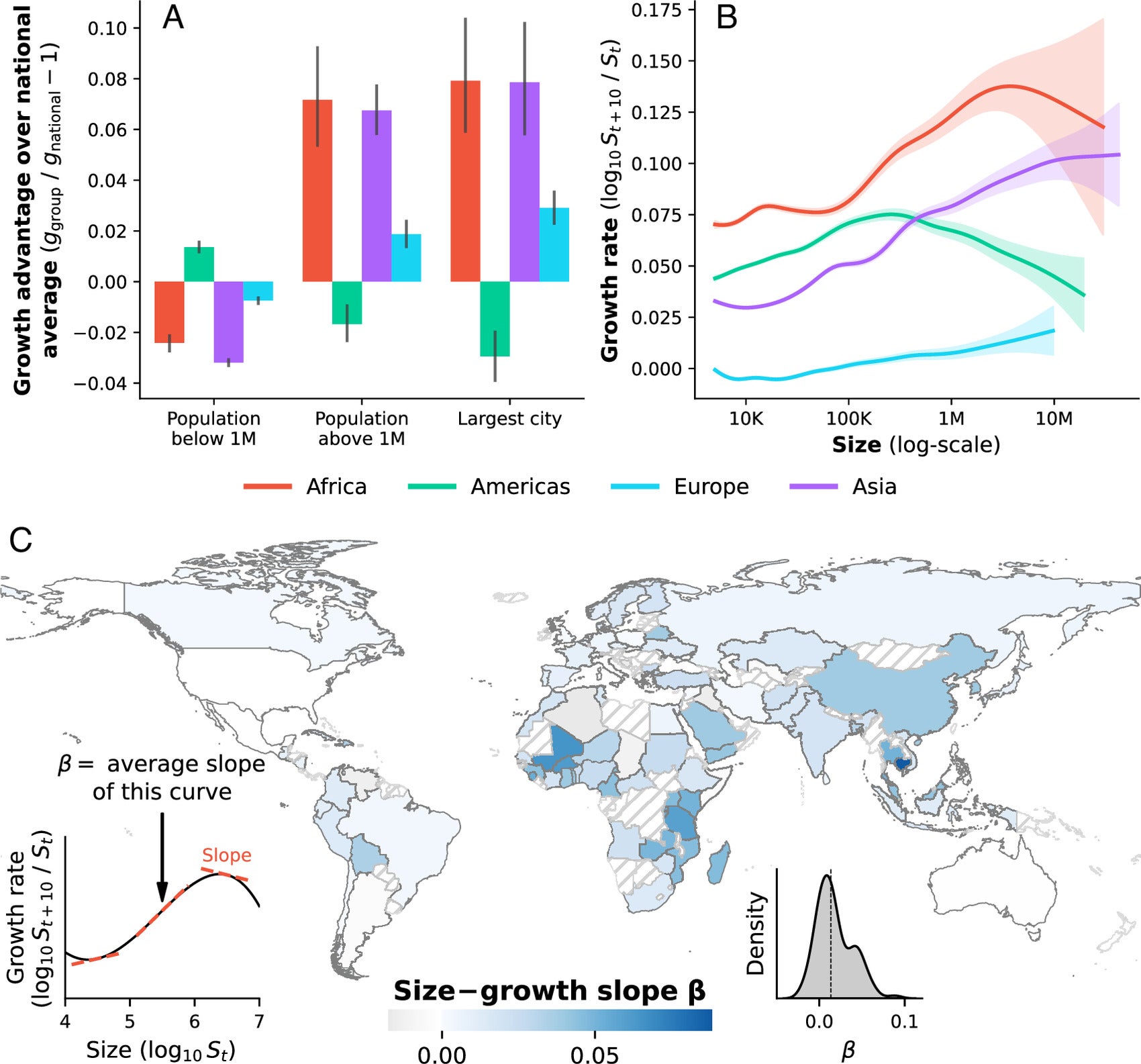
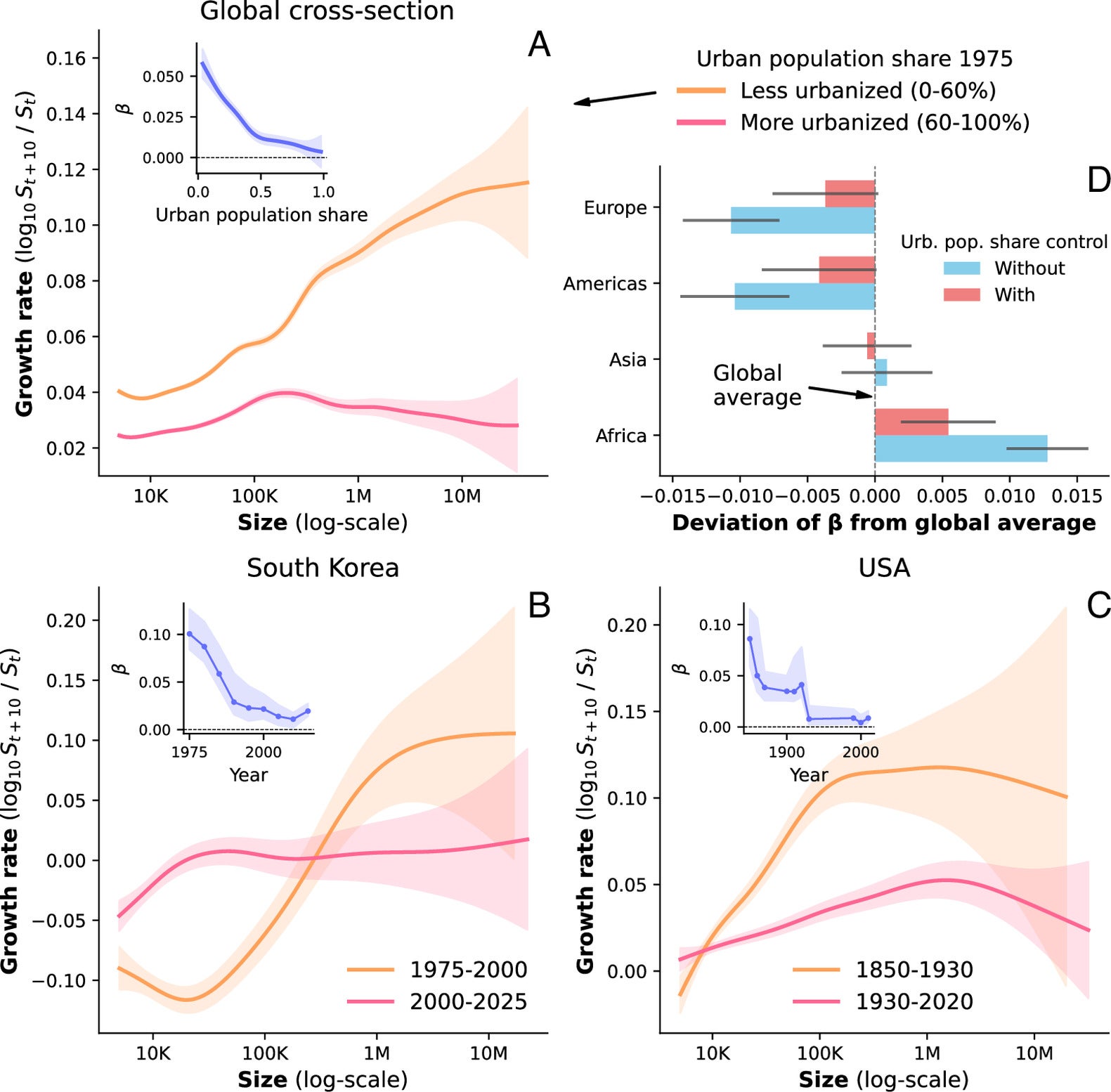
“We found that between 1975 and 2025, cities with more than one million inhabitants in less urbanized countries, including many countries in Asia and Africa, grew about 7.3% faster than the average city in their respective country,” Musso said.
That helps explain why large urban centers have expanded so dramatically across parts of the developing world in recent decades. But the researchers say the same force weakens as countries become more urbanized.
In highly urbanized countries, including much of Europe and the Americas, cities with more than one million people grew at roughly the same rate as the national average over the past 50 years. In other words, the biggest cities no longer pulled away from the rest of the urban system in the same way.
The authors describe this as a predictable urban life cycle. Early on, large cities gain ground quickly. Later, that advantage flattens, and growth spreads more evenly across cities of different sizes.
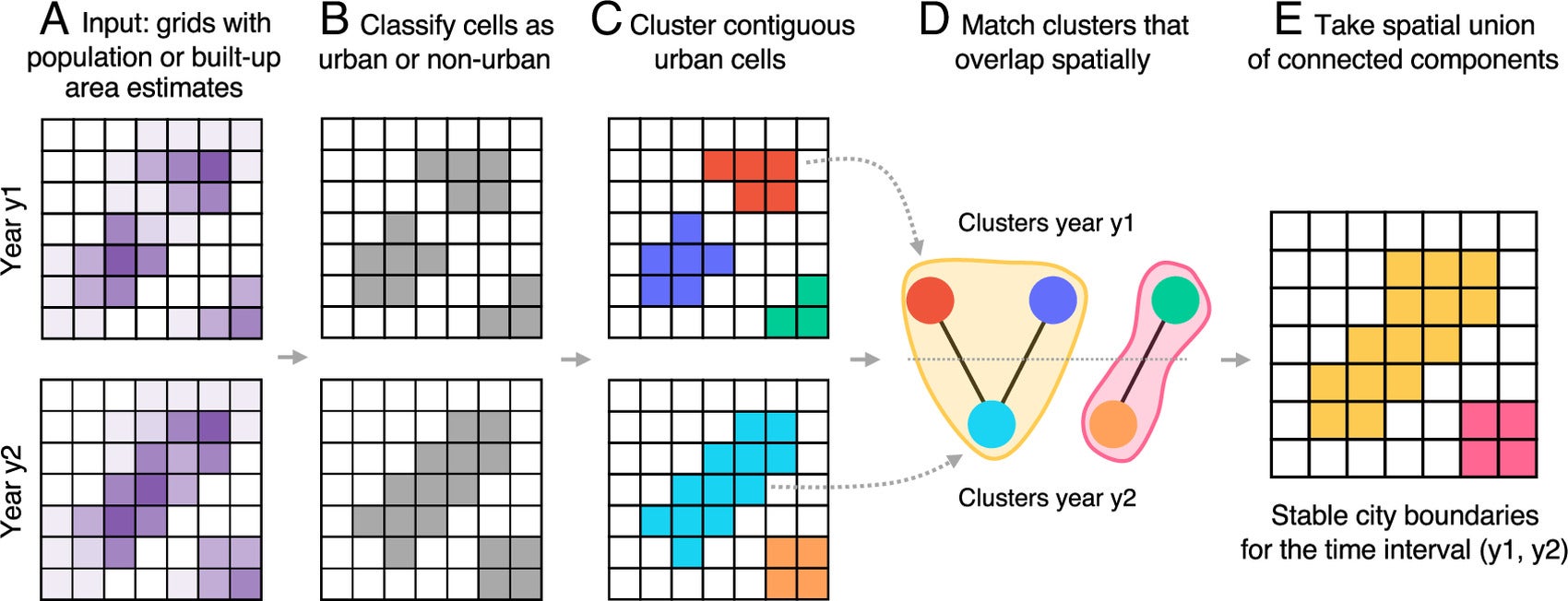
The team built its case using two new datasets designed to track cities more consistently across time and across national borders. One covers 99 countries from 1975 to 2025 and represents about 94% of the world’s population in 2025. The other reconstructs the history of American cities from 1850 to 2020.
Together, those records stretch far beyond the limited country snapshots that have shaped much of the earlier debate over whether large cities systematically outgrow smaller ones.
The first dataset relied on satellite imagery and followed cities as they expanded physically across the landscape. The second used more than 500 million individual U.S. census records matched to roughly 40,000 historical places.
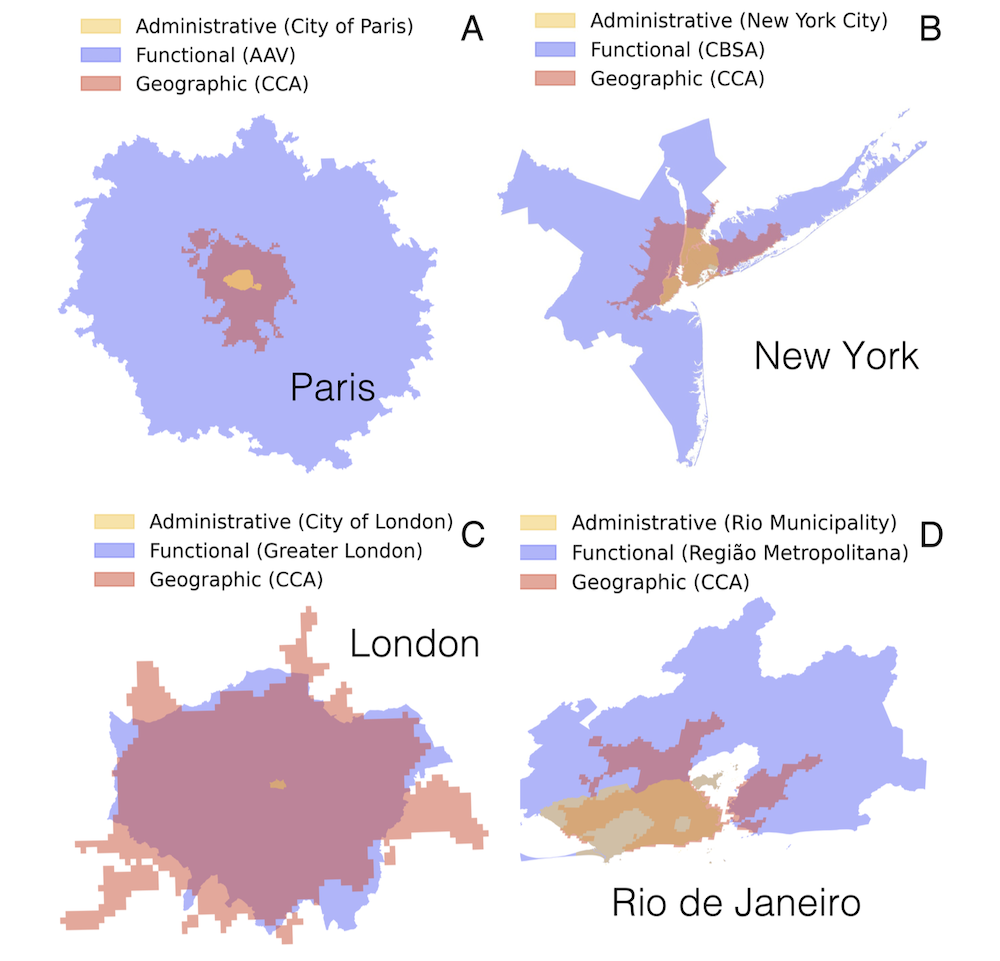
Instead of leaning on administrative boundaries, which can badly distort what counts as a city, the researchers used geographic definitions based on clusters of dense population and built-up land.
“Most earlier studies had to rely on administrative city boundaries,” Musso said. “But these boundaries are often misleading. Paris, for example, is much larger than the administrative City of Paris. New York is not just Manhattan, or even the five boroughs.”
That choice came with trade-offs. The method captures the physical footprint of cities rather than their wider functional reach, so suburbs or satellite settlements tied to a major city through commuting may sometimes appear as separate places. The authors say that makes their projections conservative, especially in more urbanized countries.
Large cities bring clear benefits, which is part of why their rise has long attracted attention from economists and urban theorists. Big cities tend to be more innovative and more productive. They gather educated workers, advanced industries, and dense networks of trade and knowledge.
But size also brings steep costs.
“Studies of US cities show that people in a city of one million spend more than twice as much time in traffic and are nearly three times more likely to contract certain diseases compared to those in a town of 10,000,” Musso said. “At the same time, residents of the million-person city are more than three times as innovative and almost twice as productive.”
That tension sits near the heart of the study. If large cities grow more slowly over time, some of the productivity boost linked to urban concentration may also lose force. But some of the burdens that scale up with city size, including congestion and environmental strain, may ease as well.
“If moving to a large city leads to a doubling in productivity, then the rise of large cities can be a powerful driver of economic growth,” said Frank Neffke, who leads the Transforming Economies research group at the Complexity Science Hub and is also a professor at IT Interdisciplinary Transformation University Austria. “Our findings show that this driver gradually loses momentum as countries become more urbanized.”
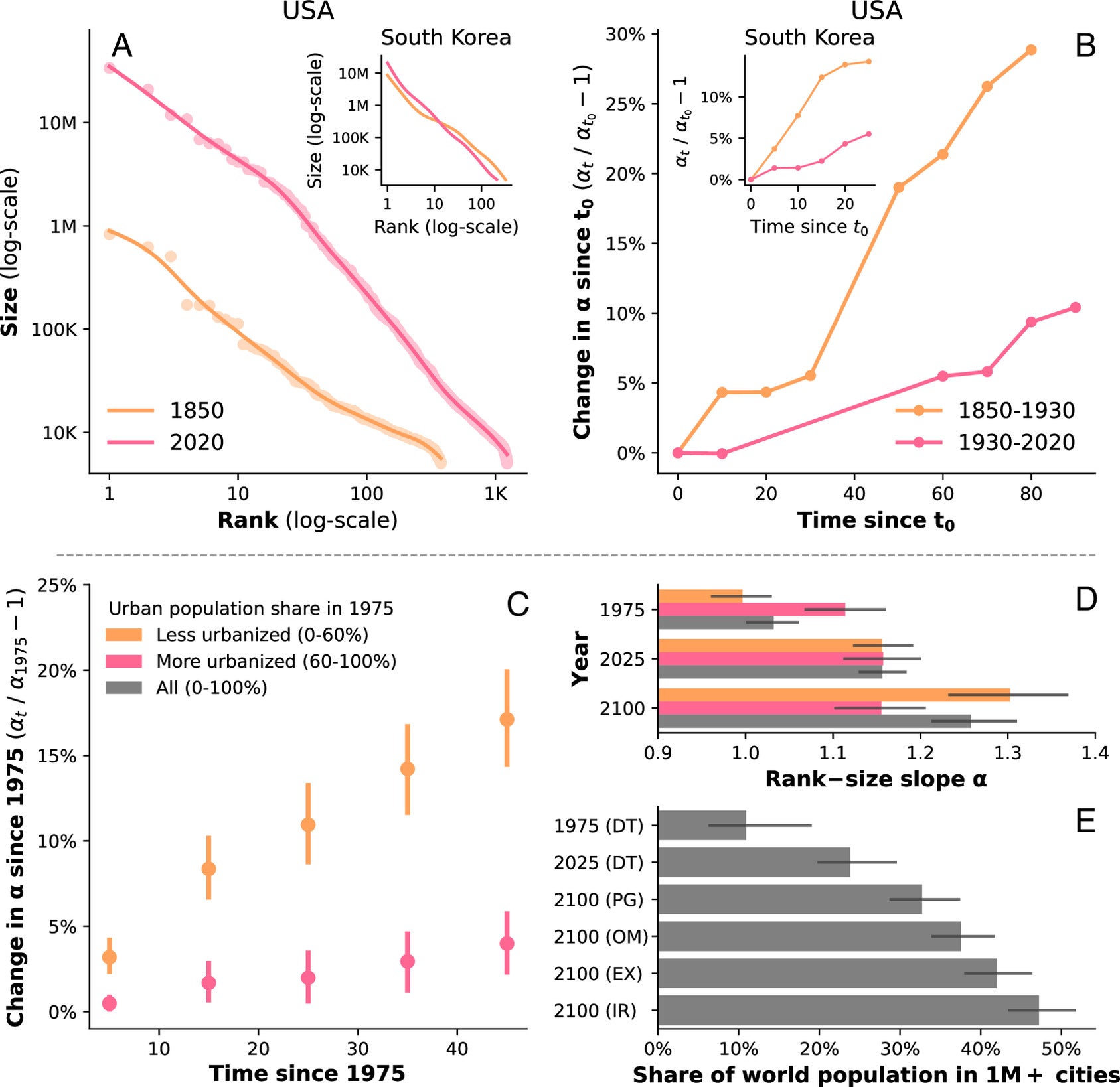
The world is still urbanizing rapidly. In 1975, about 11% of the global population lived in cities with more than one million inhabitants. Today that figure is about 24%. Projections suggest that over the next 25 years, one billion people will move into cities.
Yet the new analysis argues that using today’s patterns as a straight line into the future misses an important shift. The study’s projection of 38% living in million-plus cities by 2100 falls below an extrapolation of current trends, which would put the share at about 42%. It also sits above a strict proportional-growth benchmark of 33%, where cities of all sizes grow at similar rates.
That middle position is the point. The authors argue that increasing returns and proportional growth are not really rival theories so much as different phases of the same process.
“Knowing that urban growth follows a predictable life cycle is enormously important for decision-makers,” Neffke said. “It can help guide infrastructure planning, climate adaptation strategies, and forecasts of future economic growth.”
For planners and policymakers, the message is not that major cities will stop growing. It is that the world’s biggest urban centers may not keep concentrating people at the pace many forecasts assume. That could affect where governments put roads, rail, housing, schools, hospitals, and flood defenses.
The study also suggests that countries should not treat the experience of today’s highly urbanized nations as a universal template. In places still early in the urbanization process, large cities may continue to expand quickly. In more mature urban systems, smaller cities may absorb a larger share of future growth than expected.
The authors also stress several limits. Their city boundaries are geographic rather than functional, they define urban systems through national borders, they focus on population rather than GDP or employment, and their framework is descriptive rather than causal. Their projections also assume no major external shocks, such as pandemics, geopolitical disruptions, climate-driven migration, or technological upheaval.
Still, the central result is a practical one. The urban future may be less about endless concentration in a handful of giant cities, and more about a slowing, more even spread of growth across national urban systems.
Research findings are available online in the journal Proceedings of the National Academy of Sciences.
The original story “Study makes surprising prediction on where people will live by 2100” is published in The Brighter Side of News.
Like these kind of feel good stories? Get The Brighter Side of News’ newsletter.
The post Study makes surprising prediction on where people will live by 2100 appeared first on The Brighter Side of News.


Leave a comment
You must be logged in to post a comment.