Tylosaurus rex rewrites the story of giant sea predators, not just for its size but for what its bones reveal about mosasaur identity, violence, and evolution. Fossils long grouped with another species now point to a fiercer Texas lineage.
A giant sea predator that prowled the ancient waters of Texas has been given a new name. With it comes a fresh look at one of the ocean’s most formidable reptile dynasties.
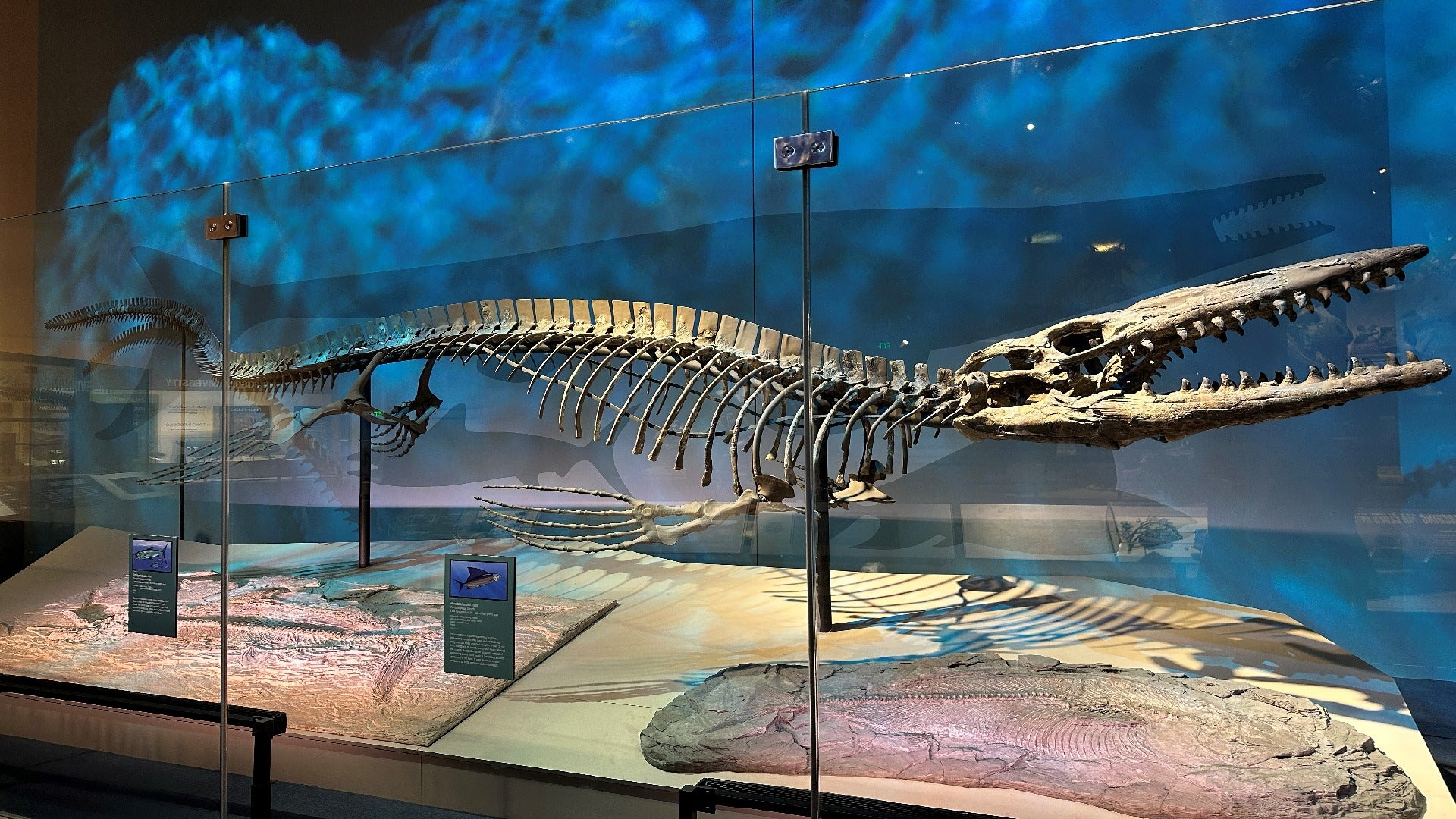
The animal is Tylosaurus rex, a newly described mosasaur that lived about 80 million years ago. At that time, much of North America was split by the Western Interior Seaway. At up to 43 feet long, it ranks among the largest mosasaurs known. Its skull, teeth, and jaw structure suggest a predator built not just for size, but for force.
“Everything is bigger in Texas and that includes the mosasaurs, apparently,” said Amelia Zietlow, lead author of the study, published in the Bulletin of the American Museum of Natural History
The name means “king of the tylosaurs,” and it is not just a nod to body length. The fossils point to an animal with serrated teeth, a massive skull, and room for especially strong jaw and neck muscles. That combination set it apart from specimens that had long been assigned to another species, Tylosaurus proriger.
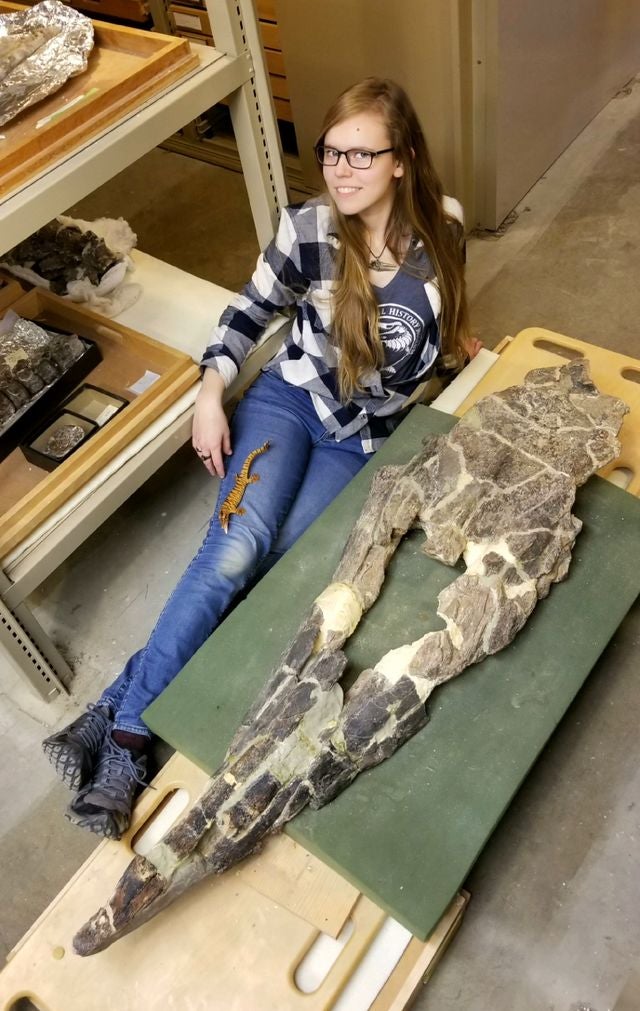
Zietlow began sorting out the distinction after finding a fossil in the American Museum of Natural History’s research collection that appeared to be misidentified. When she and her colleagues compared it with the holotype of T. proriger at Harvard’s Museum of Comparative Zoology, the differences started to stack up.
The team found that more than a dozen fossils from several institutions shared the same unusual traits. These animals were generally larger than T. proriger. Their teeth had fine serrations, an uncommon feature among mosasaurs. And they came mostly from Texas deposits that were younger than the Kansas fossils that dominate the record of T. proriger.
That geographic and time split mattered. Most T. proriger specimens come from what is now Kansas and date to about 84 million years ago. The newly grouped fossils are largely from Texas and are about 4 million years younger. Based on dates and associated fossil zones, the researchers concluded that most T. rex specimens likely fall between about 81 million and 79 million years old.
The holotype, the specimen that formally anchors the species name, is a giant fossil on display at the Perot Museum of Nature and Science in Dallas. It was found in 1979 near Lake Ray Hubbard, east of Dallas, in what is now within the city of Heath. For years it was informally known as the “Heath Mosasaur.”
Other famous skeletons now reassigned to the new species include “Bunker,” a large specimen at the University of Kansas. “Sophie,” on display at the Yale Peabody Museum, is also reassigned.
The new name also honors an older insight. In the late 1960s, paleontologist John Thurmond had already noticed that tylosaurs from northeast Texas seemed unusually large and may have represented a distinct species. He informally called them “Tylosaurus thalassotyrannus,” or “sea tyrant,” while acknowledging the grandiosity of the label.
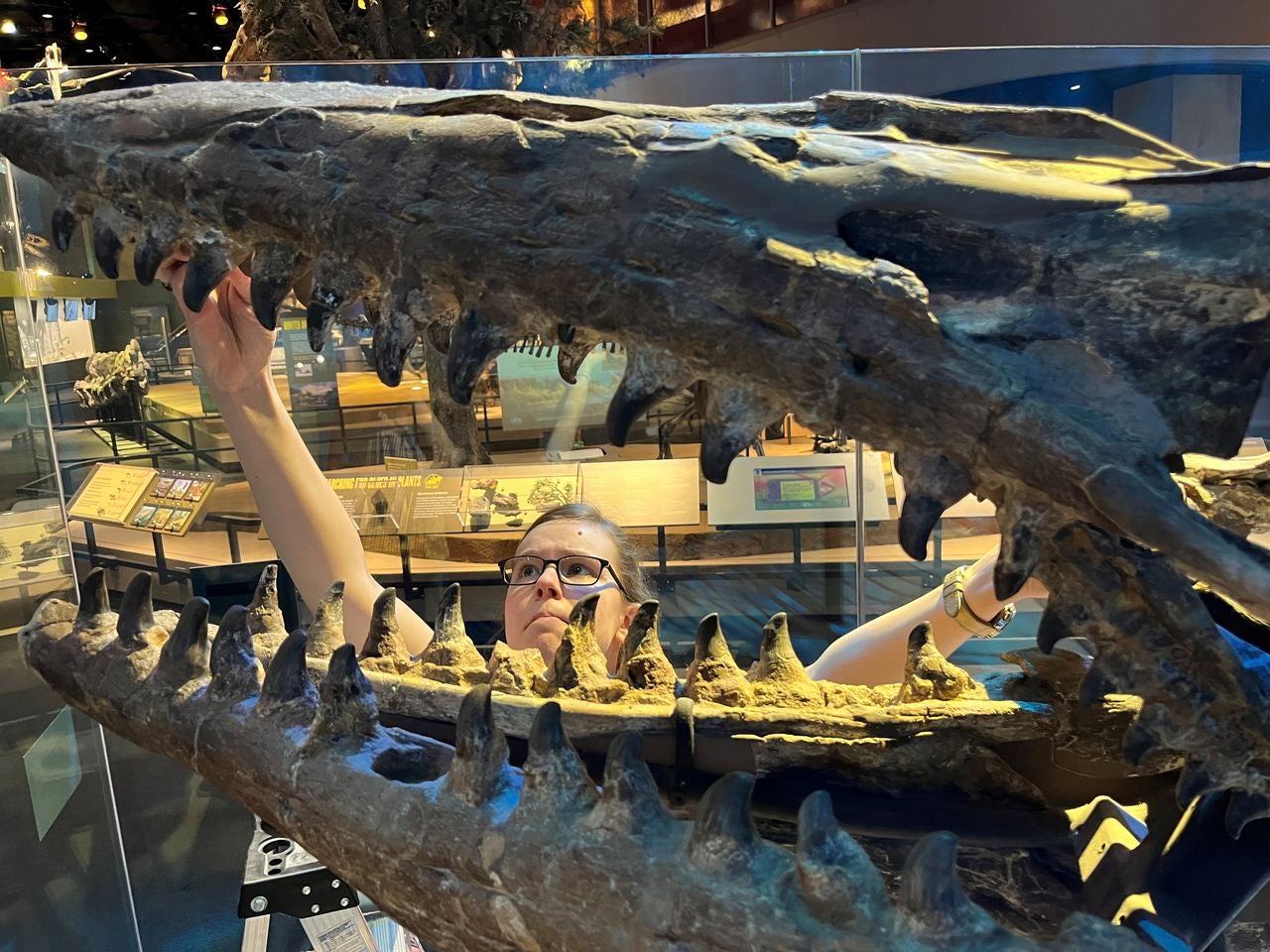
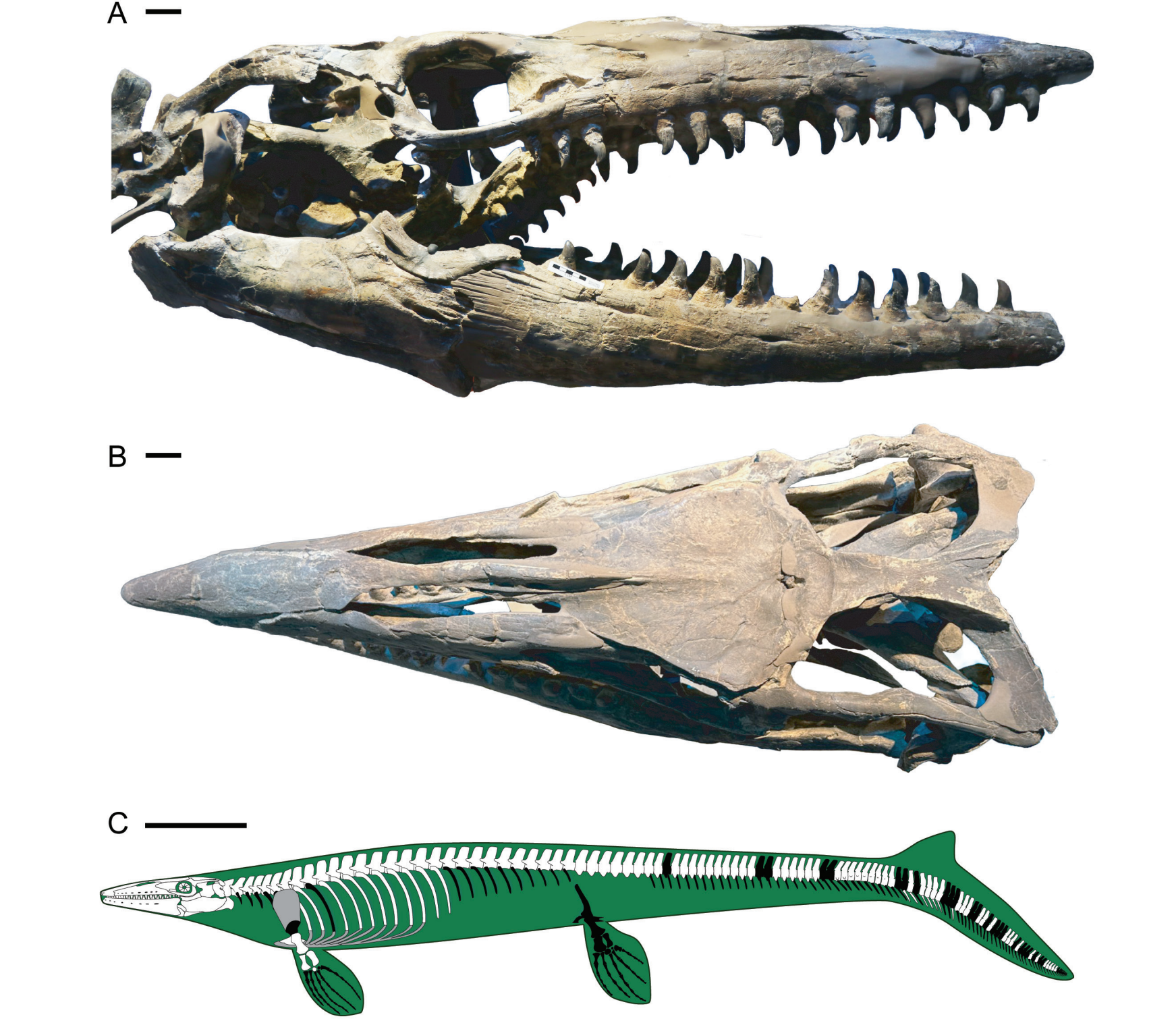
The study argues that T. rex was not simply a scaled-up version of its relatives. Its anatomy suggests a more heavily built predator, especially in the jaws and neck. Researchers described features such as a deep nuchal fossa in the parietal bone and a distinctive three-lobed quadrate joint in the skull. In addition, they found a suite of traits that could have helped brace the head during powerful bites.
“Besides being huge, roughly twice the length of the largest great white sharks, T. rex appeared to be a much meaner animal than other mosasaurs,” said co-author Ron Tykoski, vice-president of science and curator of vertebrate paleontology at the Perot Museum. “Through our study and examination of well-preserved fossils collected throughout the north Texas region, we have evidence of violence within this species to a degree not previously seen in other Tylosaurus specimens.”
One of the clearest cases comes from a specimen in the Perot Museum collection nicknamed “The Black Knight.” It is missing the tip of its snout and has a fractured lower jaw. The researchers say those injuries were likely inflicted by another member of its own species.
That detail adds another layer to the portrait. This was not just a giant marine reptile moving through warm inland seas. It may also have been part of an ecosystem where top predators fought each other often enough to leave a mark in the fossil record.
The fossils show that T. rex ranged from about 25 feet to 43 feet long, with even the smaller known individuals already large animals. In the team’s sample, the species consistently outscaled several earlier North American tylosaurs. Statistical analysis of quadrate height, one proxy for skull size, found a significant difference between T. rex and T. kansasensis, T. nepaeolicus, and T. proriger.
The paper does more than describe a new species. It also takes aim at a long-standing problem in mosasaur research: the character dataset used to study their evolutionary relationships has changed very little in nearly 30 years.
To address that, the team rebuilt the working matrix used for tylosaur comparisons. They added 50 new characters and revised older ones. The anatomical range of features included in the analysis was also expanded. Bones that had been underused or ignored in earlier studies, including parts of the braincase, palate, and femur, were brought into the picture.
Their analysis recovered Tylosaurus rex as the most derived species within Tylosaurus, while also suggesting that the broader tylosaur family tree needs a deeper overhaul. The results support keeping Hainosaurus distinct from Tylosaurus, rather than lumping the two together. In addition, they point to a more tangled history than earlier studies had recognized.
“This discovery is not just about naming a new species,” Zietlow said. “It highlights the need to revisit long-standing assumptions about mosasaur evolution and to modernize the tools we use to study these iconic marine reptiles.”
Michael Polcyn of Southern Methodist University, also a co-author, said the findings sharpen both the anatomical and evolutionary picture of these animals. They also reinforce Texas as a major place for understanding ancient marine life.
That is partly because the new species is tied so strongly to the marine rocks of northeast Texas, especially the Taylor Group, which preserves deposits from the southern end of the Western Interior Seaway. Those formations captured a time when sea level, shoreline position, and sediment supply were shifting. As a result, they helped shape the habitats where giant predators lived.
The clearest impact of the study is taxonomic. Fossils long grouped under Tylosaurus proriger may need to be reexamined, especially when earlier referrals were made without close comparison to the original defining specimen. That could change museum labels, scientific databases, and future studies of mosasaur diversity.
The work also gives paleontologists a more detailed framework for studying mosasaur anatomy and growth. By expanding the character list and using overlooked parts of the skeleton, the researchers have created tools that may help identify additional species and clarify how these marine reptiles changed over time.
More broadly, the findings strengthen Texas’s role in Late Cretaceous marine paleontology. They suggest that the region did not just host giant predators, but preserved a distinct evolutionary branch of them, one that may have been more specialized and more violent than scientists had realized.
Research findings are available online in the journal Bulletin of the American Museum of Natural History.
The original story “This giant predator is literally the T. Rex of the sea” is published in The Brighter Side of News.
Like these kind of feel good stories? Get The Brighter Side of News’ newsletter.
The post This giant predator is literally the T. Rex of the sea appeared first on The Brighter Side of News.

