Long before oceans teemed with life, Earth endured relentless violence. Asteroids slammed into its surface again and again, reshaping the young planet. These impacts once seemed purely destructive. New research now suggests they may have helped create the conditions needed for life to begin.
Scientists at Southwest Research Institute used advanced modeling to study how early impacts altered Earth’s crust. Their findings reveal a world where collisions opened pathways for water and heat deep underground. These environments, known as hydrothermal systems, may have supported the earliest chemical steps toward life.
Amanda Alexander, lead author of the study, describes the importance of the work. “This modeling is both novel and crucial for understanding the earliest environments life may have emerged from,” she said.
Earth formed about 4.5 billion years ago. Soon after, it entered a chaotic period marked by intense bombardment. Large space rocks struck the surface at extreme speeds. Each collision released immense energy.
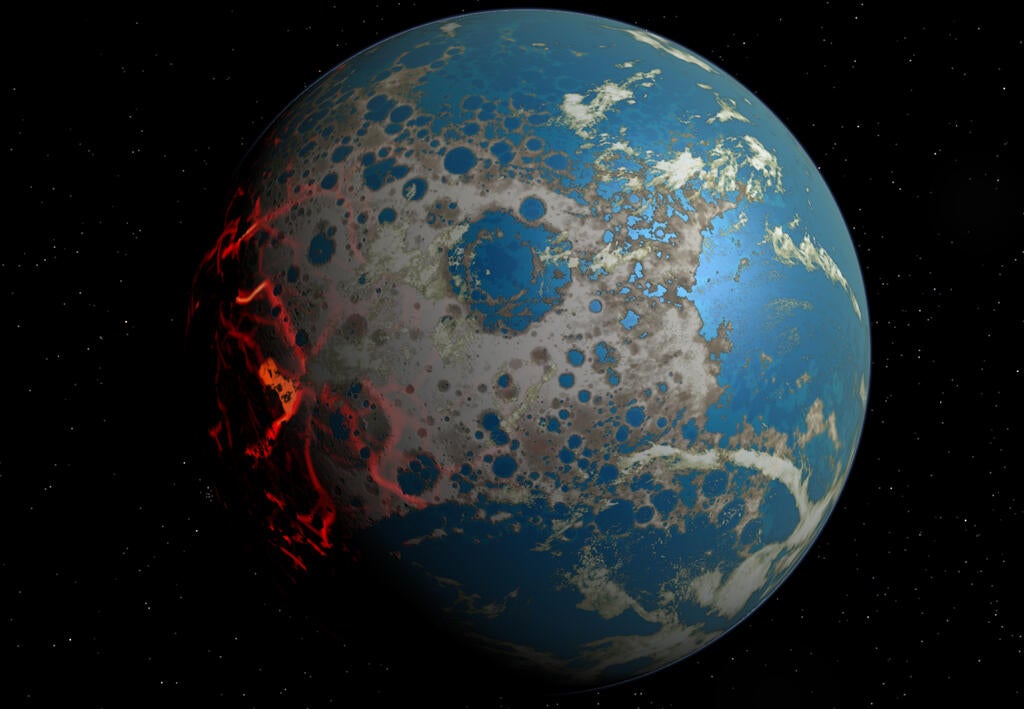
These impacts shattered rock layers and melted parts of the crust. Molten material spread across the landscape. Shock waves fractured deep layers beneath the surface. The result was a broken, unstable crust filled with cracks and pores.
This period, often linked to destruction, may have played a creative role as well. Beneath the surface, the fractured rock allowed water to move through new pathways.
When an asteroid struck Earth, it did more than leave a crater. The force created networks of fractures in the crust. These fractures formed channels that allowed fluids to circulate.
At the same time, heat from the impact warmed the surrounding rock. Earth’s internal heat added to this effect. Together, these forces created hydrothermal systems similar to those seen today in Yellowstone National Park.
In these systems, hot water moves through rock, carrying minerals and energy. Such environments are considered strong candidates for the origin of life. They provide heat, chemical ingredients, and protection from harsh surface conditions.
Alexander noted that impacts may have generated far more activity than modern systems. Each collision could produce up to 100 times the hydrothermal output seen in Yellowstone today.
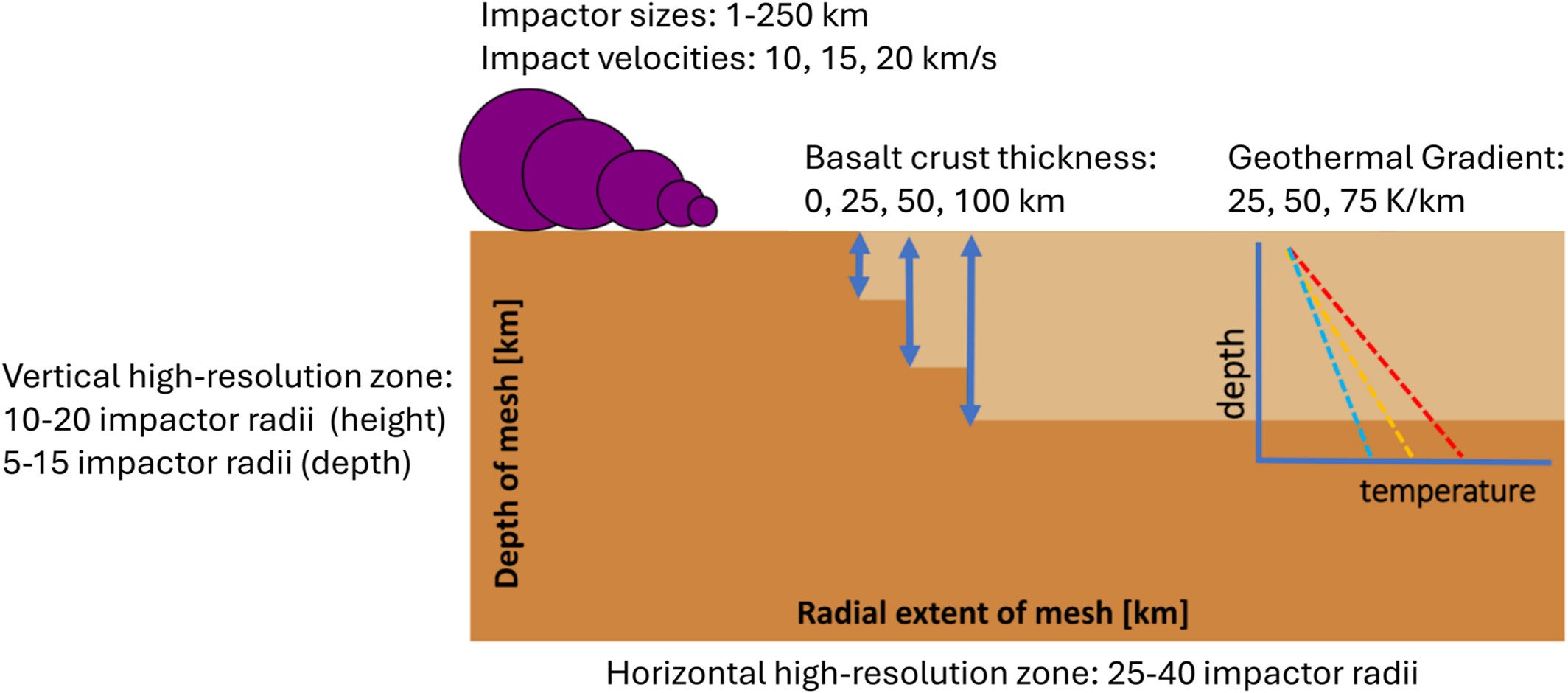
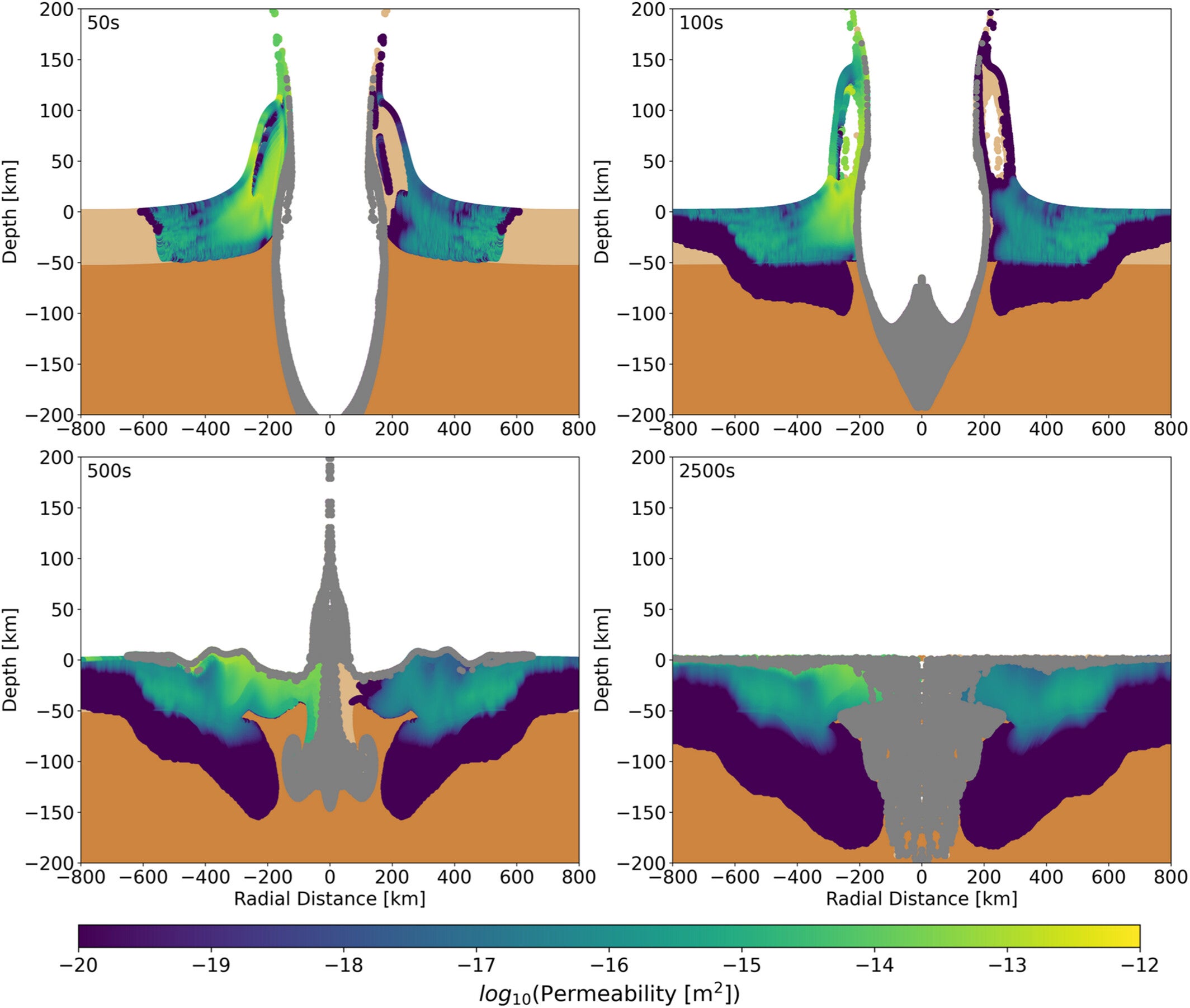
To understand these processes, researchers used a detailed physics model. The simulation examined how impacts of different sizes and speeds affected the crust.
The model tracked how rocks fractured and how pores formed. It measured permeability, or how easily fluids could move through the crust. This allowed scientists to estimate how much of the early Earth could support hydrothermal activity.
The simulations tested many variables. These included asteroid size, impact speed, crust composition, and temperature conditions. Each factor influenced how much of the crust became permeable.
The results showed a clear pattern. Larger and faster impacts created more extensive fractured zones. Smaller impacts still played a role, but their effects were more localized.
The study suggests that early Earth’s upper crust was far more dynamic than once believed. Around 4.3 billion years ago, much of the top eight kilometers of the crust may have been permeable.
This means water could move freely through large regions underground. These conditions likely lasted for hundreds of millions of years.
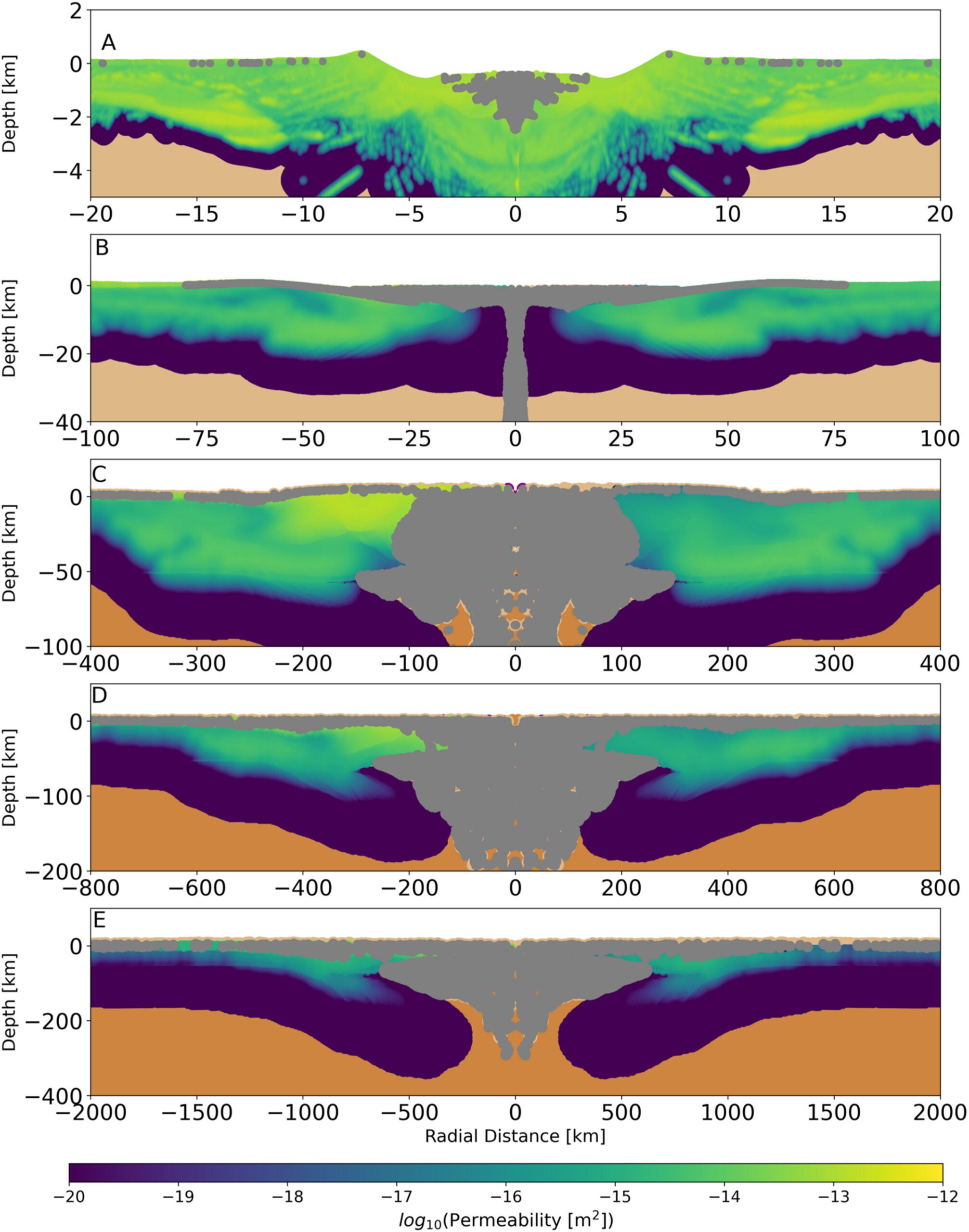
Even as impacts became less frequent, their effects lingered. Some regions remained permeable until about 3.5 billion years ago. This created long-lasting environments where chemical reactions could occur.
The research shows that impacts were not isolated events. Their cumulative effect transformed the planet’s surface and subsurface.
Impact energy played the largest role in shaping permeability. Bigger impacts produced deeper and wider fracture zones. Speed also mattered, since faster objects released more energy.
Environmental conditions influenced the results as well. The geothermal gradient, which describes how temperature increases with depth, affected how rocks responded to stress.
Cooler conditions tended to produce more fractures. Warmer conditions reduced cracking because softer rock absorbed some of the energy.
Crust composition also played a role. Different materials fractured in different ways. This affected how easily fluids could move through the rock.
The presence of early oceans added another layer of complexity. When impacts occurred beneath water, the ocean absorbed some of the shock energy.
This reduced the overall amount of fracturing in the crust. In some cases, the volume of permeable rock dropped by about 30 percent.
However, the ocean also helped preserve cooler conditions in certain layers. This allowed more pores to form in those regions. As a result, some areas showed stronger permeability despite the reduced overall volume.
The fractured crust did not behave uniformly. Some regions had high permeability, allowing strong fluid flow. Others remained less connected.
Researchers found that about 20 to 50 percent of fractured zones could support heat transfer. These areas likely formed active hydrothermal systems.
Smaller impacts often produced more efficient permeability within their zones. Larger impacts created broader regions, but their fractures were sometimes less effective at moving fluids.
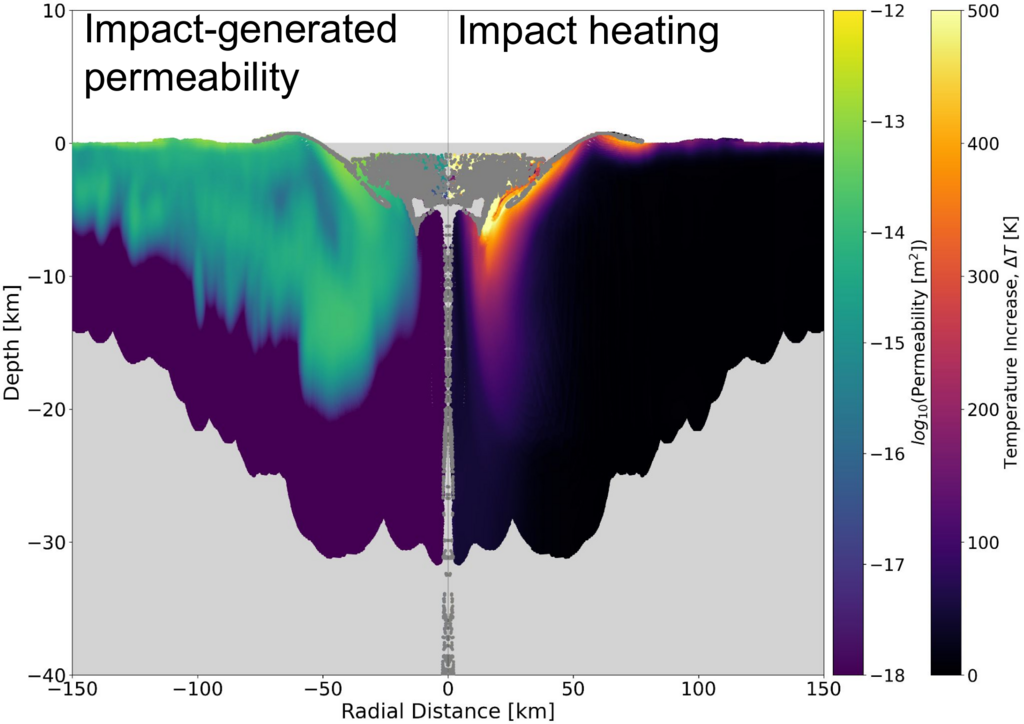
Even so, the total volume of affected rock was enormous. Every modeled impact created more hydrothermal potential than modern geothermal systems.
Hydrothermal systems offer a promising setting for early life. They provide heat, water, and chemical building blocks. These conditions support reactions that can form complex molecules.
The study suggests that early Earth had many such environments. Instead of a few isolated systems, the planet may have hosted widespread networks of underground activity.
These systems could have acted as natural laboratories. Within them, simple compounds may have combined into more complex structures. Over time, this process could have led to the first living organisms.
Because these environments lay beneath the surface, they offered protection. They shielded early chemistry from radiation and extreme surface conditions.
Asteroid impacts often carry a negative image, especially when linked to mass extinctions. This research presents a different perspective.
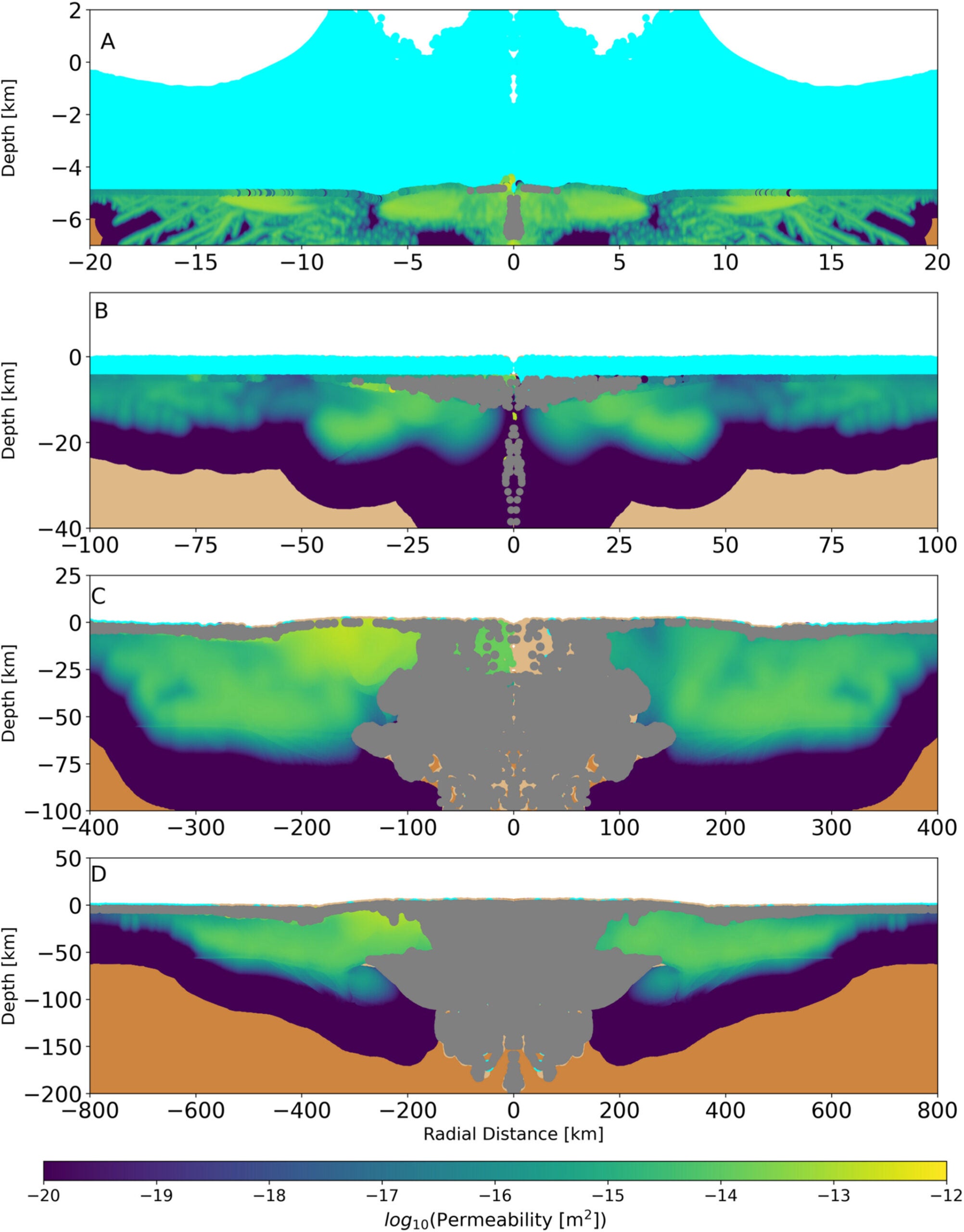
Rather than only causing destruction, impacts may have driven key changes in Earth’s chemistry. They reshaped the crust and created pathways for water and heat.
Alexander emphasized this shift in understanding. Impact events were not just catastrophic. They played a central role in shaping early environments.
The study highlights how destructive forces can also create opportunities for life.
This research changes how scientists view Earth’s earliest years. The planet was not just a hostile surface battered by impacts. It was also a place of hidden activity beneath the ground.
Fractured rock, flowing water, and heat combined to create dynamic systems. These systems may have persisted for millions of years.
The findings suggest that life’s origins may lie deep within the crust. Surface conditions alone may not tell the full story.
This study offers new insight into how life may have begun on Earth. By showing that impacts created widespread hydrothermal systems, it expands the range of possible environments where life could emerge.
The findings may guide future research in astrobiology. Scientists searching for life on other planets can look for similar conditions. Planets or moons with impact histories and subsurface water may be strong candidates.
The work also improves understanding of Earth’s geological history. It highlights how early processes shaped the planet’s chemistry and structure. This knowledge can inform studies of modern geothermal systems and crust dynamics.
In addition, the research encourages a broader view of environmental change. It shows that destructive events can create new opportunities for life. This perspective may influence how scientists study planetary evolution.
Research findings are available online in the journal AGU Advances.
The original story “Violent asteroid impacts may have helped spark life on early Earth” is published in The Brighter Side of News.
Like these kind of feel good stories? Get The Brighter Side of News’ newsletter.
The post Violent asteroid impacts may have helped spark life on early Earth appeared first on The Brighter Side of News.


Leave a comment
You must be logged in to post a comment.