A stubborn wound can change nearly every part of daily life. Simple movements become painful. Routine tasks take longer. The risk of infection never feels far away. For millions of people living with chronic wounds, healing can stall for months or even years, despite repeated treatments and frequent medical visits.
Now, researchers at Rice University have developed a new approach that aims to help wounds heal by restoring the body’s own repair signals. Their work describes a removable “cytokine factory” patch that continuously produces therapeutic proteins directly inside a wound. In animal studies, the technology accelerated healing and activated key biological pathways involved in tissue repair.
The innovation tackles one of the biggest challenges in wound medicine. While scientists have long known that cytokines play a crucial role in healing, delivering these signaling proteins effectively has proven difficult. They break down quickly, often fail to remain at the injury site and can cause unwanted side effects when delivered throughout the body.
The new patch seeks to solve those problems by turning the wound itself into a localized treatment center.
Chronic wounds affect about 2% of the U.S. population, or nearly 7 million people. They are associated with conditions such as diabetes, poor circulation and impaired immune function. The financial burden is equally significant, with annual treatment costs estimated at roughly $50 billion in the United States alone.
Healing normally depends on a carefully coordinated sequence of biological events. Immune cells arrive to fight infection. New blood vessels form. Structural proteins rebuild damaged tissue. Eventually, the skin closes and repairs itself.
In chronic wounds, that sequence breaks down. Inflammation lingers too long. Key repair signals become disrupted. Cells responsible for rebuilding tissue struggle to perform their jobs.
Many current therapies focus on managing the wound’s physical environment. Treatments such as compression therapy, negative-pressure wound devices and hyperbaric oxygen can help some patients. However, they often do not address the underlying molecular problems that prevent healing. Even advanced biological therapies, including skin substitutes and grafts, fail in 30% to 50% of cases.
Researchers wanted to find a way to directly influence the biological signals that control healing.
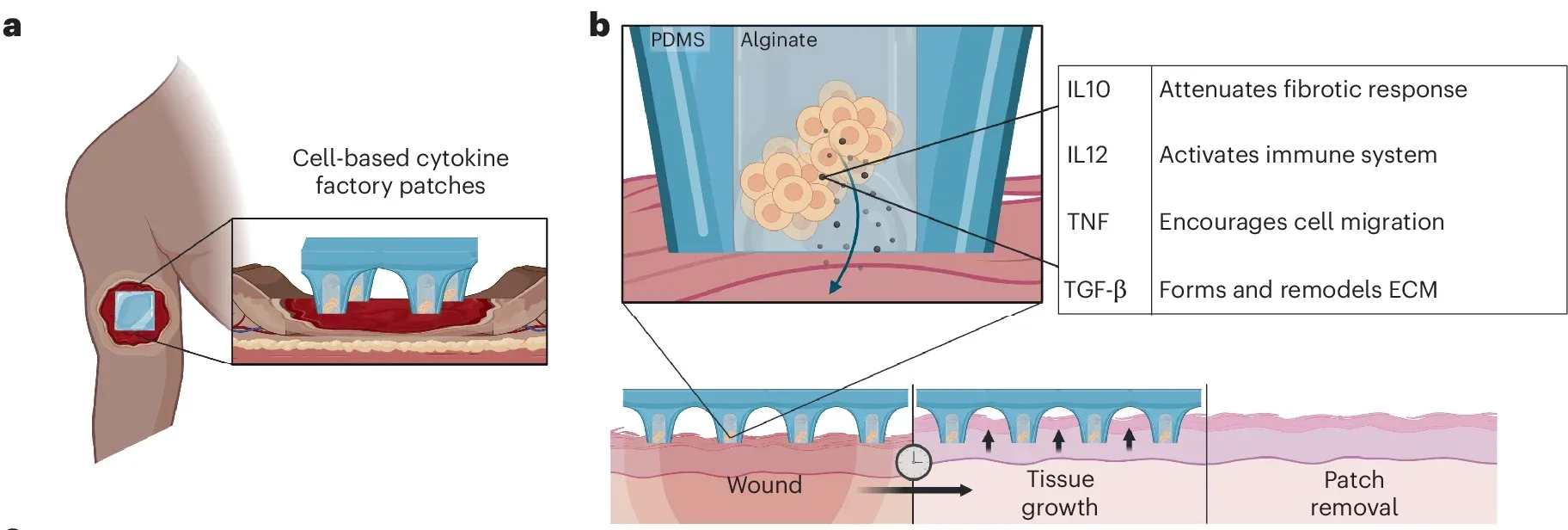
The solution developed in the laboratory of Rice bioengineer Omid Veiseh uses engineered human cells as miniature protein-producing factories.
The patch contains ARPE-19 cells, a human retinal pigment epithelial cell line, that have been genetically modified to continuously produce specific cytokines. These signaling proteins help regulate immune activity, tissue growth and repair.
The engineered cells produce one of several therapeutic cytokines, including interleukin-10 (IL-10), interleukin-12 (IL-12) and transforming growth factor-beta (TGF-β).
Researchers enclosed the cells within tiny alginate hydrogel capsules and embedded them inside a flexible, biocompatible polydimethylsiloxane, or PDMS, patch. The hydrogel acts as a protective barrier. Nutrients can enter and therapeutic proteins can leave, but the host immune system cannot attack the engineered cells.
This design allows the cells to survive while continuously releasing healing signals directly into the wound.
“The findings show how continuous, localized cytokine delivery can support key biological pathways involved in tissue repair,” said Veiseh, professor of bioengineering at Rice University and faculty director of the Rice Biotech Launch Pad. “By maintaining a consistent presence of these signaling molecules at the wound site, we can more effectively engage the body’s natural healing response.”
Before testing the patch in wounds, the team evaluated its performance under laboratory conditions.
The engineered cells remained highly viable within the device. About 90% survived after one week. During that period, they consistently produced therapeutic levels of IL-10, IL-12 and TGF-β.
Researchers also exposed the cells to inflammatory conditions commonly found in chronic wounds. Cytokine production remained stable. The cells continued functioning across a range of temperatures relevant to real-world use.
These early results suggested that the patch could maintain a steady supply of healing signals without requiring repeated treatments or injections.
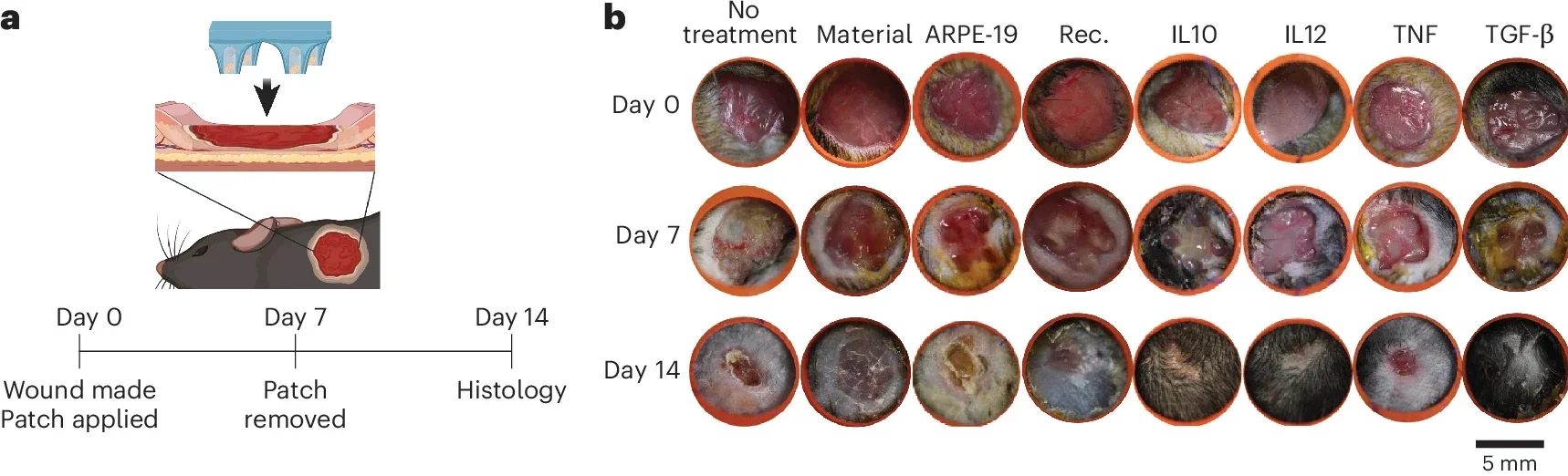
The researchers next tested the technology in mice with full-thickness skin wounds.
Animals received patches engineered to produce IL-10, IL-12, TGF-β or tumor necrosis factor (TNF). Additional groups received control treatments, including non-engineered cells and single-dose recombinant cytokine therapy.
The differences became apparent quickly.
By day 14, wounds treated with IL-10, IL-12 or TGF-β patches had shrunk to roughly 10% of their original size. Control wounds remained about 40% of their original size.
The benefits extended beyond surface appearance. Tissue analysis showed substantially improved repair beneath the skin. Granulation tissue, a marker of wound remodeling, was significantly reduced in treated animals, indicating more advanced healing.
The researchers repeated the experiments in diabetic mice, a model that better reflects chronic wound conditions in humans. Once again, the cytokine-producing patches improved healing compared with controls.
Importantly, the therapeutic proteins remained localized. Researchers detected IL-10 only within treated wounds. They did not find meaningful amounts in untreated wounds or in the bloodstream.
That finding suggests the patch can concentrate treatment where it is needed while avoiding systemic exposure.
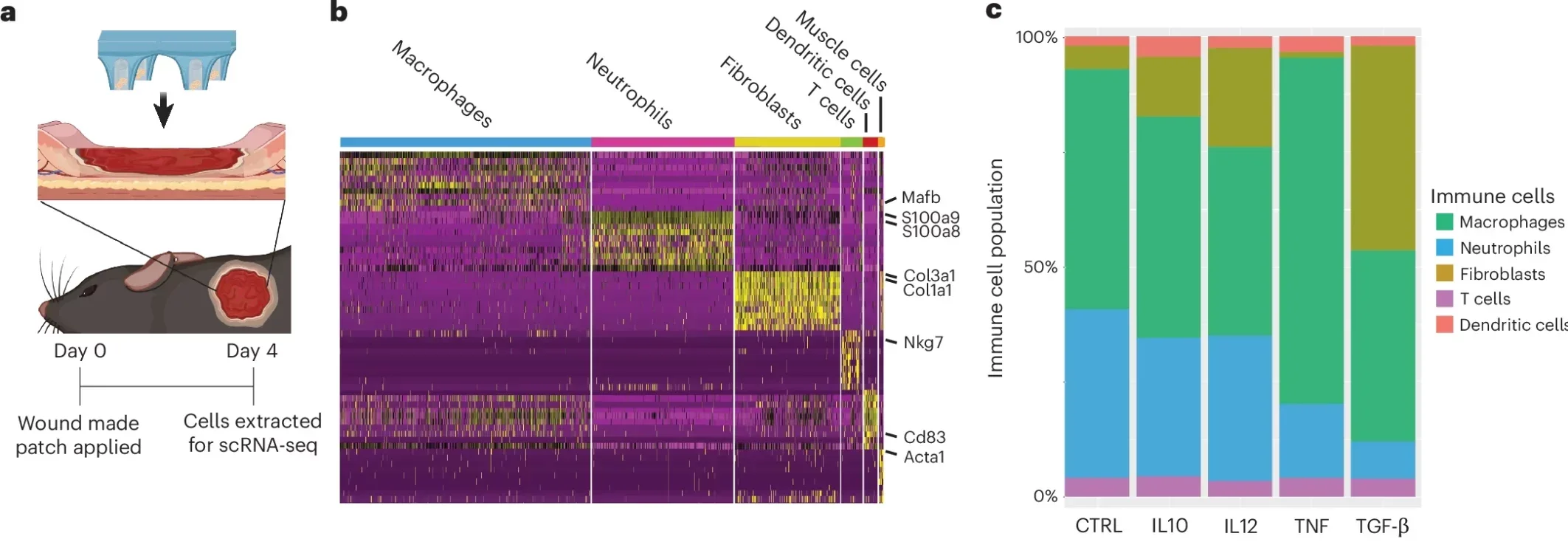
To understand why the therapy worked, researchers examined gene activity inside wound tissue.
Using single-cell RNA sequencing, they analyzed thousands of cells involved in the healing process. The results revealed widespread activation of genes linked to tissue regeneration, collagen production and immune regulation.
Macrophages emerged as central players. These immune cells help coordinate wound repair and communicate with many other cell types.
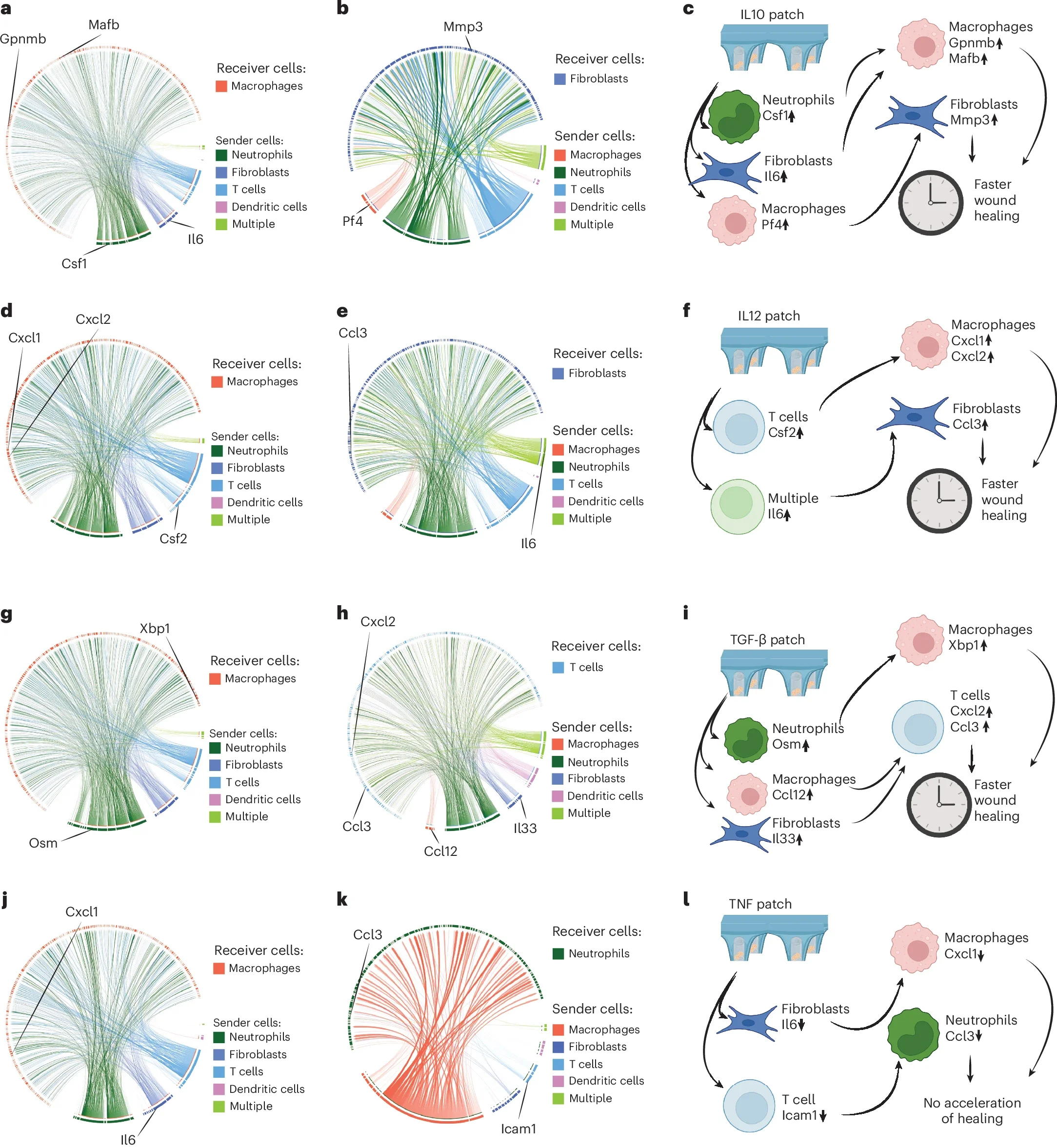
The team found that IL-10 activated a pathway involving the signaling molecule Csf1 and the gene Mafb, both associated with improved healing. When researchers blocked this pathway, the healing benefits largely disappeared.
IL-12 and TGF-β activated different but equally important repair networks. Both promoted communication between immune cells and tissue-building cells, encouraging the wound to move from inflammation toward regeneration.
“Transcriptomic analysis revealed coordinated upregulation of genes associated with tissue regeneration and immune modulation,” the researchers reported, providing a molecular explanation for the healing improvements observed.
Because pig skin closely resembles human skin, researchers also tested the patch in porcine wound models.
The results mirrored those seen in mice.
By day 15, wounds treated with IL-10, IL-12 or TGF-β patches had decreased to about 30% of their original size. Untreated wounds remained close to 70% of their original size.
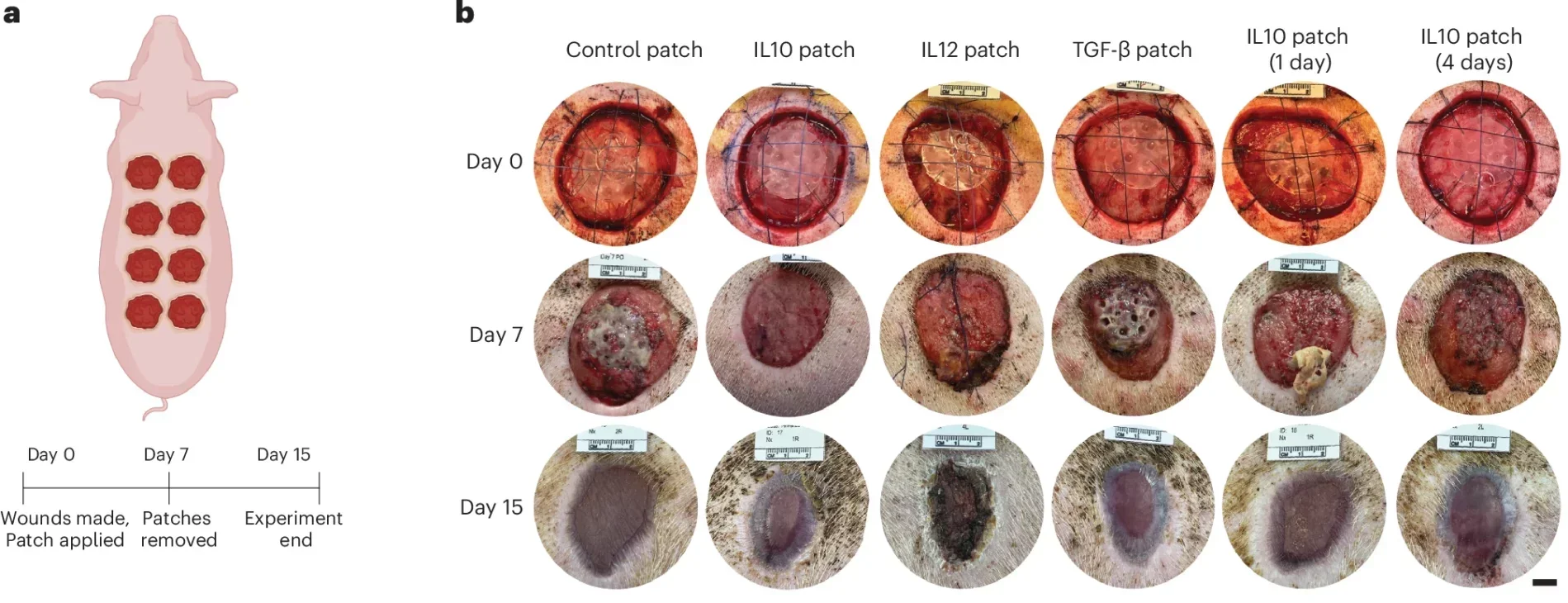
Microscopic analysis showed greater epithelial migration, a key step in skin closure. Healing-related genes involved in collagen formation and tissue remodeling were also more active in treated wounds.
These findings strengthen confidence that the approach may eventually translate to human patients.
One of the most promising aspects of the technology is its adaptability.
The platform can be modified to produce different cytokines, growth factors or therapeutic proteins depending on the medical need. Researchers envision future versions tailored for various diseases that require precise, localized biological signaling.
“The ability to tune both the type and timing of cytokine delivery opens the door to more precise control over the healing process,” said Christian Schreib, assistant research professor in Rice University’s Department of Bioengineering and co-author of the study. “Future work will focus on expanding the flexibility of the platform, including approaches such as optogenetic control to regulate cytokine secretion in real time.”
The team also believes the hydrogel-based system could eventually integrate with bioelectronic devices, creating even more sophisticated treatment platforms.
This research offers a potential new strategy for treating chronic wounds by addressing the biological causes of poor healing rather than focusing only on wound management. If future studies confirm safety and effectiveness in humans, patients with long-lasting wounds could benefit from a treatment that continuously delivers healing signals directly where they are needed.
The technology may also reduce the need for frequent clinical interventions. Because the patch produces therapeutic proteins on-site, it could lessen reliance on repeated injections or repeated applications of short-lived biological drugs. This may improve convenience for patients who have limited mobility and require long-term care.
Beyond wound treatment, the cytokine factory concept could influence many areas of medicine. Diseases involving inflammation, tissue damage or immune dysfunction may benefit from localized, cell-based delivery systems.
By providing sustained therapeutic signaling at specific locations in the body, researchers may be able to develop more targeted and effective treatments while minimizing unwanted side effects.
Research findings are available online in the journal Nature Biomedical Engineering.
The original story “Engineered cells deliver healing signals directly into wounds” is published in The Brighter Side of News.
Like these kind of feel good stories? Get The Brighter Side of News’ newsletter.
The post Engineered cells deliver healing signals directly into wounds appeared first on The Brighter Side of News.


Leave a comment
You must be logged in to post a comment.