New research is changing how scientists view the ground beneath rugged terrain. A study led by researchers at the University of Oregon shows that hilly and mountainous landscapes store far more carbon in their soils than previously believed.
The findings suggest that these regions may play a much larger role in slowing climate change. For years, scientists assumed steep terrain could not hold much carbon because of constant erosion. This new work shows the opposite may be true.
“There was a misconception that mountainous areas would not hold much carbon because they’re so rapidly eroding and there’s not much soil,” said earth scientist Josh Roering. “What we’re saying is, it’s actually the opposite. These areas can be impressive reservoirs of soil organic carbon.”
Soil already acts as one of Earth’s largest carbon storage systems. It holds more carbon than the atmosphere and all plant life combined. That makes it a key part of the global carbon cycle.
Carbon enters soil through plant roots, decaying leaves, and microbial activity. Over time, it becomes trapped in the ground, preventing it from entering the atmosphere as carbon dioxide.
However, scientists have struggled to measure how much carbon soil can truly store. Most studies focus only on the top 30 centimeters. That layer is easier to access and analyze.
Brooke Hunter, who led the study as a doctoral researcher, explained why that is a problem. “In order to have an accurate understanding of carbon budgets, we need to know how much carbon is in the soil and where it’s most concentrated,” she said.
Mountain landscapes are difficult to study. Steep slopes, dense vegetation, and unstable ground make fieldwork challenging.
Because of this, most research has focused on flatter regions like farmland. These areas are easier to measure and model.
Geomorphology, the study of how landscapes change, offers a different perspective. It examines how rock turns into soil and how that soil moves across land.
Roering described it simply. “We have our own form of bookkeeping to determine the rate at which rock is converted into soil and how long the soil hangs out before it is transported into rivers and beyond,” he said.
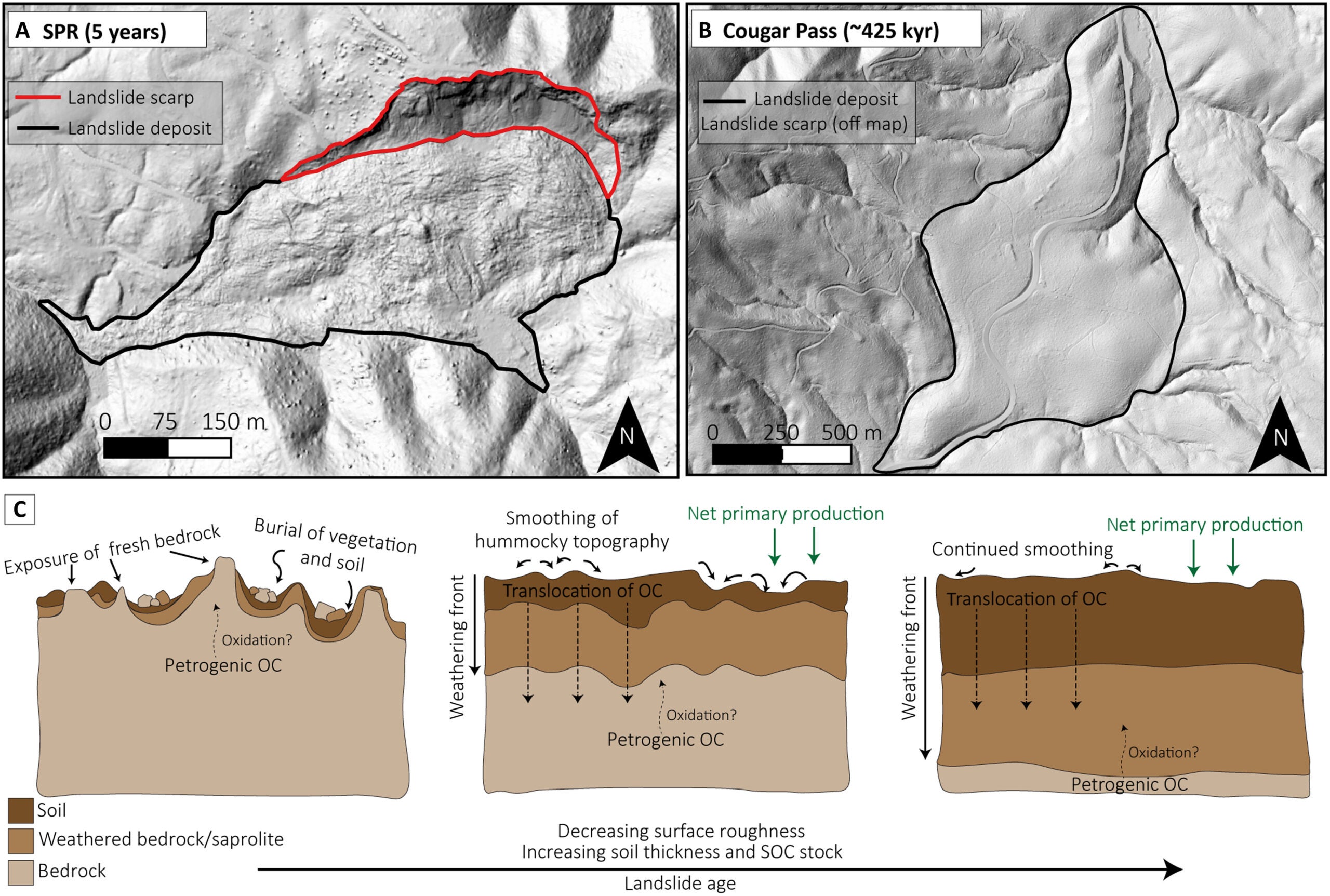
In mountainous areas, landslides constantly reshape the land. These events move large amounts of material downhill, creating thick deposits of soil and organic matter.
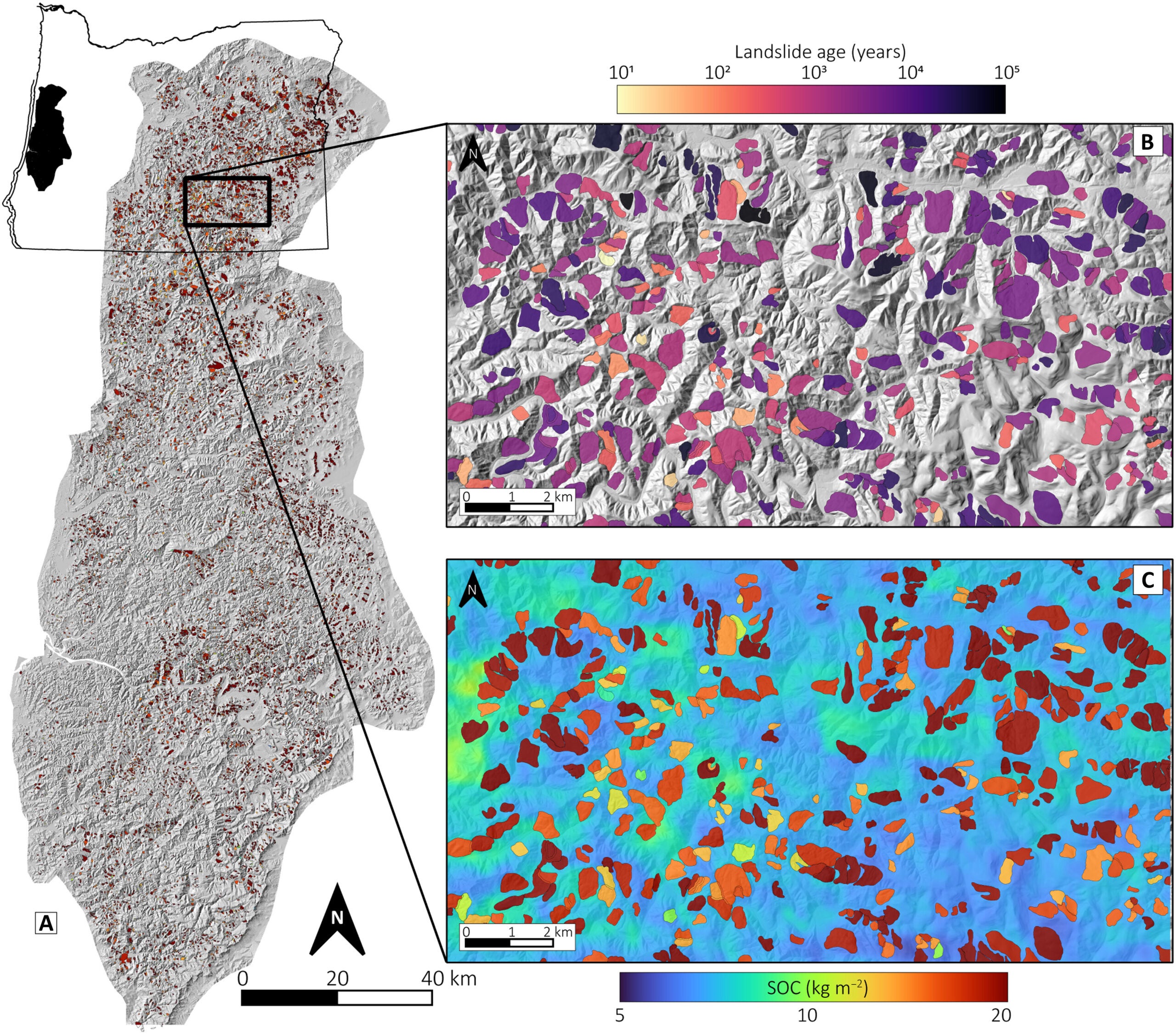
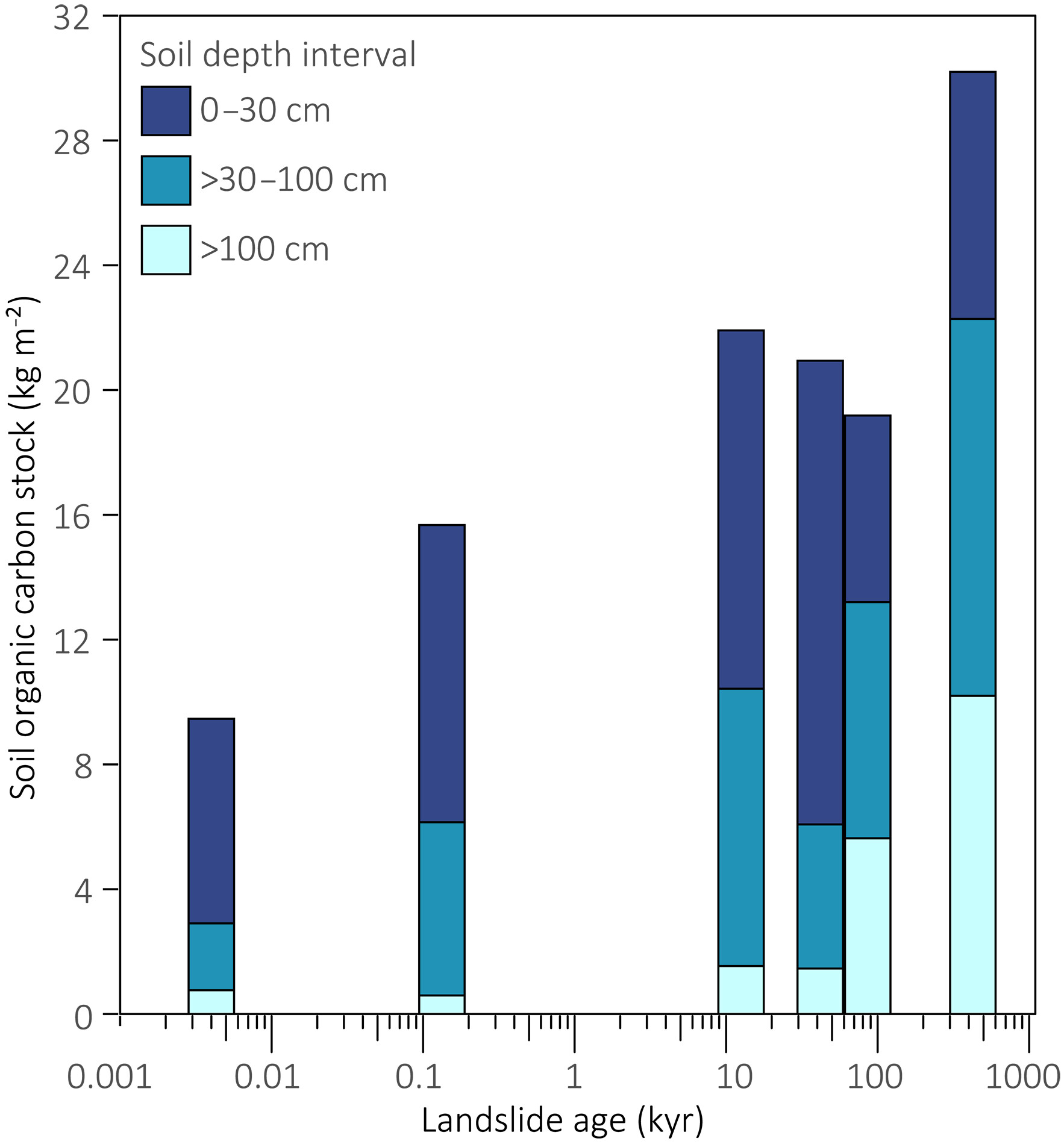
To understand how much carbon these deposits hold, researchers studied nearly 10,000 landslides in the Oregon Coast Range. These landslides ranged in age from about four years to 480,000 years.
The team selected several sites for detailed analysis. They drilled deep into the ground to measure carbon levels and soil density.
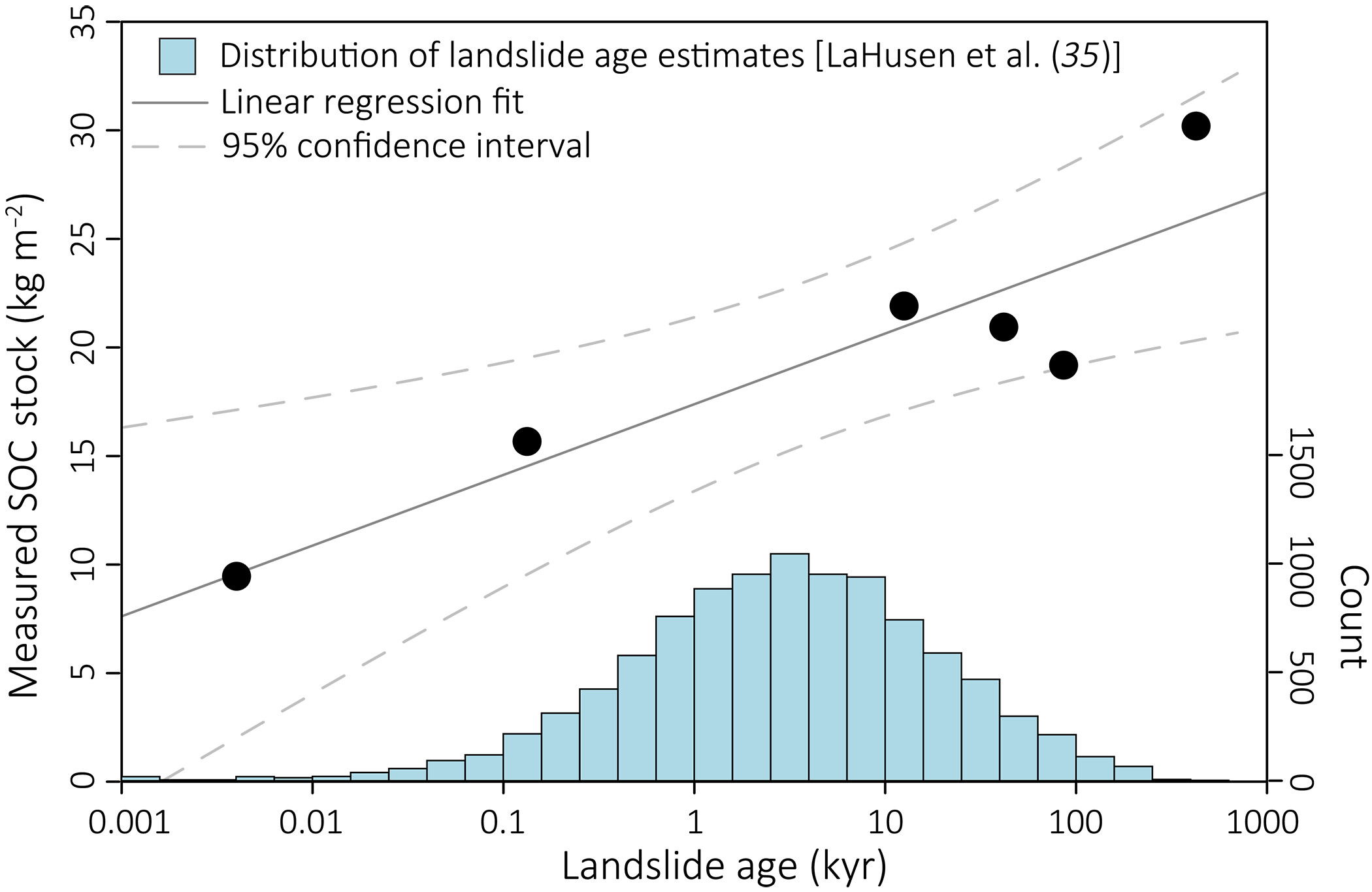
Using this data, they built a timeline showing how soil develops and stores carbon over time. They then applied their findings across the entire region.
This approach allowed them to estimate carbon storage on a much larger scale than previous studies.
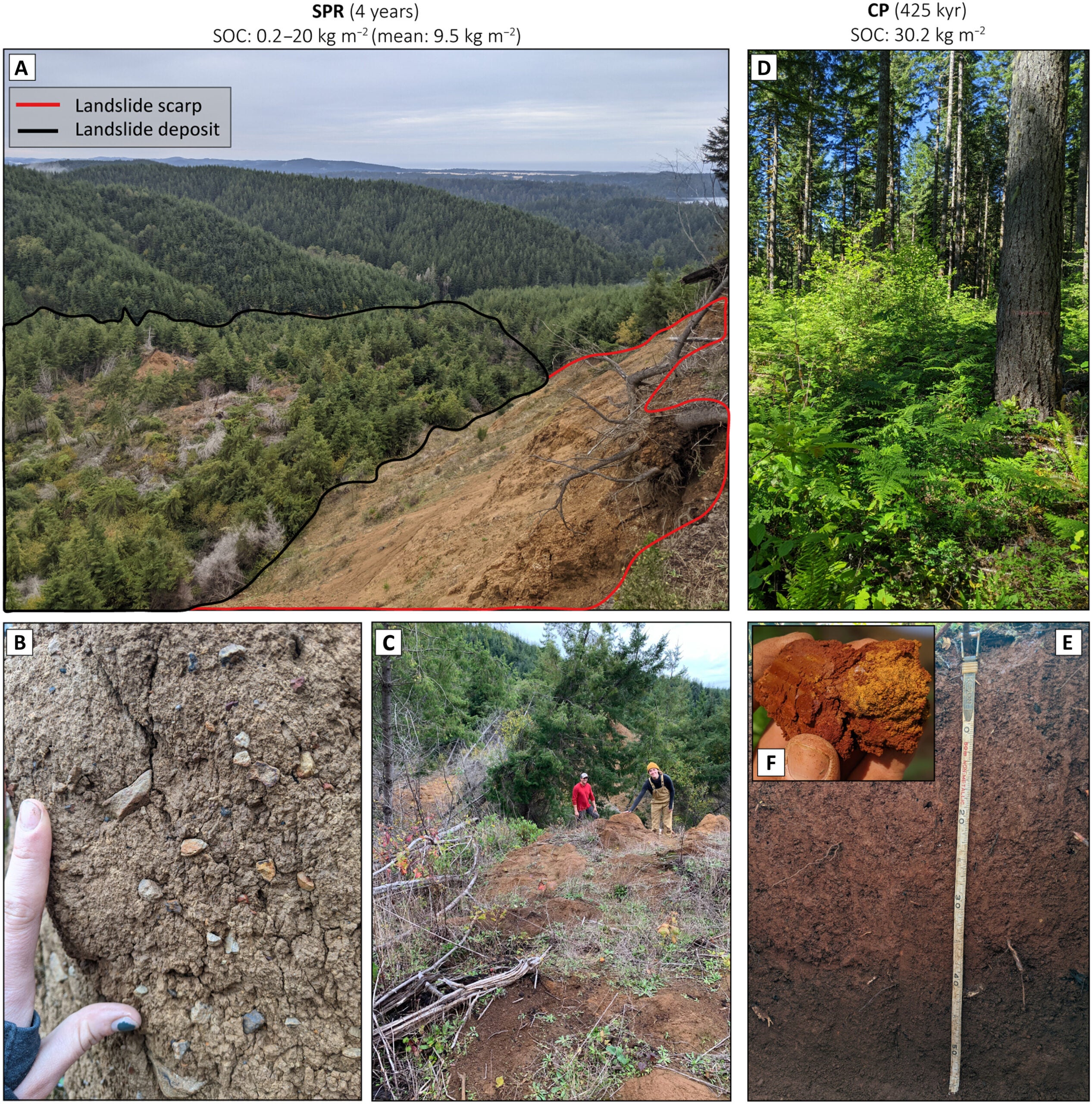
The results revealed something surprising. Landslides often contain soil layers more than five meters deep. That is far deeper than the 30 centimeters used in most global models.
These deep layers hold large amounts of carbon. In many cases, the majority of carbon sits below the surface, not near it.
Thicker soils also tend to store more carbon. Fine particles created by weathering provide more surface area for carbon to attach.
“These deep weathering zones are really good at holding carbon,” Roering said. “The older they are, the more weathered they are and the thicker they are, and the more carbon they can store.”
This means that older landslides, which have had more time to develop, act as especially strong carbon reservoirs.
When researchers compared their findings to existing models, the difference was striking. Carbon stored in landslide soils was about twice as high as earlier estimates.
Past models underestimated carbon because they ignored deep soil layers and complex terrain. By including these factors, the new study provides a more complete picture.
The research also shows that carbon builds over time. As soils age and deepen, they continue to accumulate organic material.
This long-term storage is important. Carbon buried deep in soil is less likely to return to the atmosphere.
The study highlights how dynamic soil systems can be. In mountainous regions, landslides mix soil, bury vegetation, and create new layers.
Over time, plants grow back and add more organic material. Weathering breaks down rock, creating fine particles that help stabilize carbon.
These processes create a cycle where carbon moves through the landscape but often ends up stored deep underground.
Even though some carbon may be lost during erosion, much of it becomes locked away in stable soil layers.
The findings come at a time when scientists are exploring natural ways to reduce greenhouse gases. These methods are often called natural climate solutions.
Examples include adding minerals to soil to speed up weathering or improving soil health to capture more carbon.
Better data about existing carbon storage can help guide these efforts. Knowing where carbon is already stored allows scientists to focus on protecting those areas.
“If you are going to manage the landscape for carbon, you would want to know where the areas with high amounts of carbon are and prioritize management practices that preserve them,” Roering said.
One key takeaway from the study is the need for improved landscape mapping. Traditional models do not fully account for how terrain shapes soil depth and carbon storage.
By integrating geomorphology into climate models, scientists can improve predictions. This can lead to more effective strategies for managing land and reducing emissions.
Hunter emphasized that there is no single solution. “When it comes to soil management and natural climate solutions, there isn’t one miracle fix,” she said.
Instead, different regions may require different approaches based on their unique conditions.
Mountain landscapes have long been viewed as unstable and difficult environments. This research suggests they may also be vital allies in the fight against climate change.
By storing large amounts of carbon deep underground, these regions help regulate the Earth’s climate over long periods.
The findings also remind scientists to look beyond the surface. Important processes often occur out of sight, shaping the planet in ways that are not immediately obvious.
As research continues, these hidden systems may reveal even more about how the Earth stores and cycles carbon.
This study could reshape how scientists and policymakers approach climate solutions. By showing that mountainous regions store far more carbon than expected, it highlights new areas for conservation and protection.
Land managers can use this information to prioritize regions with deep, carbon-rich soils. Protecting these areas from erosion, deforestation, or development could help prevent stored carbon from being released.
The research also improves climate modeling. More accurate estimates of soil carbon will lead to better predictions of future climate change.
In addition, it may guide efforts to enhance carbon storage naturally. Understanding how deep soils form and function could help scientists design better strategies for increasing carbon sequestration.
Overall, the findings show that nature already provides powerful tools for managing carbon. By protecting and understanding these systems, humanity can better address the challenges of climate change.
Research findings are available online in the journal Science Advances.
The original story “Mountain soils store twice as much carbon as scientists thought” is published in The Brighter Side of News.
Like these kind of feel good stories? Get The Brighter Side of News’ newsletter.
The post Mountain soils store twice as much carbon as scientists thought appeared first on The Brighter Side of News.


Leave a comment
You must be logged in to post a comment.