Inside a long vacuum chamber in Southern California, a spacecraft engine glowed white-hot as it pushed toward a level of power the United States has not reached before with this kind of electric propulsion.
During a February test at NASA’s Jet Propulsion Laboratory, a prototype lithium-fed magnetoplasmadynamic thruster reached up to 120 kilowatts, a figure NASA says is higher than any electric propulsion system previously tested in the country. The firing, carried out on Feb. 24, is part of a broader effort to build propulsion systems that could one day move astronauts toward Mars and robotic missions deeper into the solar system.
That does not mean a crewed Mars ship is around the corner. The engine is still a prototype, and some of the hardest problems remain unsolved. But the result gave NASA engineers something they had been working toward for years, a powerful first full test with data they can now use to plan what comes next.
“At NASA, we work on many things at once, and we haven’t lost sight of Mars. The successful performance of our thruster in this test demonstrates real progress toward sending an American astronaut to set foot on the Red Planet,” NASA Administrator Jared Isaacman said.
He added that the test marked “the first time in the United States that an electric propulsion system has operated at power levels this high, reaching up to 120 kilowatts.”
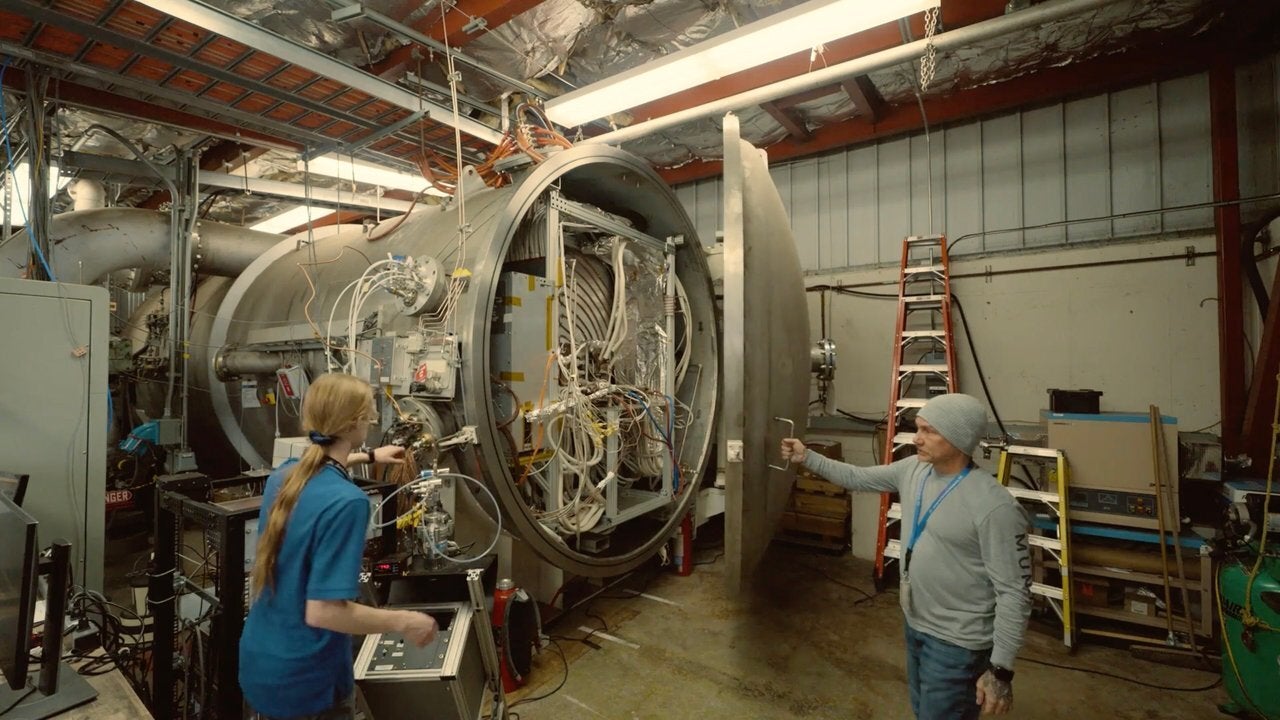
The test took place in JPL’s Electric Propulsion Lab, inside what NASA describes as a unique national facility built to handle metal vapor propellants at up to megawatt-class power levels. The condensable metal propellant vacuum facility lets researchers safely run engines that would be difficult to test in ordinary chambers because the metal propellant can coat surfaces and create major technical problems.
During five ignitions, the tungsten electrode at the center of the thruster heated to more than 5,000 degrees Fahrenheit, or 2,800 degrees Celsius, glowing bright white. The outer electrode, shaped like a nozzle, also lit up as the engine produced a vivid red plume.
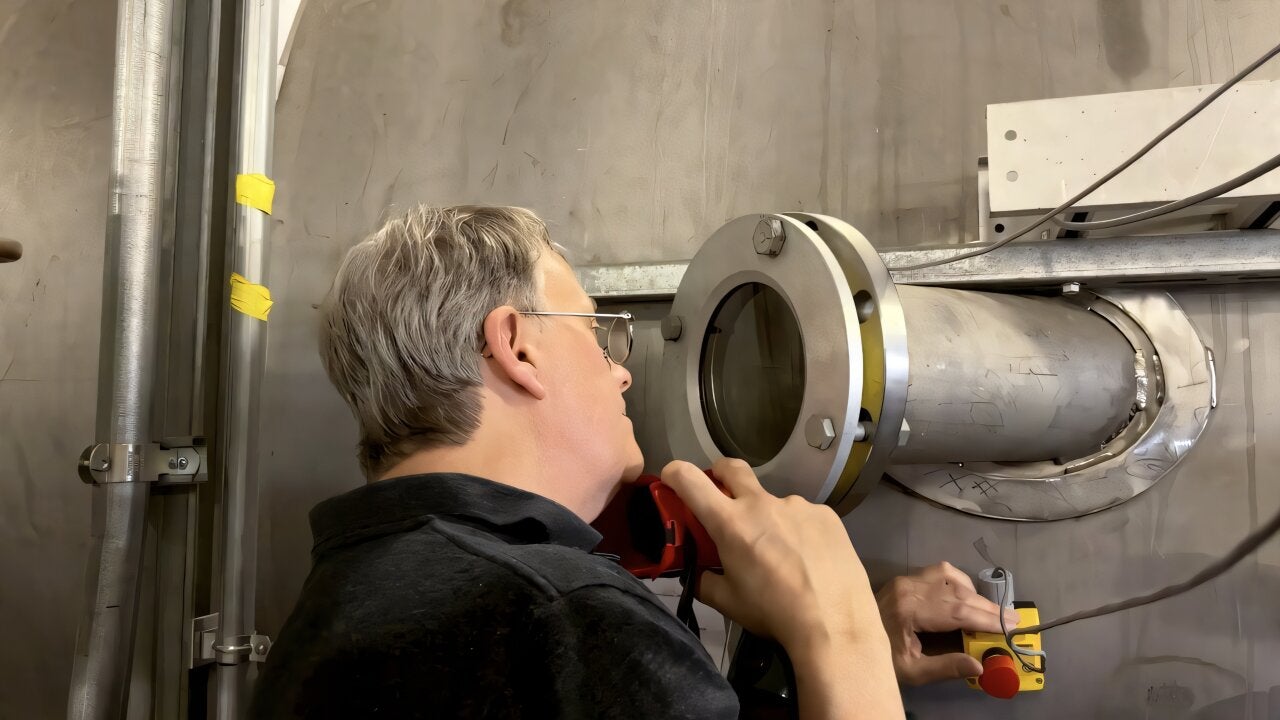
James Polk, a senior research scientist at JPL, watched through a small portal in the side of the water-cooled chamber, which stretches 26 feet long. He has spent decades studying lithium-fed MPD thrusters and previously worked on NASA’s Dawn mission and Deep Space 1, the mission that first demonstrated electric propulsion beyond Earth orbit.
“Designing and building these thrusters over the last couple of years has been a long lead-up to this first test,” Polk said. “It’s a huge moment for us because we not only showed the thruster works, but we also hit the power levels we were targeting. And we know we have a good testbed to begin addressing the challenges of scaling up.”
That last phrase matters. Hitting a target in a short test is one thing. Building an engine that can survive long enough for a Mars mission is something else.
Electric propulsion is not new at NASA. The agency is already flying solar electric thrusters on missions such as Psyche. Those systems use electricity to accelerate propellant and can cut propellant use by as much as 90 percent compared with traditional chemical rockets.
The tradeoff is thrust. Chemical rockets produce a powerful shove. Electric thrusters deliver a much gentler push, but they can keep pushing for long stretches, slowly driving a spacecraft to very high speed.
Psyche offers a good example of that approach. NASA says its thrusters, now the highest-power electric thrusters operating on any agency spacecraft, gradually accelerate the mission in deep space until it reaches 124,000 miles per hour.
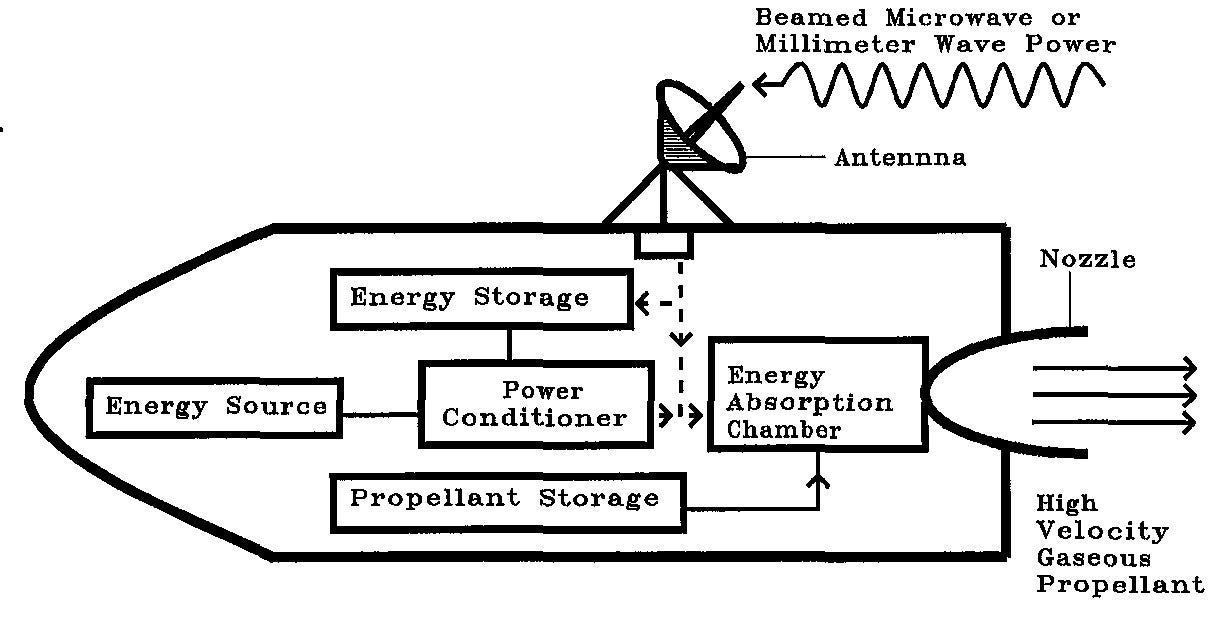
The lithium-fed MPD engine under test at JPL works differently from those current systems. Instead of relying on the same kind of propellant acceleration used in existing NASA electric thrusters, it uses high electrical currents interacting with a magnetic field to accelerate lithium plasma. Lithium is stored as a metal, then turned into vapor and plasma as part of the propulsion process.
That design has been studied since the 1960s, but NASA says it has never flown operationally.
The latest test also moved into a different power class. At 120 kilowatts, the prototype ran at more than 25 times the power of Psyche’s thrusters.
A human mission to Mars would demand far more than a successful lab firing. NASA says such a mission might need 2 to 4 megawatts of power, which would likely require multiple MPD thrusters working together. Those engines would also need to keep operating for more than 23,000 hours.
That sets the scale of the problem.
The JPL team hopes to raise power levels to between 500 kilowatts and 1 megawatt per thruster in the coming years. Yet the same conditions that make the engine attractive also make it punishing to build. The hardware runs at extremely high temperatures, so engineers must prove the components can survive not just for minutes, but for many hours of testing and, eventually, for mission-length operation.
In other words, this breakthrough is real, but it is still an early one.
NASA argues that if the technology can be fully developed and paired with a nuclear power source, it could lower launch mass and help carry the large payloads needed for human missions to Mars. The combination of higher thrust and efficient propellant use is what makes the concept so appealing. A spacecraft would not have to haul as much propellant as a chemical system would require, but it could still get more thrust than today’s flying electric engines provide.
That makes MPD thrusters attractive not only for Mars, but also for robotic missions that need to travel long distances with heavy equipment.
MPD exists inside a much broader family of advanced propulsion concepts, many of them aimed at the same basic problem: how to move farther through space without paying the enormous mass penalty that comes with chemical fuel.
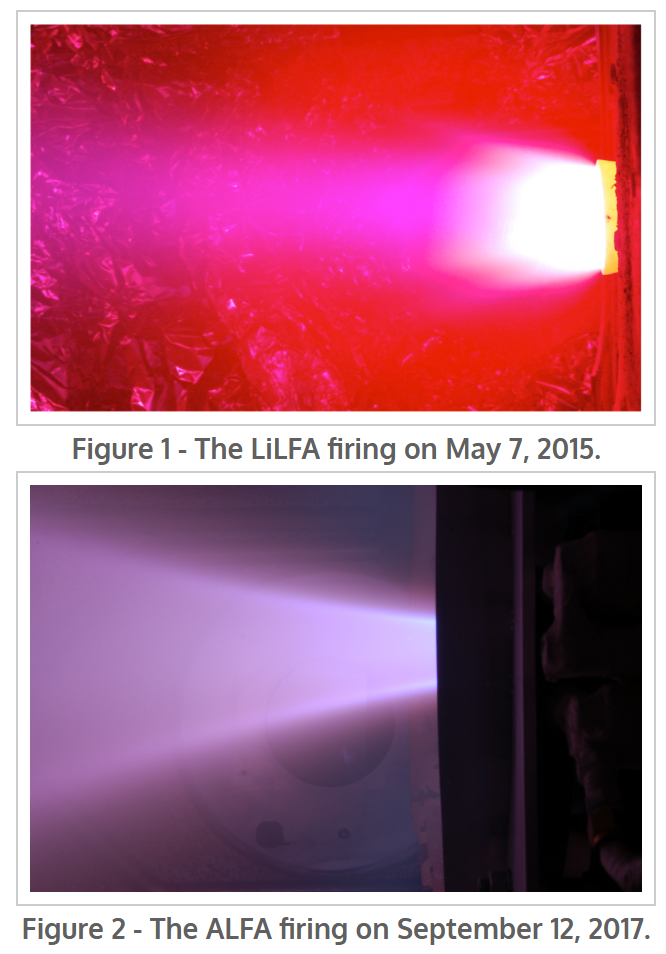
One related concept is the lithium Lorentz force accelerator, or LiLFA thruster, which builds on the MPD idea, which uses lithium vapor and multiple smaller cathode rods packed into a hollow cathode tube. That setup is meant to reduce one of the classic problems in MPD systems, cathode corrosion caused by constant contact with plasma.
Other concepts follow a different path. Pulsed inductive thrusters use bursts instead of continuous thrust and can operate at megawatt-scale power levels. Electrodeless plasma thrusters remove anodes and cathodes entirely, reducing erosion and allowing throttling. Helicon double-layer thrusters use radio frequency power and magnetic fields to eject ionized gas at high speed.
Then there is VASIMR, the Variable Specific Impulse Magnetoplasma Rocket, which ionizes propellant with radio waves and accelerates it using magnetic fields. A 200-kilowatt VASIMR test engine had once been discussed for the International Space Station, though NASA canceled those plans in 2015. A much more powerful future version, has been envisioned as a way to sharply cut travel times to destinations such as Mars, Jupiter, or Saturn.
Those technologies vary widely in maturity and design. Still, they point to the same long-running reality in spaceflight: chemical rockets are excellent for launch and short bursts, but they are not the final answer for every deep-space trip.
For NASA’s lithium-fed MPD team, the most useful result from the February firing may not be the headline number alone. It is the chance to start working through the engineering problems that only show up when a thruster begins running at truly high power.
This engine has not flown in space. It must be scaled far beyond the 120-kilowatt test. It must survive far longer run times. And it will likely need a nuclear power source before it can support the kind of mission planners have in mind for Mars.
Those are not minor hurdles.
Even so, the test gives NASA something concrete to build on. The agency now has a prototype that operated at the power level researchers were aiming for, inside a facility built for exactly this kind of risky work. For a field that often advances in long, uneven stretches, that matters.
And it gives researchers a more immediate job than dreaming about astronauts on Mars. They now need to prove that this bright, violent machine can last.
The clearest practical impact is in mission design. If lithium-fed MPD thrusters can be developed further, NASA could gain a propulsion option that uses propellant far more efficiently than chemical rockets while producing more thrust than the electric engines it flies today. That could help spacecraft carry larger payloads, reduce launch mass, and make long deep-space journeys more realistic for both human crews and robotic explorers.
For now, though, the research mainly shifts the conversation from theory toward engineering. NASA has shown the thruster can run at a very high power level in a controlled test.
The next challenge is endurance, heat management, and system scaling. Until those problems are solved, the engine remains a promising tool rather than a mission-ready one.
The original story “NASA’s lithium-fed electric thruster could carry humans to Mars and beyond” is published in The Brighter Side of News.
Like these kind of feel good stories? Get The Brighter Side of News’ newsletter.
The post NASA’s lithium-fed electric thruster could carry humans to Mars and beyond appeared first on The Brighter Side of News.

