A giant predator was stalking what is now Britain roughly 415 million years ago, long before forests spread and before the ancestors of reptiles, birds, and mammals had fully taken to land. Its identity has been argued over for more than a century. Now researchers say the fossil fragments belong to a scorpion, and not just any scorpion, but the largest one yet known.
The animal, Praearcturus gigas, is estimated to have exceeded a meter in length. Its pincers alone reached about 16 centimeters, far larger than those of any living scorpion.
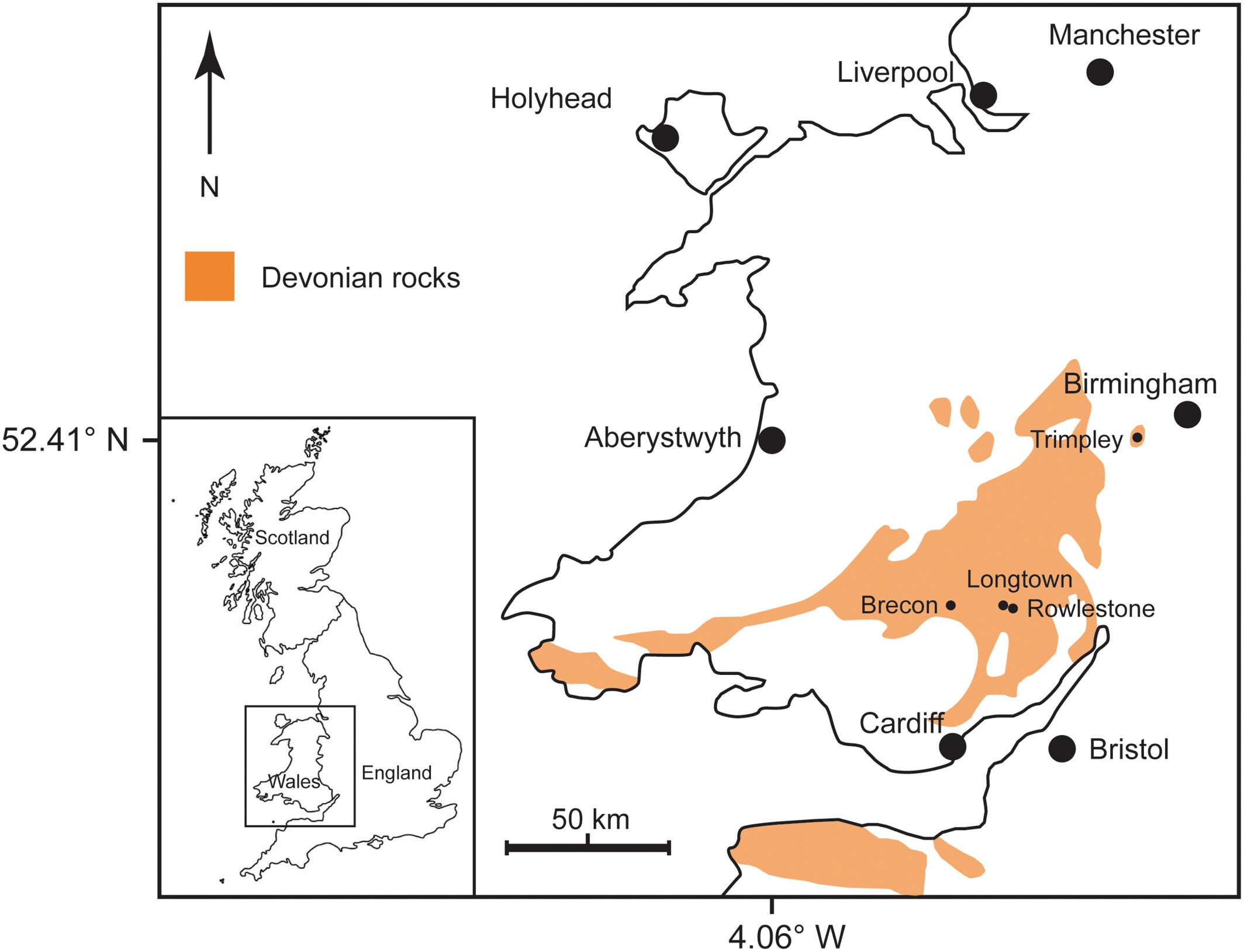
The new analysis, published in Palaeontology, also folds two other fossil species into the same animal, strengthening the case that these scattered remains all belonged to one outsized predator from Early Devonian England and Wales.
That matters because Praearcturus lived at a very different moment in Earth’s history than the giant arthropods people usually picture.
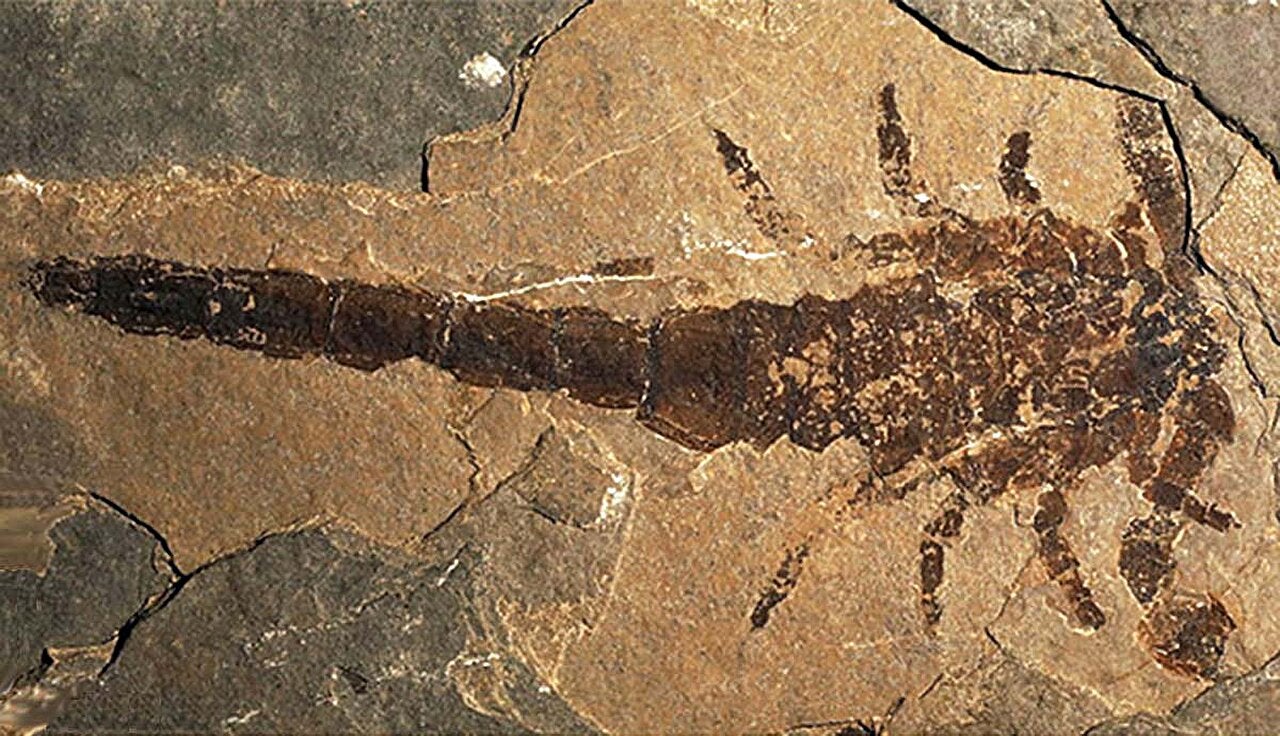
When most people think of giant arthropods, they picture later creatures such as Arthropleura, the huge millipede of the Carboniferous, or the dragonfly-like griffinflies. Those animals appeared tens of millions of years after Praearcturus, when land ecosystems were far more developed.
Dr. Richie Howard, lead author of the study and curator of fossil arthropods at the Natural History Museum, put it this way: “When we think of giant arthropods, people tend to think of enormous millipedes like Arthropleura or the dragonfly-like griffinflies.”
“But these species lived in the Carboniferous Period, at least 55 million years after Praearcturus, once land-based ecosystems had time to develop.”
“Instead, Praearcturus lived when life on land was just starting out and the ancestors of reptiles, mammals and birds were yet to leave the water. It suggests that this species might have grown so big because there weren’t any other large predators, allowing it to dominate its environment.”
The fossil sites come from the St Maughan’s Formation in the Anglo-Welsh Basin, a landscape interpreted as river channels and floodplains. At the time, land plants were still small and simple. The familiar structure of later terrestrial ecosystems had not arrived yet.
That left a puzzle. What exactly was an animal this large doing in such a sparse world?
Dr Russell Garwood, Palaeontologist at The University of Manchester, added: “Praearcturus has puzzled us palaeontologists for more than a century. By bringing together material from several collections and using cutting edge imaging techniques , we’ve been able to build a clearer picture of the animal than was previously possible, which is really exciting.
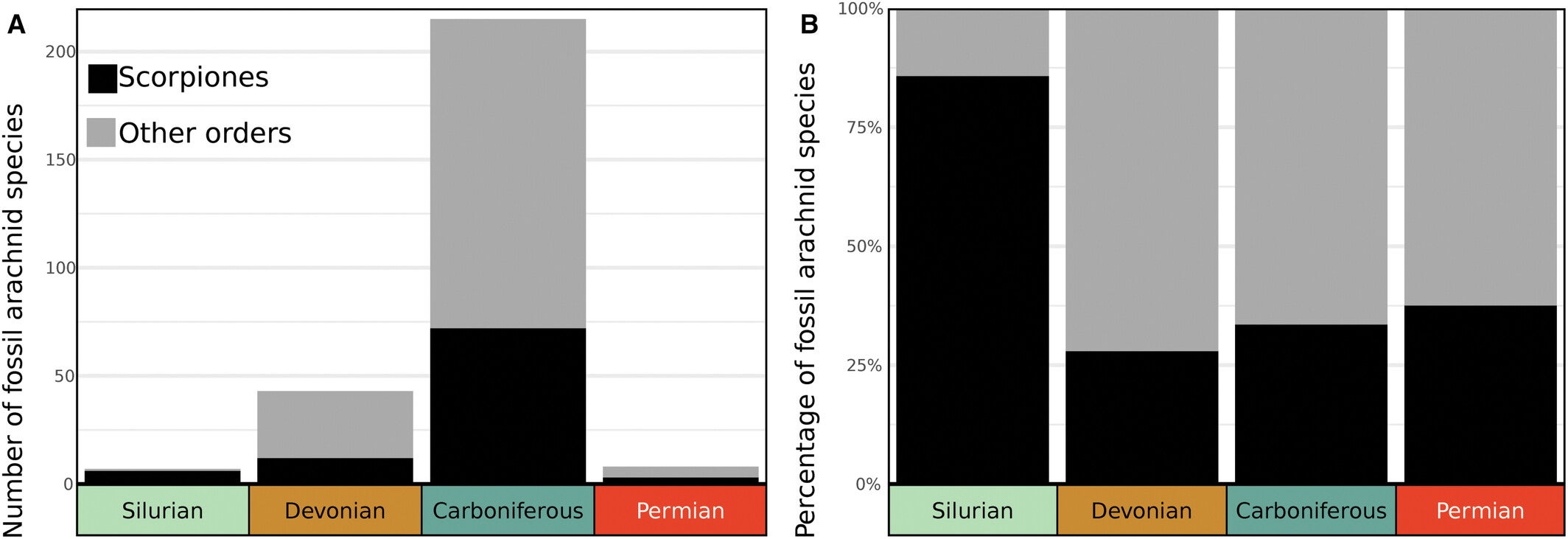
“What makes Praearcturus so interesting is that it became enormous at a time when life on land was otherwise very small. But it was a world that could somehow support a giant predator. To try and better understand this ancient world we compared the size of fossil scorpions with other animals alive at the time. To reach such extraordinary sizes, and conclude that perhaps it lived in water, where life was bigger.”
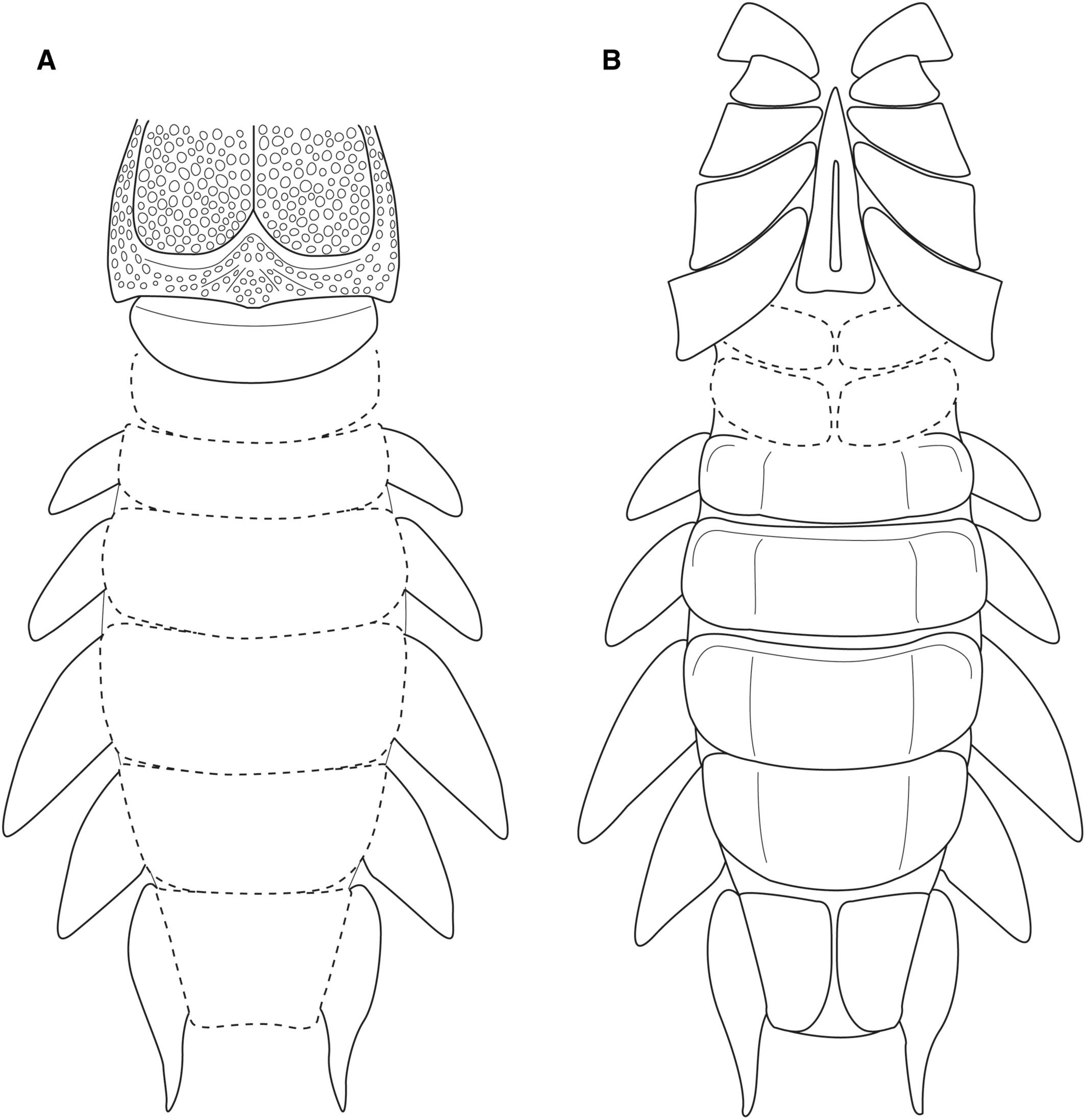
Praearcturus gigas has had an unusually tangled scientific history. When Henry Woodward named it in 1871, he thought it was a giant woodlouse-like crustacean. Later researchers compared it to other arthropod groups, including eurypterids. Only in the 1980s did some scientists begin arguing that it might really be a scorpion.
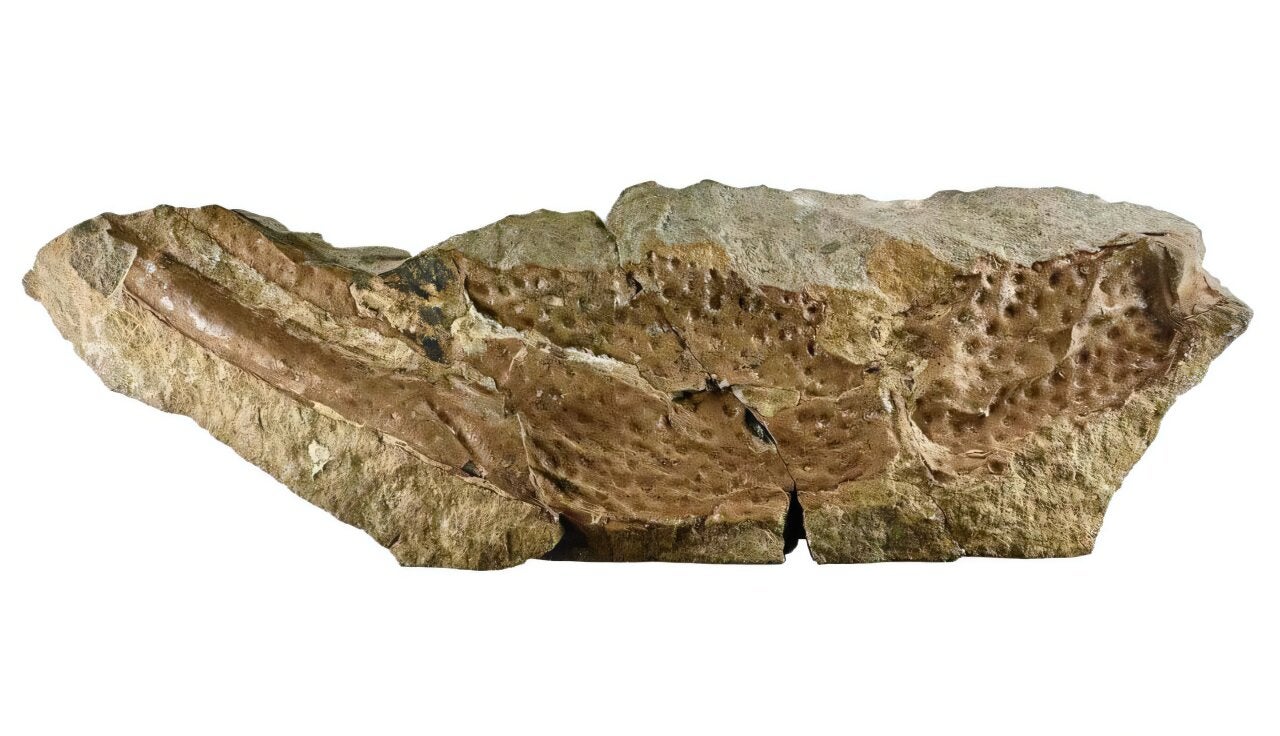
The trouble was that the fossils are incomplete. The classic scorpion features people might expect, especially the tail and sting, were not preserved. That left room for doubt.
The new study re-examined the original fossils and additional material, including specimens once described as Brontoscorpio anglicus and Bennettarthra annwnensis. The authors conclude those are junior synonyms of Praearcturus gigas.
Their strongest argument centers on the sternum, a long triangular structure on the underside of the body. The fossil shows a sternum closely resembling that of Eramoscorpius, an ancient scorpion from Canada described from a much better preserved specimen.
“Eramoscorpius was named from a well-preserved fossil, and is clearly a scorpion,” Howard says. “One key feature of its anatomy is the sternum, which is a long triangular structure with a groove running down the middle that’s on the bottom of the carapace.”
“Praearcturus is a similar age to Eramoscorpius and also has one of these structures. So, this shows beyond doubt that Praearcturus must be a scorpion.”
The team also points to the structure of the pedipalps, the heavy claw-bearing appendages, and to other body features that fit a scorpion better than a crustacean.
Even with its identity clarified, Praearcturus still raises a harder question about lifestyle. The new work argues that this animal may not have been purely terrestrial.
That idea comes partly from the world it lived in. Early Devonian land ecosystems may not have offered enough prey to support such a large hunter full time. The researchers suggest Praearcturus may have hunted on land but also fed in freshwater, where larger prey such as fish and other arthropods were available.
Some fossils show flap-like lateral structures, called epimera, that the team says resemble features seen in lobsters and crabs. Those do not prove an aquatic lifestyle, but they point in that direction. Other features pull the other way. The animal had thick cuticle, especially around the leg bases, which could have helped support its bulk during movement on land.
Howard described the animal as one that may have crossed a boundary that was still blurry in its time. “Without complex ecosystems to support Praearcturus on land, these animals probably spent part of their lives hunting in water,” he says.
Dr. Greg Edgecombe, a co-author and fossil arthropod expert, said the animal complicates ideas about how early scorpions evolved. “The lines are blurred between arthropods living on the land and in the sea when Praearcturus was alive,” Edgecombe explains.
“Our best family trees from DNA sequences suggest that scorpions are closely related to other arachnids with which they share book lungs, such as the spiders. This predicts that they are descended from an air-breathing ancestor.”
“If this is the case, then Praearcturus is an example of an animal that likely returned to the water after its ancestors moved onto land.”
That is still a hypothesis, not a settled fact. The fossils do not preserve everything researchers would like to see, and the study notes that some key parts of the anatomy remain unknown.
The revised identity of Praearcturus shifts the timeline of giant scorpions deep into the Early Devonian, at a stage when land life was still in its infancy. It also weakens a common idea that giant land arthropods mainly owed their size to the later atmospheric oxygen peaks of the late Paleozoic. Praearcturus was already enormous well before that interval.
The study also suggests early scorpions were unusually large compared with other arachnids of their time. Many other known land arthropods from comparable deposits were far smaller, often by an order of magnitude.
That does not make Praearcturus a solved story. Tentative remains from Late Devonian rocks near Portishead, North Somerset, may show the species survived at least another 40 million years, but those fossils have not been firmly confirmed.
This study sharpens a major chapter in the history of life on land. By identifying Praearcturus gigas as a scorpion, the research suggests large predators appeared in terrestrial or partly terrestrial settings earlier than once thought.
It also pushes scientists to rethink how the first scorpions lived, whether some moved between water and land, and why early scorpions became both so large and so common in the fossil record.
Just as important, it shows how reexamining old museum fossils with new comparisons and imaging tools can overturn long-standing assumptions.
Research findings are available online in the journal Palaeontology.
The original story “World’s largest scorpion lived in Britain 415 million years ago” is published in The Brighter Side of News.
Like these kind of feel good stories? Get The Brighter Side of News’ newsletter.
The post World’s largest scorpion lived in Britain 415 million years ago appeared first on The Brighter Side of News.

